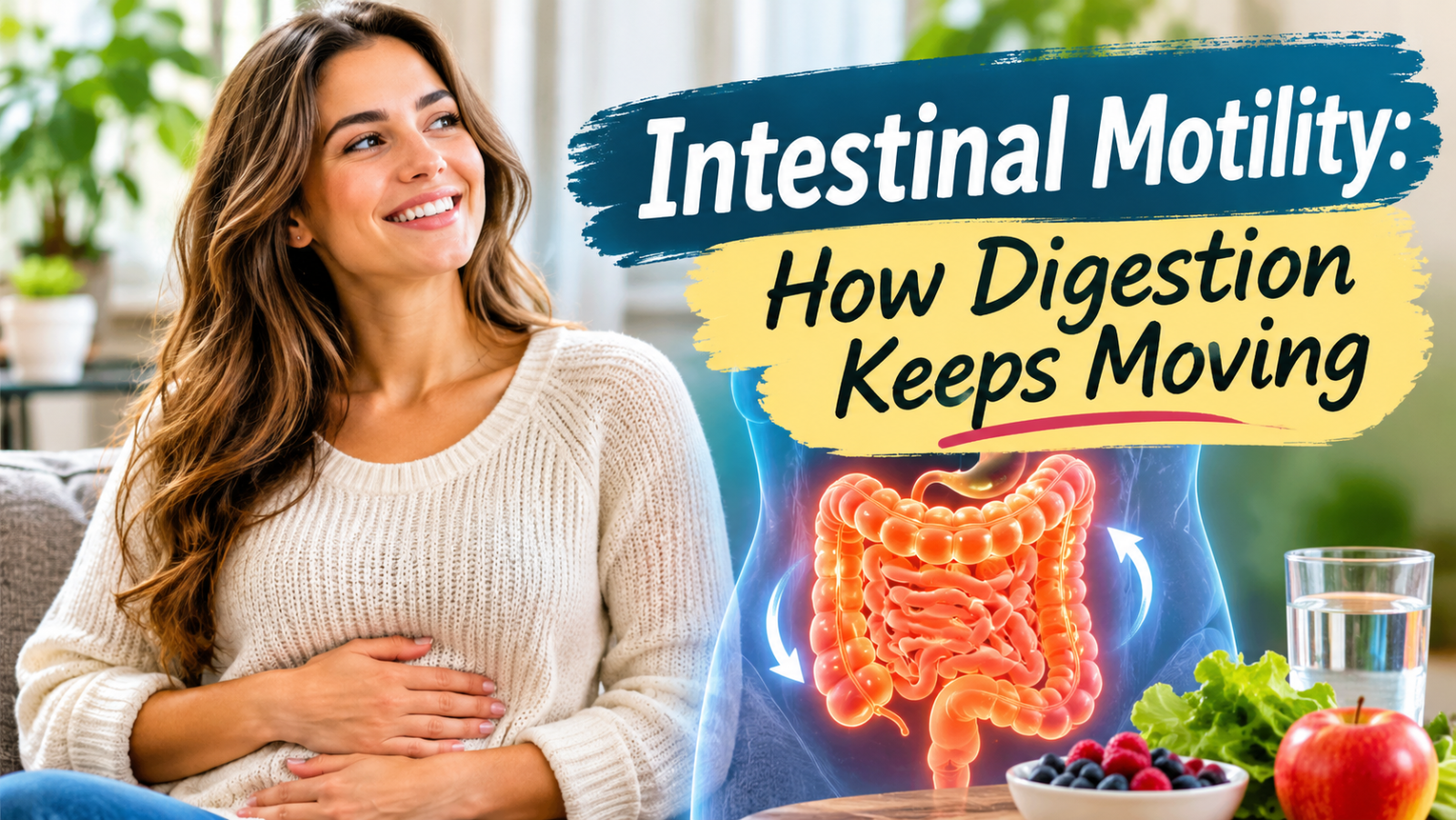
Intestinal motility is the coordinated movement that carries food, fluids, and waste through your digestive tract. When this process works smoothly, your body can digest meals, absorb nutrients, and move waste toward elimination; however, changes in this movement can contribute to bloating, constipation, diarrhea, and other digestive problems. Understanding how intestinal motility works can help you make more informed choices about food, nutrition, and everyday gut health.
The Gutrova Copy Button makes it easier to save and share useful digestive health tips, so you can return to the advice that matters most.
Quick Answer: What Is Intestinal Motility?
Intestinal motility refers to the muscle movements that move and mix food throughout your digestive tract. These movements help transport digested food through the intestines, support nutrient absorption, and move waste toward the rectum. Healthy motility depends on coordinated muscle activity, nerve signals, hydration, and normal digestive function.
How Intestinal Motility Works
Your digestive system doesn’t simply wait for food to move through it. Instead, muscles in the walls of your gastrointestinal tract contract and relax in carefully coordinated patterns.
One important movement is called peristalsis. It involves wave-like muscle contractions that push food forward through the digestive tract. Another type of movement mixes intestinal contents, helping digestive juices interact with food and giving the body time to absorb nutrients.
Here’s how the process works from one stage to the next.
1. Food travels through the esophagus
After you swallow, muscle contractions move food down the esophagus and into your stomach. This movement happens automatically, without requiring conscious effort.
2. The stomach prepares food for digestion
The stomach muscles mix food with digestive juices and gradually release the mixture into the small intestine. This controlled emptying helps prevent the digestive system from receiving more food than it can process at once.
3. The small intestine absorbs nutrients
The small intestine continues mixing and moving food while enzymes and digestive fluids break it down. Nutrients such as carbohydrates, proteins, fats, vitamins, and minerals pass through the intestinal lining and enter circulation.
4. The large intestine processes waste
Material that hasn’t been absorbed moves into the colon. There, the body absorbs water and electrolytes while intestinal movements gradually carry stool toward the rectum.
Each stage relies on coordinated activity. Therefore, a problem in one area can affect how comfortable digestion feels throughout the day.
Signs Your Intestinal Motility May Be Disrupted
Intestinal motility can become too slow, too fast, or poorly coordinated. The symptoms depend on which part of the digestive tract is affected.
Common signs include:
- Constipation: Bowel movements become less frequent, or stools turn hard and difficult to pass.
- Bloating: Gas and digestive contents may contribute to abdominal fullness.
- Diarrhea: Food and waste move through the intestines too quickly, leaving less time for water absorption.
- Abdominal discomfort: Cramping or pain may occur alongside changes in digestive movement.
- Nausea: Problems with stomach emptying can cause nausea and uncomfortable fullness.
- Feeling full quickly: You may feel satisfied after eating only a small amount of food.
These symptoms don’t automatically mean you have a motility disorder. For example, occasional constipation can follow a change in routine, reduced fluid intake, or a few days of eating less fiber.
However, persistent symptoms deserve attention, especially when they interfere with eating, sleep, or everyday activities.
What Can Affect Intestinal Motility?
Several systems work together to control digestive movement. As a result, changes in health, medication, nutrition, or daily habits can affect how food travels through your gut.
1. Nerve signals and digestive health
Your digestive tract has an extensive network of nerves that helps control muscle contractions. The enteric nervous system communicates with the muscles and coordinates many digestive functions.
The brain also communicates with the digestive system. This connection helps explain why stress can affect bowel habits and digestive comfort in some people.
2. Diabetes and other health conditions
Diabetes can damage nerves involved in digestion, potentially slowing stomach emptying. This may lead to gastroparesis, a condition in which food moves from the stomach into the small intestine more slowly than normal.
Other conditions, including hypothyroidism, certain neurological disorders, and some gastrointestinal disorders, can also affect digestive movement.
3. Medications and supplements
Some medications can change intestinal or stomach movement. Opioid pain medicines, certain antidepressants, and medicines with anticholinergic effects may slow digestive activity.
Supplements can matter, too. Iron and calcium supplements may contribute to constipation in some people. If your bowel habits change after starting a new product, discuss it with your healthcare professional before stopping prescribed treatment.
4. Eating patterns and hydration
Your digestive tract responds to what and how you eat. A diet low in fiber may contribute to constipation, while inadequate fluid intake can make stools harder.
Large meals may also feel uncomfortable for people who have delayed stomach emptying. In those situations, meal size and food texture can make a difference.
5. Physical activity and daily routine
Long periods of sitting, travel, and changes in meal schedules can affect regular bowel habits. In addition, ignoring the urge to use the bathroom may make constipation harder to manage.
A consistent routine gives your digestive system more predictable opportunities to function.
Intestinal Motility and the Role of Vitamins and Minerals
Because this topic belongs to the Vitamins & Minerals cluster, it’s worth understanding how nutrients contribute to normal digestive function.
Vitamins and minerals don’t work like a switch that turns intestinal movement on. However, several nutrients support the muscles, nerves, and other processes involved in digestion.
Magnesium
Magnesium supports normal muscle and nerve function. It also plays a role in many reactions involved in energy production.
Some magnesium supplements can soften stools or have a laxative effect. However, taking large amounts without guidance can cause diarrhea and other problems. People with kidney disease should be particularly careful with magnesium supplements.
Potassium
Potassium helps maintain normal muscle function and fluid balance. Since digestive muscles depend on electrical signals and coordinated contractions, maintaining healthy potassium levels matters.
Severe potassium imbalances can affect muscle function, including the muscles involved in digestion. However, taking extra potassium isn’t a suitable treatment for constipation or other motility symptoms unless a healthcare professional identifies a need.
Vitamin B12
Vitamin B12 supports healthy nerve function and red blood cell production. Since nerves help coordinate digestive activity, adequate B12 is important for overall nervous system health.
A deficiency can cause neurological problems. However, extra B12 won’t automatically improve intestinal motility in someone whose levels are already adequate.
Vitamin D
Vitamin D supports several body functions, including calcium absorption and muscle health. Research continues to explore its relationship with digestive conditions, but vitamin D supplements aren’t an established treatment for intestinal motility disorders.
The practical takeaway is simple: aim for a balanced diet that provides essential nutrients. If you suspect a deficiency, appropriate testing and professional guidance are more useful than guessing which supplement to take.
Practical Ways to Support Healthy Intestinal Motility
You can’t control every factor that affects digestion. Still, several everyday habits may support normal bowel function and digestive comfort.
Eat enough fiber, but increase it gradually
Fiber helps add bulk to stool and supports regular bowel movements. Good sources include:
- Oatmeal and whole-grain bread
- Lentils, chickpeas, and black beans
- Apples, pears, and berries
- Broccoli, carrots, and green peas
- Almonds and other nuts
If your current diet contains very little fiber, don’t suddenly add large amounts. Instead, increase your intake gradually and drink enough fluids. A rapid increase can cause gas and bloating.
People with certain digestive conditions or suspected intestinal narrowing may need individualized fiber advice.
Drink fluids throughout the day
Water helps keep stool softer and supports normal digestive function. Your fluid needs depend on your activity level, climate, health, and diet.
For example, if you spend much of the day outdoors in hot weather, you may need more fluids than someone working in a cool indoor environment. Soups, fruits, and vegetables also contribute to fluid intake.
Move your body regularly
Physical activity can help support bowel regularity. You don’t need an intense workout to get started.
A short walk after lunch or dinner is a practical option. Similarly, taking movement breaks during a long workday can help you avoid sitting for hours at a time.
Build a consistent bathroom routine
Your colon often becomes more active after meals. Therefore, allowing time for a bathroom visit after breakfast may help establish a regular pattern.
Don’t ignore the urge to go. Also, avoid rushing or straining, as both can make bathroom habits more uncomfortable.
Pay attention to meal size
If large meals leave you feeling overly full, try eating smaller portions more regularly. Chew thoroughly and give yourself time to eat.
People with diagnosed gastroparesis may need specific food-texture and meal-size adjustments from their healthcare team. A general high-fiber diet isn’t appropriate for every motility condition.
When Should You Seek Medical Advice?
Occasional changes in bowel habits are common. However, ongoing symptoms may point to an underlying condition that needs evaluation.
Speak with a healthcare professional if you experience:
- Persistent constipation or diarrhea
- Frequent bloating with abdominal discomfort
- Repeated nausea or vomiting after meals
- Feeling full after eating very small amounts
- Unexplained weight loss
- Ongoing difficulty passing stool
Seek prompt medical attention for severe or constant abdominal pain, blood in your stool, repeated vomiting, or an inability to pass gas.
Your clinician may review your symptoms, diet, medications, and medical history. Depending on the situation, they may recommend blood tests, imaging, or specialized tests that measure stomach emptying or intestinal movement.
Treatment depends on the cause. Some people benefit from dietary adjustments, while others need medication, pelvic floor therapy, or treatment for an underlying condition.
Frequently Asked Questions
1. What is normal intestinal motility?
Normal intestinal motility involves coordinated muscle contractions that move and mix digestive contents through the gastrointestinal tract. The speed varies between different organs and changes in response to meals and other body signals.
2. Can poor intestinal motility cause bloating?
Yes. Changes in digestive movement can contribute to bloating, gas, and abdominal discomfort. However, food intolerances, constipation, and other digestive conditions can cause similar symptoms.
3. Does drinking water improve intestinal motility?
Adequate hydration supports normal digestion and helps prevent hard stools. However, drinking extra water alone may not correct a diagnosed motility disorder.
4. Which foods support healthy intestinal motility?
Fiber-rich foods such as oats, beans, lentils, fruits, vegetables, and whole grains can support regular bowel movements. Introduce them gradually and drink enough fluids to help your body adjust.
5. Can vitamins improve intestinal motility?
Vitamins and minerals support normal nerve and muscle function, but supplements don’t automatically correct motility problems. Their usefulness depends on your nutritional status and the underlying cause of your symptoms.
Conclusion: Take Care of Your Digestive Movement
Healthy intestinal motility helps your digestive system move food, absorb nutrients, and eliminate waste at the right pace. Fiber-rich meals, adequate hydration, regular movement, and consistent bathroom habits can support everyday digestive function. However, persistent bloating, constipation, diarrhea, or nausea may require a closer look at the underlying cause.
Remember that supplements aren’t a shortcut to better digestion. Focus on balanced nutrition and sustainable habits, and seek professional guidance when symptoms continue. You can also use the Gutrova Copy Button to save and share the practical tips that help you make informed choices for your gut health.
Suggested WordPress SEO settings
- Focus keyphrase: intestinal motility
- Slug:
intestinal-motility - Keyphrase synonyms: gut motility, intestinal movement, gastrointestinal motility, digestive motility
- Topic cluster: Vitamins & Minerals
Trusted references
Editorial note: The exact keyphrase appears in the SEO title, meta description, H1, introduction, and several headings. Because it is an awkward phrase to repeat, I’ve prioritized natural wording over forcing it into every heading. Actual Yoast scores will depend on your WordPress settings and the final published page.












1 thought on “Intestinal Motility: How Digestion Keeps Moving.”