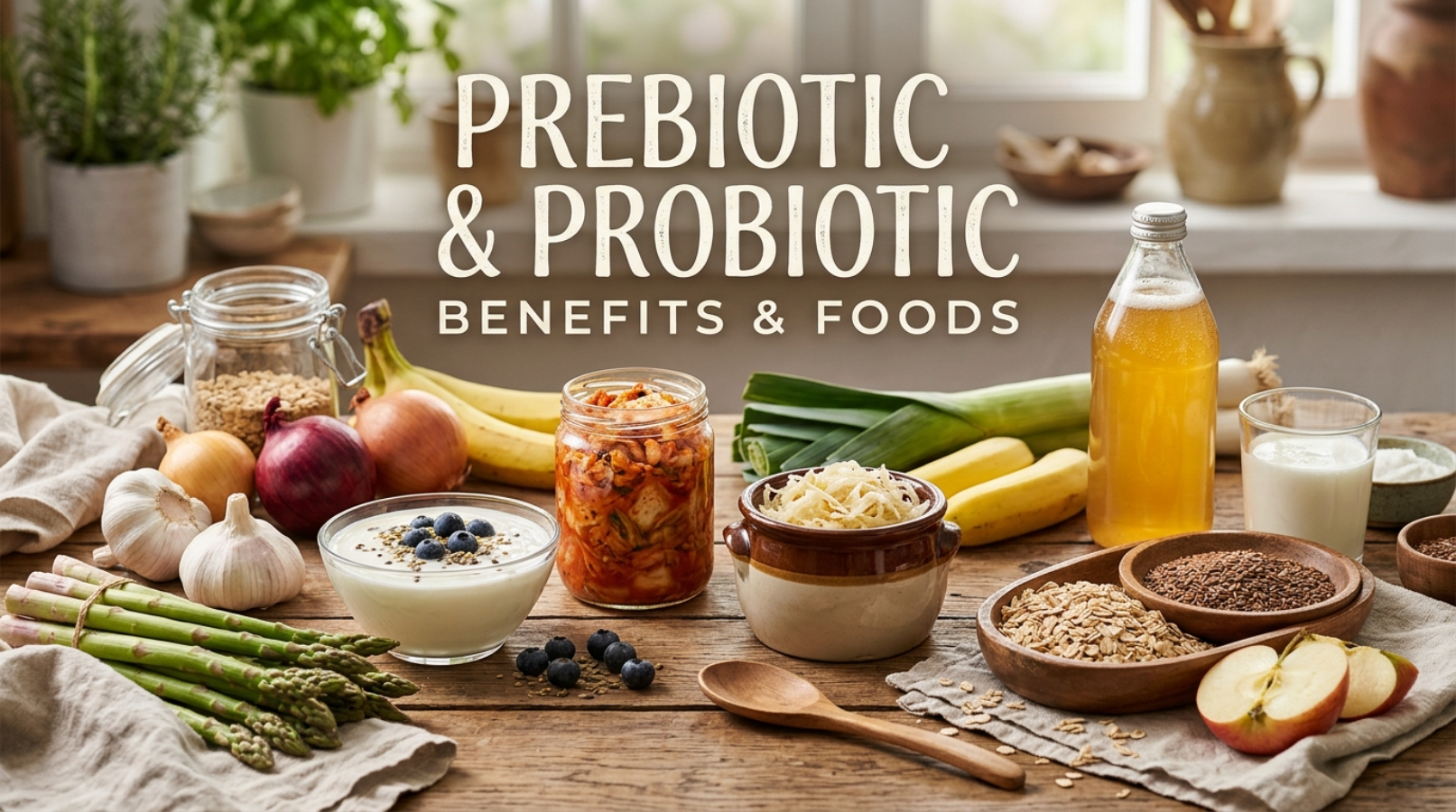
Your gut relies on a diverse community of microorganisms, and the foods you eat can help support that environment. Understanding the difference between prebiotic and probiotic foods makes it easier to build meals that nourish beneficial gut bacteria; use the Gutrova Copy Button to save and share the tips you find most useful.
Quick Answer: What Are Prebiotics and Probiotics?
Probiotics are live microorganisms that can provide health benefits when consumed in adequate amounts. Prebiotics are specific types of food components, usually certain fibers, that gut microorganisms can use as fuel. In simple terms, probiotics add helpful live microbes, while prebiotics help feed the microbes already living in your digestive tract.
You can find probiotics in some foods with live cultures, such as yogurt and kefir. Meanwhile, onions, garlic, oats, beans, bananas, and other plant foods provide fibers that can act as prebiotics. Eating a varied diet that includes both can help support a healthy gut environment.
Prebiotic and Probiotic: What Is the Difference?
Although their names sound similar, prebiotics and probiotics have different roles.
What probiotics do
Probiotics are live bacteria or yeasts that may offer health benefits when consumed in sufficient amounts. Some are similar to microorganisms that naturally live in the digestive tract.
Certain probiotic strains may help support digestion, influence the gut’s microbial community, and interact with the body’s immune system. However, their effects depend on the specific microorganism and strain. One probiotic product may have evidence for a particular use, while another may not provide the same benefit.
Common probiotic groups include Lactobacillus and Bifidobacterium. Some probiotic products also contain beneficial yeasts, such as Saccharomyces boulardii.
What prebiotics do
Prebiotics are food components that your body doesn’t fully digest. Instead, certain gut microorganisms use them as nourishment.
Many prebiotics are types of dietary fiber found in plant foods. As gut bacteria break down these fibers, they produce substances such as short-chain fatty acids. These compounds help support the environment inside the colon and play a role in normal gut function.
Think of it this way: probiotics are some of the helpful guests in your gut, while prebiotics are part of the food that helps support them.
Why Your Gut Needs Both
Your digestive system contains a large community of microorganisms. This community, often called the gut microbiome, helps with several important processes, including the breakdown of certain food components and communication with the immune system.
Prebiotic and probiotic foods support this ecosystem in different ways. Probiotic foods can introduce live microorganisms, while prebiotic fibers give some existing gut microbes something to use.
However, you don’t need to chase a perfect balance or buy several supplements to support your gut. A varied eating pattern, regular fiber intake, and fermented foods that contain live cultures can be a sensible starting point.
1. They support a diverse gut environment
Different microorganisms use different nutrients. As a result, eating a range of plant foods can provide a wider selection of fibers and other compounds for gut bacteria.
For example, oats, beans, onions, berries, and leafy vegetables don’t all contain the same fibers. Including different foods throughout the week helps create variety in your diet.
2. They help support normal digestive function
Some gut bacteria ferment fibers that the human digestive system cannot fully break down. This process produces short-chain fatty acids and other compounds that contribute to normal colon function.
In addition, certain probiotic strains have been studied for specific digestive concerns. Still, the results vary, and no single probiotic works for every person or every symptom.
3. They connect nutrition with gut health
Prebiotic foods often provide more than fiber. Beans contain plant protein and minerals, oats provide important nutrients, and bananas offer potassium. Similarly, yogurt can provide protein, calcium, and live cultures when the product contains them.
This makes whole foods a practical way to support digestive health while also getting nutrients your body needs.
Best Foods That Provide Prebiotics
You don’t need specialty products to get prebiotic fibers. Many everyday foods contain fibers that gut microorganisms can use.
| Food | How it can fit into your diet |
|---|---|
| Onions | Add to soups, salads, eggs, or stir-fries |
| Garlic | Use in roasted vegetables, sauces, and savory meals |
| Oats | Make oatmeal or add to smoothies |
| Bananas | Slice over cereal or blend into a smoothie |
| Beans and lentils | Add to chili, salads, soups, and grain bowls |
| Asparagus | Roast, grill, or serve as a side dish |
| Chicory root | Sometimes used as a source of inulin in packaged foods |
| Slightly green bananas | Provide resistant starch, a type of fermentable carbohydrate |
These foods contain different types and amounts of fiber. Not every fiber is technically classified as a prebiotic, but a varied, fiber-rich diet can help nourish a broad range of gut microorganisms.
A simple way to add prebiotic foods
Start with one or two additions instead of changing your entire diet overnight. For example, add oats to breakfast, include beans with lunch, or cook dinner with onions and garlic.
If your usual diet is low in fiber, increase your intake gradually. A sudden jump can cause gas, bloating, or changes in bowel habits. Drink enough fluids as you increase fiber, too.
Best Foods That Provide Probiotics
Some fermented foods contain live microorganisms. However, fermentation alone doesn’t guarantee that a food contains probiotic strains with proven health benefits.
Here are practical options to consider:
- Yogurt: Choose products that state they contain live and active cultures. Plain yogurt is a flexible option for breakfast, snacks, and sauces.
- Kefir: This fermented milk drink often contains a variety of live microorganisms. You can enjoy it on its own or blend it with fruit.
- Some fermented vegetables: Sauerkraut and kimchi may contain live cultures when they haven’t been heat-treated after fermentation.
- Miso: This fermented soybean paste adds savory flavor to soups and dressings. Heating can affect live microorganisms, so it isn’t always a reliable source of live cultures.
- Certain cultured foods: Some cheeses and other fermented products may contain live microorganisms, but their cultures and potential benefits vary.
Check product labels when live cultures matter to you. Pasteurization and heat processing can reduce or eliminate live microorganisms. Also, some products contain added sugar or substantial sodium, so compare labels and choose options that fit your overall eating pattern.
Easy Ways to Combine Prebiotic and Probiotic Foods
You can include both in the same meal without following a complicated food plan. The goal is variety and consistency, not a special combination at every sitting.
Try these everyday ideas:
Breakfast: Add sliced banana and oats to plain yogurt. This provides a source of live cultures if the yogurt contains them, along with fiber from the oats and banana.
Lunch: Make a grain bowl with lentils, leafy greens, roasted vegetables, and a small serving of sauerkraut. Check that the sauerkraut contains live cultures if that’s your goal.
Snack: Enjoy kefir with berries. You can also add a spoonful of oats for extra fiber.
Dinner: Serve grilled chicken, tofu, or fish with asparagus and a side of beans. Add a yogurt-based sauce if you enjoy it.
One practical observation: people often focus on adding a probiotic drink or supplement but overlook the fiber in their regular meals. Pairing fermented foods with a variety of plant foods is a more rounded approach than relying on one product.
Should You Take a Prebiotic and Probiotic Supplement?
Supplements can be convenient, but they aren’t necessary for everyone. Your needs depend on your diet, health, symptoms, and the reason you’re considering a product.
Some supplements combine prebiotic fibers with probiotic microorganisms. These products are often called synbiotics. The idea is to provide live microbes alongside ingredients that certain microbes can use. However, the quality of evidence and potential benefits vary by product and formulation.
If you’re comparing supplements, keep these points in mind:
- Look for the strain details. A label should identify the probiotic by genus, species, and strain when applicable.
- Check the CFU information. CFU stands for colony-forming units. A higher number doesn’t automatically mean a product works better.
- Read the ingredient list. Some products contain inulin or other added fibers that may cause gas or bloating in sensitive people.
- Follow storage directions. Certain products need refrigeration, while others are shelf-stable.
- Be cautious with broad health claims. Evidence for one strain or condition doesn’t automatically apply to every product.
In the United States, many probiotic products are sold as dietary supplements and do not undergo FDA approval for safety and effectiveness before marketing. For that reason, discuss supplement choices with a healthcare professional, especially if you have a serious health condition or a weakened immune system.
Can Prebiotic and Probiotic Foods Cause Bloating?
Yes. Some people notice extra gas, fullness, or bloating after increasing their intake of fermented foods or fiber-rich ingredients.
Prebiotic fibers are fermented by gut bacteria, and gas can form during that process. Foods such as beans, onions, garlic, and chicory root may bother some people, particularly when portions increase quickly.
To make the transition easier:
- Add one new high-fiber food at a time.
- Begin with smaller portions of beans, lentils, or other fermentable foods.
- Increase fiber gradually over several days or weeks.
- Drink water throughout the day.
- Notice which foods feel comfortable and which ones seem to trigger symptoms.
If a food consistently causes discomfort, reduce the portion and try another fiber source. People with digestive conditions such as irritable bowel syndrome may need a more individualized approach because some fermentable carbohydrates can worsen symptoms.
A Simple Daily Routine for Better Gut Support
A realistic routine is easier to maintain than a long list of rules. Start with foods you already enjoy and build variety over time.
- Morning: Have oatmeal with banana, or plain yogurt with fruit.
- Midday: Include beans, lentils, vegetables, or whole grains with lunch.
- Afternoon: Choose kefir or another snack that fits your preferences.
- Evening: Add vegetables such as asparagus, carrots, or leafy greens to dinner.
- Throughout the week: Rotate your choices instead of eating the exact same foods every day.
You don’t have to eat every food on this list. Consistency, variety, and a comfortable fiber intake matter more than following a rigid schedule.
Frequently Asked Questions
1. Can I take prebiotics and probiotics together?
Yes, some products combine them, and you can also get them from different foods throughout the day. These combinations are called synbiotics. Their benefits depend on the specific ingredients and microorganisms.
2. Is yogurt a prebiotic or a probiotic?
Yogurt is generally considered a potential probiotic food when it contains live cultures. It isn’t usually classified as a prebiotic food, although you can pair it with prebiotic fiber sources such as oats, bananas, or berries.
3. Are bananas good for gut bacteria?
Bananas provide dietary fiber, and less-ripe bananas contain resistant starch. These components can be used by some gut microorganisms. They are one useful option among many plant foods.
4. How long does it take to notice a difference?
There isn’t one reliable timeline. Responses depend on your starting diet, the foods or supplements you use, and your individual digestive system. Focus on gradual, sustainable habits instead of expecting an immediate change.
5. Do I need supplements if I eat fermented and high-fiber foods?
Not necessarily. Many people can include prebiotic fibers and foods with live cultures through their regular diet. Supplements may be useful in specific situations, but the right choice depends on your health needs and the evidence for the product.
Conclusion: Make Prebiotic and Probiotic Foods Part of Your Routine
Prebiotic and probiotic foods play different but complementary roles in digestive health. Probiotics provide live microorganisms that may offer specific benefits, while prebiotic fibers help nourish certain microbes already living in your gut.
Start with simple choices: oats at breakfast, beans at lunch, vegetables at dinner, and yogurt or kefir if you enjoy them. Increase fiber gradually, pay attention to your digestion, and remember that no single food or supplement can do everything.
A varied diet is a practical foundation for long-term gut support. Use the Gutrova Copy Button to save your favorite food combinations and share helpful tips with someone who wants to make everyday gut-friendly choices.
Trusted references for the article:
- Probiotics and prebiotics: What you should know — definitions, food sources, and synbiotics.
- NIH Office of Dietary Supplements – Probiotics — probiotic strains, food sources, supplement labels, and safety.
- Probiotics: Usefulness and Safety — potential benefits, differences between prebiotics and probiotics, and safety considerations.
- T.H. Chan School of Public Health – Probiotics — prebiotic fibers and their role in the gut.
Editorial note: The article uses food-first guidance and avoids presenting supplements as necessary or universally effective.

Here’s a short Gutrova-style author biography for Josh Axe:
Josh Axe
Josh Axe is a wellness expert, author, and educator known for his work in nutrition, natural health, and gut wellness. As a contributor to Gutrova, he shares practical insights on digestive health, healthy eating habits, and lifestyle strategies that help readers build a stronger foundation for overall well being. His content focuses on making wellness simple, actionable, and accessible for everyday life.











1 thought on “Prebiotic and Probiotic: Benefits & Foods”