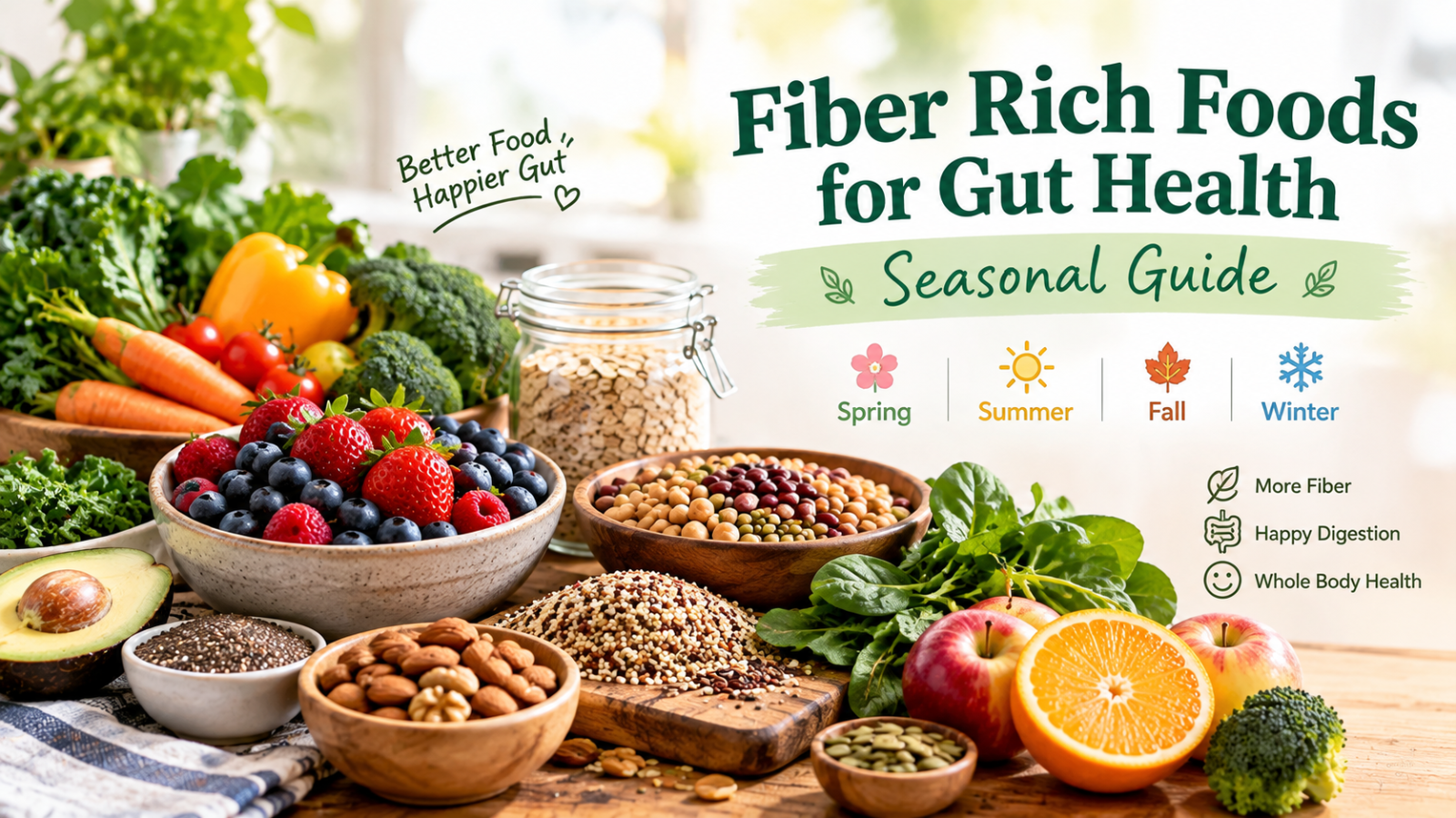
Fiber rich foods for gut health can make everyday meals more satisfying while supporting regular digestion and the trillions of microbes living in your digestive tract. From berries and oats in spring to beans, squash, apples, and winter greens, seasonal foods make it easier to build variety without relying on the same few ingredients.
If you find a tip worth keeping, Gutrova’s Copy Button makes it easy to copy and save your favorite gut-health ideas for later.
Quick Answer: Why Fiber Matters for Your Gut
Fiber is a type of carbohydrate that your body doesn’t fully digest. Some types help add bulk to stool, while other fibers are fermented by gut microbes and can produce compounds such as short-chain fatty acids.
The easiest approach is to get fiber from a variety of whole foods, including fruits, vegetables, beans, lentils, nuts, seeds, and whole grains. Adults generally need around 22 to 34 grams of fiber per day, depending on age and sex, although individual needs can vary.
Instead of trying to hit a perfect number overnight, build your intake gradually. Your gut may need time to adjust, especially if your current diet is relatively low in fiber.
Why Fiber Rich Foods for Gut Health Matter
Your digestive system doesn’t just move food from point A to point B. Your colon is also home to a large community of microorganisms that interact with components of your diet.
Certain fibers reach the colon largely undigested, where gut microbes can ferment them. This process can produce short-chain fatty acids, including butyrate, acetate, and propionate. Research suggests that different types of dietary fiber can influence the composition and activity of the gut microbiome, although individual responses vary.
Fiber also plays a practical role in bowel regularity. Some fibers absorb water and add bulk to stool, which can make bowel movements easier to pass. That’s one reason fiber-rich foods are commonly recommended as part of constipation management.
There’s another benefit that’s easy to overlook: variety.
Eating oatmeal every morning is useful, but rotating oats with barley, lentils, berries, apples, sweet potatoes, peas, nuts, and seeds gives your diet a broader mix of plant compounds and fiber types.
Best Fiber Rich Foods for Gut Health
You don’t need unusual ingredients or expensive powders to eat more fiber. Many of the best options are already sitting in a typical grocery store.
1. Beans, Lentils, and Chickpeas
Legumes are some of the most practical fiber-rich foods available.
Try:
- Lentils in soups or grain bowls
- Black beans in tacos or salads
- Chickpeas in hummus or roasted snacks
- Kidney beans in chili
- White beans in vegetable soups
- Edamame as a snack or side dish
If beans tend to make you gassy, start with a smaller serving and increase slowly. Rinsing canned beans can also make them easier to incorporate into everyday meals.
2. Berries and Whole Fruits
Berries are an easy way to add fiber to breakfast or snacks. Raspberries, in particular, provide a substantial amount of fiber per serving, while apples, pears, oranges, strawberries, and bananas can contribute as part of a varied diet.
Keep the whole fruit rather than automatically reaching for juice. The intact fruit provides fiber that juice generally doesn’t provide in the same way.
A simple combination I like is plain yogurt topped with berries, chia seeds, and a small handful of walnuts. It takes minutes to assemble and works for breakfast or an afternoon snack.
3. Oats and Other Whole Grains
Oatmeal isn’t the only option.
Rotate among:
- Oats
- Barley
- Brown rice
- Bulgur
- Quinoa
- Whole-wheat pasta
- Whole-grain bread
- Popcorn without excessive butter or salt
Whole grains can make an easy foundation for meals, particularly when paired with vegetables and a protein source. The Dietary Guidelines also recognize oats, barley, brown rice, quinoa, whole-wheat products, and other whole grains as nutrient-dense grain choices. (Dietary Guidelines)
4. Vegetables
Vegetables bring more than fiber to the plate. They also provide vitamins, minerals, and a wide range of plant compounds.
Good choices include broccoli, green peas, Brussels sprouts, carrots, sweet potatoes, leafy greens, squash, and cabbage.
For a simple dinner, roast several vegetables together and serve them with lentils, chicken, fish, tofu, or another protein you enjoy.
5. Nuts and Seeds
Chia seeds, flaxseeds, almonds, peanuts, walnuts, pumpkin seeds, and other nuts and seeds can add fiber without requiring a large portion.
Sprinkle chia or ground flax over oatmeal. Add pumpkin seeds to a salad. Keep a small serving of nuts nearby for a convenient snack.
The goal isn’t to eat every option in one day. A little variety across the week is much easier to maintain.
Seasonal Fiber Rich Foods for Gut Health
Seasonal eating gives you a natural way to rotate plant foods throughout the year.
Spring
Spring is a great time to bring lighter produce back into your meals.
Try:
- Strawberries
- Peas
- Asparagus
- Spinach
- Artichokes
- Radishes
- Fresh herbs
A simple spring bowl could combine quinoa, peas, asparagus, spinach, chickpeas, and a lemon-based dressing.
Summer
Summer offers plenty of fresh fruits and vegetables that work well in simple meals.
Focus on:
- Raspberries and strawberries
- Blackberries
- Peaches
- Pears
- Corn
- Tomatoes
- Green beans
- Zucchini
- Avocado
Cold grain salads are especially useful during hot weather. Combine cooked quinoa or barley with vegetables, chickpeas, herbs, and a light dressing.
Fall
Fall brings some of the most satisfying high-fiber ingredients.
Reach for:
- Apples
- Pears
- Pumpkin
- Sweet potatoes
- Winter squash
- Brussels sprouts
- Cauliflower
- Lentils
A warm lentil and roasted squash bowl can be an easy weeknight meal. Add greens and pumpkin seeds for more variety.
Winter
Winter doesn’t have to mean a fiber-free menu.
Keep foods such as these in rotation:
- Oats
- Barley
- Beans
- Lentils
- Cabbage
- Carrots
- Sweet potatoes
- Citrus fruits
- Frozen berries
Frozen produce can be a practical choice when fresh options are limited. Frozen fruits and vegetables can still fit into a nutritious eating pattern.
How to Add Fiber Without Making Your Gut Miserable
This is where many people go wrong.
They hear that fiber is good for digestion, then suddenly add a huge bowl of beans, several tablespoons of seeds, bran cereal, and a giant salad to the same day.
The result? Gas, bloating, cramping, or a very unhappy stomach.
Mayo Clinic and NIDDK both recommend increasing fiber gradually rather than making a dramatic overnight change. Drinking enough fluid is also important as fiber intake increases.
Try this instead:
Week 1: Add fruit to breakfast and one extra vegetable at dinner.
Week 2: Replace one refined grain with a whole-grain option.
Week 3: Add beans or lentils to one meal several times during the week.
Week 4: Add nuts, seeds, or another plant food you enjoy.
This approach gives your digestive system and gut microbes time to adapt.
A Simple Day Built Around Fiber Rich Foods for Gut Health
You don’t need complicated recipes to put these foods together.
Breakfast: Oatmeal with blueberries, chia seeds, and walnuts.
Lunch: Whole-grain wrap with hummus, spinach, carrots, cucumber, and grilled chicken or tofu.
Snack: An apple with peanut butter.
Dinner: Lentils or black beans with brown rice, roasted broccoli, avocado, and a simple salsa.
Evening option: Fresh berries with plain yogurt if you’re still hungry.
The exact foods can change with the season. In summer, swap oatmeal berries for peaches or fresh strawberries. In fall, add roasted squash. During winter, use frozen berries and hearty vegetable soups.
The bigger idea is consistency, not perfection.
What If Fiber Makes You Bloated?
More fiber isn’t automatically better for everyone at every moment.
If you suddenly increase fiber and notice extra gas or bloating, step back and increase it more gradually. You may also want to look at portion sizes and the specific foods you’re eating.
For example, someone might tolerate oatmeal and berries comfortably but feel very bloated after a large serving of beans. Another person may have the opposite experience.
Food tolerance is personal. Keeping a simple food-and-symptom journal for a couple of weeks can help you spot patterns without eliminating large groups of foods unnecessarily.
If digestive symptoms are persistent, severe, or changing significantly, it’s worth discussing them with a healthcare professional rather than assuming fiber is the cause.
Easy Grocery List for More Fiber
Want to make this practical?
Start with a short shopping list:
Fruits
- Apples
- Pears
- Raspberries
- Strawberries
- Oranges
- Bananas
Vegetables
- Broccoli
- Carrots
- Sweet potatoes
- Brussels sprouts
- Spinach
- Squash
Legumes
- Lentils
- Chickpeas
- Black beans
- Kidney beans
Whole grains
- Oats
- Barley
- Brown rice
- Quinoa
- Whole-wheat bread or pasta
Nuts and seeds
- Chia seeds
- Ground flaxseed
- Almonds
- Walnuts
- Pumpkin seeds
You don’t need the entire list. Pick two or three foods from each category and build from there.
Common Mistakes to Avoid
Going from low fiber to very high fiber overnight: Your digestive system may not appreciate the sudden change.
Forgetting fluids: Fiber and adequate fluid intake work together, particularly when you’re trying to improve stool consistency.
Relying on one food: No single fruit, vegetable, grain, or seed has to carry your entire gut-health routine.
Ignoring your tolerance: A food can be nutritious and still cause symptoms for you in a particular portion.
Chasing fiber numbers instead of food quality: A varied diet built around minimally processed plant foods is more useful than obsessing over a single daily target.
FAQ About Fiber Rich Foods for Gut Health
What are the best fiber rich foods for gut health?
Beans, lentils, chickpeas, oats, whole grains, berries, apples, pears, vegetables, nuts, and seeds are all useful choices. Aim for variety rather than relying on one food.
How much fiber should I eat each day?
NIDDK notes that adults generally need about 22 to 34 grams of fiber per day, depending on age and sex. Your individual needs may differ.
Can fiber cause bloating?
Yes. Increasing fiber too quickly can cause gas, bloating, or cramping. Gradually increasing your intake and drinking enough fluids can make the transition easier.
Are fruits good sources of fiber?
Yes. Whole fruits such as raspberries, apples, pears, oranges, and strawberries can contribute meaningful amounts of dietary fiber. Keeping the whole fruit instead of choosing juice also preserves its fiber. (Mayo Clinic)
Is seasonal eating necessary for gut health?
No. You don’t need to eat only seasonal produce. However, rotating fruits, vegetables, legumes, grains, nuts, and seeds throughout the year is an easy way to increase dietary variety.
The Bottom Line
Fiber rich foods for gut health don’t have to mean complicated recipes, huge salads, or restrictive eating rules. Start with familiar foods such as oats, berries, beans, lentils, vegetables, whole grains, nuts, and seeds, then rotate your choices as the seasons change.
Most of all, increase fiber gradually and give your digestion time to adjust. A varied plate repeated consistently will usually be far more practical than chasing the latest gut-health trend.
And if you find a seasonal food combination or fiber tip you want to keep handy, use Gutrova’s Copy Button to copy and save it for your next grocery trip or meal plan.

Elizabeth Boham is a respected functional medicine physician and wellness educator with a passion for helping people improve their health through nutrition and lifestyle changes. As a contributor to Gutrova, she shares practical insights on gut health, digestive wellness, and healthy living, making complex health topics easy to understand and apply in everyday life.










1 thought on “Fiber Rich Foods for Gut Health: Seasonal Guide”