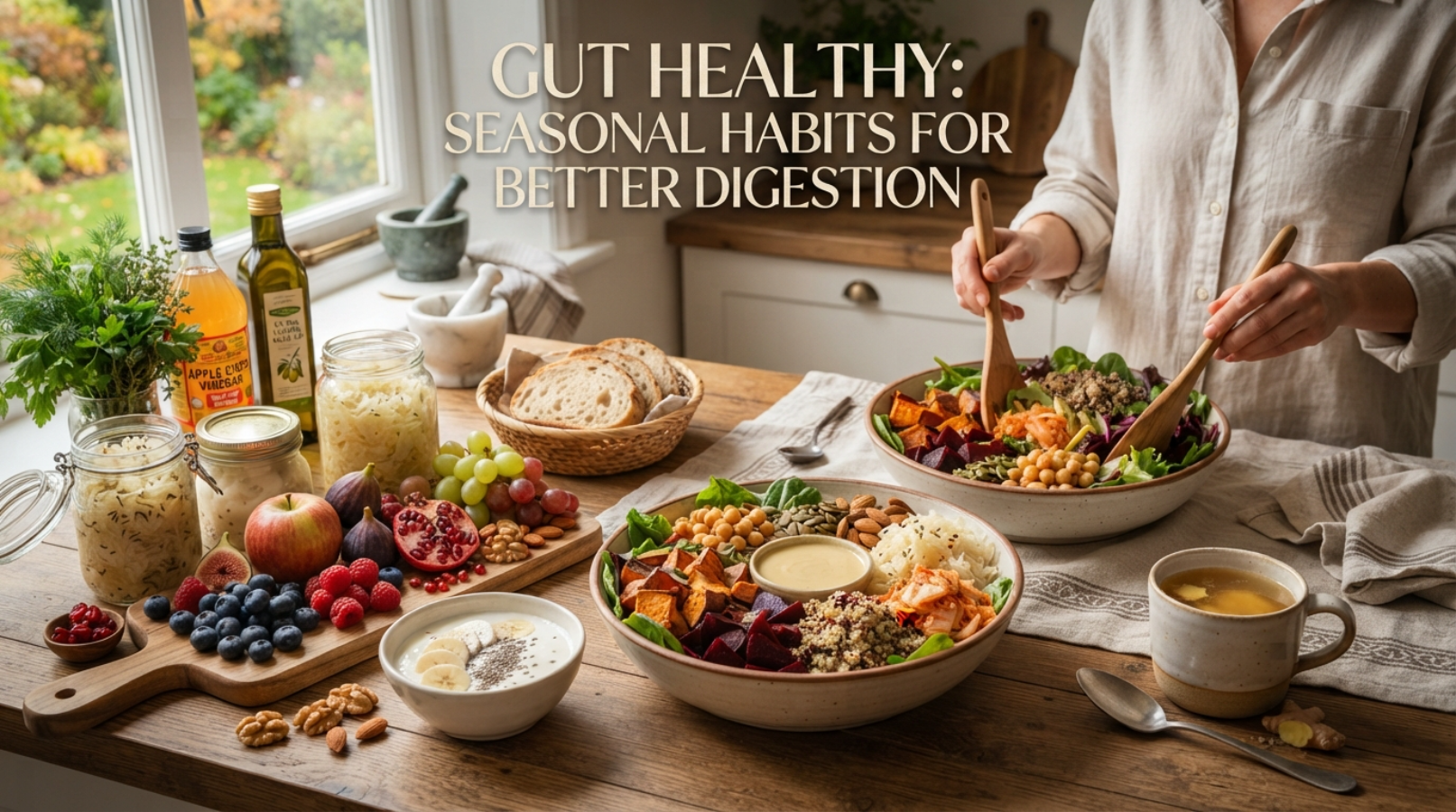
Staying gut healthy doesn’t require a perfect diet or a cabinet full of supplements. Your digestive system responds to everyday habits, so simple choices around fiber, fluids, movement, meal patterns, sleep, and seasonal foods can make a practical difference. Gutrova’s Copy Button lets you save useful tips from this guide and keep them handy when you’re planning meals or groceries.
Quick Answer: What Does Gut Healthy Really Mean?
Being gut healthy means supporting your digestive system with consistent habits that help normal digestion and bowel function. That includes eating a varied diet with fiber-rich plant foods, drinking enough fluids, staying active, eating at a comfortable pace, and paying attention to foods that don’t agree with you.
It doesn’t mean eliminating every processed food or eating fermented foods at every meal. Instead, think about the pattern across your week.
The digestive system is a coordinated network involving the mouth, stomach, small intestine, large intestine, liver, gallbladder, pancreas, nerves, hormones, and gut microorganisms. Digestion breaks food into smaller components so your body can absorb and use nutrients.
Gut Healthy Starts With What Lands on Your Plate
A gut-friendly meal doesn’t have to look like a wellness magazine spread.
Start with foods you already recognize. Oats, beans, lentils, vegetables, fruits, nuts, seeds, whole grains, yogurt, and other minimally processed foods can all fit into a varied eating pattern.
Fiber deserves special attention because it supports normal bowel function and also provides food for certain gut microorganisms. However, adding a huge amount of fiber overnight can backfire with gas or bloating.
Instead, increase fiber gradually and give your digestive system time to adjust.
For example, if breakfast is usually eggs and toast, you don’t need to replace it completely. Add berries, an apple, or a small serving of oats. At lunch, add beans to a salad or choose whole-grain bread.
Small changes are easier to repeat.
A Gut Healthy Breakfast Sets the Tone
Breakfast doesn’t have to be large. It simply needs to give you a useful starting point.
Try:
- Oatmeal with berries and walnuts
- Plain yogurt with fruit and oats
- Whole-grain toast with avocado and an egg
- A smoothie with fruit, oats, yogurt, and nut butter
- Overnight oats with banana and chia seeds
These combinations bring different nutrients and textures to the meal.
I particularly like the “add rather than replace” approach. If your normal breakfast works for you, keep its basic structure and add one fiber-rich food instead of starting over.
That feels much more realistic on a busy morning.
Mayo Clinic also recommends eating slowly, getting enough fiber, staying hydrated when increasing fiber, staying active, and paying attention to portion sizes as practical ways to support digestion.
Gut Healthy Eating Changes With the Seasons
Seasonal eating can make variety easier because different foods naturally become more appealing throughout the year.
You don’t need to follow a strict seasonal menu. Instead, use the calendar as a reminder to rotate your choices.
Spring
Spring is a good time for lighter meals with asparagus, peas, leafy greens, berries, radishes, and fresh herbs.
Try a grain bowl with greens, chickpeas, roasted asparagus, and a simple dressing. Add fruit on the side.
Summer
Summer meals can lean toward fresh produce, yogurt, chilled grains, beans, tomatoes, cucumbers, berries, and melons.
A simple lunch might be a chickpea salad with cucumber, tomato, greens, whole grains, and a protein source.
Because hot weather can change your appetite, easy meals can be especially useful.
Fall
Fall brings foods such as apples, pears, squash, sweet potatoes, oats, Brussels sprouts, and beans.
A warm bowl of oats with apple and walnuts makes an easy breakfast. At dinner, roasted vegetables and lentils can turn into a filling meal without much effort.
Winter
Winter often calls for warm, comforting foods.
Soups, stews, oatmeal, beans, lentils, cooked vegetables, whole grains, and yogurt can keep meals varied. Meanwhile, frozen fruits and vegetables are useful when fresh produce isn’t convenient.
The goal isn’t to prove that seasonal foods are automatically healthier. Rather, rotating foods helps keep your diet interesting and gives you more opportunities to eat different plant foods.
Gut Healthy Habits Include Enough Fiber
Fiber is one of the simplest places to focus if your current diet is low in plant foods.
Adults generally need different amounts depending on age and sex, and NIDDK notes that many adults need roughly 22 to 34 grams per day. However, the right amount varies from person to person.
Good sources include:
- Beans and lentils
- Oats
- Whole grains
- Berries
- Apples and pears
- Vegetables
- Nuts and seeds
- Chia and flax
- Potatoes and sweet potatoes
Don’t try to reach a high fiber intake in one weekend.
Instead, add one serving at a time. If you’re increasing fiber, fluids matter too. NIDDK recommends drinking plenty of liquids so fiber can work properly and notes that increasing fiber gradually can help reduce unwanted symptoms.
That simple combination is much more useful than treating fiber as a number to chase.
Gut Healthy Hydration Isn’t Just About Water Bottles
Hydration gets plenty of attention, but the practical part is often overlooked.
Water is the obvious choice, yet fluids also come from foods and other beverages. Soups, fruits, vegetables, milk, and unsweetened drinks can contribute to your daily fluid intake.
Your needs can also change with weather, activity, and individual circumstances.
During summer, you may need to pay more attention to fluids after sweating. In winter, thirst may feel less noticeable, even though you still need regular hydration.
If you increase fiber but don’t drink enough, your digestive routine may become uncomfortable. Therefore, think about fiber and fluids together rather than treating them as separate habits.
Gut Healthy Digestion Needs Movement, Too
Your gut isn’t separate from the rest of your body.
Regular physical activity supports normal movement throughout the digestive tract. You don’t need an intense workout after every meal, either.
A walk after dinner can be a simple starting point. On another day, you might cycle, swim, garden, stretch, or follow a workout you actually enjoy.
The best activity is often the one you’ll keep doing.
Mayo Clinic specifically lists staying active among habits that can support digestion.
If you’ve been sitting for hours, a short walk can also be a welcome break from your desk. That’s a useful habit for reasons beyond digestion.
Slow Down When You Eat
Food doesn’t just disappear into your stomach.
Digestion begins in your mouth. Chewing breaks food into smaller pieces, while saliva starts the digestion of starches. Later, the stomach, pancreas, liver, gallbladder, and small intestine contribute acid, enzymes, bile, and other digestive juices.
That’s why eating slowly can be a worthwhile habit.
Try putting your fork down between bites. Take a moment to chew. Give yourself enough time to notice when you’re comfortably full.
It sounds almost too simple, but rushed meals are easy to fall into, especially during workdays.
Gut Healthy Meals Don’t Need to Be Perfect
One of the biggest mistakes is turning gut health into an all-or-nothing project.
You might eat a fiber-rich breakfast, grab a sandwich for lunch, and have pizza with your family that evening. That single meal doesn’t erase everything else you ate.
Instead, look at the larger pattern.
A practical plate might include:
Half: vegetables or fruit, depending on the meal
Quarter: protein such as beans, fish, eggs, poultry, tofu, or another option you enjoy
Quarter: whole grains or another carbohydrate source
Then add a little healthy fat, such as nuts, seeds, avocado, or olive oil.
The exact portions don’t need to be rigid. Your appetite, activity, culture, preferences, and health needs all matter.
Gut Healthy Choices Include Foods You Tolerate Well
Healthy foods aren’t automatically comfortable for everyone.
Beans, onions, garlic, certain dairy products, large amounts of fiber, and some fermentable carbohydrates can cause gas or bloating in some people. That doesn’t make those foods universally bad.
Instead, look for patterns.
If a particular food repeatedly causes discomfort, try a smaller serving or a different preparation. Keep the rest of your diet varied so you’re not unnecessarily eliminating entire food groups based on one experience.
This is also why copying someone else’s “perfect gut diet” rarely makes sense.
Your digestive system has its own preferences.
What About Digestive Enzymes?
Digestive enzymes are essential because they help break food into smaller components your body can absorb.
For example, enzymes help break down carbohydrates, proteins, and fats. The mouth, stomach, pancreas, and small intestine all contribute to this process.
The pancreas is particularly important. It produces digestive juices containing enzymes that help digest carbohydrates, fats, and proteins in the small intestine.
That doesn’t mean everyone needs an over-the-counter digestive enzyme supplement.
People with certain medical conditions may have problems producing or delivering enough digestive enzymes. For example, exocrine pancreatic insufficiency can interfere with digestion and nutrient absorption, and doctors may prescribe pancreatic enzyme replacement therapy for it.
For everyday gut health, it’s better to focus first on balanced meals, adequate fiber, fluids, movement, and eating habits rather than assuming you need an enzyme product.
A Simple Seasonal Gut Healthy Routine
If you want something practical, try this basic framework:
Morning: Start with a breakfast containing protein and a fiber-rich plant food.
Midday: Include vegetables, fruit, beans, or whole grains.
Afternoon: Choose a snack that combines foods you enjoy, such as fruit and nuts.
Evening: Build dinner around a protein, vegetables, and a satisfying carbohydrate.
After dinner: Take a comfortable walk if you have time.
Throughout the day: Drink fluids regularly and notice how different foods affect your digestion.
Then adjust the foods with the seasons.
In summer, that may mean more fresh fruit and chilled meals. In winter, it could mean more soups, oats, beans, and roasted vegetables.
Gut Healthy Mistakes That Can Make Digestion Harder
Changing everything at once
A complete diet overhaul can make it difficult to figure out what actually works for you.
Adding fiber too quickly
More isn’t always better right away. Gradual increases are easier for many people to tolerate.
Ignoring portion size
Even nutritious foods can feel uncomfortable in very large portions.
Eating too quickly
Rushed meals can make it harder to notice fullness and can encourage you to eat more than you intended.
Forgetting movement
Long periods of sitting don’t give you much opportunity to move. Short activity breaks are easier to fit into a normal day.
Chasing supplements before habits
Supplements can have specific uses, but they shouldn’t automatically replace the basics of a varied diet and healthy routine.
FAQ About Gut Healthy Habits
What is the best food for a gut healthy diet?
There isn’t one best food. A varied pattern that includes vegetables, fruits, whole grains, beans, nuts, seeds, and other nutritious foods gives you a broader mix of nutrients and fiber.
Can changing seasons affect digestion?
Your routine often changes with the seasons. Travel, activity levels, hydration, food choices, meal timing, and daily schedules can all shift. Keeping basic habits consistent can help you maintain a steadier routine.
How can I make my meals more gut healthy?
Start small. Add a fruit or vegetable to one meal, choose a whole grain, include beans a few times, drink fluids regularly, and increase fiber gradually.
Do I need digestive enzyme supplements?
Not automatically. Your body naturally produces digestive enzymes. Certain medical conditions can cause enzyme deficiencies and may require treatment, but that is different from needing a supplement simply to maintain everyday digestion.
Is a gut healthy diet expensive?
It doesn’t have to be. Beans, oats, potatoes, lentils, bananas, apples, frozen vegetables, whole grains, and canned foods with simple ingredients can all be budget-friendly choices.
Keep Your Gut Healthy Without Making Life Complicated
A gut healthy routine is less about finding a perfect food and more about building habits you can repeat. Eat a variety of plant foods, increase fiber gradually, drink enough fluids, move regularly, slow down during meals, and pay attention to the foods that make you feel comfortable.
Seasonal changes can actually make this easier. Rotate produce, switch up your recipes, and use familiar foods in new combinations instead of following a rigid plan.
Your digestive system already has a sophisticated process for breaking down and absorbing food. Give it a supportive routine rather than chasing perfection. And when you find a tip worth keeping, use Gutrova’s Copy Button to save it for your next grocery trip, meal plan, or seasonal routine.

Elizabeth Boham is a respected functional medicine physician and wellness educator with a passion for helping people improve their health through nutrition and lifestyle changes. As a contributor to Gutrova, she shares practical insights on gut health, digestive wellness, and healthy living, making complex health topics easy to understand and apply in everyday life.











1 thought on “Gut Healthy: Seasonal Habits for Better Digestion”