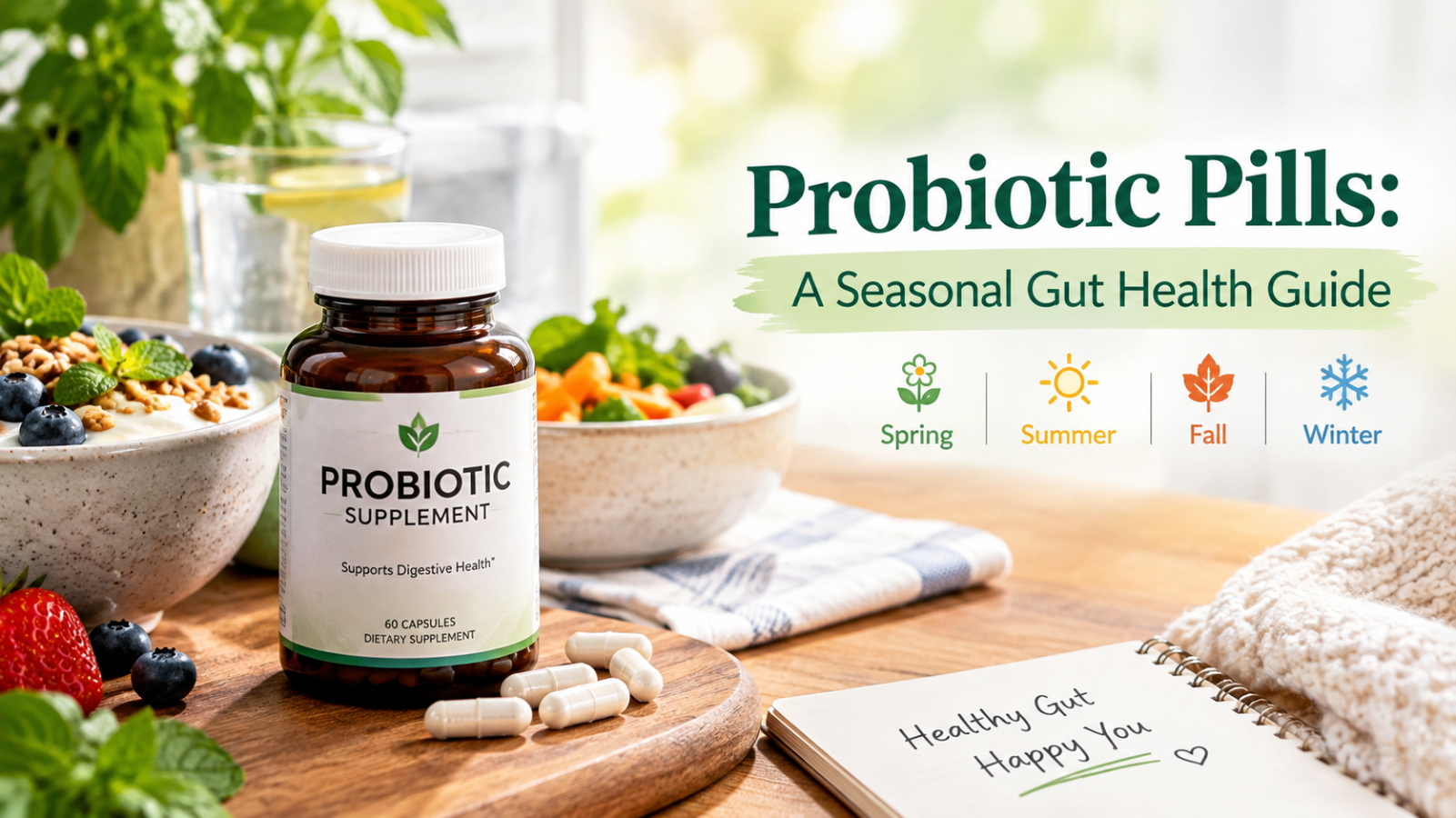
Probiotic pills can look like an easy answer when your digestion feels off, especially during travel, holiday meals, or a change in your normal routine. But not every product works the same way, and a higher number on the label doesn’t automatically mean better results. This guide explains how to choose probiotic pills thoughtfully and fit them into a broader seasonal gut health routine.
If you find a tip worth saving, Gutrova’s Copy Button makes it easy to copy and share your favorite wellness ideas for later.
Quick Answer: Are Probiotic Pills Worth Considering?
Probiotic pills contain live microorganisms intended to provide a health benefit when taken in adequate amounts. Different products contain different microorganisms, species, and strains, so their effects can vary considerably. Research suggests that some probiotics may help with specific digestive concerns, but evidence isn’t strong enough to assume that every probiotic product will work for everyone.
For general gut health, probiotic pills are best viewed as one possible tool rather than a replacement for fiber-rich foods, balanced meals, movement, hydration, sleep, and other healthy habits.
What Are Probiotic Pills?
Probiotic pills are dietary supplements that contain live microorganisms, usually bacteria and sometimes yeast. Common probiotic groups include Lactobacillus and Bifidobacterium, although many other organisms and specific strains are used.
Here’s an important detail that often gets lost on supplement labels: strain matters. A probiotic isn’t simply “a Lactobacillus” or “a Bifidobacterium.” Microorganisms are identified by genus, species, and strain, and different strains can behave differently in the body.
That means two probiotic pills with similar-looking labels may not have the same evidence behind them.
Probiotics also aren’t the same as prebiotics. Probiotics are live microorganisms, while prebiotics are substances, often certain types of dietary fiber, that can be used by microorganisms in the gut.
How Probiotic Pills May Support Gut Health
Your digestive tract contains a large community of microorganisms that interact with food, the intestinal environment, and the body’s immune system. Probiotic microorganisms may influence this environment in several ways.
For example, certain probiotics can produce substances that affect other microorganisms or interact with the body’s immune response. Some specific products have also been studied for digestive issues such as antibiotic-associated diarrhea and IBS symptoms.
However, the evidence isn’t universal. Research on probiotics is highly dependent on the particular strain, dose, condition being studied, and person taking it. A product that has been studied for one purpose shouldn’t automatically be assumed to provide the same benefit for another.
That’s one reason I wouldn’t choose a probiotic simply because the bottle promises “maximum gut support.” The details on the label matter much more than the marketing language.
Probiotic Pills and Seasonal Gut Health
Your gut routine can change with the seasons.
In summer, travel, restaurant meals, heat, and changes in hydration can affect your normal eating and bathroom routine. Fall and winter may bring more indoor meals, holiday gatherings, heavier foods, and less daily movement. Spring can also be a useful time to reset simple habits after a less active winter.
None of these seasonal changes means you automatically need probiotic pills. Instead, think about the bigger picture.
A useful seasonal routine might include:
- Eating a variety of plant foods
- Drinking enough fluids
- Getting regular physical activity
- Including fermented foods that you tolerate
- Maintaining a consistent sleep schedule
- Limiting highly processed foods
- Paying attention to changes in digestion
- Using supplements only when they make sense for your individual situation
This approach keeps probiotic pills in perspective rather than making them the center of your gut health plan.
How to Choose Probiotic Pills
Shopping for probiotics can get confusing quickly. Bottles often feature large CFU numbers, long lists of strains, and phrases such as “advanced formula” or “maximum potency.”
Instead, look for useful information.
1. Check the Strain
A quality label should identify the microorganisms clearly by genus, species, and, when applicable, strain.
Why does that matter? Research findings apply to the specific microorganisms studied. You can’t assume that every strain within the same species produces identical effects.
2. Look at the CFU Information
CFU stands for colony-forming units. It gives you an estimate of the number of viable microorganisms in a product.
A bigger CFU number isn’t automatically better. The appropriate amount depends on the particular probiotic and the reason it’s being used.
Also check when the stated CFU count applies. A label that provides information through the expiration or use-by date can give you a clearer idea of what you’re getting than a number listed only at the time of manufacture.
3. Read the Storage Instructions
Some probiotic products need refrigeration, while others are designed to remain stable at room temperature.
Follow the manufacturer’s storage instructions carefully. This becomes especially important during summer travel or when a bottle sits in a hot car or delivery box.
4. Check the Expiration Date
Live microorganisms can lose viability over time. Therefore, don’t ignore the expiration or use-by date simply because the bottle looks fine.
A fresh product stored correctly gives you a better starting point than an old bottle that has spent months outside its recommended conditions.
5. Don’t Let Marketing Do the Thinking
Words such as “strongest,” “complete,” or “professional strength” don’t tell you how well a product has been studied.
Instead, ask a more useful question: Does this particular product contain a strain that has been studied for the goal I’m interested in?
That shift can make supplement shopping much less overwhelming.
Probiotic Pills vs. Probiotic Foods
You don’t have to choose between supplements and food.
Yogurt with live cultures, kefir, kimchi, sauerkraut, miso, tempeh, and some other fermented foods can contain beneficial microorganisms. However, fermentation doesn’t guarantee that a food contains live microorganisms when you eat it, so labels and preparation methods matter.
For example, some fermented foods are heated or processed after fermentation, which can reduce or eliminate live microorganisms.
Food also brings other nutrients to the table. Yogurt can provide protein and calcium, while fermented vegetables may contribute fiber and other plant compounds.
For many people, a varied diet can be a practical foundation. Probiotic pills may make more sense in specific situations where a particular product has evidence for a particular goal.
Probiotic Pills for Different Seasons
Spring: Build Variety
Spring is a good time to add more variety to your meals. Rotate fruits, vegetables, whole grains, beans, nuts, and seeds based on your tolerance.
If you already eat fermented foods comfortably, include them as part of meals rather than suddenly adding several new products at once.
Summer: Think About Storage
Summer heat creates a practical challenge for live microorganisms. Keep probiotic pills according to their label instructions, especially when traveling.
Also keep hydration in mind. Water, fruits, vegetables, soups, and other fluid-rich foods can help support your normal digestive routine during hotter months.
Fall: Prepare for Routine Changes
Fall often brings schedule changes, more restaurant meals, and a return to busier routines.
Rather than relying on probiotic pills to compensate for an inconsistent diet, keep a few dependable meals available. Oatmeal with fruit, yogurt with berries, rice bowls with vegetables and lean protein, and simple soups can make healthy eating easier.
Winter: Don’t Forget Movement
Cold weather can make it tempting to spend more time sitting indoors. Yet regular physical activity is part of a healthy digestive routine.
A short walk after a meal can be an easy habit to maintain when outdoor conditions allow. Indoor movement counts, too.
When Probiotic Pills May Not Be the Right First Step
Sometimes the most useful step isn’t buying another supplement.
If you’re dealing with ongoing bloating, abdominal pain, diarrhea, constipation, or unexplained digestive changes, first consider the broader pattern. A new supplement could also introduce gas, cramping, or other digestive symptoms in some people.
People with serious illnesses or weakened immune systems may face greater risks from probiotics than healthy adults. For that reason, probiotic pills deserve more careful consideration in higher-risk situations.
Also, don’t use a probiotic supplement to postpone appropriate medical care. A persistent digestive problem deserves attention to its underlying cause rather than simply adding supplements.
A Simple Way to Add Probiotic Pills to Your Routine
If you’ve decided to try probiotic pills, keep the experiment simple.
Start by writing down your main reason for using the product. Are you interested in a specific digestive concern, or are you simply hoping to improve general gut health?
Next, read the label and identify the exact microorganisms, serving size, CFU information, storage instructions, and expiration date.
Then give yourself a consistent routine rather than changing five things at once. Keep meals relatively stable, maintain normal hydration, and notice changes in symptoms.
For example, if you’re already increasing fiber, adding fermented foods, changing your diet, and starting probiotic pills simultaneously, it becomes difficult to know what caused a change in your digestion.
Simple tracking can be surprisingly useful.
Common Mistakes With Probiotic Pills
One common mistake is assuming that more strains automatically means a better product. Another is choosing the highest CFU number without considering the evidence for the specific strain.
It’s also easy to forget storage instructions or take a product long after its expiration date.
Finally, don’t expect probiotic pills to compensate for a low-fiber diet, poor sleep, limited movement, or an otherwise inconsistent routine. Gut health is influenced by many factors, and no single capsule can cover all of them.
FAQ About Probiotic Pills
Can you take probiotic pills every day?
Some products are designed for daily use, but there isn’t one universal schedule that applies to every probiotic. Follow the product directions and consider the specific strain, purpose, and your individual circumstances.
Should probiotic pills be taken with food?
Instructions vary by product. Check the label rather than assuming every probiotic should be taken with or without a meal.
Do probiotic pills help with bloating?
Some probiotic formulations have been studied for digestive symptoms such as bloating, particularly in people with IBS. However, results vary, and research hasn’t established one probiotic that works for everyone.
Are probiotic pills better than fermented foods?
Not necessarily. They serve different purposes. Fermented foods can provide live microorganisms along with other nutrients, while supplements can provide specific strains in a standardized form.
Can probiotic pills cause gas?
They can cause digestive symptoms such as gas or cramping in some people. If symptoms are persistent or significant, reconsider the product and discuss your situation with a healthcare professional.
The Bottom Line on Probiotic Pills
Probiotic pills can be useful in specific situations, but they’re not a universal answer for better digestion. The most important details are the microorganism, strain, evidence for the intended use, product quality, storage, and your own response.
For seasonal gut health, start with the basics: varied plant foods, adequate fluids, regular movement, consistent sleep, and meals you tolerate well. If you choose probiotic pills, treat them as one part of that routine rather than the whole strategy.
And when you find a practical gut-health tip you want to keep, use Gutrova’s Copy Button to save or share it easily.










1 thought on “Probiotic Pills: A Seasonal Gut Health Guide”