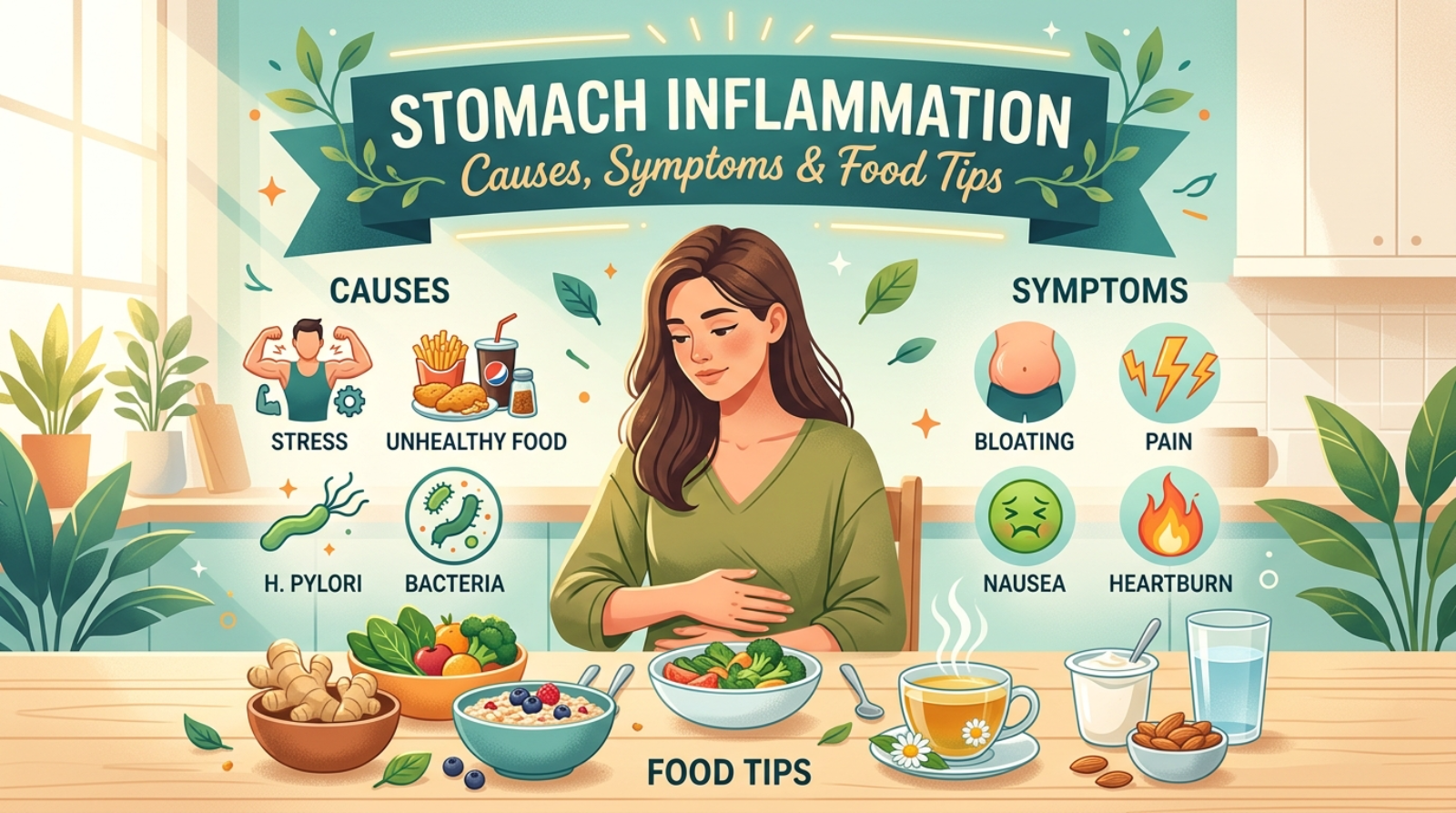
Stomach inflammation can cause burning, nausea, upper abdominal discomfort, and changes in how you feel after meals. If your stomach has been bothering you repeatedly, it helps to understand what may be causing the irritation instead of simply cutting out random foods.
The term often refers to gastritis, which means inflammation of the stomach lining. You can also use the Copy Button to save the practical tips and food ideas that fit your routine.
Quick Answer: What Is Stomach Inflammation?
Stomach inflammation happens when the stomach lining becomes irritated or inflamed. Gastritis is one common form, and it can be short-term or ongoing.
Possible causes include Helicobacter pylori infection, regular use of certain pain relievers, alcohol, severe physical stress, and some immune-related conditions.
Common symptoms include upper abdominal pain, nausea, vomiting, indigestion, reduced appetite, and feeling full quickly.
However, stomach discomfort doesn’t automatically mean you have gastritis. Reflux, indigestion, ulcers, food intolerance, and other digestive problems can cause similar symptoms.
What Causes Stomach Inflammation?
The stomach has a protective lining that helps shield its tissues from digestive acid. When that protection becomes irritated or damaged, inflammation can develop.
H. pylori infection
H. pylori is a bacterium that can live in the stomach. It can cause gastritis and may contribute to peptic ulcers.
If your symptoms persist, a healthcare professional can determine if testing makes sense.
NSAID pain relievers
Medications such as ibuprofen and naproxen belong to a group called NSAIDs.
Frequent or prolonged use can irritate the stomach lining and increase the risk of ulcers or bleeding.
If you regularly take these medicines and develop stomach pain, discuss it with your healthcare professional.
Alcohol
Alcohol can irritate the stomach lining.
Some people notice more burning, nausea, or discomfort after drinking. If you see that pattern, reducing alcohol may be a useful step.
Severe physical stress
Serious illness, major injury, surgery, or other physical stress can sometimes contribute to acute gastritis.
This is different from ordinary stomach discomfort after eating a large meal.
Autoimmune gastritis
In autoimmune gastritis, the immune system mistakenly attacks certain cells in the stomach lining.
It’s less common, but it shows why persistent symptoms shouldn’t always be blamed on diet.
Stomach Inflammation Symptoms to Watch
Symptoms vary from person to person.
You may experience:
- Burning or aching in the upper abdomen
- Nausea
- Vomiting
- Indigestion
- Bloating
- Feeling full quickly
- Reduced appetite
- Frequent belching
Some people have gastritis without obvious symptoms.
More concerning signs include vomiting blood or passing black, tarry stools. These can indicate bleeding and require prompt medical attention.
Stomach Inflammation or Indigestion?
These problems can feel remarkably similar.
A large meal, eating quickly, alcohol, or certain foods can cause temporary indigestion. That doesn’t necessarily mean your stomach lining is inflamed.
Gastritis specifically involves inflammation of the stomach lining.
For example, if you feel uncomfortable after one very large restaurant meal but feel normal the next morning, that doesn’t prove you have gastritis.
On the other hand, repeated pain that keeps returning deserves a closer look.
That’s why tracking symptoms can be more useful than immediately removing half your diet.
Foods That May Feel Better During Stomach Irritation
There isn’t one perfect stomach-friendly diet.
Still, simple foods may feel easier to tolerate when your stomach is sensitive.
Oatmeal
Plain oatmeal is soft and easy to customize.
Try adding banana, cooked apple, or a small amount of cinnamon.
Bananas
Bananas are easy to eat and can work well with oatmeal or plain yogurt.
Rice
Plain rice is a simple carbohydrate that can pair with eggs, chicken, fish, or cooked vegetables.
Potatoes
Baked or boiled potatoes can be a filling option when prepared without heavy sauces or large amounts of added fat.
Cooked vegetables
Try carrots, zucchini, squash, or green beans.
Cooking vegetables makes them softer and may feel more comfortable than a large raw salad.
Lean protein
Eggs, chicken, turkey, tofu, and fish can provide protein without requiring heavy sauces.
Choose baked, steamed, poached, or grilled preparations rather than deep-fried versions.
Yogurt, if tolerated
Plain yogurt may work well for some people.
If dairy causes bloating or discomfort, choose a suitable non-dairy alternative instead.
Foods to Limit With Stomach Inflammation
You don’t need to create a huge list of forbidden foods.
Instead, notice what consistently makes your symptoms worse.
Some people find that these foods or drinks aggravate stomach discomfort:
- Alcohol
- Very spicy foods
- Fried foods
- Heavy, fatty meals
- Large portions
- Coffee
- Highly acidic foods
- Highly processed foods
But individual responses vary.
For example, coffee may bother one person while another drinks it without trouble. The same goes for tomatoes, citrus, chocolate, or spicy foods.
A food diary can help you spot your own patterns.
How to Eat When Your Stomach Feels Irritated
The way you eat can make a difference.
Choose smaller portions
Large meals can leave your stomach feeling overly full.
Instead, try smaller meals and see how your body responds.
Slow down
Eating quickly can make meals feel heavier.
Put your fork down between bites when possible and give yourself time to chew.
Keep meals simple
A meal of rice, baked chicken, and cooked carrots may feel easier than a greasy combination of fried foods, rich sauces, and a large dessert.
Use gentle cooking methods
Baking, steaming, poaching, and simmering allow you to prepare flavorful food without relying on lots of added fat.
Stay upright after meals
If you also experience reflux or heartburn, lying down soon after eating may make symptoms worse.
Staying upright for a while can be more comfortable.
Stomach Inflammation and Coffee
Coffee is a common concern.
Some people experience stomach burning, nausea, or discomfort after drinking it. Others tolerate coffee without any noticeable problem.
If you suspect coffee is a trigger, reduce your intake and observe how you feel.
Also consider what you’re drinking with it. Large amounts of cream, sugar, or flavored syrups can make the drink much heavier.
You don’t necessarily need to give up coffee forever. First, look at your individual response.
Stomach Inflammation and Alcohol
Alcohol can irritate the stomach lining.
Therefore, drinking may make existing stomach discomfort feel worse.
If you notice a clear connection between alcohol and your symptoms, taking a break can be reasonable.
However, don’t assume alcohol explains every recurring stomach problem. Persistent symptoms still need proper evaluation.
Can Stress Affect Stomach Inflammation?
Stress and the digestive system have a close relationship.
During stressful periods, you might eat quickly, skip meals, sleep poorly, drink more coffee, or choose heavier convenience foods.
Those changes can affect how your stomach feels.
Stress can also influence gut movement and digestive sensitivity.
That doesn’t mean stomach symptoms are “all in your head.” They’re real physical sensations.
Try simple habits such as:
- Taking a short walk
- Eating meals without rushing
- Practicing slow breathing
- Keeping a regular sleep schedule
- Taking short breaks during stressful days
These habits support general health, but they don’t replace treatment for gastritis or another digestive condition.
A Simple Day of Meals for Stomach Comfort
When your stomach feels sensitive, keep meals uncomplicated.
Breakfast: Oatmeal with banana and cinnamon.
Lunch: Rice with baked chicken and cooked carrots.
Snack: Plain yogurt if tolerated.
Dinner: Baked fish with mashed potatoes and cooked zucchini.
Drinks: Water throughout the day.
This isn’t a required diet.
You can change the foods based on your preferences, budget, culture, and tolerance.
The goal is to eat enough nutritious food without making meals unnecessarily heavy.
Common Mistakes to Avoid
Removing too many foods: Restricting your diet can make it harder to get enough nutrients and identify your actual triggers.
Eating huge meals: Large portions may worsen fullness and discomfort.
Taking NSAIDs repeatedly: These medicines can irritate the stomach lining in some people.
Relying on supplements: A supplement isn’t automatically safer or more effective than addressing the underlying cause.
Ignoring recurring symptoms: Repeated stomach pain deserves attention.
Blaming every symptom on inflammation: Bloating, reflux, indigestion, and gastritis can overlap but aren’t identical.
When to Get Medical Help
See a healthcare professional if stomach pain keeps returning, lasts for an extended period, or affects your ability to eat normally.
You should also discuss persistent nausea, vomiting, unexplained weight loss, or a major change in your digestion.
Seek urgent medical care if you vomit blood or have black, tarry stools. These can be signs of gastrointestinal bleeding.
If H. pylori is suspected, testing can help identify the infection.
Likewise, if you regularly use NSAIDs and develop stomach symptoms, discuss your medication use with a healthcare professional.
Frequently Asked Questions About Stomach Inflammation
What is the fastest way to calm stomach inflammation?
There isn’t one guaranteed quick fix because treatment depends on the cause. Eating smaller, simpler meals and avoiding known triggers may improve comfort, but persistent symptoms need proper evaluation.
What foods are best for stomach inflammation?
Oatmeal, bananas, rice, potatoes, cooked vegetables, lean proteins, and tolerated yogurt can be practical choices. Individual tolerance matters, though.
Can stomach inflammation go away on its own?
Some temporary forms of stomach irritation may improve after the trigger disappears. Gastritis caused by an infection or another condition may require specific treatment.
Can coffee cause stomach inflammation?
Coffee can worsen stomach symptoms for some people, but it doesn’t affect everyone the same way. If you notice a consistent connection, reducing your intake may help.
Is stomach inflammation the same as gastritis?
Gastritis means inflammation of the stomach lining. People sometimes use “stomach inflammation” more generally to describe irritation or discomfort, so the exact cause matters.
The Bottom Line on Stomach Inflammation
Stomach inflammation can have several causes, including H. pylori, certain medications, alcohol, severe physical stress, and immune-related conditions. Food can affect how you feel, but changing your diet alone won’t address every cause.
For everyday comfort, choose moderate portions, eat slowly, favor simple cooking methods, and pay attention to foods that consistently trigger symptoms.
Most importantly, don’t ignore persistent pain or warning signs such as vomiting blood, black stools, or unexplained weight loss.
If you’d like to keep these practical food and lifestyle tips handy, use the Copy Button to save them for your next meal-planning session.

Elizabeth Boham is a respected functional medicine physician and wellness educator with a passion for helping people improve their health through nutrition and lifestyle changes. As a contributor to Gutrova, she shares practical insights on gut health, digestive wellness, and healthy living, making complex health topics easy to understand and apply in everyday life.











1 thought on “Stomach Inflammation: Causes, Symptoms & Food Tips”