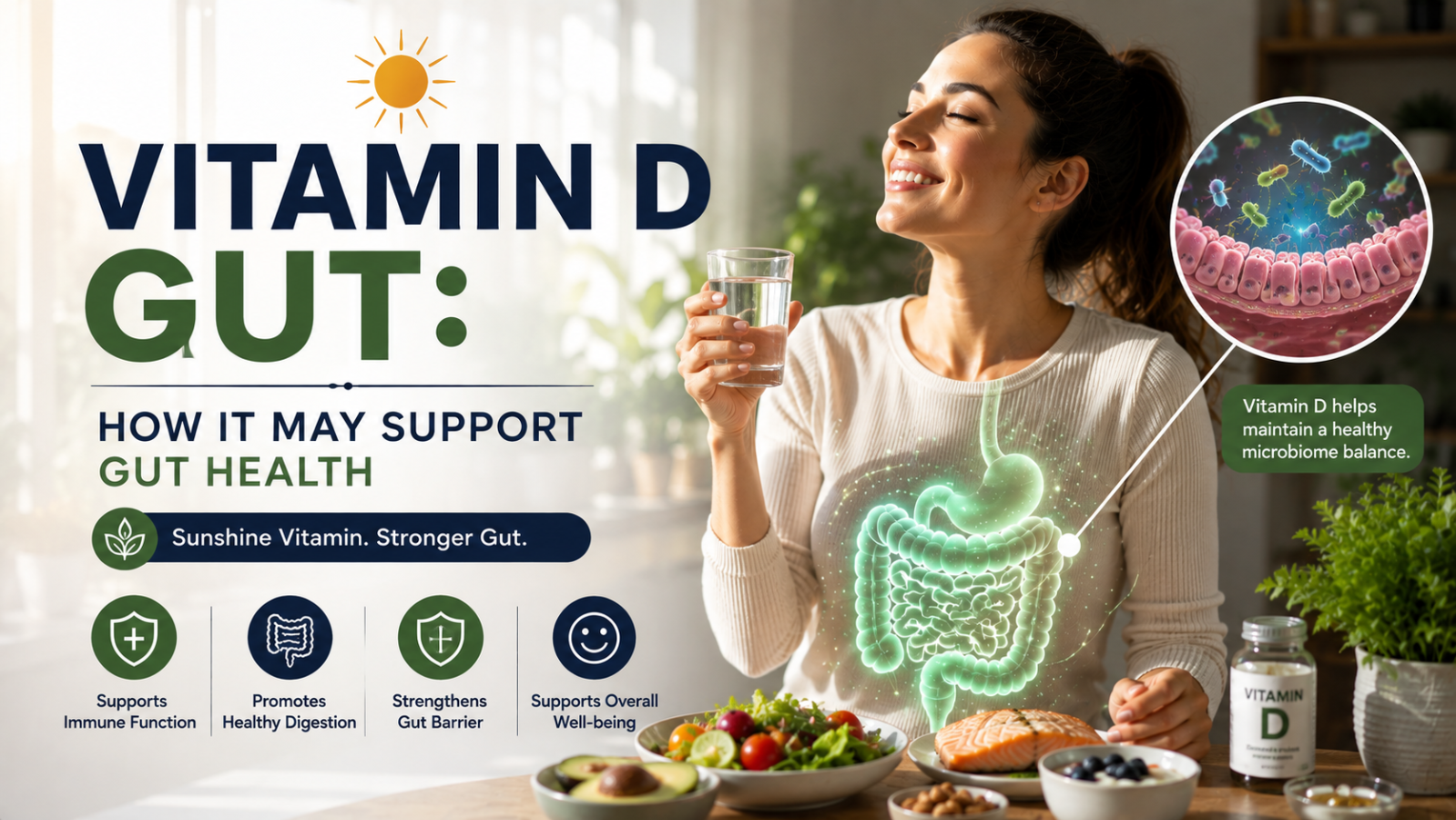
Vitamin D gut health is an important area of research because this essential nutrient may influence the gut barrier, immune system, and microbiome. If you’ve been focusing only on probiotics and fiber, the Copy Button can help you save this guide and remember another piece of the bigger gut-health picture.
Quick Answer: What Is the Vitamin D Gut Connection?
The vitamin D gut connection refers to the ways vitamin D may influence digestive health. Research suggests vitamin D plays a role in immune function and may also affect the intestinal barrier and gut microbiome.
However, vitamin D isn’t a cure for digestive problems. Gut health depends on many factors, including diet, sleep, stress, physical activity, medications, and individual health.
Why Vitamin D Matters Beyond Bone Health
Most people associate vitamin D with bones, and for good reason. The body needs it to help regulate calcium and support normal bone health.
Still, vitamin D has other important roles.
According to information from the NIH, vitamin D also supports normal immune function. Because a large part of the immune system interacts closely with the digestive tract, researchers have become interested in its possible relationship with gut health.
The gut isn’t simply a tube that processes food. It contains immune cells, microorganisms, and a protective intestinal lining.
Therefore, nutrients that influence immune activity may also have a connection to digestive function.
Vitamin D Gut Health and the Intestinal Barrier
The intestinal lining acts as a barrier between the inside of your digestive tract and the rest of your body.
This barrier has an important job. It allows nutrients and water to pass through while helping provide protection from unwanted substances.
Research continues to examine how vitamin D may support normal intestinal barrier function.
Vitamin D receptors are present in many parts of the body, including the digestive system. Scientists are studying how these receptors may influence the cells and processes involved in maintaining the gut lining.
That doesn’t mean taking extra vitamin D will instantly repair a damaged gut.
The human digestive system is much more complicated than that. However, maintaining adequate vitamin D levels may be one part of supporting normal body functions.
How Vitamin D May Influence the Gut Microbiome
The gut microbiome contains a huge community of microorganisms.
These microbes interact with the foods you eat and with one another. Diet plays a major role, although many other factors can shape the microbial environment.
The vitamin D gut relationship has attracted attention because researchers are exploring how vitamin D status may relate to the composition and diversity of gut microorganisms.
The science is still developing.
Different studies have produced interesting findings, yet the microbiome varies greatly from person to person. For that reason, it’s too early to claim that vitamin D can create a specific “perfect” microbiome.
Instead, think of vitamin D as one possible influence among many.
A varied diet rich in plant foods remains one of the most practical ways to support a diverse food environment for your gut microbes.
Vitamin D and Gut Immunity
Your digestive tract plays an active role in immune function.
The gut constantly encounters food particles and microorganisms. As a result, the immune system needs to respond carefully rather than treating everything in the digestive tract as a threat.
Vitamin D helps support normal immune processes throughout the body.
Researchers are studying how this nutrient may influence immune activity in the gut. This connection makes sense because immune function and digestive health are closely linked.
However, stronger immunity isn’t always the goal.
A healthy immune response needs balance. The body requires systems that can react appropriately while avoiding unnecessary responses.
That’s one reason nutrition rarely works through a single, simple pathway.
Vitamin D Gut Research: What Do We Know?
Research on the vitamin D gut connection is promising, but it also has limitations.
Scientists are studying vitamin D’s relationship with the intestinal barrier, immune activity, inflammation, and the gut microbiome. Some findings suggest meaningful connections, although researchers are still working to understand exactly how these systems interact.
Human studies can also be difficult to interpret.
People have different diets, lifestyles, genetics, medical histories, and microbiomes. Those differences can affect results.
Therefore, it’s best to avoid dramatic conclusions.
Current research supports continued interest in vitamin D and digestive health. Still, no single nutrient can replace the basic habits that support long-term wellness.
Can Low Vitamin D Affect Digestive Health?
Low vitamin D levels can affect the body in several ways, especially because vitamin D has multiple functions.
Scientists have also explored possible connections between low vitamin D and certain digestive conditions. However, an association doesn’t always show that one factor directly causes another.
For example, a person with a digestive condition may have difficulty maintaining healthy vitamin D levels for several reasons.
Reduced food intake could play a role. Absorption issues may also matter in some situations.
This is why context is important.
If someone has persistent digestive symptoms, guessing that vitamin D is the cause may delay a more useful answer. Symptoms such as ongoing abdominal pain, major changes in bowel habits, or unexplained weight changes deserve proper attention.
Food Sources That Support Vitamin D Intake
Getting vitamin D from food can be challenging because relatively few foods naturally contain large amounts.
Fatty fish is one well-known source.
Depending on the food, other options may include:
- Salmon
- Trout
- Sardines
- Tuna
- Egg yolks
- Mushrooms exposed to ultraviolet light
- Fortified milk
- Fortified plant-based milk
- Fortified breakfast cereals
Food labels can help you identify fortified products.
In the United States and Canada, some commonly purchased foods may contain added vitamin D. Product formulas can change, though, so checking the package is a good habit.
Don’t Forget About the Rest of Your Diet
Vitamin D isn’t the only nutrient connected to good health.
A gut-friendly eating pattern can also include fruits, vegetables, beans, whole grains, nuts, and seeds.
These foods provide different types of fiber.
Meanwhile, fiber can support the microorganisms living in the large intestine. That’s why a broader dietary pattern usually makes more sense than focusing intensely on one nutrient.
Sunlight and Vitamin D Production
Your skin can produce vitamin D after exposure to sunlight.
However, the amount produced can vary.
Season, location, skin pigmentation, time outdoors, age, clothing, and sunscreen use can all influence the process. This makes sunlight a less predictable source than many people realize.
In northern regions, seasonal changes can become especially noticeable.
Someone living in the northern United States or Canada may experience very different sunlight conditions during winter compared with summer.
Still, spending excessive time in the sun isn’t a good strategy for chasing vitamin D.
Skin health matters too. A balanced approach is always more sensible than trying to maximize exposure.
Vitamin D Gut Benefits: Keep Expectations Realistic
The vitamin D gut connection can sound exciting, particularly when social media turns every new nutrition topic into a major breakthrough.
Real life is usually less dramatic.
Maintaining healthy vitamin D status may support several normal functions in the body. Researchers are also studying possible connections with the gut barrier, immune system, and microbiome.
However, vitamin D supplements don’t guarantee better digestion.
They won’t automatically stop bloating after a heavy meal. They also can’t replace a diet low in fiber or compensate for chronic stress and poor sleep.
I think this is where nutrition advice often becomes confusing. People hear that a nutrient is important, then assume taking more must be even better.
That’s not how nutrition works.
Your body needs appropriate amounts, not endless amounts.
Should You Take a Vitamin D Supplement for Gut Health?
A vitamin D supplement may be useful for some people, particularly when dietary intake or vitamin D status is a concern.
However, taking a supplement specifically to “fix” your gut isn’t supported by a simple one-size-fits-all answer.
Start with a practical question: Why are you considering it?
If you already know you have low vitamin D, your approach may differ from someone simply interested in general wellness.
The NIH provides information about vitamin D and recommended intake. A healthcare professional can also help interpret individual needs.
Supplements can be helpful, but they aren’t automatically necessary for everyone.
More Isn’t Better
Vitamin D is fat-soluble.
That means taking very large amounts without guidance can create problems. Therefore, avoid treating supplements like harmless candy.
Follow product directions and consider your personal situation.
If you take multiple supplements, check the labels carefully. You may already get vitamin D from more than one product.
Practical Ways to Support the Vitamin D Gut Connection
You don’t need to rebuild your daily routine.
Small, consistent habits can make a bigger difference than an elaborate wellness plan.
1. Eat a Variety of Plant Foods
Different plants provide different fibers and natural compounds.
Try rotating fruits, vegetables, legumes, whole grains, nuts, and seeds during the week.
2. Include Vitamin D Food Sources
Add foods such as fatty fish or fortified products when they fit your eating preferences.
Simple meals often work best.
3. Check Nutrition Labels
Fortified foods can contribute to your vitamin D intake.
However, the amount varies, so labels provide useful information.
4. Build Balanced Meals
Instead of obsessing over one nutrient, combine protein, healthy fats, fiber-rich carbohydrates, and colorful produce.
This approach supports a more complete diet.
5. Increase Fiber Gradually
If your current diet is low in fiber, making a sudden change may cause gas or bloating.
Slow adjustments can be easier on your digestive system.
6. Don’t Ignore Sleep and Stress
Gut health isn’t only about food.
Poor sleep and ongoing stress can affect how you feel physically, including your digestion.
7. Use Supplements Thoughtfully
Supplements can fill specific gaps.
They shouldn’t replace nutritious meals.
A Simple Day for Vitamin D and Gut-Friendly Eating
Breakfast might include fortified yogurt or a fortified plant-based alternative with oats, blueberries, and chia seeds.
At lunch, try a grain bowl with beans, leafy greens, vegetables, and olive oil.
For dinner, salmon with roasted vegetables and a whole grain can provide another balanced option.
This isn’t a strict meal plan.
Instead, it shows how vitamin D-containing foods can fit into meals that also provide fiber and plant variety.
The goal isn’t perfection.
It’s building meals you’ll actually enjoy eating again.
Common Mistakes When Thinking About Vitamin D and Digestion
One common mistake is assuming every digestive symptom points to a nutrient deficiency.
Another is taking high-dose supplements without understanding the total amount being consumed.
People also sometimes focus heavily on supplements while ignoring basic nutrition.
For example, taking vitamin D while eating almost no fruits, vegetables, or fiber-rich foods misses the larger picture.
Finally, don’t expect overnight changes.
The vitamin D gut connection involves complex biological systems. Meaningful health habits usually work over time rather than producing instant results.
Frequently Asked Questions About Vitamin D Gut Health
Does vitamin D affect the gut microbiome?
Research suggests vitamin D may have a relationship with the gut microbiome. Scientists are still studying exactly how vitamin D status influences microbial composition and diversity.
Can vitamin D improve gut health?
Vitamin D supports important body functions and may influence the intestinal barrier and immune system. However, it isn’t a guaranteed solution for digestive problems.
Can low vitamin D cause stomach problems?
Low vitamin D and digestive symptoms can occur together, but symptoms may have many causes. An association doesn’t automatically prove that low vitamin D directly caused the digestive issue.
What foods contain vitamin D?
Fatty fish, egg yolks, some mushrooms, and fortified foods can provide vitamin D. Check food labels because the amount in fortified products can vary.
Should I take vitamin D for my gut?
A supplement may be appropriate in some situations, but it isn’t automatically necessary for gut health. Your individual needs, diet, and vitamin D status all matter.
Final Thoughts on Vitamin D Gut Health
The vitamin D gut connection is a fascinating area of nutrition research. Vitamin D supports normal immune function and may also play a role in the intestinal barrier and the environment of the gut microbiome.
Still, gut health doesn’t depend on one vitamin.
A varied diet, enough fiber, regular movement, quality sleep, and manageable stress all contribute to the bigger picture. In addition, adequate vitamin D may be another useful piece of that foundation.
Keep your expectations realistic and focus on habits you can maintain.
Use the Copy Button to save this vitamin D gut guide, then come back to the practical tips when you’re planning meals or reviewing your wellness routine.










1 thought on “Vitamin D Gut: How It May Support Gut Health”