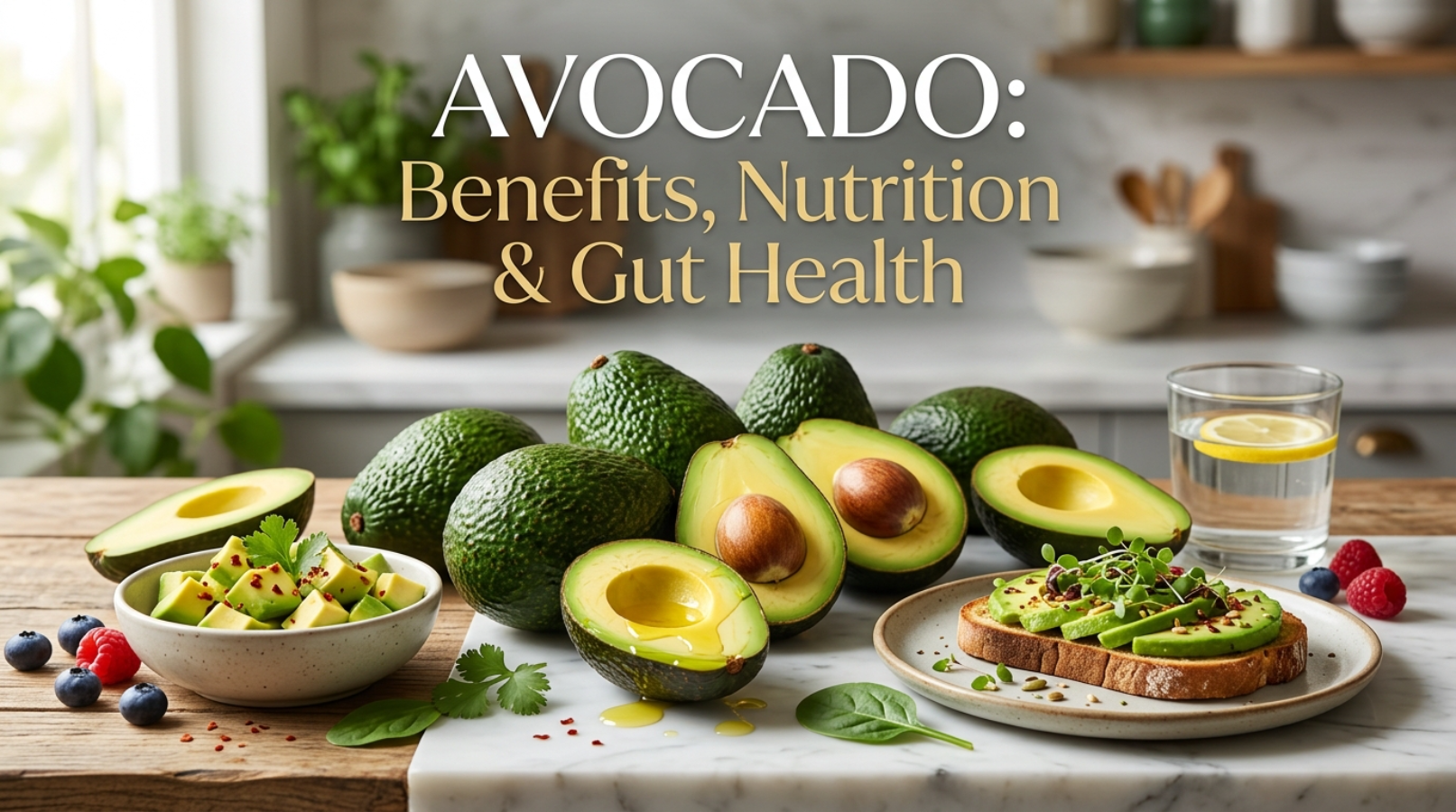
Avocado is a creamy, nutrient-rich fruit that provides fiber, mostly unsaturated fats, vitamins, and minerals in every satisfying bite. Its combination of fiber and healthy fats makes avocado an easy addition to meals that need more flavor, texture, and staying power. Use the Copy Button to save the ideas you like most and share them whenever you need a little meal inspiration.
Quick Answer: Is Avocado Good for You?
Yes, avocado can be a nutritious part of a balanced diet. It provides dietary fiber, mostly unsaturated fat, potassium, folate, vitamin K, vitamin E, and other nutrients.
Avocado may also support a gut-friendly eating pattern because it contributes fiber and plant compounds. However, no single food can create perfect digestive health.
Instead, avocado works best alongside vegetables, fruits, beans, whole grains, nuts, seeds, and other minimally processed foods.
Avocado Nutrition: What Makes It So Nutritious?
Avocado stands apart from many fruits because of its higher fat content.
Most fruits are known primarily for carbohydrates, water, and natural sweetness. Avocado, however, contains a meaningful amount of mostly unsaturated fat along with fiber.
That combination gives the fruit its rich, creamy texture.
It also provides several vitamins and minerals, including potassium, folate, vitamin K, vitamin E, and magnesium.
Harvard’s Nutrition Source notes that avocado is particularly rich in monounsaturated fat and also provides both soluble and insoluble fiber.
Why Avocado Can Make Meals More Satisfying
A meal containing only refined carbohydrates may leave you hungry again fairly quickly.
Adding foods with fiber, protein, or healthy fats can create a more satisfying combination.
Avocado contributes both fat and fiber. Therefore, a few slices can make a simple meal feel more complete.
For example, whole-grain toast with avocado and eggs may feel more substantial than toast alone.
The goal isn’t to make every meal heavy. Instead, it’s about creating meals that keep you comfortably satisfied.
Avocado and Gut Health
Avocado can contribute to gut health because it provides dietary fiber, a nutrient that supports normal digestive function.
Fiber also plays an important role in the relationship between food and the gut microbiome. Some fibers can be used by microorganisms living in the colon.
As those microbes interact with dietary fiber, they produce compounds that researchers continue to study for their role in human health.
Still, gut health is much bigger than one fruit.
A diverse eating pattern usually matters more than eating large amounts of a single so-called superfood.
Try combining avocado with several other plant foods. A bowl containing beans, brown rice, greens, tomatoes, corn, and avocado offers a broader mix of fibers and nutrients.
How Avocado Supports Healthy Digestion
Avocado contributes to your daily fiber intake, which can help support normal bowel function.
However, adding a large amount of fiber to your diet overnight isn’t always comfortable.
If you’ve ever increased your intake of healthy foods too quickly and then felt bloated, you’re not alone.
Instead, increase fiber gradually.
Add fruit to breakfast. Include vegetables at lunch. Then choose beans, whole grains, or other fiber-rich foods later in the day.
Avocado can fit naturally into that pattern.
Drinking enough fluids is also helpful when you increase your intake of fiber-rich foods.
Avocado and the Gut Microbiome
The gut microbiome responds to many aspects of daily life.
Food is important, but sleep, stress, physical activity, medications, and other factors can also influence the digestive system.
Avocado is interesting from a nutrition perspective because it contains fiber as well as naturally occurring plant compounds.
Research has explored the relationship between avocado consumption and the gut microbiota. However, scientists are still learning how different foods interact with the complex ecosystem inside the digestive tract.
That means it’s better to avoid treating avocado as a gut-health cure.
Instead, think about food diversity.
Eat berries during one meal. Add beans to another. Include vegetables, whole grains, nuts, seeds, and fruits throughout the week.
Avocado simply becomes one useful part of that larger pattern.
Avocado Benefits for Healthy Fats
One of the best-known avocado benefits is its fat profile.
Avocado contains mostly monounsaturated fat, including oleic acid. Unsaturated fats are commonly found in plant foods such as nuts, seeds, vegetable oils, and certain fruits.
Harvard Health recommends focusing on the quality of dietary fat and includes avocados among foods rich in unsaturated fats.
A practical approach is substitution.
For example, mashed avocado can sometimes replace a heavily processed spread on a sandwich.
You might also add avocado to a salad instead of relying entirely on creamy toppings.
That doesn’t mean other foods must disappear from your diet.
Rather, small substitutions can help create a more balanced eating pattern.
Can Avocado Help You Feel Full?
Many people enjoy avocado because it makes meals feel satisfying.
Its creamy texture adds richness without requiring a complicated recipe.
The combination of fat and fiber may also contribute to fullness as part of a balanced meal.
For instance, try avocado with eggs and whole-grain toast.
At lunch, combine it with beans, vegetables, and a whole grain.
The rest of the meal matters, too.
Avocado won’t automatically prevent hunger. However, it can help turn a light meal into one that feels more complete.
A Simple Avocado Breakfast
Try this easy combination:
- Whole-grain toast
- Mashed avocado
- Eggs or another protein source
- Tomato slices
- Fresh fruit
It’s quick, colorful, and easy to adjust.
You can add herbs, black pepper, or a squeeze of lemon for extra flavor.
Easy Ways to Eat Avocado
Avocado is far more versatile than avocado toast and guacamole.
Here are practical ways to use it:
- Add sliced avocado to whole-grain toast.
- Mash avocado with lemon and herbs.
- Add diced avocado to a salad.
- Include it in a grain bowl.
- Serve it with eggs.
- Add it to a breakfast burrito.
- Make homemade guacamole.
- Use avocado in tacos.
- Add it to a bean bowl.
- Place slices inside a sandwich.
- Add it to a vegetable wrap.
- Serve it with tomatoes and cucumbers.
- Add diced avocado to chili.
- Blend a small amount into a smoothie.
- Use it as a creamy topping for roasted vegetables.
Personally, I find avocado easiest to eat when I don’t overthink it.
A complicated recipe can be fun occasionally. On a busy weekday, though, sliced avocado on an existing meal often works just as well.
Convenience matters.
Choosing the Best Avocado
Buying avocado can feel unpredictable because ripeness changes quickly.
A very firm avocado usually needs more time.
Meanwhile, a ripe avocado should give slightly when pressed gently.
If you plan to eat it several days later, choose a firmer fruit.
For immediate use, select one that’s closer to ripe.
Avoid squeezing the fruit aggressively in the store because repeated pressure can bruise the flesh.
A little planning also reduces food waste.
Buy avocados at different stages of ripeness instead of buying several that are ready at exactly the same time.
Avocado Storage Tips
Unripe avocado should generally remain at room temperature while it ripens.
Once it becomes soft enough to eat, refrigeration can slow the ripening process.
After cutting an avocado, the exposed flesh may turn brown.
That happens because the flesh reacts with oxygen.
The color change doesn’t automatically mean the fruit has spoiled.
However, avocado tastes best when used reasonably soon after cutting.
Cover the exposed surface and refrigerate leftovers.
A little lemon or lime juice may also help slow browning.
Can Avocado Cause Bloating?
Avocado can cause digestive discomfort in some people.
That doesn’t make it unhealthy.
The fruit contains fiber, fat, and carbohydrates that some individuals may find difficult to tolerate in larger portions.
Portion size can make a noticeable difference.
If you’ve ever eaten a large serving of guacamole and felt uncomfortable afterward, avocado may not have been the only factor.
Onions, garlic, chips, spicy ingredients, and the total size of the meal could also contribute.
Instead of immediately avoiding the food, try a smaller portion.
Pay attention to patterns.
If discomfort consistently happens after eating avocado, your personal tolerance may differ from someone else’s.
Avocado Portions: How Much Should You Eat?
There’s no single avocado portion that works for every person.
Your appetite, energy needs, overall diet, and personal preferences all matter.
For many people, a few slices or part of a medium avocado fits comfortably into a meal.
Because avocado contains fat and calories, you don’t necessarily need a whole fruit every time you eat it.
A smaller serving can still provide flavor and nutrition.
One helpful strategy is to add avocado to meals you already enjoy.
Put it in a salad.
Add it to tacos.
Spread it on toast.
That approach often feels easier than trying to create an entirely new eating routine.
Avocado for Breakfast, Lunch, and Dinner
One ingredient can work differently throughout the day.
Breakfast: Add avocado to eggs and whole-grain toast.
Lunch: Combine greens, beans, colorful vegetables, whole grains, and avocado in a filling bowl.
Dinner: Add avocado to tacos, chili, or a grain-based meal.
Snack: Pair a modest serving with sliced vegetables and whole-grain crackers.
Notice that avocado isn’t the only nutritious ingredient in these meals.
That’s intentional.
A healthy eating pattern comes from combining many foods rather than placing all your attention on one ingredient.
Fresh Avocado vs. Guacamole
Fresh avocado and homemade guacamole can both be nutritious choices.
The main difference often comes from what else is added.
Simple guacamole made with avocado, lime, herbs, and vegetables can fit easily into a balanced diet.
However, restaurant versions may come with large portions and salty chips.
That doesn’t mean you should avoid them.
Instead, enjoy them with awareness.
You can also make guacamole at home and control the ingredients.
Try serving it with vegetables, whole-grain crackers, or as a topping for a balanced meal.
Building a Gut-Friendly Meal With Avocado
Want to use avocado as part of a more diverse meal?
Start with a few simple ingredients.
Choose a whole grain such as brown rice or quinoa.
Add a protein source, such as beans, chicken, fish, or tofu.
Next, include several vegetables.
Then add avocado for creaminess and healthy fats.
Finally, sprinkle on herbs or seeds for extra flavor and texture.
This approach creates a meal with several different plant foods.
As a result, you’re not relying on avocado alone to support your nutritional goals.
A Simple Bowl Idea
Try combining:
- Brown rice
- Black beans
- Leafy greens
- Tomatoes
- Corn
- Avocado
- Pumpkin seeds
- Lime juice
You can adjust every ingredient based on your preferences.
That’s one advantage of simple meal templates.
They provide structure without forcing you to eat the same meal repeatedly.
Frequently Asked Questions About Avocado
Is avocado good for your gut?
Avocado can be part of a gut-friendly diet because it provides dietary fiber and naturally occurring plant compounds. However, a diverse diet containing many plant foods is more important than relying on avocado alone.
Can you eat avocado every day?
Many people can enjoy avocado regularly as part of a balanced diet. However, rotating it with nuts, seeds, olive oil, and other nutritious foods can add useful variety.
Does avocado help with constipation?
Because avocado contains dietary fiber, it contributes to total fiber intake and can support normal bowel function. However, it isn’t a guaranteed remedy for constipation.
Why does avocado cause bloating for some people?
Some people may experience bloating because of avocado’s fiber, fat, or certain carbohydrates. Larger portions may also be harder to tolerate.
Is avocado good for weight management?
Avocado can fit into a balanced eating pattern and may make meals more satisfying because it contains fat and fiber. However, weight management depends on many factors beyond one food.
Final Thoughts on Avocado
Avocado is popular because it’s nutritious, versatile, and remarkably easy to use.It provides fiber, mostly unsaturated fats, vitamins, minerals, and a creamy texture that works in many meals.
For gut health, the best approach is to keep the bigger picture in mind. Avocado can support a varied, fiber-rich eating pattern, but it works alongside the many other foods and habits that influence digestive health.
Start with a simple idea.
Add avocado to toast, a salad, tacos, eggs, or a grain bowl. Pay attention to portions that feel comfortable and choose meals you genuinely enjoy. Then use the Copy Button to save your favorite avocado ideas and come back to them when you need an easy, nutritious meal.

Elizabeth Boham is a respected functional medicine physician and wellness educator with a passion for helping people improve their health through nutrition and lifestyle changes. As a contributor to Gutrova, she shares practical insights on gut health, digestive wellness, and healthy living, making complex health topics easy to understand and apply in everyday life.











1 thought on “Avocado: Benefits, Nutrition & Gut Health”