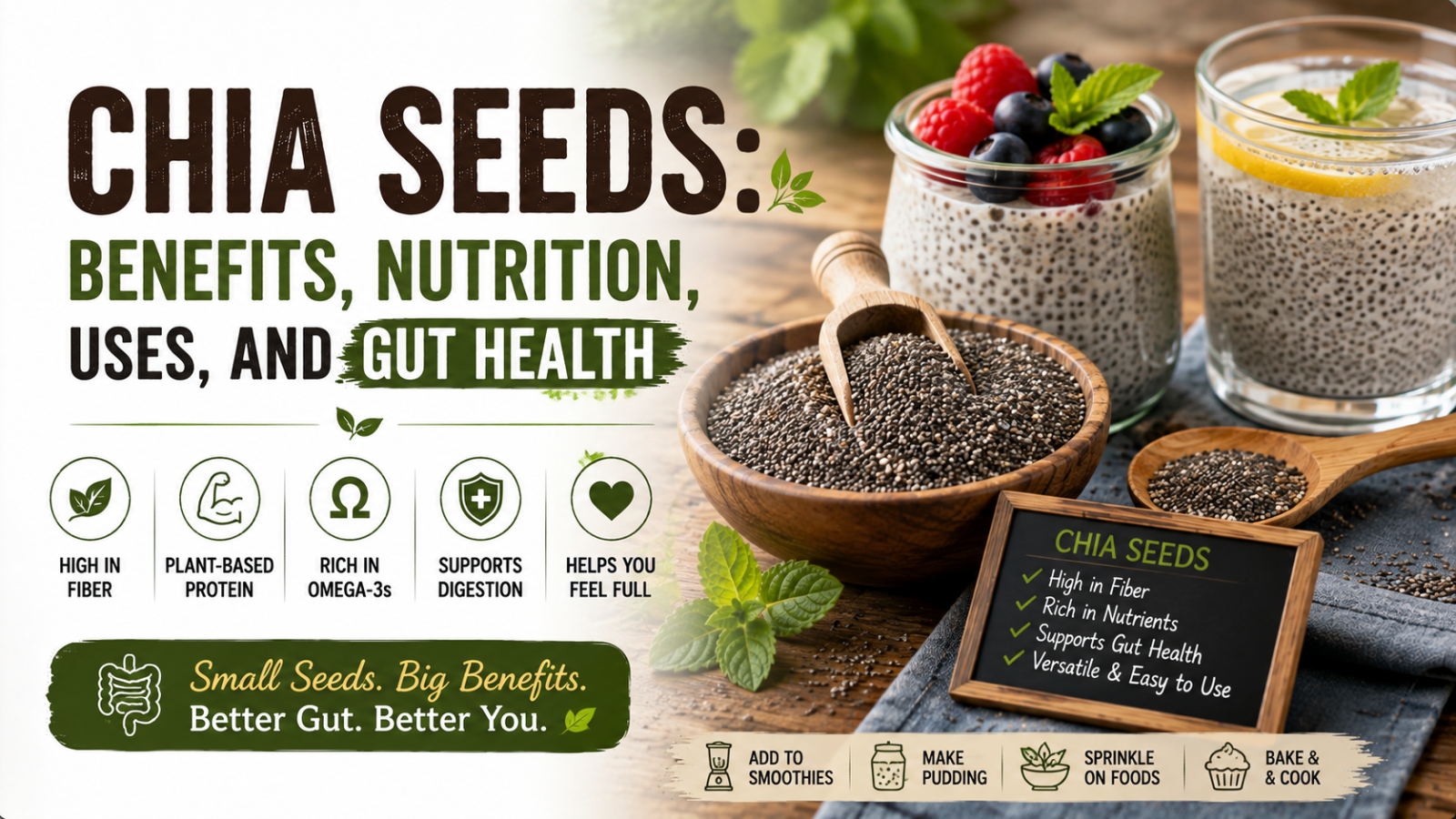
Chia seeds are an easy way to add fiber, plant-based omega-3 fats, and useful nutrients to everyday meals. Their mild flavor makes them simple to mix into oatmeal, yogurt, smoothies, and other foods, so you don’t need to completely change what you already eat. If you find a tip you want to save, the Copy Button makes it easy to copy and share it for later.
Quick Answer: What Are Chia Seeds Good For?
Chia seeds are small edible seeds that provide dietary fiber, plant-based omega-3 fatty acids, protein, and minerals such as calcium, magnesium, and phosphorus. They also absorb liquid and form a soft gel, which makes them useful in foods like chia pudding and overnight oats.
For gut health, their main benefit comes from fiber. Dietary fiber supports normal bowel movements and can provide fuel for certain gut microbes. However, adding a large amount at once may cause gas or bloating, especially if your usual diet is low in fiber.
A practical approach is to start with a small serving and increase it gradually. At the same time, keep up with your normal fluid intake.
Chia Seeds Nutrition at a Glance
Although they’re tiny, chia seeds pack several nutrients into a small serving. They contain both soluble and insoluble fiber, along with plant-based protein and alpha-linolenic acid, commonly called ALA.
ALA is an essential omega-3 fatty acid. Your body needs it from food because it can’t make enough on its own.
Chia seeds also contain minerals, including calcium, magnesium, phosphorus, and manganese. In addition, they provide antioxidant compounds that contribute to their overall nutritional value.
That doesn’t mean you need to eat chia every day. Instead, think of them as one convenient option within a varied diet.
Foods such as oats, beans, lentils, vegetables, berries, nuts, and other seeds can contribute important nutrients and fiber, too.
How much chia is a reasonable serving?
There isn’t one ideal amount for everyone. If you’re new to high-fiber foods, starting with about 1 teaspoon to 1 tablespoon is a sensible way to see how your body responds.
Later, you can adjust the amount based on your meals and digestive comfort. More isn’t automatically better, especially if your total fiber intake is already high.
Chia Seeds and Gut Health
The relationship between chia seeds and gut health mainly centers on their fiber content. Your small intestine doesn’t fully digest dietary fiber, so some fiber reaches the large intestine.
There, certain gut bacteria can use fermentable fibers as a food source. As a result, eating a variety of fiber-rich plant foods can help support a healthy gut environment.
Chia can contribute to that variety. However, one food shouldn’t carry the entire burden of supporting your gut microbiome.
For example, you might have chia with oatmeal at breakfast, lentils at lunch, and vegetables or whole grains at dinner. That combination provides a much broader range of plant foods than relying on chia alone.
This is one reason I prefer using chia as a simple add-on rather than treating it like a special health fix.
Chia Seeds for Digestion and Regularity
If you’re trying to eat more fiber, chia seeds can be a convenient addition. Their fiber can support regular bowel movements as part of an overall fiber-rich eating pattern.
Still, your digestive system may need time to adjust. Suddenly adding several tablespoons to your diet can lead to bloating, gas, or abdominal discomfort.
Instead, increase your intake slowly. You can also spread fiber-rich foods across several meals rather than putting most of your daily fiber into breakfast.
Fluid intake matters as well. Fiber and fluids work together, so don’t dramatically increase your fiber intake while ignoring your usual water consumption.
If your stomach feels uncomfortable after adding chia, simply scale back. You can try a smaller amount again once your digestion settles.
Chia Seeds and Omega-3 Fatty Acids
Chia seeds are a plant source of ALA, an omega-3 fatty acid. This makes them a useful addition to meals, particularly for people who enjoy plant-based foods.
Your body can convert ALA into other omega-3 fatty acids, but that conversion is limited. Therefore, chia shouldn’t be viewed as an exact substitute for every other source of omega-3 fats.
Instead, use a variety of foods. Walnuts, flaxseed, fatty fish, and other foods can contribute different forms of healthy fats.
The goal isn’t to find one perfect ingredient. A broader eating pattern gives you more nutritional variety.
Chia Seeds for Breakfast: Simple Ideas
Breakfast is one of the easiest times to use chia because the seeds pair naturally with moist foods.
Try adding them to:
- Oatmeal with berries and cinnamon
- Plain Greek yogurt with fruit
- A banana or berry smoothie
- Overnight oats
- Cottage cheese with sliced fruit
- Nut butter on whole-grain toast
- Homemade muffins
- Unsweetened applesauce
- A breakfast bowl with oats, nuts, and fruit
For a busy morning, overnight oats can be especially convenient. Combine oats, milk, chia, and your preferred toppings the night before. By morning, the mixture is ready to eat.
I find that simple routines tend to work better than complicated recipes. If a food can be added to something you already make, you’re more likely to keep using it.
Chia Seeds in Smoothies, Yogurt, and Oatmeal
You don’t need a special recipe every time you eat chia. In fact, simple combinations often make the most sense.
For smoothies, add chia directly to the blender. If the smoothie becomes thicker than you prefer, add a little more liquid.
With yogurt, stir the seeds into the yogurt and let them soften for a few minutes. Berries, chopped nuts, cinnamon, or a small amount of honey can add extra flavor.
Oatmeal works well, too. Stir chia into the oats as they cook, or add it after cooking. The seeds absorb some of the liquid and can make the bowl thicker.
Easy chia pudding recipe
For a simple chia pudding, combine:
- 2 tablespoons chia seeds
- ½ cup milk or an unsweetened milk alternative
- ¼ teaspoon vanilla extract
- Fresh berries or sliced fruit
Stir the ingredients thoroughly. Then refrigerate the mixture for several hours or overnight.
Before eating, give it another stir. If it’s too thick, add a splash of milk. If the texture is too loose, let it sit longer.
Do Chia Seeds Need to Be Ground?
Unlike flaxseed, chia doesn’t need to be ground before you eat it. Whole chia seeds can be added to many foods without grinding.
Their ability to absorb liquid is actually part of what makes them useful. Once hydrated, they develop a soft gel around the seed.
That texture works especially well in puddings and overnight oats. However, some people prefer ground chia in smoothies or baked recipes because it blends more evenly.
Choose whichever form fits your routine. There’s no benefit in buying a product you won’t enjoy eating.
How to Eat Chia Seeds Without Digestive Discomfort
A sudden increase in fiber can be uncomfortable. Therefore, people who don’t regularly eat high-fiber foods should take a gradual approach.
Start with a small amount and give your body time to adjust. Then increase the serving if you feel comfortable.
It’s also helpful to eat chia as part of a meal rather than treating it like a supplement. Mix it into oatmeal, yogurt, or a smoothie instead of swallowing a large spoonful by itself.
Adequate fluid intake matters, too. Your overall hydration needs vary, but drinking fluids regularly can make a higher-fiber eating pattern easier to tolerate.
A realistic example
Imagine your usual breakfast is toast and coffee. Suddenly replacing it with a large bowl of chia pudding may give you more fiber than your digestive system is used to.
Instead, add 1 teaspoon of chia to your oatmeal or yogurt for several days. If that feels comfortable, gradually increase the amount.
Meanwhile, add fiber from vegetables, fruit, beans, and whole grains at other meals. That gives you variety without placing all the extra fiber in one sitting.
Chia Seeds: Buying and Storage Tips
Chia seeds are widely available at supermarkets, natural food stores, and online retailers. Both black and white varieties are common.
When buying them, check the package for a good expiration or best-by date. Also, choose a product from a reputable food retailer.
Once opened, keep chia seeds in a cool, dry place in a tightly closed container. For longer storage, refrigeration can help maintain freshness.
Because chia contains fat, it can eventually develop an unpleasant stale smell or taste. If the seeds smell noticeably off, don’t use them.
Buying a smaller package can also make sense if you don’t eat chia often. Fresh food that actually gets used is more useful than a large bag sitting in the pantry for months.
Common Mistakes When Eating Chia Seeds
Chia is simple, but a few common mistakes can make it less enjoyable.
Adding too much too soon: Large amounts of fiber may cause digestive discomfort. Start small instead.
Forgetting about fluids: A higher-fiber diet works best alongside adequate fluid intake.
Treating chia as a cure-all: Chia can contribute useful nutrients, but it can’t replace a varied diet.
Using it only in sweet foods: Chia can also work in savory meals, grain bowls, homemade dressings, and seed mixes.
Ignoring your body’s response: If a certain amount causes bloating or discomfort, reduce the serving.
Expecting immediate results: Digestive health depends on your overall eating habits, activity, hydration, and other factors.
A little flexibility goes a long way. You don’t have to force chia into your diet simply because it’s considered nutritious.
Chia Seeds and a Fiber-Rich Eating Pattern
One of the easiest ways to use chia is to think of it as one piece of a bigger picture.
For breakfast, you might combine chia with oats and berries. At lunch, add beans or lentils to a salad or grain bowl. Then, include vegetables and a whole grain with dinner.
This approach gives your gut microbes access to a wider mix of plant foods. It also makes your meals more interesting.
Variety matters because different foods contain different types and amounts of fiber and other plant compounds. Consequently, building meals around several plant foods is more useful than focusing on one “superfood.”
Chia fits nicely into that pattern because it’s inexpensive, easy to store, and quick to add.
Frequently Asked Questions About Chia Seeds
Are chia seeds good for constipation?
Chia seeds may help support regular bowel movements because they provide dietary fiber. However, increase your fiber intake gradually and maintain adequate fluid intake. Persistent or severe constipation deserves attention rather than simply adding more chia.
Can chia seeds cause bloating?
Yes. Chia seeds can cause gas or bloating in some people, particularly after a sudden increase in fiber. Start with a small serving and increase it slowly.
Should chia seeds be soaked before eating?
They don’t have to be soaked for every use. However, soaking changes their texture and can make them easier to mix into foods such as oatmeal, yogurt, and chia pudding.
Can you eat chia seeds every day?
Chia seeds can fit into a regular diet for many people. The amount that works best depends on your overall diet and how well you tolerate the extra fiber.
Are chia seeds better than flaxseeds?
Neither seed is automatically better. Chia provides fiber and ALA, while flaxseed offers its own nutritional benefits. Using different seeds can add variety to your meals.
Final Takeaway: Make Chia Seeds Part of the Bigger Picture
Chia seeds are small, versatile, and easy to work into everyday meals. Their fiber, ALA omega-3 fats, protein, minerals, and convenient texture make them a useful addition to a varied eating pattern.
For gut health, the key is consistency and variety rather than relying on one ingredient. Start with a modest serving, increase it gradually, and pair chia with other fiber-rich foods such as fruits, vegetables, beans, lentils, oats, and whole grains.
You don’t need an elaborate recipe, either. A spoonful in oatmeal or yogurt may be all it takes to make chia a regular part of your routine. If you want to save these ideas, use the Copy Button to quickly copy your favorite chia tips and share them with someone who might find them useful.

Elizabeth Boham is a respected functional medicine physician and wellness educator with a passion for helping people improve their health through nutrition and lifestyle changes. As a contributor to Gutrova, she shares practical insights on gut health, digestive wellness, and healthy living, making complex health topics easy to understand and apply in everyday life.










1 thought on “Chia Seeds: Benefits, Nutrition, Uses, and Gut Health”