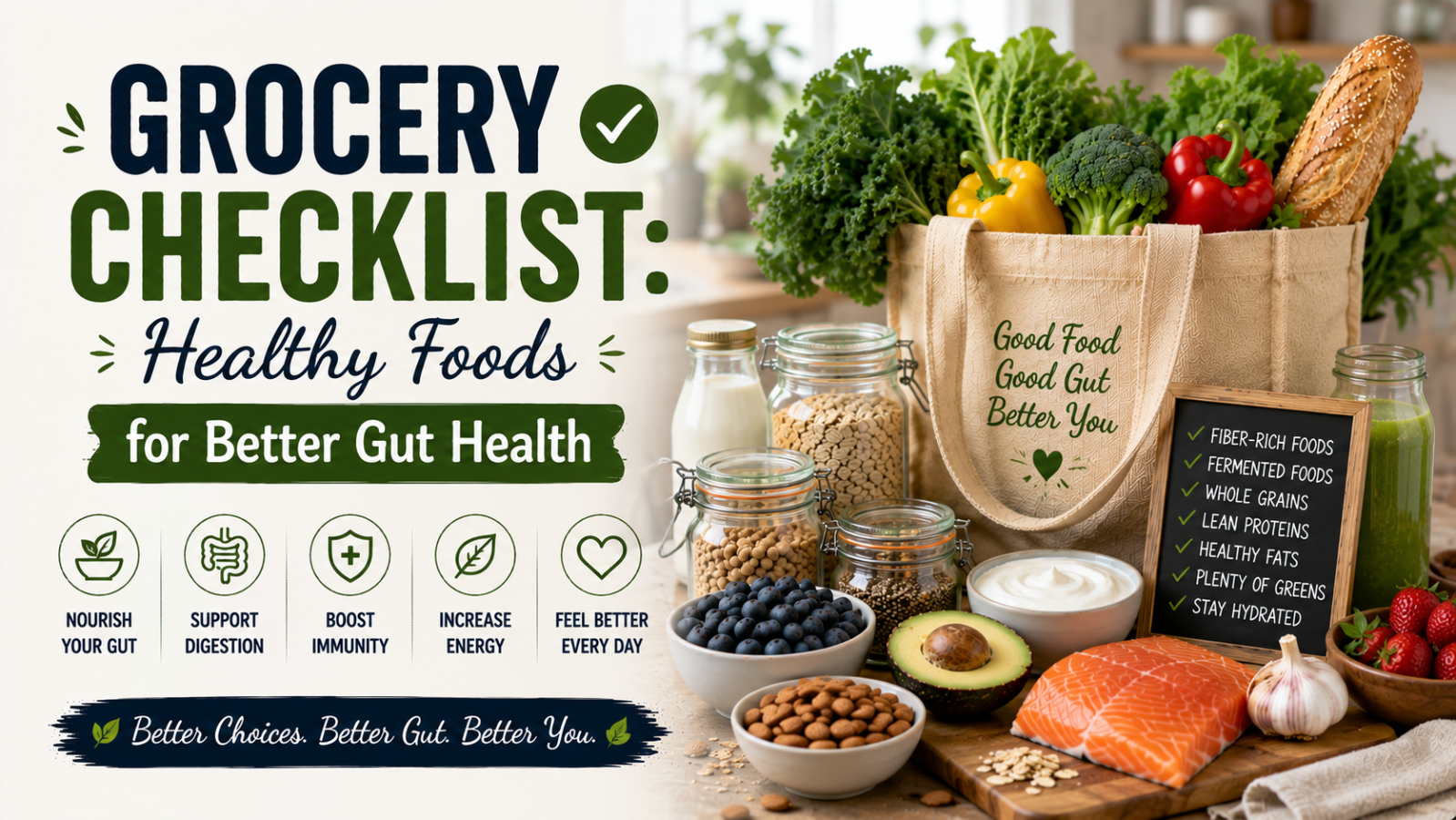
A grocery checklist can make healthy shopping much easier when you know what foods you actually need. Instead of wandering through every aisle or buying ingredients that sit unused, a simple plan helps you build meals around nutritious staples, fiber-rich foods, quality proteins, and satisfying drinks. You can also use the Copy Button on our site to instantly copy useful shopping tips and save them for your next store trip.
Quick Answer: What Should Be on a Grocery Checklist?
A useful grocery checklist should include vegetables, fruits, whole grains, beans, nuts, seeds, healthy proteins, fermented foods, and simple cooking ingredients. Add a few convenient options, too, so healthy meals remain realistic on busy days.
For gut-friendly shopping, focus on variety rather than buying a long list of specialty products. Fiber-rich plants, minimally processed foods, and fermented choices can all have a place in a balanced eating pattern.
Start Your Grocery Checklist With Fresh Produce
The produce section is usually the easiest place to begin. Filling your cart with different colors can help you bring a wider range of plant foods into your meals.
Try adding:
- Leafy greens such as spinach, kale, or romaine
- Broccoli or cauliflower
- Carrots
- Bell peppers
- Cucumbers
- Tomatoes
- Zucchini
- Green beans
- Mushrooms
- Apples
- Bananas
- Berries
- Oranges
- Kiwi
- Seasonal fruit
You don’t need every item each week. Instead, choose a few vegetables you genuinely enjoy and rotate them over time.
For example, frozen berries can work well when fresh fruit isn’t practical. Likewise, frozen vegetables can make weeknight cooking much easier without requiring you to wash and chop everything from scratch.
I often find that the best grocery choices are the foods that actually get eaten. A bag of greens isn’t useful if it gets forgotten in the refrigerator, so buy an amount that fits your routine.
Build a Grocery Checklist Around Fiber-Rich Foods
Fiber deserves a regular spot on your grocery checklist because it supports digestive health and helps make meals more filling. Many high-fiber foods also provide vitamins, minerals, and other plant compounds.
Good choices include:
- Oats
- Barley
- Brown rice
- Quinoa
- Whole-grain bread
- Whole-grain tortillas
- Lentils
- Black beans
- Chickpeas
- Split peas
- Chia seeds
- Ground flaxseed
- Pumpkin seeds
- Almonds
- Raspberries
However, you don’t need to overhaul your diet overnight. If your current diet is low in fiber, gradually adding more can be easier on your digestive system.
For instance, add berries to oatmeal, beans to a soup, or chia seeds to yogurt. Drinking enough fluid throughout the day can also support normal digestion as you increase fiber intake.
Add Protein to Your Grocery Checklist
Protein helps create satisfying meals, and there are plenty of options for different eating styles and budgets.
Consider including:
- Eggs
- Chicken
- Turkey
- Salmon
- Canned tuna
- Sardines
- Plain Greek yogurt
- Cottage cheese
- Tofu
- Tempeh
- Lentils
- Black beans
- Chickpeas
- Edamame
- Nuts and seeds
You don’t have to choose expensive cuts of meat or specialty products. Eggs, beans, canned fish, lentils, and plain yogurt can be practical choices for many households.
Meanwhile, pairing protein with vegetables and a fiber-rich carbohydrate creates an easy meal formula. Think salmon with roasted potatoes and broccoli, or black beans with brown rice, peppers, and avocado.
Choose Healthy Fats Without Overthinking It
Fat often gets treated as something to avoid, but your body needs dietary fat. The better approach is to choose useful sources and pay attention to portions.
Add a few of these to your grocery checklist:
- Extra-virgin olive oil
- Avocados
- Walnuts
- Almonds
- Pistachios
- Chia seeds
- Flaxseed
- Pumpkin seeds
- Natural peanut butter
- Natural almond butter
Olive oil works well for roasting vegetables and making simple dressings. Similarly, nuts and seeds can add texture to oatmeal, salads, yogurt, and grain bowls.
Still, calorie-dense foods can add up quickly. A small handful of nuts or a spoonful of nut butter may be enough to complement a meal.
Keep Fermented Foods on Your Grocery Checklist
Fermented foods can add variety to a gut-friendly eating pattern. Some products contain live microorganisms, although the amount and type can vary considerably.
Depending on your preferences, look for:
- Plain yogurt with live cultures
- Kefir
- Sauerkraut
- Kimchi
- Fermented vegetables
- Some fermented soy foods
Read labels when possible, especially if you’re looking specifically for products containing live cultures. Refrigerated fermented foods may also have different storage requirements than shelf-stable products.
Not every fermented food works for every person. For example, spicy kimchi may bother someone with a sensitive stomach, while plain yogurt may feel easier to tolerate.
That’s why personal tolerance matters.
Make Your Grocery Checklist Work for Busy Days
A healthy shopping list shouldn’t assume you’ll cook elaborate meals every night. Real life gets messy. Work runs late, kids need dinner, and sometimes you’re simply too tired to chop six vegetables.
Therefore, keep a few convenient foods available.
Useful choices include:
- Frozen vegetables
- Frozen fruit
- Prewashed greens
- Canned beans
- Low-sodium canned soups
- Canned fish
- Plain microwaveable whole grains
- Rotisserie chicken
- Hummus
- Plain yogurt
- Unsalted nuts
- Nut butter
- Eggs
- Whole-grain wraps
- Precut vegetables
Convenience isn’t automatically unhealthy. In fact, practical ingredients can make it easier to prepare balanced meals at home.
For example, combine rotisserie chicken, microwaveable brown rice, frozen broccoli, and olive oil for a quick dinner. It won’t win a cooking competition, but it can get dinner on the table.
Use Labels to Improve Your Grocery Checklist
Food labels can help you compare similar products, but you don’t need to study every number on the package.
Start with the ingredient list and Nutrition Facts label. Look at fiber, added sugars, sodium, protein, and serving size based on what you’re buying.
For packaged foods, shorter ingredient lists can sometimes make choices easier. However, a long ingredient list doesn’t automatically mean a product is unhealthy.
Whole-grain bread is a good example. Look for a whole grain listed as an early ingredient rather than judging the bread by its color alone.
Similarly, flavored yogurt may contain added sugar, while plain yogurt gives you more control over sweetness. You can add berries, cinnamon, or a small amount of fruit yourself.
Create a Grocery Checklist for Gut-Friendly Drinks
Drinks deserve attention because beverages can quietly add large amounts of sugar to a diet.
For everyday hydration, water is the simplest choice. You can also include:
- Sparkling water without added sugar
- Unsweetened herbal tea
- Green tea
- Black tea
- Coffee without excessive added sugar
- Plain kefir
- Milk or unsweetened fortified alternatives
Lemon, lime, cucumber, mint, or berries can add flavor to water without turning it into a sugary drink.
Meanwhile, don’t assume that a drink labeled “natural” or “wellness” automatically offers digestive benefits. Check the ingredient list and nutrition label instead.
If you’re buying probiotic drinks, also remember that probiotic products differ in their microorganisms, amounts, and evidence. A higher price doesn’t necessarily mean a better choice.
Plan Your Grocery Checklist by Meal
One of the easiest ways to waste food is to shop for ingredients without knowing how you’ll use them.
Instead, think about three or four meals before heading to the store.
For example:
Breakfast
- Oats
- Berries
- Greek yogurt
- Chia seeds
Lunch
- Whole-grain wraps
- Chicken
- Greens
- Hummus
- Cucumbers
Dinner
- Salmon
- Brown rice
- Broccoli
- Avocado
Snacks
- Apples
- Nuts
- Carrots
- Plain yogurt
Now the list has a purpose. The same ingredients can also appear in multiple meals, which helps reduce waste.
A bag of spinach might become part of an omelet, salad, sandwich, and dinner bowl. That’s much more useful than buying five unrelated vegetables because they happened to look appealing.
Grocery Checklist Mistakes That Make Healthy Eating Harder
Even a well-intentioned shopping trip can go sideways.
One common mistake is buying too much fresh food. Produce has a limited shelf life, so a smaller amount may make more sense if you shop once a week.
Another issue is choosing foods based only on health claims. Words such as “natural,” “light,” or “multigrain” don’t tell you everything about a product.
Also, don’t create a grocery checklist filled with foods you dislike. Healthy eating becomes much harder when every meal feels like a chore.
Instead, build your list around foods you enjoy. Then add one or two new ingredients at a time.
Finally, remember that your grocery cart doesn’t need to look perfect. A realistic shopping trip can include fresh produce, frozen vegetables, canned beans, whole grains, convenience foods, and a few foods simply chosen because you enjoy them.
A Simple Weekly Grocery Checklist
If you want a starting point, use this basic list and adjust it to your household.
Produce
- 3–5 vegetables
- 2–4 fruits
- Leafy greens
- One frozen vegetable
- One frozen fruit
Protein
- Eggs
- Chicken or turkey
- Fish
- Beans or lentils
- Greek yogurt or kefir
- Tofu or another plant protein
Fiber-Rich Staples
- Oats
- Brown rice or quinoa
- Whole-grain bread
- Whole-grain tortillas
- Chia or flaxseed
- Nuts or seeds
Healthy Fats
- Olive oil
- Avocado
- Natural nut butter
Gut-Friendly Extras
- Yogurt with live cultures
- Fermented vegetables
- Kefir
- Hummus
Drinks
- Water
- Sparkling water
- Unsweetened tea
- Coffee
- Unsweetened milk or fortified alternative
FAQ About a Healthy Grocery Checklist
What should I buy first at the grocery store?
Start with foods that form the foundation of your meals: vegetables, fruit, protein, whole grains, beans, and healthy fats. After that, add snacks, drinks, and convenience foods that fit your routine.
How can I make my grocery checklist healthier?
Add more whole and minimally processed foods, especially vegetables, fruit, beans, whole grains, nuts, seeds, and quality protein sources. At the same time, choose packaged foods by checking their ingredient list and Nutrition Facts label.
What foods are good for gut health?
Fiber-rich plant foods, beans, whole grains, fruits, vegetables, nuts, and seeds can support a healthy eating pattern for the gut. Fermented foods such as yogurt and kefir may also fit into that pattern.
Should I buy fresh or frozen vegetables?
Both can be useful. Fresh vegetables work well when you’ll eat them soon, while frozen options offer convenience and can reduce food waste.
How often should I make a grocery checklist?
Many people find it helpful to make one once a week. However, your schedule matters more than following a strict routine. A shorter list may work better if you shop several times a week.
Final Thoughts
A grocery checklist shouldn’t make healthy eating complicated. Its real purpose is to help you bring home foods that can become satisfying meals, while reducing impulse purchases and forgotten ingredients.
Start with vegetables, fruits, fiber-rich staples, protein, healthy fats, and simple drinks. Then add convenient options that make your actual routine easier. You don’t need a perfect cart; you need a practical one. If this list helps, use the Copy Button to save the checklist on your phone before your next shopping trip. A few minutes of planning can make the rest of the week feel much easier.











1 thought on “Grocery Checklist: A Simple Guide to Healthy Shopping”