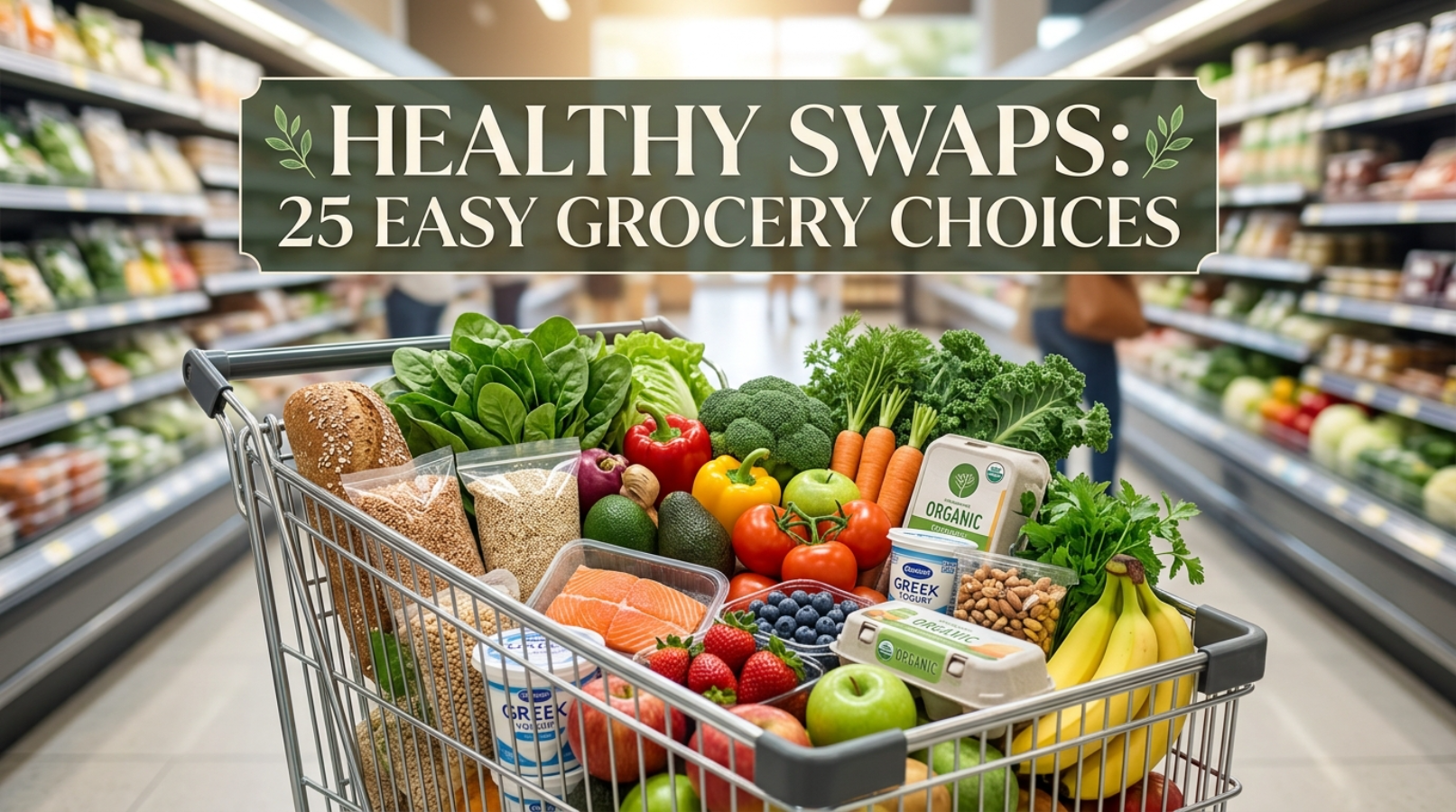
Healthy swaps can make everyday eating feel easier without forcing you to give up the foods you enjoy. Instead of rebuilding your entire diet, you can make a few practical changes at the grocery store and gradually create meals with more fiber, protein, healthy fats, and minimally processed foods.
I’ve found that the easiest swaps are the ones that fit meals people already eat. That’s why this guide focuses on realistic choices you can actually use, and you can use the Copy Button to quickly save or share the swaps that fit your next grocery trip.
Quick Answer: What Are Healthy Swaps?
Healthy swaps are simple food or drink substitutions that improve the nutritional quality of a meal while keeping it familiar and satisfying. For example, you might choose whole-grain bread instead of refined white bread, plain Greek yogurt instead of a sugary flavored yogurt, or sparkling water instead of a sugar-sweetened soda.
The goal isn’t perfection. Rather, healthy swaps help you add more nutrient-dense foods while reducing excess added sugar, refined grains, highly processed ingredients, or saturated fat when appropriate.
Healthy Swaps That Make Grocery Shopping Easier
A good grocery list doesn’t need dozens of specialty products. In fact, some of the most useful choices are basic foods that can work across breakfast, lunch, dinner, and snacks.
Start with swaps that solve a problem you regularly have. If breakfast leaves you hungry, add protein and fiber. If afternoon snacking gets out of hand, keep fruit, nuts, or yogurt ready to grab.
1. White bread → Whole-grain bread
Look for bread where a whole grain appears near the beginning of the ingredient list. Whole-grain bread can provide more fiber than refined white bread, which supports digestive health and helps make meals more filling.
2. Sugary cereal → Oatmeal
Instead of starting the morning with a heavily sweetened cereal, try plain oats topped with berries, cinnamon, walnuts, or peanut butter. You control the sweetness while adding fiber and healthy fats.
3. Flavored yogurt → Plain Greek yogurt
Plain Greek yogurt gives you a versatile base for breakfast and snacks. Add fruit for natural sweetness, or use it in savory dishes as a creamy sauce.
4. Sweetened coffee creamer → Milk or unsweetened alternatives
If your coffee tastes more like dessert than coffee, gradually reduce sweetened creamer. Milk or an unsweetened dairy or plant-based alternative can keep the drink creamy without adding as much sugar.
5. Soda → Sparkling water
You don’t have to switch from soda to plain water overnight. Sparkling water can provide carbonation and a refreshing flavor without the added sugar found in regular soda.
6. Fruit juice → Whole fruit
Whole fruit comes with fiber that juice often lacks because much of the fruit’s structure gets removed during processing. Try an orange, apple, berries, or melon alongside breakfast instead.
7. Chips → Popcorn
Air-popped popcorn can be a satisfying crunchy snack. Add a little olive oil and seasoning rather than relying on large amounts of butter or salty toppings.
8. Sweet pastries → Toast with nut butter
A slice of whole-grain toast with peanut or almond butter can provide a more balanced combination of carbohydrate, protein, and fat. Add sliced banana or berries if you’d like something sweet.
Healthy Swaps for More Fiber
Fiber deserves special attention because many Americans don’t get enough from their usual diets. It supports regular bowel movements and also provides fuel for certain gut microbes.
However, increasing fiber too quickly can cause gas or bloating for some people. Increase high-fiber foods gradually and drink enough fluids throughout the day.
9. White rice → Brown rice or another whole grain
Brown rice retains more of the grain than white rice. You can also rotate in quinoa, barley, farro, or other whole grains for variety.
10. Regular pasta → Whole-wheat pasta
Whole-wheat pasta adds more fiber while still working with familiar sauces. If you’re new to it, try mixing half whole-wheat pasta with regular pasta at first.
11. Low-fiber crackers → Whole-grain crackers
Check the label rather than trusting the front of the package. A simple whole-grain cracker with hummus or cheese can make a more substantial snack.
12. Fruit snacks → Fresh or frozen fruit
Fresh fruit is an easy choice, but frozen fruit works just as well for smoothies, oatmeal, yogurt, and quick desserts. Keep a bag in the freezer so you always have an option available.
13. Refined breakfast bar → Oats, nuts, and fruit
Many packaged bars contain plenty of added sugar while offering little fiber. A small bowl of oats with berries and chopped nuts can be just as convenient when prepared ahead.
14. Regular tortillas → Whole-grain tortillas
Whole-grain tortillas work well for wraps, tacos, breakfast burritos, and quick pizzas. Choose one you actually enjoy eating, because the best grocery choice is the one you’ll use.
Healthy Swaps for Better Protein and Satiety
Protein helps make meals satisfying, but you don’t need to turn every meal into a high-protein challenge. Instead, spread protein sources throughout your day.
Beans, lentils, eggs, seafood, poultry, dairy foods, tofu, nuts, and seeds can all fit into a balanced eating pattern.
15. Processed lunch meat → Roasted chicken or turkey
For sandwiches and wraps, leftover roasted chicken or turkey can replace some highly processed deli meats. Cook extra at dinner and save portions for the next day’s lunch.
16. Meat-heavy chili → Bean-rich chili
Beans can stretch a meal while adding fiber and plant protein. Try using black beans, kidney beans, pinto beans, or lentils alongside your usual chili ingredients.
17. Sugary protein bar → Nuts and Greek yogurt
A protein bar isn’t automatically a poor choice, but some contain substantial amounts of added sugar. Plain Greek yogurt with walnuts or almonds gives you a simple alternative.
18. Cream cheese spread → Hummus
Hummus works on toast, wraps, vegetables, and grain bowls. It also adds chickpeas, which provide plant protein and fiber.
19. Fried chicken → Roasted or grilled chicken
You can keep the familiar protein while changing the cooking method. Roasted chicken also works beautifully for leftovers, salads, sandwiches, and soups.
Healthy Swaps for Everyday Drinks
Drinks can quietly add a surprising amount of sugar to a normal day, especially when portions grow larger than expected. That doesn’t mean every beverage needs to be boring.
Instead, think about what you want from the drink: hydration, caffeine, flavor, or something refreshing.
20. Sweet tea → Unsweetened iced tea
Brew black, green, or herbal tea and chill it in the refrigerator. Add lemon, mint, cucumber, or a small amount of fruit for extra flavor.
21. Flavored sugary drink → Water with fruit
Try water infused with berries, citrus, cucumber, or fresh herbs. It gives plain water a little personality without requiring a sweetened beverage.
22. Dessert-style smoothie → Balanced smoothie
Smoothies can become sugar-heavy when they contain large amounts of juice, sweetened yogurt, syrups, and multiple servings of fruit. Instead, combine fruit with plain yogurt, milk or an unsweetened alternative, leafy greens, and seeds.
23. Energy drink → Coffee or unsweetened tea
For adults who tolerate caffeine well, coffee or unsweetened tea can be a simpler option than highly sweetened energy drinks. Keep an eye on total caffeine intake, particularly if caffeine affects your sleep.
Healthy Swaps for Cooking at Home
Some of the most useful changes happen before food reaches your plate. A few smart pantry and refrigerator choices can make homemade meals easier during busy weeks.
24. Butter for every cooking task → Extra-virgin olive oil when appropriate
Extra-virgin olive oil works well for many sautéing, roasting, and dressing applications. It also adds flavor, so you may need less sauce or heavy seasoning.
25. Bottled sugary sauce → Simple homemade sauce
Try combining ingredients such as olive oil, lemon juice, vinegar, herbs, garlic, mustard, or plain yogurt. Homemade sauces give you more control over sweetness, sodium, and portion size.
How to Choose Healthy Swaps Without Overthinking Labels
The grocery aisle can make simple eating seem complicated. One package says “natural,” another says “multigrain,” and another uses phrases such as “made with whole grains.”
Don’t let front-of-package marketing make the decision for you.
Instead, turn the package around and check the nutrition facts panel and ingredient list. Look for foods that provide useful nutrients such as fiber and protein, while keeping added sugars and sodium appropriate for your overall diet.
For bread and grain products, “whole grain” should appear clearly in the ingredients. For yogurt, compare added sugar and protein. For drinks, check the serving size before deciding how much sugar you’re actually getting.
And remember that a food doesn’t have to be perfect to belong in your kitchen.
A Realistic Healthy Swaps Grocery List
If you’re starting from scratch, don’t replace everything at once. Pick five changes that match foods you already buy.
A simple shopping list could include:
- Whole-grain bread
- Old-fashioned oats
- Brown rice or quinoa
- Whole-wheat pasta
- Plain Greek yogurt
- Eggs
- Beans or lentils
- Hummus
- Chicken or fish
- Fresh berries
- Apples or oranges
- Leafy greens
- Frozen vegetables
- Nuts or seeds
- Natural peanut or almond butter
- Extra-virgin olive oil
- Sparkling water
- Unsweetened tea
- Herbs and spices
- Avocado
This mix gives you building blocks rather than rigid recipes. You can turn them into oatmeal, grain bowls, wraps, salads, soups, smoothies, or simple dinners.
Healthy Swaps Don’t Have to Mean Giving Up Favorite Foods
This is where many healthy eating plans become unrealistic. If someone loves pizza, telling them to never eat pizza again isn’t a useful grocery strategy.
Instead, look at the meal as a whole.
You might choose a vegetable-heavy pizza, add a side salad, and pair it with sparkling water. If tacos are a family favorite, use beans, vegetables, avocado, and a lean protein alongside the usual toppings.
The same idea applies to dessert. You can enjoy a cookie and still build most of your meals around nutrient-dense foods.
That flexibility matters because sustainable eating usually has room for foods chosen for enjoyment, not just nutrition.
Common Healthy Swap Mistakes to Avoid
Not every replacement automatically makes a meal better.
For example, a gluten-free cookie can still contain plenty of added sugar and saturated fat. A granola labeled “natural” can also be calorie-dense. Plant-based doesn’t automatically mean nutrient-rich.
Another common mistake is choosing a food solely because the package says “low fat.” Some low-fat products compensate with added sugar or other ingredients.
Instead, consider the entire food. Ask three simple questions:
- What nutrients does this food provide?
- Will it keep me satisfied?
- Does it fit the way I actually eat?
Those questions are often more useful than chasing a perfect label.
FAQ About Healthy Swaps
Are healthy swaps better than dieting?
Healthy swaps can be a practical alternative to restrictive dieting because they focus on improving individual choices. You can gradually change meals without creating a long list of forbidden foods.
What is the easiest healthy swap to start with?
Start with beverages if you regularly drink soda, sweet tea, or other sugary drinks. Replacing some of them with water, sparkling water, or unsweetened tea can be simple and noticeable.
Are healthy swaps good for gut health?
Many healthy swaps can support digestive health when they increase fiber-rich foods such as whole grains, beans, vegetables, fruits, nuts, and seeds. However, increase fiber gradually if your current intake is low.
Do I need to buy organic foods for healthy swaps?
No. Organic foods can be part of a healthy diet, but you don’t need an all-organic grocery cart to eat well. Budget, availability, personal preference, and overall food quality all matter.
Can I still eat processed foods?
Yes. Processing covers a wide range of foods. Frozen vegetables, canned beans, plain yogurt, and whole-grain bread are all processed in some way. Focus on the overall nutritional value rather than trying to eliminate every packaged food.
Final Takeaway
The best healthy swaps are rarely the most complicated ones. They’re the small grocery decisions that make your normal meals more nutritious without making them feel unfamiliar or restrictive.
Start with a few changes you can repeat: whole grains instead of refined grains, fruit instead of juice, plain yogurt instead of heavily sweetened varieties, beans alongside meat, and water or unsweetened drinks more often.
Then build from there. Healthy eating gets much easier when your kitchen already contains foods that make the better choice convenient.
If you want to save these ideas for your next grocery trip, use the Copy Button to quickly copy and share your favorite healthy swaps with family or friends.

Here’s a short Gutrova-style author biography for Josh Axe:
Josh Axe
Josh Axe is a wellness expert, author, and educator known for his work in nutrition, natural health, and gut wellness. As a contributor to Gutrova, he shares practical insights on digestive health, healthy eating habits, and lifestyle strategies that help readers build a stronger foundation for overall well being. His content focuses on making wellness simple, actionable, and accessible for everyday life.











1 thought on “Healthy Swaps: 25 Easy Grocery Choices”