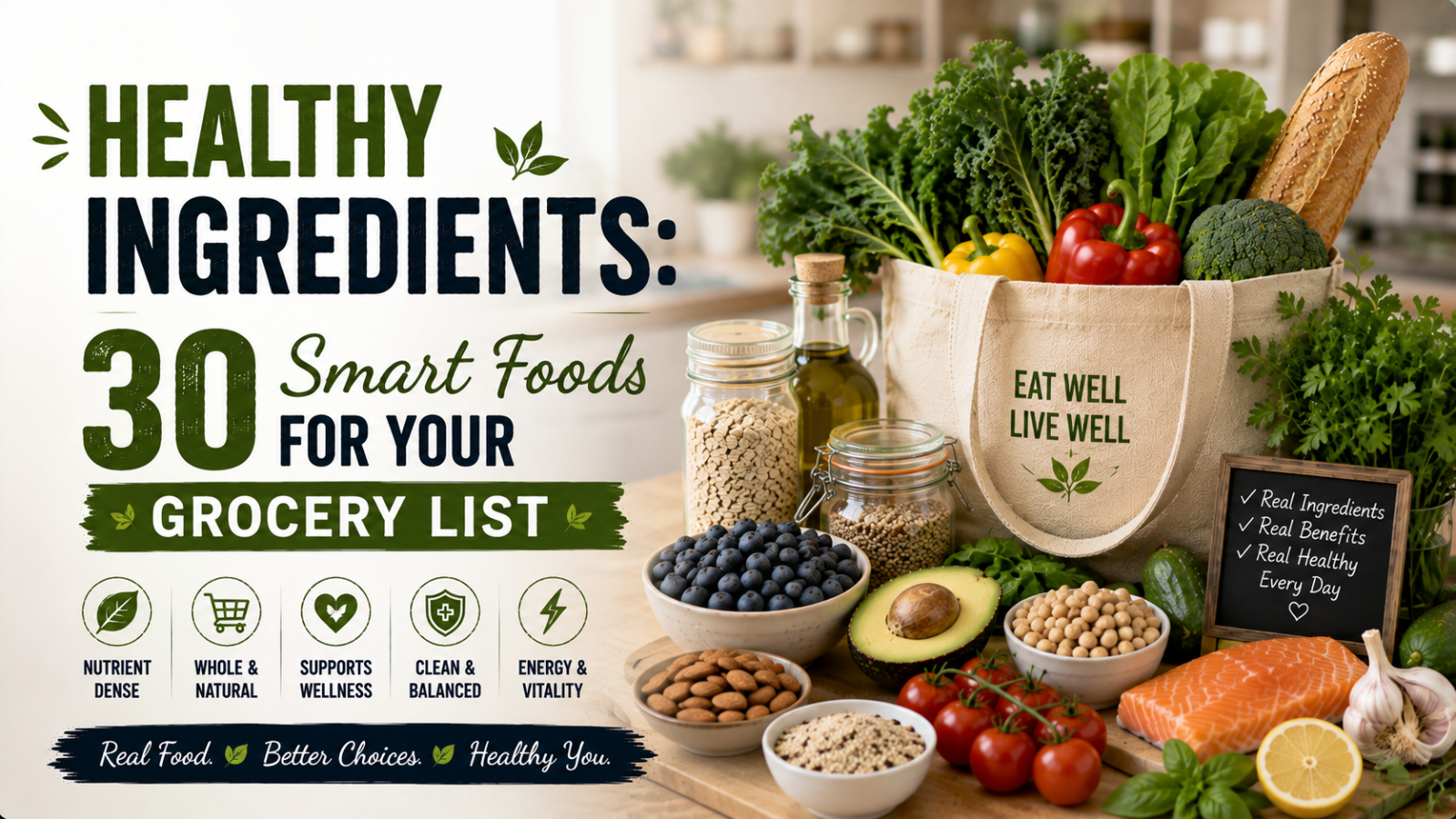
Healthy ingredients don’t need to be expensive, unusual, or difficult to prepare; the most useful choices are often simple foods you can combine in dozens of ways. A well-stocked kitchen makes it easier to cook balanced meals, add more fiber, and avoid relying on takeout when the day gets hectic. The trick is choosing ingredients that work hard for you, not ingredients that look impressive on a grocery shelf.
If you spot tips you want to remember, use the Copy Button to quickly save or share your favorite healthy ingredients for your next grocery trip.
Quick Answer: What Are Healthy Ingredients?
Healthy ingredients are nutrient-rich foods that can help you build balanced meals and snacks. They include vegetables, fruits, beans, lentils, whole grains, nuts, seeds, lean proteins, seafood, eggs, and minimally processed dairy foods.
A useful ingredient doesn’t have to be labeled “superfood.” In fact, everyday options such as oats, potatoes, canned beans, frozen vegetables, eggs, and apples can form the backbone of a nutritious kitchen.
The best choices are foods that provide useful nutrients, fit your budget, taste good to you, and are practical enough to use regularly.
Healthy Ingredients for a Better-Stocked Kitchen
A grocery list becomes much more useful when every item has a job.
Instead of buying random foods because they’re on sale, think about what each ingredient can become. Spinach can go into eggs, soups, pasta, smoothies, or grain bowls. Chickpeas can become a salad topping, curry base, or roasted snack.
That flexibility matters.
1. Leafy Greens
Spinach, kale, romaine, collard greens, and other leafy vegetables provide fiber, vitamins, minerals, and plant compounds.
Fresh greens work well in salads, while frozen spinach can disappear into omelets, soups, and smoothies.
2. Broccoli
Broccoli is easy to roast, steam, stir-fry, or add to pasta.
It also provides fiber and several micronutrients, making it a useful vegetable to keep in rotation.
3. Sweet Potatoes
Sweet potatoes offer carbohydrates, fiber, and beta-carotene.
Bake several at once, then use them throughout the week with eggs, chicken, beans, or greens.
4. Berries
Blueberries, strawberries, raspberries, and blackberries bring natural sweetness along with fiber and plant compounds.
Keep frozen berries available for oatmeal and smoothies when fresh fruit isn’t practical.
5. Apples
Apples are one of the easiest grab-and-go fruits.
Pair one with peanut butter or a handful of nuts for a more filling snack.
6. Bananas
Bananas are inexpensive, portable, and naturally sweet.
Use them in oatmeal, yogurt bowls, smoothies, or homemade muffins.
Healthy Ingredients That Add Fiber
Fiber deserves special attention when you’re building a grocery list.
It supports normal digestion and helps provide fuel for certain gut microbes. Yet you don’t need to buy a specialty fiber product to get more.
Look first at everyday plant foods.
7. Oats
Oats contain soluble fiber, including beta-glucan.
Try them as oatmeal, overnight oats, or a base for homemade energy bites.
8. Lentils
Lentils are inexpensive and cook relatively quickly.
Add them to soups, grain bowls, salads, or tomato-based dishes.
9. Black Beans
Canned black beans are one of my favorite practical pantry ingredients because they require almost no cooking.
Rinse them, then add them to tacos, rice bowls, salads, or chili.
10. Chickpeas
Chickpeas work in both hot and cold meals.
Mash them into a simple spread, toss them into salads, or roast them with spices for a crunchy snack.
11. Chia Seeds
Chia seeds contain fiber, healthy fats, and minerals.
Add a small amount to oatmeal, yogurt, or chia pudding.
12. Ground Flaxseed
Ground flaxseed is easy to stir into oatmeal, smoothies, yogurt, and baked foods.
Grinding the seeds helps make their nutrients more accessible than eating them whole.
Healthy Ingredients for Protein
Protein helps build and maintain body tissues and can make meals more satisfying.
You don’t have to depend on one protein source. Rotate animal and plant options throughout the week.
13. Eggs
Eggs are versatile enough for breakfast, lunch, or dinner.
Scramble them with vegetables, boil them for snacks, or add them to a grain bowl.
14. Greek Yogurt
Plain Greek yogurt provides protein and calcium.
Choose an unsweetened version and add berries, nuts, cinnamon, or a little fruit for flavor.
15. Salmon
Salmon provides protein and omega-3 fatty acids.
Bake a fillet for dinner, then use leftovers in salads or grain bowls.
16. Canned Tuna
Canned tuna can turn a basic lunch into a protein-rich meal within minutes.
Combine it with beans, greens, tomatoes, or whole-grain bread.
17. Tofu
Tofu absorbs flavors well, which makes it surprisingly flexible.
Bake it, stir-fry it, or crumble it into a vegetable scramble.
18. Chicken
Chicken works across many cuisines and meal styles.
Roast extra portions so you have protein ready for salads, wraps, bowls, and quick dinners.
Healthy Ingredients for Better Fats
Dietary fat isn’t something you need to eliminate.
Certain sources provide unsaturated fats along with other useful nutrients.
19. Avocados
Avocados provide fiber and monounsaturated fat.
Add them to toast, salads, tacos, eggs, or grain bowls.
20. Walnuts
Walnuts provide healthy fats and plant-based omega-3 fatty acids.
Keep a small portion available for snacks or sprinkle them over oatmeal and yogurt.
21. Extra-Virgin Olive Oil
Olive oil can become the foundation of a simple dressing.
Mix it with lemon juice, vinegar, herbs, and spices for a quick homemade option.
22. Natural Peanut Butter
Look for peanut butter with a simple ingredient list.
It works especially well with apples, bananas, whole-grain toast, oatmeal, and smoothies.
Healthy Ingredients That Make Meals Taste Better
Nutrition isn’t enough if the food tastes bland.
Flavor ingredients can help you enjoy vegetables, beans, grains, and proteins more often.
23. Garlic
Fresh garlic adds a lot of flavor without requiring complicated preparation.
Use it in roasted vegetables, soups, sauces, marinades, and stir-fries.
24. Fresh Herbs
Parsley, cilantro, basil, mint, and rosemary can change the character of a simple meal.
Keep a few favorites in rotation.
25. Lemons
A squeeze of lemon can brighten vegetables, fish, grains, salads, and beans.
It can also help you use less heavy sauce while keeping food flavorful.
26. Ginger
Fresh ginger works well in stir-fries, soups, dressings, and tea.
Its sharp flavor pairs especially well with vegetables and seafood.
27. Cinnamon
Cinnamon can add warmth without needing much sugar.
Try it in oatmeal, plain yogurt, baked apples, or smoothies.
Healthy Ingredients to Keep in the Pantry
A useful pantry gives you a backup plan.
When fresh food runs low, these ingredients can help you make a decent meal without another store run.
28. Canned Tomatoes
Canned tomatoes can become soup, pasta sauce, chili, shakshuka, or a base for beans.
Choose products that fit your preferred sodium level.
29. Brown Rice
Brown rice provides whole-grain carbohydrates and can serve as the base for countless meals.
Keep cooked portions in the refrigerator or freezer for faster weeknight dinners.
30. Canned Sardines
Sardines provide protein, omega-3 fats, and several micronutrients.
They work well on whole-grain toast, in salads, or mixed into pasta.
How to Turn Healthy Ingredients Into Real Meals
A refrigerator full of nutritious foods doesn’t automatically produce dinner.
You need a simple way to combine them.
Try this formula:
Protein + vegetable + fiber-rich carbohydrate + healthy fat + flavor
For example:
Salmon bowl:
Salmon + broccoli + brown rice + avocado + lemon
Bean tacos:
Black beans + cabbage + whole-grain tortillas + avocado + salsa
Breakfast bowl:
Greek yogurt + berries + oats + walnuts + cinnamon
Quick lunch:
Tuna + white beans + spinach + tomatoes + olive oil + lemon
Once you understand the pattern, you can swap ingredients without rebuilding your meal plan every time.
Healthy Ingredients on a Tight Budget
You can eat well without buying every premium product in the store.
Start with affordable staples.
Beans and lentils are usually inexpensive. So are oats, potatoes, eggs, bananas, carrots, cabbage, and frozen vegetables.
Meanwhile, expensive specialty products aren’t automatically more nutritious.
If fresh berries aren’t in your budget, buy frozen. If wild-caught salmon costs too much, canned sardines or tuna may be practical alternatives.
A healthy grocery cart should fit your actual budget.
Healthy Ingredients for Busy Weeknights
Time is a nutrition factor, too.
If cooking takes too long, even the best grocery plan can fall apart.
Keep a few fast options ready:
- Frozen vegetables
- Canned beans
- Prewashed greens
- Eggs
- Plain Greek yogurt
- Canned fish
- Microwaveable whole grains
- Rotisserie chicken
- Frozen fruit
These aren’t shortcuts you need to feel bad about. They’re ways to reduce friction.
For example, combine microwaveable brown rice, canned black beans, frozen corn, salsa, and avocado. That’s a meal in minutes.
How to Shop for Healthy Ingredients Without Overspending
Before heading to the store, check your refrigerator, freezer, and pantry.
Then write down three things:
What needs using?
This helps reduce food waste.
What meals can I make?
Choose a few simple meals before buying ingredients.
What can serve multiple purposes?
Prioritize foods you can use in several dishes.
For instance, spinach can become breakfast greens, salad, soup, or a smoothie ingredient.
That kind of flexibility is more valuable than buying a long list of foods you’ll use once.
Common Grocery Mistakes to Avoid
Buying Too Much Fresh Produce
Fresh vegetables are nutritious, but buying more than you can eat creates waste.
Mix fresh and frozen produce instead.
Shopping Without a Meal Plan
You don’t need a rigid seven-day menu. However, knowing three or four meals you’ll make can prevent random purchases.
Focusing Only on Superfoods
No single ingredient makes a diet healthy.
A combination of ordinary foods usually matters much more.
Forgetting Flavor
If healthy food tastes boring, you won’t want to eat it repeatedly.
Keep herbs, spices, garlic, lemon, vinegar, and other flavor boosters available.
A Simple Healthy Ingredients Shopping List
For your next grocery trip, consider this starter list:
Produce
- Spinach
- Broccoli
- Carrots
- Sweet potatoes
- Berries
- Apples
- Bananas
- Avocados
- Lemons
Protein
- Eggs
- Chicken
- Salmon
- Greek yogurt
- Lentils
- Black beans
- Tuna
Whole grains
- Oats
- Brown rice
- Whole-grain bread
- Whole-grain tortillas
Healthy fats
- Olive oil
- Walnuts
- Peanut butter
- Chia seeds
- Ground flaxseed
Flavor
- Garlic
- Ginger
- Cinnamon
- Fresh herbs
- Vinegar
- Salsa
Adjust the quantities to your household, budget, food preferences, and cooking schedule.
FAQ About Healthy Ingredients
What are the healthiest ingredients to buy?
Start with vegetables, fruits, beans, lentils, whole grains, nuts, seeds, eggs, seafood, poultry, and minimally processed dairy foods. Variety matters more than finding one perfect ingredient.
What healthy ingredients should I always keep at home?
Oats, beans, lentils, eggs, frozen vegetables, frozen berries, brown rice, canned tomatoes, nuts, and olive oil are useful starting points because you can combine them in many ways.
Are canned foods healthy ingredients?
Many canned foods can fit into a nutritious diet. Look for options with little added sugar and choose lower-sodium products when appropriate. Rinsing canned beans can also reduce some of their sodium.
Which healthy ingredients are good for digestion?
Foods containing fiber, such as oats, beans, lentils, vegetables, fruits, nuts, and seeds, can support normal digestion. Increase fiber gradually if your current intake is low.
Can healthy ingredients be affordable?
Absolutely. Build meals around inexpensive staples such as beans, lentils, oats, potatoes, eggs, seasonal produce, and frozen vegetables. You don’t need premium products to eat well.
Final Thoughts
The most useful healthy ingredients are the ones that make nutritious eating easier in your actual life. Stock foods you enjoy, choose ingredients that work in several meals, and keep a few quick options available for busy days.You don’t need a perfect grocery cart. Start with vegetables, fruit, protein, whole grains, healthy fats, and a few flavor boosters. Then build meals from there.
A well-planned kitchen can make healthy choices feel less like a daily decision and more like the natural option. Save this guide with the Copy Button before your next grocery trip so you can quickly check your list while shopping.

Elizabeth Boham is a respected functional medicine physician and wellness educator with a passion for helping people improve their health through nutrition and lifestyle changes. As a contributor to Gutrova, she shares practical insights on gut health, digestive wellness, and healthy living, making complex health topics easy to understand and apply in everyday life.











1 thought on “Healthy Ingredients: 30 Smart Foods for Your Grocery List”