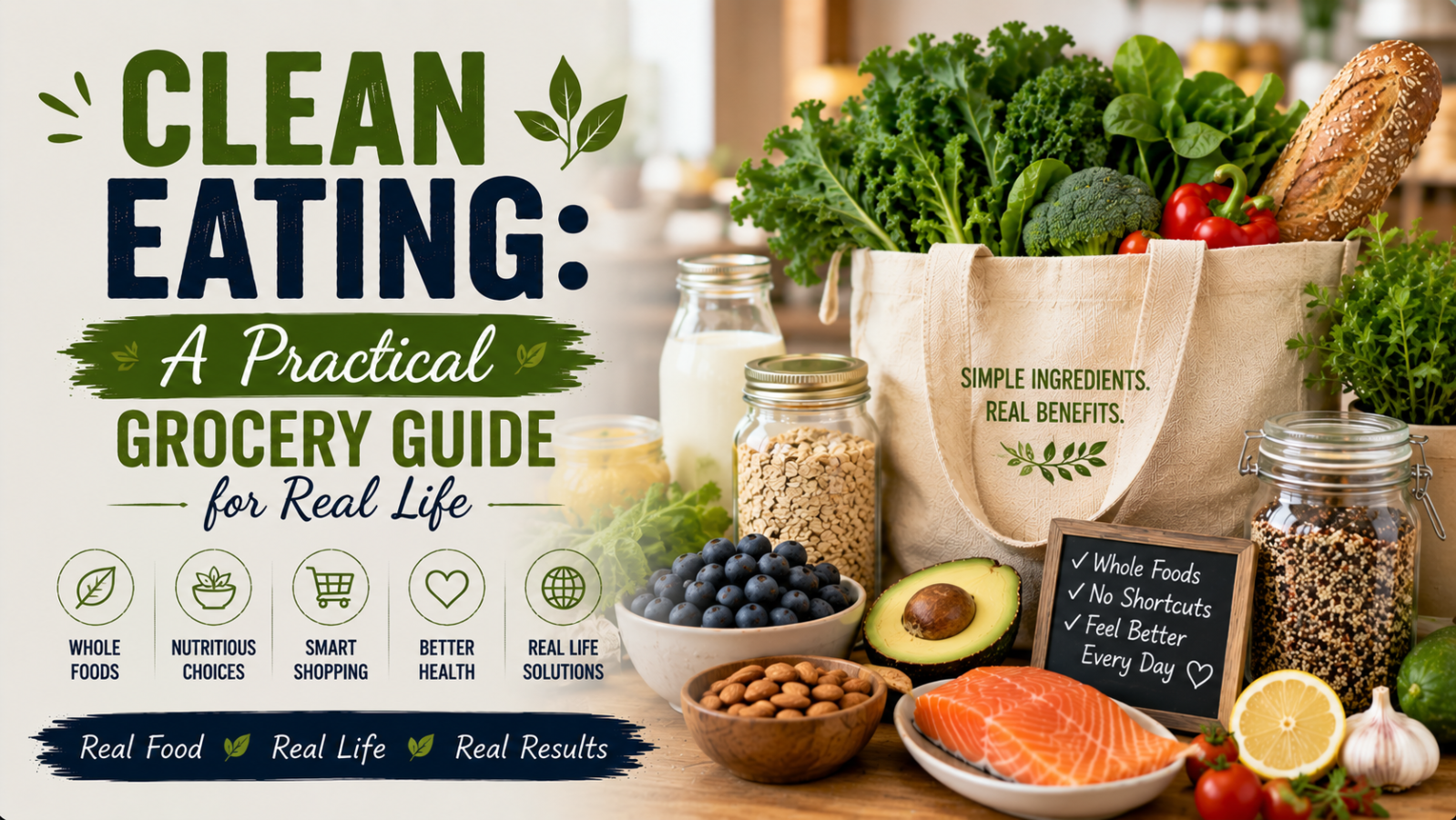
Clean eating can be as simple as choosing more minimally processed foods and making balanced meals from ingredients you recognize. You don’t need a perfect kitchen or a strict list of forbidden foods; instead, a few smart grocery habits can make everyday meals easier and more nourishing. The best clean eating plan is one that still works when you’re tired, busy, or staring into an almost-empty refrigerator.
If you like saving useful ideas while shopping, use the Copy Button to quickly copy and save the tips below for your next grocery trip.
Quick Answer: What Is Clean Eating?
Clean eating generally means emphasizing whole and minimally processed foods such as vegetables, fruits, beans, whole grains, nuts, seeds, eggs, fish, poultry, and plain dairy products.
It doesn’t mean you must avoid every packaged food. Frozen vegetables, canned beans, plain yogurt, whole-grain bread, and canned fish can all fit into a nutritious eating pattern.
The goal is to improve the quality of your overall diet, not to make every meal flawless.
Clean Eating Starts With Your Grocery Cart
Healthy meals often begin long before you turn on the stove.
If your refrigerator contains vegetables, fruit, protein sources, whole grains, and a few easy ingredients, you have more options when hunger hits. On the other hand, if the kitchen is mostly stocked with snack foods, sugary drinks, and convenience meals, those choices become harder to resist.
I’ve found that a useful grocery list doesn’t need to be complicated. It simply needs to answer one question: What can I make with this when I get home?
Try shopping across a few basic categories.
Produce
Choose a mix of fresh and frozen options:
- Spinach
- Broccoli
- Carrots
- Bell peppers
- Tomatoes
- Cabbage
- Green beans
- Sweet potatoes
- Apples
- Bananas
- Berries
- Oranges
Frozen produce is especially handy because it lasts longer and requires little preparation.
Protein
Build meals around foods such as:
- Eggs
- Chicken
- Turkey
- Salmon
- Tuna
- Sardines
- Plain Greek yogurt
- Cottage cheese
- Lentils
- Black beans
- Chickpeas
- Tofu
You don’t need meat at every meal. Beans, lentils, tofu, eggs, and dairy can provide useful alternatives.
Whole-Grain Carbohydrates
Carbohydrates aren’t something you need to fear.
For a clean eating approach, consider:
- Oats
- Brown rice
- Quinoa
- Barley
- Bulgur
- Whole-grain bread
- Whole-wheat pasta
- Whole-grain tortillas
- Potatoes
- Sweet potatoes
The best option is often the one you actually enjoy and will prepare consistently.
How to Choose Packaged Foods Without Stress
Here’s where clean eating can become unnecessarily complicated.
Some people see a long ingredient list and assume the product doesn’t belong in a healthy diet. That’s not always true. Ingredients such as spices, vitamins, minerals, preservatives, or stabilizers can serve practical purposes.
Instead of judging a food by the number of ingredients alone, look at the bigger picture.
Check the serving size first. Then look at fiber, protein, added sugar, sodium, and the ingredient list.
For example, plain oatmeal in a package is still a convenient food. A whole-grain bread with several ingredients can also be a useful choice.
A Better Label Question
Rather than asking, “Is this food clean?” ask:
“Does this food help me build the diet I want?”
That small change removes a lot of unnecessary food anxiety.
Clean Eating and Gut-Friendly Foods
A grocery cart built around plants can also support digestive health because many plant foods provide dietary fiber.
Fiber is found naturally in foods such as beans, lentils, oats, berries, apples, vegetables, nuts, and seeds.
Your gut microbes can use some types of fiber, producing compounds during fermentation that play roles in the gut environment.
However, more fiber isn’t always better overnight.
If your current diet contains very little fiber, suddenly eating huge portions of beans, bran, and raw vegetables may leave you uncomfortable. Instead, increase fiber gradually and drink enough fluid.
Add Variety, Not Just More Fiber
One of the easiest clean eating mistakes is eating the same “healthy” foods every day.
You don’t need five superfoods.
Instead, rotate your choices.
Try oats one morning, whole-grain toast another day, and potatoes with eggs on the weekend. Likewise, alternate spinach with broccoli, carrots, cabbage, peppers, or green beans.
Different plant foods provide different combinations of fiber and plant compounds.
Clean Eating Breakfast Ideas
Breakfast doesn’t have to be elaborate.
A balanced morning meal might include:
Oatmeal bowl:
Oats + berries + walnuts + plain Greek yogurt
Savory breakfast:
Eggs + spinach + whole-grain toast + avocado
Quick option:
Plain Greek yogurt + banana + chia seeds + peanut butter
Smoothie:
Berries + plain yogurt + milk or fortified alternative + spinach + ground flaxseed
Notice the pattern. Each meal combines several food groups instead of relying on one ingredient.
That makes breakfast more satisfying and gives you flexibility.
Clean Eating Lunches That Don’t Feel Boring
Lunch often becomes the weak spot when people try to eat better.
A salad every day sounds healthy, but a small bowl of lettuce isn’t much of a meal.
Instead, make lunch substantial.
Start with greens or another vegetable. Add protein, a high-fiber carbohydrate, and some healthy fat.
For example:
- Chicken + quinoa + spinach + avocado
- Chickpeas + cucumber + tomatoes + whole-grain pita
- Tuna + white beans + greens + olive oil
- Lentils + roasted vegetables + brown rice
- Turkey + vegetables + whole-grain tortilla
Add lemon juice, herbs, salsa, or a simple vinaigrette for flavor.
Healthy food shouldn’t taste like punishment.
Clean Eating Dinner Formula
When you don’t have a recipe, use a simple formula:
Protein + vegetable + carbohydrate + flavor
Try baked salmon with potatoes and roasted broccoli.
Another night, make chicken tacos with black beans, cabbage, avocado, and salsa.
Short on time? Scramble eggs with spinach and peppers, then serve them with roasted potatoes and fruit.
The point isn’t to create a picture-perfect plate. It’s to have a reliable method for getting dinner on the table.
Keep Three Emergency Meals Ready
Busy days happen.
For those evenings, keep ingredients for three fast meals:
- Bean bowl: Canned beans + microwaveable brown rice + frozen vegetables + salsa
- Egg plate: Eggs + whole-grain toast + avocado + fruit
- Tuna bowl: Canned tuna + potatoes + greens + olive oil and lemon
These meals can save you from making a rushed food decision when you’re already exhausted.
Clean Eating on a Budget
Eating nutritious food doesn’t require a refrigerator full of expensive specialty products.
Some affordable staples include:
- Oats
- Rice
- Potatoes
- Beans
- Lentils
- Eggs
- Canned tuna
- Peanut butter
- Bananas
- Carrots
- Cabbage
- Frozen vegetables
- Seasonal fruit
Buy what’s abundant and reasonably priced.
For example, frozen berries may cost less than fresh berries and last much longer. Likewise, dried lentils can provide several meals from one inexpensive package.
Shop Your Pantry First
Before going to the store, check what you already have.
You may discover:
- A half bag of rice
- Canned tomatoes
- Lentils
- Peanut butter
- Oats
- Frozen vegetables
- Spices
Then build your grocery list around those ingredients.
This simple habit can reduce food waste and keep grocery spending under control.
Drinks Matter, Too
Clean eating isn’t only about what’s on your plate.
For everyday hydration, water is the simplest choice. Unsweetened tea, sparkling water, and other low-sugar drinks can also fit comfortably into a balanced diet.
If you enjoy smoothies, build them around more than fruit juice and sweeteners.
Try berries, plain Greek yogurt, milk or a fortified dairy alternative, spinach, chia seeds, or nut butter. This creates a more substantial drink than a fruit-only smoothie.
Sweetened beverages, meanwhile, can add a lot of sugar without providing the same fullness as a meal.
You don’t have to ban them. Simply make water and lower-sugar choices your usual options.
Common Clean Eating Mistakes
A little structure helps, but too much can backfire.
Mistake 1: Treating “Clean” as Perfect
One restaurant meal doesn’t ruin your eating pattern.
Likewise, eating a cookie doesn’t mean you’ve failed.
Return to your normal meals at the next opportunity.
Mistake 2: Buying Foods You Don’t Like
Kale isn’t mandatory.
Neither are chia seeds, quinoa, or any other trendy ingredient.
If you hate a food, don’t build your diet around it. Choose nutritious foods you genuinely enjoy.
Mistake 3: Forgetting Convenience
Some people make clean eating so complicated that every meal requires an hour of cooking.
That isn’t sustainable for most families.
Frozen vegetables, canned beans, prewashed greens, rotisserie chicken, plain yogurt, and microwaveable whole grains can make nutritious meals much easier.
Mistake 4: Cutting Too Much
Clean eating shouldn’t mean eliminating entire food groups without a good reason.
Your body needs carbohydrates, protein, fats, vitamins, minerals, fiber, and fluids. A varied diet can provide those nutrients without turning meals into a long list of restrictions.
A One-Week Clean Eating Grocery List
Here’s a practical starting point for one person or a small household.
Produce
- Spinach
- Broccoli
- Bell peppers
- Carrots
- Sweet potatoes
- Apples
- Bananas
- Berries
- Avocados
- Lemons
Protein
- Eggs
- Chicken
- Salmon
- Plain Greek yogurt
- Black beans
- Lentils
- Canned tuna
Grains and starches
- Oats
- Brown rice
- Quinoa
- Whole-grain bread
- Potatoes
Fats and extras
- Olive oil
- Natural peanut butter
- Walnuts
- Chia or ground flaxseed
- Salsa
- Herbs and spices
You can adjust the list based on household size, budget, allergies, preferences, and cooking time.
How to Make Clean Eating Easier This Week
Don’t overhaul your entire kitchen in one afternoon.
Instead, choose three small changes.
First, add one fruit or vegetable to a meal you already eat.
Next, replace one sugary drink with water or unsweetened tea.
Finally, prepare one protein and one grain ahead of time so tomorrow’s meals require less work.
Once those habits feel normal, add another.
That’s often much easier than trying to follow a perfect seven-day meal plan from day one.
FAQ About Clean Eating
What foods should I eat for clean eating?
Focus mainly on vegetables, fruits, beans, lentils, whole grains, nuts, seeds, eggs, fish, poultry, and minimally processed dairy foods. Packaged foods can still fit into the pattern.
Is clean eating good for gut health?
A varied diet rich in plant foods can provide fiber that supports normal digestion and the gut microbiome. However, individual tolerance varies, especially when fiber intake changes quickly.
Can I eat bread while clean eating?
Yes. Whole-grain bread can fit into a nutritious eating pattern. Check the ingredient list and nutrition facts, then choose a product you enjoy.
Is clean eating expensive?
It doesn’t have to be. Beans, lentils, oats, potatoes, eggs, frozen vegetables, and seasonal produce can form the foundation of affordable meals.
Do I have to avoid sugar completely?
No. A balanced diet can include foods with added sugar. The practical goal is to keep highly sweetened foods and beverages from dominating your everyday eating pattern.
Final Thoughts on Clean Eating
Clean eating works best when you treat it as a flexible eating pattern rather than a strict set of rules. Fill your kitchen with foods that help you make satisfying meals, keep convenient options nearby, and leave room for the foods you enjoy.
Start with your next grocery trip. Pick a few vegetables, two or three protein sources, a couple of whole grains, some fruit, and easy pantry staples. Small choices repeated consistently can shape a much healthier kitchen without making food feel complicated.And when you find a tip worth keeping, use the Copy Button to save it for your next grocery-shopping trip

Here’s a short Gutrova-style author biography for Josh Axe:
Josh Axe
Josh Axe is a wellness expert, author, and educator known for his work in nutrition, natural health, and gut wellness. As a contributor to Gutrova, he shares practical insights on digestive health, healthy eating habits, and lifestyle strategies that help readers build a stronger foundation for overall well being. His content focuses on making wellness simple, actionable, and accessible for everyday life.










1 thought on “Clean Eating: A Practical Grocery Guide for Real Life”