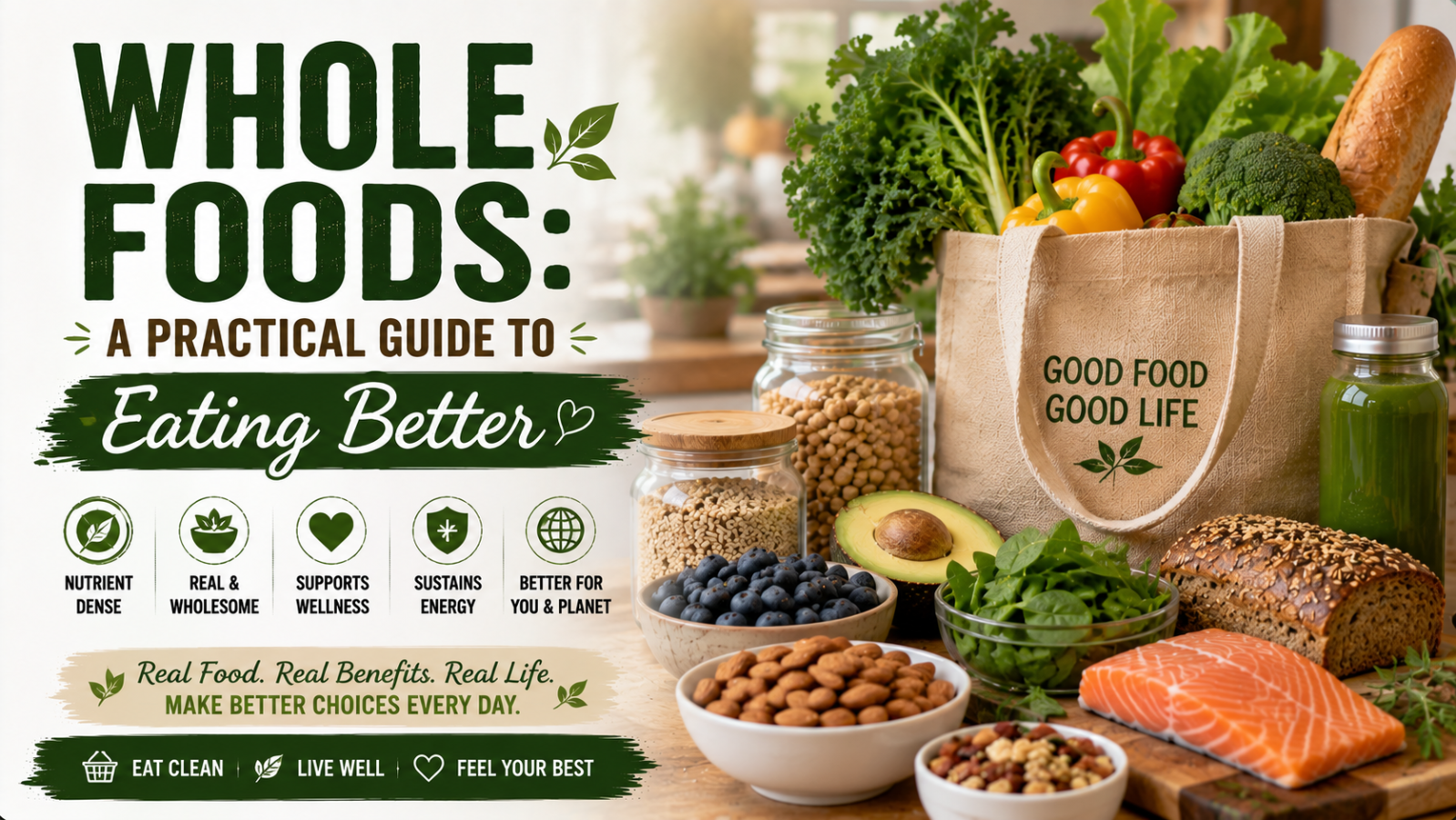
Whole foods can make everyday eating simpler because they give you a straightforward starting point: choose foods that are close to their natural form and build balanced meals around them. Instead of chasing complicated diet rules, you can focus on produce, whole grains, beans, nuts, seeds, eggs, fish, and other nourishing staples. The best grocery list is one you can actually use on a busy Tuesday night.
If you’re planning your next grocery trip, use the Copy Button on our practical tips so you can quickly save or share the ideas that fit your routine.
Quick Answer: What Are Whole Foods?
Whole foods are foods that remain relatively close to their original form and usually contain little processing. Examples include apples, carrots, potatoes, oats, lentils, beans, eggs, plain yogurt, nuts, seeds, fish, and fresh or frozen vegetables.
That doesn’t mean every packaged food is unhealthy. Frozen berries, canned beans, plain oatmeal, and vegetables packed without excessive added ingredients can all fit comfortably into a balanced eating pattern.
The goal isn’t perfection. It’s to make minimally processed foods the foundation of most meals while leaving room for convenience foods and treats.
Why Whole Foods Matter for Everyday Nutrition
One reason whole foods are useful is that they often bring several nutrients together in one package.
An apple, for example, provides carbohydrates, fiber, water, and various plant compounds. Beans offer fiber, plant protein, minerals, and complex carbohydrates. Nuts provide healthy fats, protein, and minerals.
That combination can make meals more satisfying than foods built mostly around refined starches or added sugars.
Whole foods also make it easier to add variety. You can rotate berries, leafy greens, citrus, tomatoes, squash, beans, lentils, whole grains, seafood, poultry, eggs, and nuts throughout the week.
Think About the Whole Meal
A healthy meal doesn’t need to contain every nutrient in perfect proportions.
Instead, try combining a few simple categories:
- A protein source
- A vegetable or fruit
- A high-fiber carbohydrate
- A source of healthy fat
For example, baked salmon with roasted potatoes, broccoli, and olive oil is a complete meal without requiring a complicated recipe.
Similarly, oatmeal with berries, walnuts, and plain Greek yogurt works well for breakfast.
Whole Foods to Keep on Your Grocery List
A useful grocery list should help you create meals, not simply fill your refrigerator.
When I build a practical shopping list, I like to think about what can be combined in several ways. A bag of oats can become breakfast, overnight oats, or homemade snack bars. Chickpeas can go into salads, soups, grain bowls, or wraps.
Here are some versatile choices to consider.
Fruits
Choose several colors and types throughout the week.
- Apples
- Bananas
- Oranges
- Berries
- Grapes
- Pears
- Kiwi
- Peaches
- Melons
- Avocados
Fresh fruit works well, but frozen fruit can be just as convenient for smoothies and oatmeal.
Vegetables
Keep a mixture of fresh and frozen vegetables on hand.
- Spinach
- Broccoli
- Carrots
- Bell peppers
- Tomatoes
- Cauliflower
- Green beans
- Brussels sprouts
- Sweet potatoes
- Cabbage
Frozen vegetables can be especially helpful when your schedule doesn’t allow frequent trips to the store.
Whole Grains
Whole grains contain more of the grain’s natural components than refined grains.
Good options include:
- Oats
- Brown rice
- Quinoa
- Barley
- Bulgur
- Whole-grain bread
- Whole-grain tortillas
- Whole-wheat pasta
You don’t have to eliminate white rice or regular pasta. Instead, consider adding whole grains more often when you enjoy them and they work for your meals.
Whole Foods for Better Gut Health
Your digestive system interacts with the foods you eat, and dietary fiber plays an important role in digestive health.
Many plant foods contain different types of fiber. Some fibers help add bulk to stool, while others can be fermented by gut microbes.
Beans, lentils, oats, vegetables, fruits, nuts, and seeds can all contribute fiber to your diet.
However, there’s a practical catch: suddenly eating much more fiber can leave some people feeling gassy or bloated.
So, if your current diet is low in fiber, increase high-fiber foods gradually and drink enough fluids. Your digestive system may appreciate a slower transition.
Don’t Forget Fermented Foods
Some minimally processed foods can also provide live microorganisms.
Examples include:
- Plain yogurt with live cultures
- Kefir
- Fermented vegetables
- Sauerkraut
- Kimchi
Not every fermented product contains the same microorganisms, and some packaged products may contain added sugar or other ingredients. Therefore, check the label and choose products that fit your preferences and dietary needs.
Whole Foods vs. Processed Foods
The phrase “processed food” can sound more dramatic than it needs to.
Processing includes many everyday actions. Washing, freezing, chopping, pasteurizing, cooking, drying, and canning are all forms of food processing.
Frozen spinach is processed. So is canned tuna. Plain yogurt is processed. Yet these foods can easily fit into a nutritious diet.
The bigger distinction is often between minimally processed foods and highly processed products that contain substantial amounts of refined ingredients, added sugars, sodium, or other additives.
That doesn’t make every highly processed food automatically bad. Instead, look at what the food contributes to your overall eating pattern.
Read the Label Without Overthinking It
When buying packaged food, look at three things first:
- The ingredient list
- Added sugar
- Sodium
Then consider protein, fiber, and serving size based on the food.
For example, a whole-grain cereal with oats, nuts, and dried fruit may be a useful breakfast option. A cereal made primarily from refined grains with a large amount of added sugar may offer less nutritional value.
You don’t need to memorize every ingredient.
Whole Foods on a Budget
Eating well doesn’t require an expensive cart.
In fact, some of the most useful foods in a healthy kitchen are inexpensive staples.
Try building meals around:
- Dry or canned beans
- Lentils
- Oats
- Brown rice
- Potatoes
- Canned tuna or salmon
- Eggs
- Peanut butter
- Bananas
- Carrots
- Cabbage
- Frozen vegetables
- Seasonal produce
Frozen fruits and vegetables can reduce waste because you can use exactly what you need and keep the rest for later.
Beans and lentils also stretch meals surprisingly well. Add them to soups, chili, tacos, salads, or rice bowls for more fiber and plant protein.
A Simple Budget Dinner
Try a bowl with brown rice, black beans, roasted vegetables, salsa, avocado, and a spoonful of plain Greek yogurt.
It’s inexpensive, flexible, and easy to adjust.
Don’t have avocado? Skip it.
Have leftover chicken? Add it.
Only have frozen corn and peppers? Those work, too.
That flexibility is what makes a grocery strategy sustainable.
Whole Foods for Quick Weeknight Meals
Healthy eating gets much easier when your ingredients can move from refrigerator to plate quickly.
Keep a few shortcuts available:
- Prewashed greens
- Frozen vegetables
- Microwaveable whole grains
- Canned beans
- Rotisserie chicken
- Hard-boiled eggs
- Plain Greek yogurt
- Canned fish
- Frozen berries
These aren’t shortcuts to feel guilty about. They’re tools.
For instance, combine canned chickpeas, prewashed greens, cherry tomatoes, cucumber, olive oil, lemon juice, and a little feta. Dinner can be ready in minutes.
Likewise, frozen vegetables can turn leftover rice and eggs into a quick stir-fry.
How to Build a Whole Foods Grocery List
Rather than walking through the store and buying whatever looks appealing, start with the meals you expect to eat.
For a typical week, choose three or four proteins, several fruits and vegetables, two or three carbohydrate sources, and a few easy snacks.
A sample list might look like this:
Protein
- Eggs
- Chicken
- Salmon
- Greek yogurt
- Lentils
- Black beans
Produce
- Spinach
- Broccoli
- Carrots
- Apples
- Berries
- Bananas
Grains and starches
- Oats
- Brown rice
- Potatoes
- Whole-grain tortillas
Healthy fats
- Olive oil
- Avocados
- Walnuts
- Natural peanut butter
Flavor boosters
- Garlic
- Lemons
- Herbs
- Salsa
- Low-sugar marinara
This approach gives you ingredients that can cross over into several meals.
Whole Foods Don’t Have to Be Perfect
One of the easiest mistakes is turning healthy eating into an all-or-nothing project.
Maybe breakfast is oatmeal and berries. Lunch is a homemade grain bowl. Then dinner is pizza with friends.
That’s normal.
A nutritious eating pattern can include restaurant meals, packaged foods, desserts, and convenience products. What matters is the pattern you create over time.
If you eat a highly processed lunch, you don’t need to “make up for it” later. Simply return to your usual meals at the next opportunity.
That mindset can make healthy eating feel much less restrictive.
A Simple Whole Foods Meal Formula
When you’re standing in the kitchen wondering what to cook, use this formula:
Protein + plants + high-fiber carbohydrate + healthy fat + flavor
For example:
Breakfast: Eggs + spinach + whole-grain toast + avocado
Lunch: Chicken + mixed greens + quinoa + olive oil dressing
Dinner: Lentils + roasted vegetables + brown rice + tahini
Snack: Apple + peanut butter
This isn’t a strict meal plan. Think of it as a fallback system for days when you don’t want to make another food decision.
What About Drinks?
Food gets most of the attention, but beverages matter too.
Water is the simplest everyday choice. Unsweetened tea, sparkling water, and other low-sugar drinks can add variety.
Smoothies can also contain nutritious ingredients, although portions matter because it’s easy to consume several servings of fruit quickly. For a more balanced smoothie, combine fruit with Greek yogurt, milk or a fortified alternative, nut butter, seeds, and vegetables.
FAQ About Whole Foods
Are whole foods always healthier than processed foods?
Not automatically. Processing covers a wide range of methods, from freezing vegetables to producing highly refined snack foods. Focus on the overall nutritional value, ingredients, and role the food plays in your diet.
Can I eat whole foods on a tight budget?
Yes. Beans, lentils, oats, potatoes, eggs, frozen vegetables, bananas, cabbage, and canned fish can provide affordable building blocks for nutritious meals.
Are frozen fruits and vegetables considered whole foods?
They can fit into a whole-food-focused eating pattern, especially when they contain little more than the fruit or vegetable itself. Freezing can also make nutritious produce easier to keep available.
Do whole foods help digestion?
Many whole foods contain fiber, and fiber supports normal digestion and contributes to a healthy gut environment. Increase fiber gradually if you’re not used to eating much of it.
Do I need to avoid all processed foods?
No. A realistic diet can include processed and packaged foods. Instead of aiming for a completely “clean” kitchen, make nutrient-rich, minimally processed foods the foundation of most meals.
The Bottom Line on Whole Foods
Whole foods don’t require a perfect diet, expensive ingredients, or hours of meal preparation. They simply give you a practical foundation: more fruits and vegetables, beans, whole grains, nuts, seeds, and quality protein sources, with flexibility for the foods you enjoy.
Start small. Add one extra vegetable to dinner. Keep frozen berries available. Swap one refined grain for a whole-grain option. Stock a few reliable pantry staples so a busy evening doesn’t automatically turn into takeout.If this guide helps, use the Copy Button to save your favorite whole foods ideas for your next grocery trip.

Elizabeth Boham is a respected functional medicine physician and wellness educator with a passion for helping people improve their health through nutrition and lifestyle changes. As a contributor to Gutrova, she shares practical insights on gut health, digestive wellness, and healthy living, making complex health topics easy to understand and apply in everyday life.











1 thought on “Whole Foods: A Practical Guide to Eating Better”