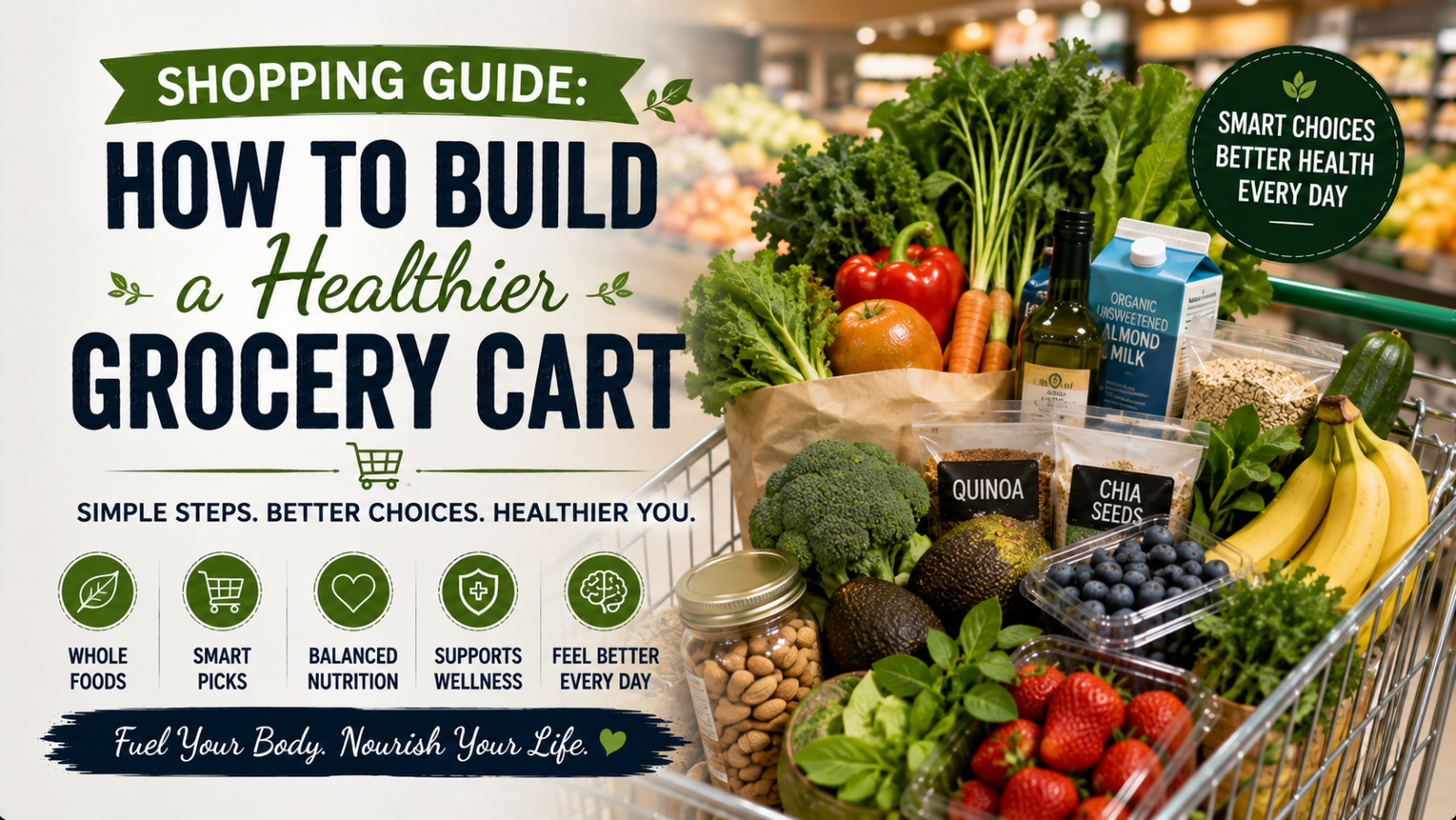
A good shopping guide can make a busy grocery trip feel much less complicated, especially when every aisle seems packed with products promising better health. Instead of chasing trendy foods, focus on simple ingredients you can use often, enjoy, and afford.
I’ve found that the easiest grocery trips start with a short plan rather than a perfect list. A few reliable staples, some flexible meal ingredients, and smarter drink choices can give you plenty of options at home. You can also use the Copy Button to quickly save or share useful tips from this guide before your next trip.
Quick Answer: What Belongs in a Healthy Grocery Cart?
A practical healthy grocery cart should include vegetables, fruits, beans, whole grains, nuts, seeds, protein foods, healthy fats, and low-sugar beverages.
For drinks, make water your everyday foundation. Unsweetened tea, sparkling water, milk, fortified dairy alternatives, and selected fermented drinks can add variety.
The best shopping strategy isn’t about avoiding every processed food. Instead, build most meals around nutrient-rich foods, check labels on packaged products, and choose foods that fit your real schedule.
Shopping Guide Basics: Start With What You Already Eat
Before changing your grocery list, look at what usually disappears from your kitchen each week.
Do you always run out of eggs? Buy extra. Does spinach wilt in the refrigerator? Purchase a smaller amount or switch some of your greens to frozen vegetables. If your family reaches for sweet drinks every afternoon, stock chilled sparkling water or unsweetened tea instead.
This sounds simple, but it matters.
A grocery list should reflect your actual habits. Otherwise, you can end up with a refrigerator full of ambitious ingredients and very little food you want to cook.
Use the 5-part cart method
Build your cart around five broad categories:
- Produce
- Protein
- Fiber-rich carbohydrates
- Healthy fats
- Drinks and hydration
From there, add convenience foods that make meals easier.
For example, canned beans, frozen vegetables, prewashed greens, plain yogurt, and whole-grain bread can save time without turning your grocery cart into a collection of specialty products.
Shopping Guide for Fruits and Vegetables
Produce is one of the easiest places to add variety to your diet.
However, you don’t need to buy every fruit and vegetable available. Choose several that you’ll actually eat before they spoil.
Fresh, frozen, and canned produce can all have a place in a practical kitchen.
Smart produce picks
Try rotating among:
- Berries
- Apples
- Bananas
- Oranges
- Grapes
- Leafy greens
- Broccoli
- Carrots
- Bell peppers
- Cabbage
- Cauliflower
- Tomatoes
- Sweet potatoes
- Green beans
- Avocados
Frozen berries work especially well for smoothies. Frozen vegetables can also become a quick side dish when you’re short on time.
Canned vegetables and fruits can be useful, too. Look for options with little or no added sugar and compare sodium levels when that matters to you.
Most importantly, don’t let an ideal grocery list make you feel guilty about convenience.
A bag of frozen broccoli that gets eaten is more useful than fresh broccoli that gets forgotten in the crisper drawer.
A Shopping Guide to Fiber-Rich Foods
Fiber deserves a regular spot on your grocery list because it supports digestive health and helps make meals more satisfying.
Many plant foods provide fiber, including fruits, vegetables, beans, lentils, whole grains, nuts, and seeds.
Keep these fiber foods nearby
- Old-fashioned oats
- Barley
- Brown rice
- Quinoa
- Whole-grain bread
- Whole-grain pasta
- Black beans
- Chickpeas
- Lentils
- Chia seeds
- Ground flaxseed
- Almonds
- Walnuts
- Raspberries
- Pears
If you’re currently eating very little fiber, increase it gradually. A sudden large increase can cause gas, bloating, or changes in bowel habits for some people.
Drinking enough fluid also matters as you increase fiber intake.
Shopping Guide for Healthy Drinks
Drinks deserve their own section because they’re easy to overlook during grocery shopping.
Water remains the simplest choice for everyday hydration. Still, many people want something with more flavor.
That’s where unsweetened tea, sparkling water, lemon water, and other lower-sugar choices can help.
Compare these drink options
Water:
Keep still or sparkling water cold and ready to drink. A reusable bottle can make this easier during work or errands.
Herbal tea:
Peppermint, ginger, chamomile, and other caffeine-free teas offer variety without added sugar.
Green or black tea:
These provide caffeine, so consider the timing if caffeine affects your sleep.
Kefir:
Plain kefir can provide protein and fermented cultures. Flavored versions may contain added sugar, so check the label.
Kombucha:
Kombucha is fermented, but sugar levels vary considerably among brands. Read the nutrition panel instead of relying on the word “fermented.”
Milk or fortified alternatives:
These can provide nutrients such as protein, calcium, and vitamin D, depending on the product.
A simple label rule
When choosing a packaged drink, check:
- Serving size
- Added sugar
- Caffeine
- Calories
- Protein
- Ingredient list
You don’t need to reject a product because it contains a long ingredient list. Instead, ask whether it serves a useful purpose in your diet.
What to Buy for a Gut-Friendly Kitchen
Gut health isn’t built around one magic food.
Instead, dietary variety, adequate fiber, and an overall balanced eating pattern matter more than constantly adding new wellness products.
Research suggests that eating a diverse range of plant foods can support a diverse gut microbiome. You can work toward that variety without making your meals complicated.
Build meals from different plant groups
For example, breakfast might include oats, blueberries, chia seeds, and yogurt.
Lunch could bring together greens, chickpeas, tomatoes, whole-grain bread, and olive oil.
Dinner might include salmon, roasted sweet potatoes, broccoli, and brown rice.
The next day doesn’t need to look the same.
That’s actually part of the point. Variety can happen naturally when you rotate ingredients throughout the week.
Shopping Guide for Fermented Foods
Fermented foods have become popular in grocery stores, and some can be useful additions to a balanced diet.
Good options include:
- Plain yogurt with live cultures
- Kefir
- Sauerkraut
- Kimchi
- Miso
- Tempeh
- Some fermented vegetables
- Kombucha
However, fermentation doesn’t automatically make a product low in sugar, low in sodium, or ideal for everyone.
For example, some flavored yogurts contain significant added sugar. Some fermented vegetables contain a lot of sodium. Kombucha can also vary from one bottle to another.
So read the label.
The goal is to include fermented foods when you enjoy them, not to force them into your diet because they’re trendy.
How to Shop the Grocery Store Without Overspending
Eating well doesn’t have to mean filling your cart with premium-priced products.
In fact, some of the most useful foods are inexpensive staples.
Budget-friendly choices
Look for:
- Oats
- Beans
- Lentils
- Eggs
- Potatoes
- Sweet potatoes
- Bananas
- Apples
- Carrots
- Cabbage
- Frozen vegetables
- Brown rice
- Whole-grain pasta
- Canned fish
- Peanut butter
- Plain yogurt
Compare unit prices rather than package prices. A larger container isn’t always cheaper per ounce.
Store brands can also offer good value when the ingredients and nutrition information compare favorably.
Meanwhile, frozen produce can reduce waste because you can use only what you need.
A Shopping Guide for Busy Weeknights
A healthy grocery cart should account for the nights when you don’t feel like cooking.
Those nights are normal.
Keep a few fast combinations available.
Five-minute meal ideas
Egg bowl:
Scrambled eggs + frozen vegetables + whole-grain toast.
Bean wrap:
Black beans + avocado + greens + whole-grain tortilla.
Yogurt bowl:
Plain Greek yogurt + berries + chia seeds + walnuts.
Quick grain bowl:
Microwaveable brown rice + canned salmon + frozen broccoli + olive oil.
Oatmeal:
Oats + milk + banana + ground flaxseed + cinnamon.
These aren’t fancy meals. That’s why they’re useful.
Don’t Forget the Freezer
The freezer can be one of the most helpful tools in a healthy kitchen.
Frozen vegetables require little preparation, and frozen fruit works beautifully in smoothies or oatmeal.
You can also freeze bread, cooked grains, homemade soups, and portions of certain meals.
Foods worth freezing
- Berries
- Mango
- Spinach
- Broccoli
- Peas
- Green beans
- Whole-grain bread
- Cooked rice
- Homemade soups
- Leftover cooked meals
As a result, you can shop less often and waste less food.
Shopping Guide: What About Snacks?
Snacks don’t need to be perfect. The goal is to make satisfying choices easy to grab.
Try combining a source of protein or fat with a fiber-rich food.
For example:
- Apple + peanut butter
- Pear + walnuts
- Carrots + hummus
- Plain yogurt + berries
- Whole-grain crackers + cheese
- Banana + almond butter
- Roasted chickpeas
- Chia pudding
If you’re buying packaged snacks, compare serving sizes and added sugar. A small amount of a favorite snack can fit comfortably into a balanced eating pattern.
The Grocery Aisles Worth Spending More Time In
If you’re trying to improve your grocery habits, don’t feel obligated to inspect every package.
Spend most of your attention on the areas that give you the most useful options.
Start with produce. Then visit beans, whole grains, protein foods, dairy or alternatives, and healthy fats.
After that, shop the packaged-food aisles with a little more attention to labels.
This approach keeps grocery shopping efficient without turning every food decision into a research project.
A One-Trip Healthy Grocery List
Need a starting point?
Produce
- Apples
- Bananas
- Berries
- Citrus
- Leafy greens
- Broccoli
- Carrots
- Bell peppers
- Sweet potatoes
- Avocados
Pantry
- Oats
- Brown rice
- Quinoa
- Beans
- Lentils
- Chia seeds
- Ground flaxseed
- Nut butter
- Whole-grain pasta
- Canned tomatoes
Protein
- Eggs
- Chicken
- Fish
- Tofu
- Plain Greek yogurt
- Kefir
- Nuts and seeds
Drinks
- Water
- Sparkling water
- Herbal tea
- Green tea
- Black tea
- Coffee
- Unsweetened milk or fortified alternative
- Lower-sugar kombucha
You can adjust the list based on your budget, household, dietary needs, and cooking style.
Three Grocery Habits Worth Keeping
You don’t need a complete kitchen makeover.
Start with these three habits.
Shop with a list.
A short list reduces impulse purchases and helps you remember the foods you actually need.
Buy ingredients you can combine.
Oats, berries, yogurt, chia, and nuts can create several breakfasts without much effort.
Keep healthy convenience foods available.
Frozen vegetables, canned beans, precooked grains, and ready-to-eat produce can make balanced meals much easier.
Small systems tend to last longer than ambitious plans.
FAQ About Healthy Grocery Shopping
What should I buy first when grocery shopping for healthier meals?
Start with produce, protein foods, fiber-rich staples, and drinks. Then add convenient ingredients that make meals easier during busy days.
What drinks should I put on my grocery list?
Water should be the main option for hydration. You can also choose sparkling water, unsweetened tea, coffee, milk, fortified alternatives, and selected fermented drinks based on your preferences.
Are expensive health foods worth buying?
Not necessarily. Many affordable foods, including oats, beans, lentils, eggs, frozen vegetables, fruit, and whole grains, provide plenty of nutritional value.
How can I make grocery shopping easier?
Plan a few meals before you shop, keep a reusable list of staples, and buy ingredients that work in multiple meals. Also, don’t overlook frozen and canned foods.
How often should I change my grocery list?
You don’t need to reinvent it every week. Keep reliable staples and rotate seasonal produce, proteins, grains, and other ingredients to add variety.
Final Thoughts
The best shopping guide isn’t a strict list of foods you can and can’t eat. It’s a practical system that helps you bring home nutritious ingredients you’ll actually use. Start with water and other sensible drinks. Add fruits, vegetables, fiber-rich foods, protein, healthy fats, and a few convenient staples. Then build meals around what fits your household and your schedule.
You don’t have to shop perfectly to eat well. A better grocery cart usually comes from a handful of repeatable choices made consistently.If you want to save this list for your next trip, use the Copy Button to quickly copy the tips or grocery ideas that work for you.












1 thought on “Shopping Guide: How to Build a Healthier Grocery Cart”