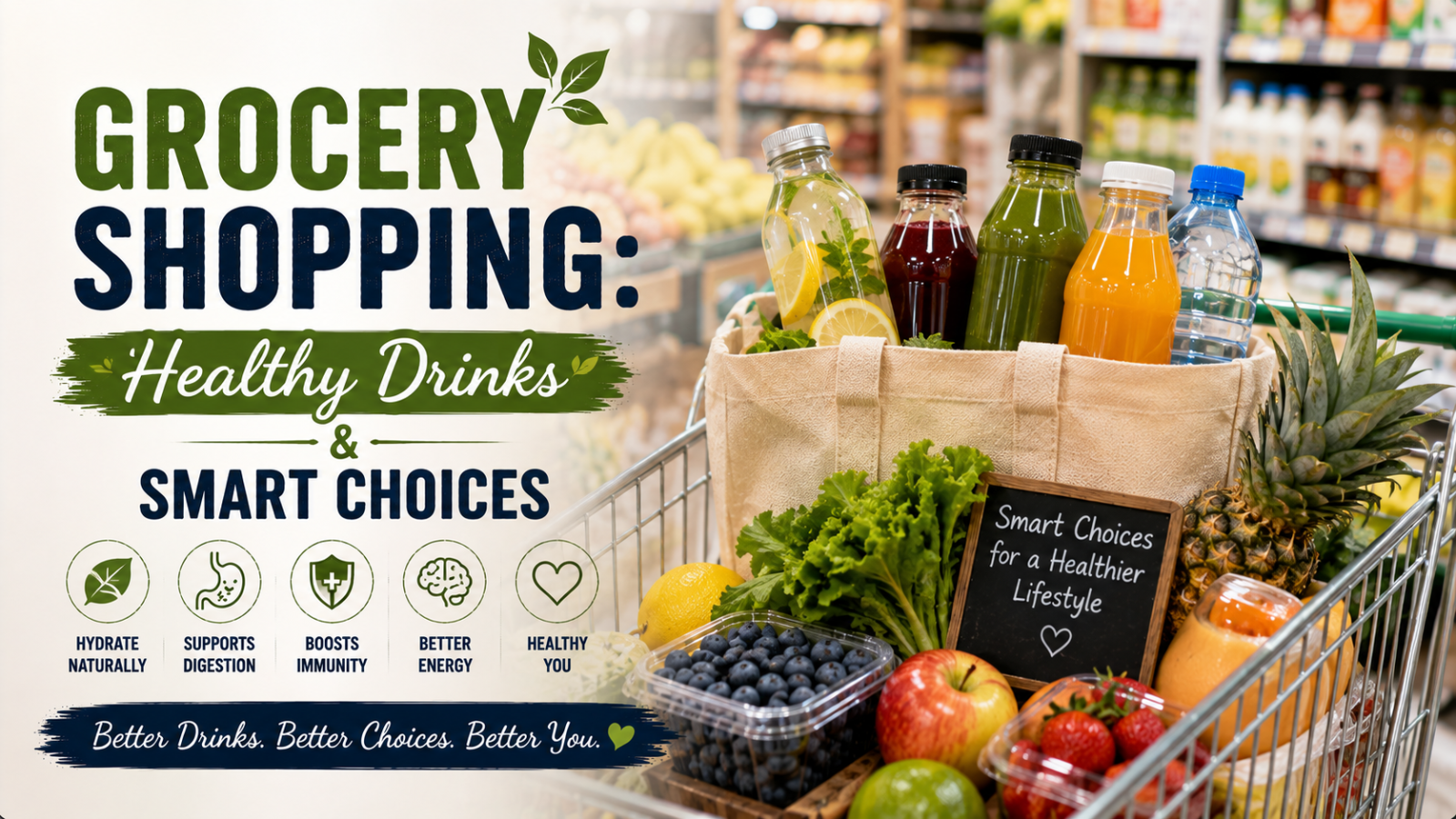
Grocery shopping gets a lot easier when you know which drinks and everyday foods are worth putting in your cart. A few simple choices can help you drink more water, add useful nutrients, and avoid filling your kitchen with products that don’t work well for your routine.
I’ve found that the biggest difference often comes from having a short list before walking into the store. Instead of chasing every new wellness drink, focus on simple options you’ll actually enjoy and use. You can also use the Copy Button on helpful tips in this guide to quickly save or share your grocery list.
Quick Answer: What Should You Buy?
For healthier grocery shopping, build your cart around water, unsweetened tea, plain or lightly sweetened fermented drinks, milk or fortified alternatives, whole fruits, vegetables, beans, whole grains, nuts, seeds, and simple protein sources.
For drinks, check the added sugar, caffeine, serving size, and ingredient list. Water should usually be your everyday choice, while drinks such as herbal tea, ginger tea, peppermint tea, kefir, or kombucha can add variety.
The goal isn’t to create a perfect cart. It’s to make healthy choices easier once you get home.
Grocery Shopping Starts With Your Drink Cart
Beverages are easy to overlook because they don’t always feel like part of a meal. Yet a large sweetened drink can add a surprising amount of sugar without making you feel as satisfied as a meal or snack.
That doesn’t mean every flavored beverage belongs on a forbidden list. Instead, look at what you drink most often.
A practical drink lineup
A useful weekly rotation might include:
- Plain or sparkling water
- Water with lemon, lime, cucumber, or berries
- Unsweetened green or black tea
- Herbal teas
- Ginger tea
- Peppermint tea
- Plain kefir
- Lower-sugar kombucha
- Milk or an unsweetened fortified alternative
- Coffee with modest additions
Water can handle most of your daily hydration needs. Meanwhile, tea can provide flavor without much sugar.
Kefir is different because it can provide protein and fermented cultures. However, flavored versions may contain added sugar, so compare labels before choosing one.
Kombucha can also contain live microorganisms from fermentation, but products vary widely. Some contain quite a bit of added sugar, so don’t assume every bottle is automatically a healthy choice.
How to Read Drink Labels Without Overthinking Them
Nutrition labels can make grocery shopping feel like a math assignment. Fortunately, you don’t need to study every number on the package.
Start with four things: serving size, added sugar, caffeine, and ingredients.
A bottle may look like one serving even when the label lists two. Therefore, check the serving size before judging the sugar or calorie content.
Watch the added sugar
The American diet contains plenty of sweetened beverages, so cutting back can be an easy place to improve your overall eating pattern.
Look for terms such as:
- Added sugars
- Cane sugar
- Brown sugar
- Honey
- Agave
- Syrups
- Fruit juice concentrates
Natural sugars in plain milk or whole fruit aren’t the same as added sugars. However, a fruit-flavored drink can still contain substantial added sugar even if the front label features pictures of fruit.
Don’t fear every ingredient you can’t pronounce
An unfamiliar ingredient isn’t automatically harmful. Food science uses many names for stabilizers, acids, emulsifiers, flavors, and other ingredients.
Instead, ask a simpler question: Does this product fit what I want from this drink?
If you’re looking for everyday hydration, plain water may do the job better than an expensive beverage with a long ingredient list.
Build a Pantry That Makes Healthy Choices Easier
Smart grocery shopping isn’t just about fresh produce. Your pantry can quietly determine what you eat on busy days.
A well-stocked pantry gives you ingredients for quick meals when takeout sounds tempting.
Useful pantry staples
Keep several of these on hand:
- Old-fashioned oats
- Brown rice
- Quinoa
- Canned beans
- Lentils
- Canned tomatoes
- Unsweetened applesauce
- Natural peanut or almond butter
- Chia seeds
- Ground flaxseed
- Walnuts
- Pumpkin seeds
- Whole-grain pasta
- Low-sodium broth
- Dried herbs and spices
Fiber-rich foods deserve special attention for digestive wellness. Beans, oats, lentils, whole grains, chia seeds, flaxseed, fruits, and vegetables can help increase your fiber intake.
If your current diet is low in fiber, though, increase it gradually and drink enough fluid. A sudden jump can leave some people feeling unusually full or gassy.
Grocery Shopping for a Happier Gut
Your digestive system doesn’t need a trendy shopping list. It needs a sustainable eating pattern that supplies nutrients and works with your individual tolerance.
Research on the gut microbiome continues to show the importance of dietary variety and fiber-rich plant foods. That doesn’t mean you need 30 different vegetables in your refrigerator.
Instead, aim for variety across the week.
Try apples one day and berries another. Use oats for breakfast, beans at lunch, and roasted vegetables with dinner. Then add nuts, seeds, whole grains, and other plant foods where they fit naturally.
What about fermented foods?
Fermented foods can be a useful addition to a varied diet. Examples include yogurt with live cultures, kefir, kimchi, sauerkraut, and some fermented beverages.
However, fermentation doesn’t make every product nutritionally equal.
For example, a sugary flavored yogurt still contains added sugar. Likewise, a sweet kombucha isn’t interchangeable with water.
Think of fermented foods as one part of your diet rather than a special solution for every digestive concern.
Make Grocery Shopping Easier With a Drink Formula
One of my favorite ways to simplify grocery shopping is to stop looking for individual “healthy” products and start shopping by category.
For drinks, use a simple formula:
Hydration + flavor + nutrition when useful.
Water covers hydration. Lemon, berries, mint, or cucumber can make it more appealing. Milk, kefir, or a fortified alternative can contribute nutrients that water doesn’t provide.
Tea adds another option when you want something warm or flavorful without turning every drink into a sweet treat.
This approach also leaves room for coffee, sparkling water, or an occasional favorite beverage.
Healthy eating doesn’t require drinking the same thing every day.
Grocery Shopping Mistakes That Make Healthy Eating Harder
Sometimes the problem isn’t a lack of healthy foods. It’s buying foods that don’t match your actual life.
Imagine buying a refrigerator full of ingredients for complicated recipes. Then Wednesday arrives, you’re tired, and none of those ingredients looks appealing.
That’s a planning problem, not a willpower problem.
Common mistakes to avoid
Buying too much fresh food.
Fresh produce is nutritious, but you don’t need to buy more than your household can use. Frozen vegetables and fruits can be practical backups.
Choosing drinks based only on front-label claims.
Words such as “natural,” “wellness,” or “refreshing” don’t tell you how much sugar or caffeine a beverage contains.
Ignoring convenience.
Prewashed greens, canned beans, frozen vegetables, and ready-to-drink unsweetened beverages can make healthy habits easier.
Trying to change everything at once.
Pick two or three upgrades first. Once they become routine, add another.
Forgetting taste.
A drink can look perfect on paper and still sit unopened in your refrigerator. Flavor matters because foods you enjoy are easier to keep in your routine.
A Simple Weekly Grocery Shopping List
If you want a starting point, build your list around these categories.
Drinks
- Still water
- Sparkling water
- Unsweetened herbal tea
- Green or black tea
- Ginger tea
- Peppermint tea
- Plain kefir
- Lower-sugar kombucha
- Unsweetened milk or fortified alternative
Produce
- Apples
- Bananas
- Berries
- Citrus
- Leafy greens
- Carrots
- Broccoli
- Bell peppers
- Sweet potatoes
- Avocado
Fiber-rich foods
- Oats
- Beans
- Lentils
- Chia seeds
- Ground flaxseed
- Whole-grain bread
- Brown rice
- Quinoa
Protein
- Eggs
- Plain Greek yogurt
- Fish
- Chicken
- Tofu
- Beans and lentils
- Nuts and seeds
Flavor boosters
- Garlic
- Ginger
- Cinnamon
- Turmeric
- Fresh herbs
- Olive oil
- Vinegar
- Lemon or lime
You don’t need everything on the list every week. Choose foods that fit your budget, preferences, cooking habits, and household size.
How to Shop for Digestive-Friendly Drinks
Some people tolerate certain drinks easily, while others notice discomfort after drinking them. Personal tolerance matters.
For example, carbonated drinks can feel uncomfortable for someone prone to bloating. Caffeinated beverages may also affect some people differently than others.
Milk-based drinks deserve individual attention too. People who don’t digest lactose well may prefer lactose-free milk or a suitable fortified alternative.
Try a simple observation
Instead of eliminating several foods at once, keep a basic food-and-symptom note for a short period if you’re trying to identify a pattern.
Write down:
- What you drank
- Roughly how much
- When you drank it
- What else you ate
- Any digestive symptoms afterward
This won’t diagnose a condition, but it can help you notice patterns worth discussing with a healthcare professional.
A 10-Minute Grocery Shopping Strategy
Pressed for time? Use this quick method.
First, choose your drinks.
Pick water plus one or two options you genuinely enjoy.
Next, grab five produce items.
Mix colors and types rather than buying five versions of the same food.
Then, choose two fiber-rich staples.
Oats, beans, lentils, whole grains, chia, and flax are easy choices.
Add two protein sources.
Eggs, yogurt, fish, poultry, tofu, or beans can work.
Finish with flavor.
Grab herbs, spices, citrus, garlic, or another ingredient that makes simple meals taste better.
This strategy keeps your cart focused without requiring a complicated meal plan.
Small Changes That Make a Big Difference
Healthy grocery shopping becomes much more manageable when you think about your next seven days rather than trying to create the perfect diet.
Swap one sugary drink for sparkling water. Add berries to breakfast. Keep frozen vegetables available for rushed evenings. Put beans on the list even if you don’t have a recipe yet.
Likewise, keep a few teas in the cupboard so you have something flavorful when plain water doesn’t sound appealing.
These aren’t dramatic changes. That’s exactly why they can work.
FAQ About Grocery Shopping and Healthy Drinks
What is the healthiest drink to buy during grocery shopping?
For most people, plain water is the simplest everyday choice for hydration. Unsweetened tea, sparkling water, and other low- or no-added-sugar options can provide variety.
Is kombucha a healthy drink?
Kombucha can fit into a balanced diet, particularly when you choose a product with less added sugar. However, it’s not necessary for good health, and different products have different nutrition profiles.
Is kefir good for digestion?
Kefir is a fermented dairy drink that can provide protein and live cultures. Some people enjoy it as part of a balanced diet, although individual tolerance varies, especially for people who have trouble digesting lactose.
What should I avoid buying at the grocery store?
Rather than creating a long list of forbidden foods, pay attention to products high in added sugar, especially beverages you consume frequently. Also consider serving sizes and how well a product fits your overall eating pattern.
How can I make grocery shopping healthier on a budget?
Build meals around affordable staples such as oats, beans, lentils, eggs, frozen vegetables, seasonal produce, and whole grains. Compare unit prices, use store brands when appropriate, and avoid buying specialty wellness products simply because they have a health-focused label.
Final Thoughts
Good grocery shopping doesn’t require a cart filled with expensive health products. A better approach is to stock your kitchen with foods and drinks that support your everyday routine, taste good, and make balanced meals easier to prepare.
Start with water, add a few unsweetened beverages for variety, and choose fiber-rich whole foods throughout the week. From there, fermented foods such as kefir or lower-sugar kombucha can be optional additions rather than requirements.

Here’s a short Gutrova-style author biography for Josh Axe:
Josh Axe
Josh Axe is a wellness expert, author, and educator known for his work in nutrition, natural health, and gut wellness. As a contributor to Gutrova, he shares practical insights on digestive health, healthy eating habits, and lifestyle strategies that help readers build a stronger foundation for overall well being. His content focuses on making wellness simple, actionable, and accessible for everyday life.











1 thought on “Grocery Shopping: Healthy Drinks & Smart Choices”