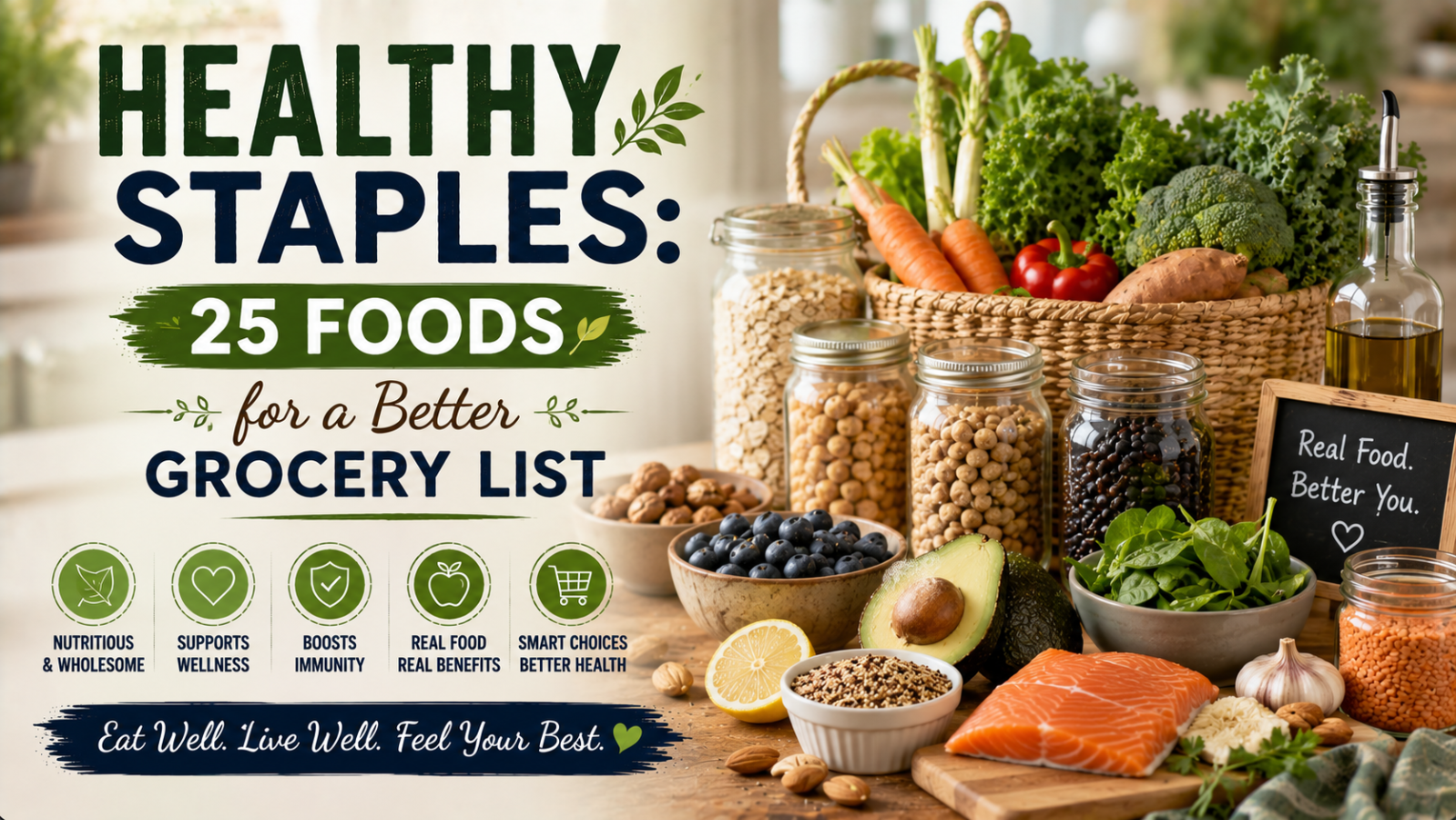
Healthy staples make eating well much easier because they give you something useful to work with when the fridge looks nearly empty. A few dependable foods can turn a rushed morning, quick lunch, or last-minute dinner into a balanced meal without much planning.
The best healthy staples aren’t fancy—they’re foods you’ll actually use.
For this guide, think beyond a strict “health food” list. The goal is to build a flexible pantry, refrigerator, and freezer with foods that provide fiber, protein, healthy fats, vitamins, minerals, and satisfying flavor. You can also use the Copy Button on helpful tips you want to save or share for your next grocery trip.
Quick Answer: What Are Healthy Staples?
Healthy staples are nutritious foods that you regularly keep at home because they can form the base of simple, balanced meals. Good choices include beans, oats, whole grains, nuts, seeds, vegetables, fruit, eggs, plain yogurt, olive oil, canned fish, and frozen produce.
The easiest approach is to keep a mix of fiber-rich foods, protein sources, healthy fats, and minimally processed ingredients available. That way, you can combine a few staples instead of relying on takeout or highly processed convenience foods every time you’re short on time.
Healthy Staples That Make Breakfast Easier
Breakfast doesn’t need to be elaborate. In fact, having a few reliable ingredients can make your first meal much easier to balance.
1. Old-fashioned oats
Oats provide soluble fiber, including beta-glucan, and work well in both sweet and savory meals. Try them with berries, chia seeds, walnuts, and plain yogurt for a filling breakfast.
2. Eggs
Eggs are a convenient source of protein and can be prepared in minutes. Scramble them with spinach, mushrooms, or leftover vegetables for a quick meal.
3. Plain Greek yogurt
Choose plain yogurt and add your own fruit, nuts, or seeds. It provides protein and, when it contains live cultures, can also contribute beneficial microorganisms to the diet.
4. Chia seeds
These tiny seeds add fiber and plant-based omega-3 fats. Stir them into oatmeal, yogurt, or a smoothie, or use them to make chia pudding.
5. Frozen berries
Frozen blueberries, strawberries, and raspberries are convenient year-round. They also add natural sweetness, color, and fiber without requiring much preparation.
Healthy Staples for Fiber and Gut Support
Fiber deserves a regular place on your grocery list. It supports normal digestion and provides fuel for beneficial gut microbes.
6. Beans and lentils
Canned beans make healthy meals much faster. Black beans, chickpeas, kidney beans, and lentils work in soups, salads, grain bowls, tacos, and simple side dishes.
If canned beans contain a lot of sodium, drain and rinse them before using. For people who aren’t used to much fiber, increasing portions gradually can be more comfortable.
7. Whole grains
Brown rice, quinoa, barley, farro, and whole-grain pasta can provide more fiber and nutrients than refined versions. You don’t need to abandon white rice or regular pasta, either. Simply make whole grains part of your rotation.
8. Ground flaxseed
Ground flaxseed is easy to add to oatmeal, yogurt, smoothies, and baked goods. It provides fiber and plant-based omega-3 fats.
Keep it refrigerated after opening to help maintain freshness.
9. Sweet potatoes
Sweet potatoes offer fiber, potassium, and carotenoids. Roast several at once, then use them throughout the week with eggs, beans, greens, or leftover chicken.
10. Popcorn kernels
Plain popcorn is a whole grain and can become a satisfying snack. Pop it on the stovetop or in an air popper, then add a little olive oil and your favorite seasoning.
Healthy Staples for Fast, Balanced Meals
This is where a well-stocked kitchen really earns its keep. When protein, vegetables, and a few simple carbohydrates are ready to go, dinner becomes much less stressful.
11. Canned salmon or sardines
Canned fish provides protein and can supply omega-3 fats, depending on the variety. Add salmon to a grain bowl, make sardine toast, or mix either into a simple salad.
12. Canned tomatoes
Keep crushed, diced, and whole tomatoes nearby for soups, chili, pasta sauces, and bean dishes. They’re especially useful when fresh produce isn’t available.
13. Extra-virgin olive oil
A good olive oil can make simple food taste much better. Use it for dressings, roasted vegetables, sautéed foods, or a finishing drizzle.
14. Garlic
Fresh garlic adds plenty of flavor without requiring a complicated sauce. It also contains compounds that researchers continue to study for their potential health effects.
15. Onions
Onions are inexpensive, versatile, and useful in almost every style of cooking. Keep yellow onions for everyday meals and red onions for salads, grain bowls, and sandwiches.
16. Frozen vegetables
Frozen broccoli, spinach, peas, cauliflower, and mixed vegetables are some of the most practical healthy staples you can buy. They last longer than fresh produce and can go straight into many recipes.
For busy nights, frozen vegetables can be the difference between a balanced meal and a skipped side dish.
Healthy Staples That Add Protein
Protein helps meals feel more satisfying, and having several options makes it easier to build variety into your diet.
17. Natural peanut butter
Look for peanut butter with a simple ingredient list. It works on whole-grain toast, with apples, in oatmeal, or blended into smoothies.
18. Nuts
Almonds, walnuts, pistachios, and peanuts offer protein, unsaturated fats, fiber, and minerals. A small handful makes an easy snack.
Because nuts are energy-dense, portion size still matters. Keeping a small container ready can be more practical than eating directly from a large bag.
19. Canned chickpeas
Chickpeas deserve a second mention because they’re remarkably flexible. Toss them into salads, blend them into hummus, roast them until crisp, or add them to a vegetable curry.
20. Tofu
Tofu is a useful plant-based protein that takes on the flavor of sauces and seasonings. Try it baked, sautéed, or added to stir-fries and soups.
Healthy Staples From the Produce Aisle
A nutritious kitchen needs more than pantry foods. Fresh produce brings flavor, texture, water, fiber, and a wide range of micronutrients.
21. Leafy greens
Spinach, kale, romaine, and other greens can become salads, wraps, omelets, soups, or smoothie ingredients. If fresh greens tend to spoil before you use them, frozen spinach is a smart backup.
22. Apples
Apples travel well and require almost no preparation. Pair one with peanut butter or a handful of nuts for a snack that combines carbohydrates, fiber, and fat.
23. Carrots
Carrots last relatively well in the refrigerator and can be eaten raw, roasted, sautéed, or added to soups. Baby carrots also make an easy grab-and-go option.
24. Avocados
Avocados provide fiber and mostly monounsaturated fat. Mash one onto whole-grain toast, add it to tacos, or use it to make a quick dip.
25. Citrus fruit
Oranges, grapefruit, lemons, and limes can brighten meals without relying heavily on added sugar or salty sauces. Keep lemons and limes around for water, dressings, marinades, and cooked dishes.
How to Turn Healthy Staples Into Real Meals
A grocery list only helps if the food actually gets eaten. One trick I use is to think in meal components instead of recipes.
Start with a protein. Add a high-fiber carbohydrate, then choose one or two vegetables. Finish with a healthy fat or flavorful sauce.
For example:
Busy-night grain bowl:
Brown rice + canned salmon + frozen broccoli + avocado + lemon
Quick breakfast:
Oatmeal + Greek yogurt + berries + chia seeds + walnuts
Easy lunch:
Chickpeas + leafy greens + tomatoes + cucumber + olive oil + lemon
Five-minute snack:
Apple + peanut butter
Simple dinner:
Black beans + roasted sweet potato + sautéed spinach + avocado
This approach leaves plenty of room for personal preferences. If you don’t like quinoa, use brown rice. If beans bother your stomach, start with a smaller serving or choose another protein source.
Healthy Staples for a Gut-Friendly Kitchen
A gut-friendly grocery list doesn’t need to revolve around expensive powders or specialty products. Start with everyday foods that provide fiber and plant variety.
Beans, lentils, oats, vegetables, fruit, nuts, and seeds are especially useful because they supply different types of dietary fiber. Meanwhile, fermented foods such as plain yogurt, kefir, sauerkraut, and kimchi can add variety to the diet.
However, more isn’t always better right away. If your current diet contains very little fiber, suddenly eating large amounts of beans, bran, and raw vegetables may cause gas or bloating.
Instead, increase fiber gradually and drink enough fluids. Your digestive system often handles steady changes better than a dramatic overnight overhaul.
What to Look for When Shopping
Healthy staples don’t need a “perfect” nutrition label. Instead, look for foods that help you create balanced meals.
A few useful questions can simplify grocery shopping:
- Does this food provide protein, fiber, or useful nutrients?
- Can I combine it with foods I already have?
- Will I realistically eat it before it spoils?
- Is the ingredient list reasonable for the type of food?
- Can I use it in more than one meal?
For packaged foods, compare added sugar, sodium, fiber, and protein based on the product. You don’t need to avoid every processed food. Canned beans, frozen vegetables, plain yogurt, canned fish, and whole-grain bread are all processed in some way, yet they can fit comfortably into a nutritious eating pattern.
A Simple Weekly Grocery Strategy
Rather than buying a huge list of ingredients, choose a few items from each category.
Protein: eggs, yogurt, beans, chicken, tofu, canned fish
Fiber-rich carbohydrates: oats, brown rice, quinoa, potatoes, whole-grain bread
Vegetables: leafy greens, broccoli, carrots, peppers, frozen mixed vegetables
Fruit: berries, apples, bananas, citrus
Healthy fats: olive oil, avocado, nuts, seeds, natural nut butter
Flavor builders: garlic, onions, lemon, herbs, spices, canned tomatoes
Then choose two or three meals you can make with those ingredients. This cuts down on food waste and keeps your grocery trip manageable.
I’ve found that this method works especially well during busy weeks. You don’t need a refrigerator packed with specialty ingredients. You need foods that can move easily from the grocery bag to the plate.
Healthy Staples Don’t Have to Be Expensive
Eating well can sound expensive when grocery lists focus on premium products. Fortunately, some of the most useful foods are budget-friendly.
Oats, dried beans, lentils, potatoes, bananas, carrots, cabbage, canned tomatoes, eggs, and frozen vegetables can stretch across several meals. Buying store brands can also lower the cost of basics without changing the nutritional value of many foods.
Likewise, frozen produce can reduce waste because you can use exactly what you need and return the rest to the freezer.
The goal isn’t to buy the most expensive version of every food. It’s to create a kitchen where nutritious choices are easy to reach.
FAQ About Healthy Staples
What are the most important healthy staples to keep at home?
Start with oats, beans, lentils, whole grains, frozen vegetables, fruit, eggs, yogurt, nuts, seeds, olive oil, and canned tomatoes. These foods can form the foundation of many simple meals.
Are canned foods healthy staples?
Yes. Canned beans, tomatoes, vegetables, and fish can be nutritious and convenient. Check labels when possible, and choose lower-sodium options or rinse canned foods when appropriate.
Which healthy staples are best for gut health?
Fiber-rich foods such as beans, lentils, oats, fruits, vegetables, nuts, and seeds are useful choices. Fermented foods with live cultures can also add variety to a gut-friendly eating pattern.
How can I eat healthy when I don’t have much time?
Keep frozen vegetables, canned beans, eggs, whole grains, yogurt, canned fish, and fruit available. These ingredients can become quick meals without extensive cooking.
Do healthy staples have to be organic?
No. Organic foods can be part of a healthy diet, but they aren’t required for nutritious eating. Focus first on getting a wide variety of foods that fit your budget and preferences.
Final Thoughts on Healthy Staples
The best healthy staples are the foods that make good eating easier on an ordinary Tuesday night. Keep a mix of fiber-rich plants, protein sources, whole grains, healthy fats, and convenient frozen or canned foods within reach.
You don’t need a perfect pantry. You need a useful one.Start with five or six foods you’ll actually eat, then build from there. If you find a tip in this guide worth keeping, use the Copy Button to save it for your next grocery trip. A few dependable staples can make everyday meals simpler, more satisfying, and easier on your routine.

Elizabeth Boham is a respected functional medicine physician and wellness educator with a passion for helping people improve their health through nutrition and lifestyle changes. As a contributor to Gutrova, she shares practical insights on gut health, digestive wellness, and healthy living, making complex health topics easy to understand and apply in everyday life.










1 thought on “Healthy Staples: 25 Foods for a Better Grocery List”