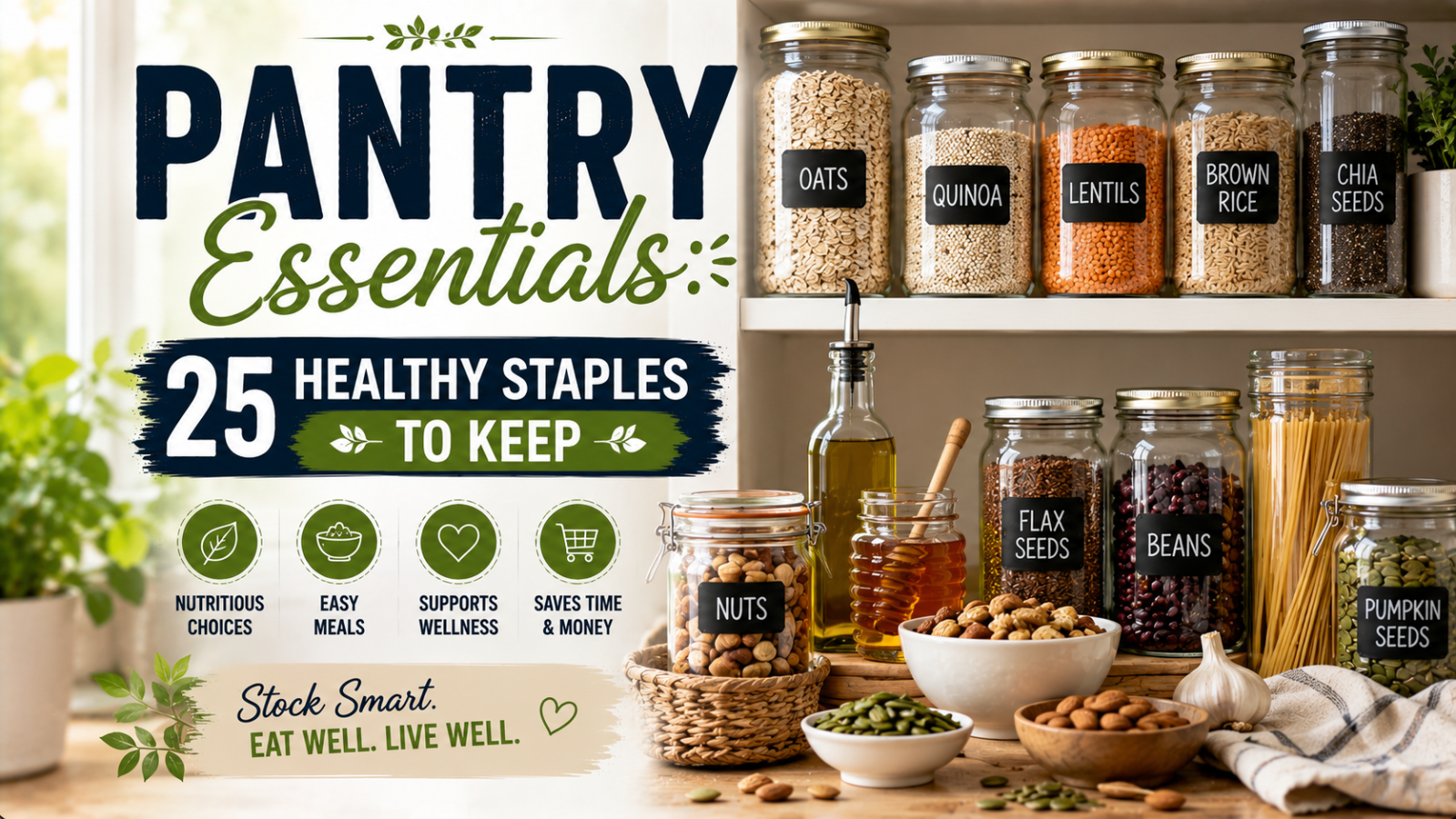
Pantry essentials can make healthy eating much easier because the right staples give you something useful to build around, even when the refrigerator looks bare. A few jars, grains, seeds, teas, and flavor boosters can turn into breakfast, a quick lunch, or a satisfying drink without much planning.
The trick is to stock foods you genuinely enjoy, not a shelf full of ingredients you hope you’ll someday use.
For this guide, I’ve focused on practical staples that work especially well for balanced meals, hydration, and digestion-friendly eating. You can also use the Copy Button to quickly save or share the pantry ideas you want to try.
Quick Answer: What are the best pantry essentials?
The best pantry essentials are versatile foods that provide fiber, protein, healthy fats, whole grains, and simple ways to add flavor. For a gut-friendly kitchen, useful choices include oats, beans, lentils, nuts, seeds, whole grains, canned vegetables, unsweetened tea, spices, and shelf-stable ingredients.
A practical starter list includes:
- Rolled oats
- Brown rice
- Quinoa
- Lentils
- Canned beans
- Chickpeas
- Chia seeds
- Ground flaxseed
- Walnuts or almonds
- Natural peanut butter
- Unsweetened cocoa
- Herbal tea
- Green tea
- Ginger
- Cinnamon
- Turmeric
- Low-sodium broth
- Canned tomatoes
- Unsweetened applesauce
- Olive oil
- Vinegar
- Dried herbs
- Pumpkin seeds
- Shelf-stable milk or milk alternatives
- Plain sparkling water
You don’t need all 25 at once. Start with the foods that match your usual meals.
Why pantry essentials matter for gut health
A well-stocked pantry won’t magically fix digestive problems. It can, however, make supportive eating habits much easier to maintain.
Fiber is a good example. Beans, lentils, oats, whole grains, nuts, seeds, and other plant foods can help increase fiber intake. NIDDK recommends getting enough fiber and fluids as part of a healthy approach to preventing and managing constipation.
There’s also a practical side that often gets overlooked.
When dinner is already half-built from pantry staples, you’re less likely to grab whatever is fastest simply because you’re hungry. I’ve found that having oats, canned beans, rice, and a few good seasonings nearby can make a bigger difference than buying a dozen specialty health foods.
Pantry essentials for fiber-rich meals
Fiber deserves plenty of shelf space.
It supports normal bowel function, and certain types of fiber can also be used by gut microbes. However, adding a huge amount all at once can leave some people uncomfortable.
Instead, increase fiber gradually and keep fluids in the mix. Variety matters, too.
Oats
Rolled oats are one of the most useful pantry staples around. Use them for oatmeal, overnight oats, homemade granola, or smoothies.
They also pair easily with fruit, cinnamon, chia seeds, walnuts, and nut butter.
Lentils
Dried or canned lentils are inexpensive and versatile. Add them to soups, grain bowls, curries, or salads.
If you’re not used to eating many legumes, start with a smaller serving and increase it as your digestive system adjusts.
Beans and chickpeas
Canned beans save time. Rinse them before using to remove excess liquid and make meal preparation easier.
Black beans work well in tacos and bowls, while chickpeas can become salads, hummus, or crispy roasted snacks.
Chia and flax
Chia seeds and ground flaxseed add fiber and healthy fats to everyday foods. Stir them into oatmeal, yogurt, smoothies, or homemade energy bites.
Ground flax is generally easier to incorporate than whole flaxseed because you can blend it directly into meals.
Pantry essentials for healthy drinks
A pantry can also become the foundation for a better beverage routine.
You don’t need expensive powders or elaborate drink mixes. A few simple ingredients can give plain water, tea, and smoothies more flavor.
Herbal teas
Chamomile, ginger, peppermint, and rooibos give you several caffeine-free options.
However, different teas suit different people. Peppermint, for example, can aggravate reflux symptoms in some individuals, so pay attention to how your body responds.
Green tea
Green tea provides a naturally flavored alternative to sweetened drinks. It also contains caffeine, so it’s worth considering the timing if caffeine affects your sleep.
Ginger
Powdered ginger is an easy pantry ingredient for tea, smoothies, oatmeal, and homemade drinks.
You only need a small amount. Its warm, spicy flavor becomes noticeable quickly.
Cinnamon
Cinnamon works beautifully in smoothies, oatmeal, coffee, tea, and warm milk.
It can add sweetness-like flavor without adding sugar.
Unsweetened cocoa
Cocoa powder can make smoothies and warm drinks taste richer. Look for unsweetened cocoa rather than products loaded with added sugar.
Try blending cocoa with banana, plain yogurt, milk, oats, and cinnamon for a creamy breakfast smoothie.
Smart pantry essentials for smoothies
Smoothies don’t have to depend entirely on fresh ingredients.
Keep a few shelf-stable additions available so you can make one even when your fruit bowl is looking sad.
Good options include:
- Rolled oats
- Chia seeds
- Ground flaxseed
- Natural nut butter
- Unsweetened cocoa
- Cinnamon
- Shelf-stable milk
- Unsweetened coconut flakes
- Canned pumpkin
- Low-sugar dried fruit in small portions
Then add fresh or frozen produce when available.
Easy pantry smoothie formula
Think of your smoothie in four parts:
Liquid: milk, unsweetened milk alternative, or water.
Produce: banana, berries, spinach, pumpkin, or another fruit or vegetable.
Fiber: oats, chia, or ground flax.
Protein or healthy fat: plain yogurt, nut butter, or another suitable protein source.
This formula is more useful than memorizing dozens of smoothie recipes.
Pantry essentials that add flavor without heavy sauces
Healthy food shouldn’t taste like punishment.
A small collection of spices can make beans, grains, vegetables, and soups much more appealing.
Keep these basics nearby:
- Garlic powder
- Onion powder
- Cumin
- Paprika
- Black pepper
- Cinnamon
- Turmeric
- Chili powder
- Dried oregano
- Dried basil
- Italian seasoning
- Ginger
Vinegar and olive oil are useful, too.
A splash of vinegar can brighten lentils or beans. Meanwhile, olive oil can turn a basic grain bowl into a satisfying meal.
You don’t need a spice rack with 40 jars. Five or six seasonings you use regularly are worth far more.
Pantry essentials for quick breakfasts
Mornings often expose the weakness in a poorly stocked kitchen.
When you have no easy breakfast ingredients, grabbing a pastry or skipping breakfast can become the default.
Fortunately, several pantry foods can rescue a rushed morning.
Try keeping:
- Oats
- Chia seeds
- Flaxseed
- Nut butter
- Cinnamon
- Unsweetened cocoa
- Low-sugar whole-grain cereal
- Nuts
- Dried fruit
One simple combination is oatmeal topped with peanut butter, chia seeds, cinnamon, and sliced banana.
Another option is overnight oats made with oats, milk, chia seeds, plain yogurt, and fruit.
The ingredients are basic. The result doesn’t have to be boring.
Pantry essentials for easy lunches and dinners
A useful pantry should help you build complete meals, not just snacks.
Canned beans can provide a quick protein and fiber source. Whole grains can form the base. Tomatoes, broth, herbs, and spices can turn those ingredients into soup or a warm bowl.
Mayo Clinic recommends building balanced meals around vegetables and fruits, whole grains, and protein-rich foods. Mayo Clinic: Healthy Eating
Keep these dinner helpers stocked
Brown rice: Pair it with beans, vegetables, eggs, fish, or chicken.
Quinoa: Useful in salads and grain bowls.
Canned tomatoes: A foundation for soups, pasta sauces, and bean dishes.
Low-sodium broth: Makes quick soups easier.
Canned salmon or tuna: Convenient for sandwiches, salads, and grain bowls.
Beans: Add them to tacos, soups, chili, or rice bowls.
Whole-grain pasta: A practical base for quick meals.
How to choose pantry essentials at the grocery store
The front of a package can be persuasive.
Words such as “natural,” “wholesome,” or “multigrain” don’t tell you everything about what’s inside. Instead, check the ingredient list and Nutrition Facts label.
For grains, look for whole-grain ingredients when possible. For canned foods, compare sodium levels. With beverages, check added sugars.
You don’t need to obsess over every number.
A simple question helps: Will this ingredient make it easier for me to prepare food I actually want to eat?
If the answer is no, leave it on the shelf.
Pantry essentials worth buying in bulk
Bulk buying can save money, but only when you use the food.
Oats, rice, lentils, beans, and certain nuts often make sense in larger packages. However, buying a giant bag of an unfamiliar grain because it’s cheaper per ounce isn’t necessarily a bargain if it sits untouched.
Store dry goods in airtight containers when practical. Keep an eye on expiration dates, especially for nuts and seeds because their natural oils can become rancid over time.
A smaller package that gets used is better than a bargain package that gets forgotten.
What doesn’t belong on your priority list?
A healthy pantry doesn’t need to be completely free of treats.
Cookies, chips, chocolate, and other foods can fit into a balanced eating pattern. The issue is convenience and quantity.
If highly sweetened drinks and snack foods dominate the shelves, they become the easiest choices when you’re hungry.
Instead, give everyday staples more space.
Keep treats available if you enjoy them, but make foods such as oats, nuts, beans, whole grains, and tea easier to reach.
That’s a more realistic strategy than trying to create a “perfect” pantry.
A simple pantry reset you can do this weekend
You don’t need to empty every cabinet.
Start by removing foods that are clearly expired. Then group similar ingredients together.
Put breakfast foods in one area. Keep grains and beans together. Give teas and drink ingredients their own section.
Next, write down five meals you regularly enjoy.
For example:
- Oatmeal with fruit and nuts
- Bean and rice bowls
- Lentil soup
- Tuna and whole-grain pasta salad
- Smoothies with oats and chia
Now check your pantry.
If you already have ingredients for most of those meals, you’re on the right track. If not, buy the missing basics instead of chasing another complicated recipe.
A practical healthy drink station
If you drink tea, coffee, smoothies, or sparkling water regularly, create one small area for beverage ingredients.
Keep tea bags or loose tea together with cinnamon, cocoa, ginger, and other flavor boosters. Store reusable bottles or glasses nearby.
For water, keep lemon or lime in the refrigerator rather than filling your pantry with flavored drink mixes.
Plain sparkling water can also make hydration more interesting. Add berries, mint, or a small splash of 100% fruit juice for flavor.
The goal is convenience.
When a healthier drink takes 30 seconds to make, you’re more likely to choose it.
FAQ About Pantry Essentials
What are the most important pantry essentials?
Start with oats, beans, lentils, whole grains, nuts, seeds, nut butter, canned tomatoes, herbs, spices, and unsweetened tea. These ingredients can support many different meals and drinks.
Which pantry essentials are good for digestion?
Fiber-rich foods such as oats, beans, lentils, chia seeds, flaxseed, and whole grains can fit into a digestion-friendly eating pattern. Increase fiber gradually if you’re not accustomed to much of it.
What pantry essentials are useful for healthy drinks?
Herbal tea, green tea, ginger, cinnamon, unsweetened cocoa, and plain sparkling water are practical choices. You can combine them with fresh or frozen ingredients for more variety.
How often should I organize my pantry?
A quick check every few weeks is usually enough for most households. Move older products forward and replace foods you actually use.
Should I buy organic pantry foods?
Organic can be a personal preference, but it isn’t required for a pantry to support healthy eating. Focus first on variety, overall food quality, affordability, and foods you enjoy.
Conclusion: Keep pantry essentials simple
The best pantry essentials aren’t necessarily the trendiest products on the grocery shelf. They’re the ingredients that help you make nourishing food and enjoyable drinks when time, energy, or inspiration is limited.
Build around a few dependable foods: oats, beans, lentils, whole grains, nuts, seeds, teas, spices, and simple flavor boosters. Then add ingredients based on the meals your household actually eats.
For gut health, think about the bigger pattern rather than one miracle ingredient. Fiber-rich plant foods, adequate fluids, variety, and balanced meals all have a place in a sensible routine. You can use the Copy Button to save this list before your next grocery trip. Start small, use what you buy, and let your pantry grow naturally from there.

Here’s a short Gutrova-style author biography for Josh Axe:
Josh Axe
Josh Axe is a wellness expert, author, and educator known for his work in nutrition, natural health, and gut wellness. As a contributor to Gutrova, he shares practical insights on digestive health, healthy eating habits, and lifestyle strategies that help readers build a stronger foundation for overall well being. His content focuses on making wellness simple, actionable, and accessible for everyday life.










1 thought on “Pantry Essentials: 25 Healthy Staples to Keep”