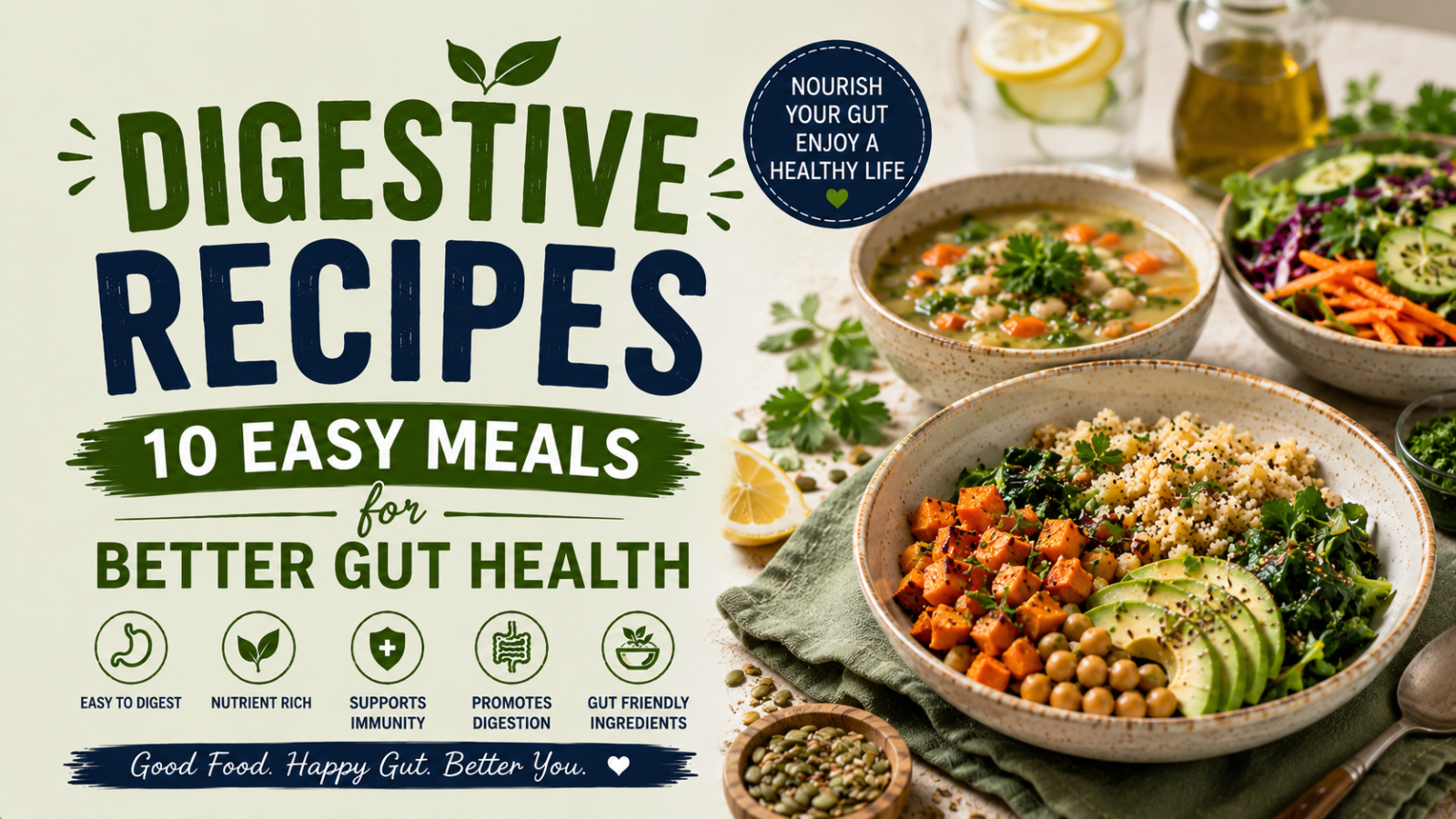
Digestive recipes can make it easier to build everyday meals with vegetables, fiber-rich foods, lean protein, and simple ingredients that support a balanced diet.
If you’ve ever felt uncomfortable after a heavy meal, switching to lighter, home-cooked dishes can be a practical place to start.
You can also save the recipes that work best for you with the Copy Button, so your favorite meal ideas are easy to keep for the next grocery trip.
Quick Answer: What Are Digestive Recipes?
Digestive recipes are meals made with ingredients that many people find gentle, nourishing, and easy to include in a balanced eating pattern. They often feature cooked vegetables, whole grains, lean proteins, fruits, healthy fats, and moderate amounts of fiber.
There isn’t one perfect “digestive diet.” Your food tolerance matters, too. Some people enjoy beans, onions, and large salads without trouble, while others feel better with smaller portions and more cooked foods.
The best approach is simple: choose nutritious foods, prepare them in ways you tolerate well, and build variety over time.
What Makes Digestive Recipes Different?
A meal doesn’t need to be bland just because you’re trying to make it easier on your stomach.
Instead, focus on simple preparation. Roasting, steaming, baking, and simmering can create satisfying meals without relying on heavy sauces or large amounts of fried food.
Fiber also deserves attention. Mayo Clinic recommends getting fiber from foods such as vegetables, fruits, whole grains, legumes, nuts, and seeds. Fiber supports normal bowel function and can also interact with the microorganisms living in the digestive tract.
However, if you’re not used to eating much fiber, increase it gradually. A sudden change can cause gas and bloating.
A useful meal formula
When I plan a meal for easier digestion, I like to keep the basic structure simple:
Protein + cooked vegetable + carbohydrate + small amount of healthy fat
For example, baked chicken with roasted carrots, rice, and olive oil can be a complete meal without being complicated.
You can use the same formula with fish, tofu, eggs, potatoes, oats, quinoa, zucchini, spinach, or other foods you already enjoy.
10 Digestive Recipes to Make at Home
These recipes are designed for ordinary kitchens and regular schedules. You can adjust the portions and ingredients based on your preferences.
1. Lemon Herb Chicken With Rice and Carrots
This is a good starting point when you want something familiar.
Ingredients:
- 1 chicken breast
- 1 cup cooked white or brown rice
- 1 cup cooked carrots
- 1 tablespoon olive oil
- Lemon juice
- Parsley
- Black pepper
Bake or pan-cook the chicken until fully cooked. Season it with lemon, parsley, and black pepper.
Serve it with warm rice and tender carrots. If brown rice feels too heavy for you, use white rice instead.
The point isn’t to label one rice as “good” and the other as “bad.” It’s about finding the option you enjoy and tolerate.
2. Gentle Vegetable and Chicken Soup
Soup can be especially useful when you want a warm, easy meal.
Ingredients:
- Cooked shredded chicken
- Carrots
- Celery
- Zucchini
- Potatoes
- Low-sodium chicken broth
- Parsley
- Black pepper
Simmer the vegetables in broth until tender. Add cooked chicken near the end and heat everything through.
You can leave the vegetables chunky or mash some of the potatoes into the broth for a thicker texture.
For a lighter dinner, keep the portion moderate and add a piece of toast if you need more food.
3. Baked Salmon With Sweet Potato
Salmon and sweet potatoes make a simple dinner with very little hands-on cooking.
Place salmon on a baking sheet and season with lemon juice, parsley, and black pepper. Roast until fully cooked.
At the same time, bake cubed sweet potato until soft.
Add cooked spinach or zucchini on the side. As a result, you get protein, vegetables, and a satisfying carbohydrate in one plate.
4. Creamy Oatmeal With Banana and Chia
Digestive recipes aren’t only for lunch and dinner.
For breakfast, cook rolled oats with milk or a fortified dairy-free alternative until creamy. Add sliced banana and a small amount of chia seeds.
If you don’t eat much fiber, start with a small amount of chia rather than adding several spoonfuls.
You can also add cinnamon for flavor.
This breakfast is warm, soft, and easy to customize. For more protein, stir in plain Greek yogurt after the oats cool slightly.
5. Turkey and Zucchini Rice Bowl
Cook lean ground turkey with zucchini and mild herbs.
Serve it over cooked rice and finish with a little olive oil and fresh parsley.
If you enjoy garlic, a small amount can add flavor. However, some people find large amounts of garlic uncomfortable, so adjust it to your own tolerance.
This recipe also works well for meal prep. Make several servings and store them separately so you can reheat lunch quickly.
6. Baked Potato With Greek Yogurt and Chicken
A baked potato can be much more than a side dish.
Bake a medium potato until soft. Split it open and add shredded chicken, plain Greek yogurt, chopped parsley, and black pepper.
For extra vegetables, add cooked spinach or carrots.
Greek yogurt provides protein and a creamy texture without requiring a heavy sauce. Choose plain yogurt without a large amount of added sugar.
7. Simple Egg and Spinach Breakfast Bowl
For a savory breakfast, cook two eggs with spinach and serve them with roasted potatoes or a slice of whole-grain toast.
Keep the seasoning simple with black pepper, parsley, or chives.
If large amounts of raw vegetables don’t sit well with you in the morning, cooked spinach can be a more comfortable choice.
This meal takes only a few minutes and can keep you satisfied until lunch.
8. Chicken and Quinoa Vegetable Bowl
Quinoa can make a useful base for a balanced meal.
Combine cooked quinoa with grilled chicken, roasted zucchini, carrots, and spinach. Add olive oil and lemon juice for flavor.
You can prepare the quinoa and chicken ahead of time, then assemble the bowl when you’re ready to eat.
If quinoa isn’t something you enjoy, brown rice, white rice, or another whole grain can work instead.
9. Ginger Carrot and Potato Soup
For a meat-free option, try a simple vegetable soup.
Simmer carrots, potatoes, zucchini, and a small amount of fresh ginger in low-sodium vegetable broth until everything becomes tender.
Blend part of the soup while leaving some vegetables whole. This creates a creamy texture without needing heavy cream.
Add a drizzle of olive oil before serving.
Ginger gives the soup a warm flavor, while the vegetables provide a range of nutrients and fiber.
10. Apple and Yogurt Oat Bowl
This quick meal works well for breakfast or an afternoon snack.
Mix plain Greek yogurt with cooked or overnight oats, chopped apple, cinnamon, and a small handful of walnuts.
If raw apples don’t agree with you, try lightly cooked apple instead.
That small change can make the texture softer while keeping the meal flavorful.
How to Make Digestive Recipes More Comfortable
Even healthy foods can feel uncomfortable when portions are too large or your body isn’t used to them.
Start with foods you already know you tolerate. Then introduce new ingredients one at a time.
Cooking vegetables can also change their texture. Steamed carrots may feel easier to eat than a large serving of raw carrots, for example.
Portion size matters as well. A giant meal can leave you feeling overly full, even when every ingredient is nutritious.
Eat slowly, give yourself time to notice fullness, and avoid turning every meal into a challenge to eat as much fiber as possible.
What about fiber?
Fiber is important, but your intake doesn’t have to change overnight.
Mayo Clinic recommends gradually increasing fiber and drinking enough fluids as you increase your intake.
So, if you currently eat very little fiber, don’t suddenly add beans, lentils, bran, chia seeds, and several servings of vegetables in one day.
Instead, add one change at a time.
Digestive Recipes for Breakfast
Breakfast sets the tone for the rest of the morning, but it doesn’t need to be elaborate.
Try oatmeal with banana, eggs with cooked spinach, or plain Greek yogurt with oats and soft fruit.
If you’re sensitive to very rich foods early in the day, keep breakfast simple. You can always add more food later when you’re hungry.
A warm breakfast can also be appealing when cold foods don’t sound good.
Digestive Recipes for Lunch
Lunch is where meal prep can save the most time.
Cook chicken, rice, quinoa, or roasted vegetables in advance. Then combine them in different ways throughout the week.
For example, Monday might be chicken and rice with carrots. Tuesday could be quinoa with chicken and zucchini. Wednesday might be a baked potato with chicken and yogurt.
The ingredients overlap, but the meals don’t feel identical.
That makes healthy eating much more realistic when you’re busy.
Digestive Recipes for Dinner
Dinner doesn’t need to be huge.
A simple plate of baked fish, potatoes, and cooked vegetables can be satisfying. So can chicken soup with rice or a turkey and zucchini bowl.
Try to finish dinner feeling comfortably satisfied rather than stuffed.
If large evening meals tend to leave you uncomfortable, experiment with a slightly smaller dinner and a balanced snack earlier in the evening.
Foods to Use Carefully in Digestive Recipes
Some nutritious foods can cause discomfort for certain people.
Beans, lentils, onions, garlic, very spicy foods, large amounts of cruciferous vegetables, and high-fat meals may cause symptoms in sensitive individuals.
That doesn’t mean these foods are unhealthy.
Instead, look at your own response. You may tolerate a small serving of lentils but feel uncomfortable after a large bowl. You might enjoy cooked broccoli but not a huge raw broccoli salad.
Food tolerance is personal.
Simple Cooking Habits That Can Help
A few kitchen habits can make meals easier to manage.
Cook vegetables until tender: This changes texture and can make them easier to chew.
Use moderate portions: You don’t need an enormous plate to get good nutrition.
Limit very heavy sauces: Try lemon, herbs, olive oil, or yogurt instead.
Eat slowly: Give yourself time to notice how much you’ve eaten.
Keep meals varied: Rotate proteins, vegetables, grains, fruits, and other foods.
Drink enough fluids: Water is especially important when you’re increasing dietary fiber.
Prepare food at home more often: It gives you greater control over ingredients and portion sizes.
Frequently Asked Questions About Digestive Recipes
What are the best digestive recipes for beginners?
Start with simple meals such as chicken and rice with cooked vegetables, oatmeal with banana, baked salmon with sweet potato, or vegetable soup. These meals use familiar ingredients and are easy to adjust.
Are digestive recipes good for gut health?
They can be. Meals based on vegetables, fruits, whole grains, legumes, and other minimally processed foods can provide fiber and nutrients that support a balanced diet.
What should I eat when my stomach feels uncomfortable?
Choose foods you already know you tolerate. Simple meals with moderate portions may feel better than very rich, spicy, or high-fiber dishes. Your personal tolerance matters.
Can digestive recipes help with constipation?
Fiber-rich foods can support normal bowel movements, and adequate fluid intake is also important. However, increase fiber gradually rather than making a sudden change.
Are these recipes suitable for everyone?
Not necessarily. Food tolerance varies widely. Ingredients that feel comfortable for one person may cause symptoms for another, so adjust recipes based on your own experience.
The Bottom Line on Digestive Recipes
The best digestive recipes aren’t complicated. They use familiar foods, sensible portions, simple cooking methods, and enough variety to keep meals enjoyable.
Start with one or two recipes you actually want to eat. Then make small changes based on your appetite and how your body responds.
You don’t need a perfect meal plan. A few reliable recipes can make everyday eating easier, especially when you’re tired, busy, or simply don’t feel like cooking something complicated.
When you find a recipe that works well for your routine, use the Copy Button to save it for later. A small collection of dependable meals can go a long way toward making balanced eating feel simple.

Here’s a short Gutrova-style author biography for Josh Axe:
Josh Axe
Josh Axe is a wellness expert, author, and educator known for his work in nutrition, natural health, and gut wellness. As a contributor to Gutrova, he shares practical insights on digestive health, healthy eating habits, and lifestyle strategies that help readers build a stronger foundation for overall well being. His content focuses on making wellness simple, actionable, and accessible for everyday life.











1 thought on “Digestive Recipes: 10 Easy Meals for Better Gut Health”