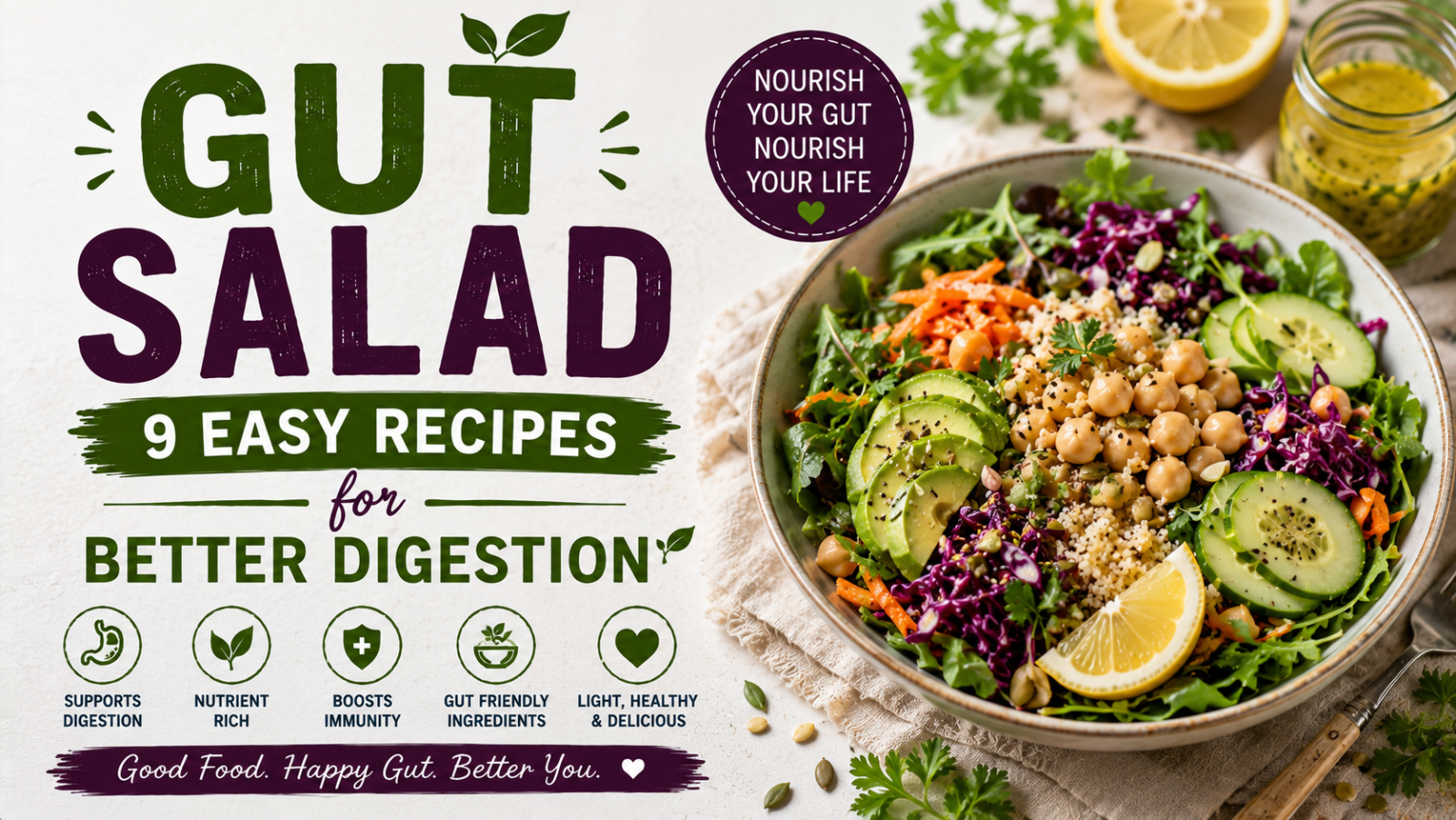
Gut salad is a simple way to pack vegetables, fiber-rich foods, protein, and healthy fats into one fresh, filling meal. If you’ve ever wanted a healthy lunch that doesn’t leave you hungry an hour later, a well-made salad can do the job.
You can also save the recipes you like with the Copy Button, making it easy to copy an ingredient list or meal idea for your next grocery trip.
Quick Answer: What Is a Gut Salad?
A gut salad is a salad made with a mix of foods that can support a balanced, fiber-rich eating pattern. There isn’t one official recipe or list of required ingredients.
A good bowl might include leafy greens, colorful vegetables, beans or lentils, whole grains, seeds, avocado, chicken, fish, or another protein source. A simple dressing made with olive oil, lemon juice, herbs, or yogurt can bring everything together.
The main idea is variety. Instead of building a bowl around lettuce alone, combine several different foods so the meal is nutritious and satisfying.
Why Gut Salad Can Be a Good Choice
Salads are an easy way to eat more plant foods without spending hours in the kitchen.
Vegetables, fruits, beans, lentils, nuts, seeds, and whole grains provide different types of fiber. Your digestive system doesn’t treat all fiber in exactly the same way, so eating a range of plant foods can be a useful part of a balanced diet.
Mayo Clinic recommends getting fiber from foods such as vegetables, fruits, whole grains, nuts, seeds, and legumes. Fiber also helps support normal bowel movements.
However, more fiber isn’t always better right away. If your usual diet is low in fiber, suddenly eating a huge salad filled with beans and raw vegetables may leave you feeling bloated.
Start where you’re comfortable and build from there.
What makes a salad a complete meal?
A few leaves and sliced cucumber probably won’t keep you satisfied for long.
Instead, think about four basic parts:
Vegetables: spinach, lettuce, carrots, tomatoes, cucumber, peppers, zucchini, or broccoli.
Protein: chicken, salmon, eggs, tofu, beans, lentils, or chickpeas.
Fiber-rich foods: beans, lentils, quinoa, barley, oats, fruit, or whole grains.
Healthy fats: avocado, walnuts, almonds, pumpkin seeds, sunflower seeds, or olive oil.
Once those pieces are in place, your salad becomes much more than a side dish.
9 Gut Salad Recipes for Easy Meals
You don’t need to follow these recipes perfectly. Use them as starting points, then swap ingredients based on what you enjoy and what you already have at home.
1. Mediterranean Gut Salad
This is a great option for a quick lunch because most of the ingredients require little preparation.
You’ll need:
- 2 cups romaine or mixed greens
- ½ cup chickpeas
- ½ cucumber, chopped
- 1 cup cherry tomatoes
- ¼ red bell pepper
- 1 tablespoon pumpkin seeds
- Fresh parsley
- 1 tablespoon extra-virgin olive oil
- 1 tablespoon lemon juice
- Black pepper
Add grilled chicken if you want more protein.
The chickpeas add fiber and plant protein, while the vegetables provide different colors, textures, and nutrients. The lemon and olive oil keep the dressing simple.
2. Berry Spinach Gut Salad
Salad doesn’t always have to taste savory.
Combine baby spinach with strawberries, blueberries, walnuts, pumpkin seeds, and grilled chicken or tofu.
For the dressing, mix olive oil, lemon juice, and a little Dijon mustard.
The berries add natural sweetness, so you don’t need a sugary dressing. Meanwhile, walnuts and seeds give the bowl more staying power.
This is a nice choice when you want something fresh but still filling.
3. Sweet Potato and Chickpea Gut Salad
Roasted sweet potatoes can turn a basic salad into a satisfying meal.
Roast cubed sweet potato until tender. Then combine it with spinach or kale, chickpeas, cucumber, pumpkin seeds, and parsley.
For dressing, whisk together olive oil, lemon juice, cumin, and black pepper.
The warm sweet potato works especially well with cool vegetables. As a result, the salad feels more like a proper meal.
4. Salmon Avocado Gut Salad
For a protein-rich bowl, start with mixed greens and add cooked salmon, avocado, cucumber, carrots, and pumpkin seeds.
Use lemon juice, olive oil, parsley, and black pepper for a quick dressing.
Salmon provides protein and omega-3 fats. Avocado adds fiber and healthy unsaturated fat.
You can prepare the salmon ahead of time, then assemble the salad in just a few minutes.
5. Lentil Gut Salad With Fresh Vegetables
Lentils are useful when you want a meat-free meal that still feels substantial.
Mix cooked lentils with chopped cucumber, tomatoes, carrots, spinach, parsley, and sunflower seeds.
Add olive oil, lemon juice, oregano, and black pepper.
If lentils usually make you uncomfortable, don’t start with a large portion. A smaller serving may be easier to handle, especially if your diet hasn’t included much fiber.
6. Quinoa and Roasted Vegetable Gut Salad
Cooked quinoa makes a useful base for meal-prep salads.
Combine quinoa with roasted zucchini, carrots, bell peppers, spinach, pumpkin seeds, and fresh herbs.
Finish with a lemon and olive oil dressing.
This salad keeps well when you store the dressing separately. Therefore, you can prepare several portions at once and assemble them throughout the week.
7. Apple, Walnut and Chicken Gut Salad
For a little sweetness and plenty of crunch, combine chopped romaine or kale with thinly sliced apple, walnuts, shredded carrots, pumpkin seeds, and grilled chicken.
A simple lemon and olive oil dressing works well.
The apple adds sweetness without needing sugar in the dressing. Walnuts bring a rich texture, while chicken provides protein.
If raw kale feels too tough, massage it briefly with a little olive oil and lemon juice before adding the other ingredients.
8. White Bean Gut Salad
This is one of the easiest recipes for a busy day.
Combine rinsed white beans with cucumber, tomatoes, spinach, roasted red peppers, parsley, and olives.
Add olive oil, lemon juice, oregano, and black pepper.
You don’t need to cook anything if you use canned beans. Just rinse them well and drain them before adding them to the bowl.
For extra protein, add a boiled egg or some grilled chicken.
9. Warm Chicken and Vegetable Gut Salad
If cold salads aren’t your favorite, try a warm version.
Roast carrots, zucchini, and sweet potato. Place them over spinach or mixed greens, then add sliced cooked chicken and pumpkin seeds.
Finish with lemon juice and olive oil.
The warm vegetables soften the greens slightly and give the meal a more comforting feel. I often prefer this style of salad when the weather is cool.
How to Build Your Own Gut Salad
Once you understand the basic formula, you won’t need a recipe every time.
Start with a leafy green. Then choose two or three vegetables, one protein, one fiber-rich food, one healthy fat, and a dressing.
For example:
Spinach + cucumber + carrots + chickpeas + quinoa + avocado + lemon dressing
Or try:
Romaine + tomatoes + peppers + chicken + sweet potato + pumpkin seeds + olive oil
You can also use leftovers.
Have roasted vegetables from dinner? Add them. Got leftover chicken in the refrigerator? Slice it over greens. Cooked quinoa sitting in the fridge? Put it in the bowl.
This approach makes healthy eating much easier because you’re not starting from zero every day.
Gut Salad Ingredients to Keep on Hand
A few basic ingredients can help you make a quick meal without much planning.
Leafy greens: Spinach, romaine, arugula, kale, and spring mix.
Vegetables: Carrots, cucumbers, tomatoes, bell peppers, zucchini, and broccoli.
Protein: Eggs, chicken, salmon, tofu, chickpeas, beans, and lentils.
Whole-food carbohydrates: Quinoa, barley, brown rice, sweet potatoes, and other whole grains.
Healthy fats: Avocado, walnuts, almonds, pumpkin seeds, and olive oil.
Flavor boosters: Lemon, lime, fresh herbs, mustard, garlic, ginger, and spices.
Keeping several of these foods available makes it much easier to build a meal when you don’t have a specific recipe planned.
How to Make Gut Salad Easier to Digest
A large raw salad isn’t comfortable for everyone.
If you notice bloating after eating salads, look at the size of the meal first. A very large bowl can contain a lot of fiber and raw vegetables at once.
Instead, try a smaller serving.
You can also cook some of the vegetables. Roasted carrots, zucchini, sweet potatoes, and peppers are softer and may be easier for you to enjoy.
Beans, lentils, onions, and certain vegetables can cause more gas in some people. That doesn’t mean you need to remove them permanently. Try smaller amounts and see how your body responds.
Also, don’t feel like every salad needs ten different ingredients. A simple bowl that feels good is more useful than a huge bowl you don’t enjoy.
Should You Add Fermented Foods to a Gut Salad?
You can.
Fermented foods such as sauerkraut, kimchi, kefir, and yogurt can add variety to your diet. Harvard Health has discussed fermented foods as one area of interest for gut health and the gut microbiome.
Try adding a small spoonful of sauerkraut or kimchi to a savory salad. You can also make a yogurt-based dressing using plain yogurt, lemon juice, herbs, and black pepper.
There’s no need to add several fermented foods to one meal.
Also, check the nutrition label on packaged fermented vegetables because some products contain a lot of sodium.
Gut Salad Meal Prep Tips
Salad preparation doesn’t have to take over your Sunday.
Wash and dry your greens, cook your protein, roast a tray of vegetables, and prepare one dressing. Store each component separately.
Keep wet ingredients away from the greens until you’re ready to eat. This helps prevent soggy lettuce.
You can also prepare grains such as quinoa or brown rice in advance. Then, during the week, simply combine them with vegetables and protein.
For busy mornings, portion everything into containers the night before.
That small step can make lunch much easier.
Common Gut Salad Mistakes
Only eating lettuce: Greens are useful, but they aren’t enough to make a filling meal.
Skipping protein: Add chicken, fish, eggs, tofu, beans, or another protein source.
Adding too much fiber at once: Increase beans, lentils, and whole grains gradually.
Using too much dressing: A little can add plenty of flavor.
Making every ingredient raw: Cooked vegetables can add variety and may feel easier to eat.
Eating the same salad every day: Rotate your ingredients to keep meals interesting.
Treating salad as a detox: A salad can be nutritious, but it isn’t a cleanse or instant fix.
Forgetting flavor: Lemon, herbs, spices, roasted vegetables, and a good dressing can make a huge difference.
Frequently Asked Questions About Gut Salad
What should I put in a gut salad?
Start with leafy greens, several vegetables, a protein source, a fiber-rich food, a healthy fat, and a simple dressing. Chickpeas, lentils, quinoa, avocado, seeds, chicken, and salmon are all practical choices.
Is gut salad good for digestion?
It can be part of a balanced diet that provides fiber and a variety of plant foods. However, some people don’t tolerate large amounts of raw vegetables or fiber very well. Portion size and personal tolerance matter.
Can I eat a gut salad every day?
You can eat salads regularly, but try to vary the ingredients. Change your vegetables, proteins, grains, beans, seeds, and dressings throughout the week.
Can gut salad cause bloating?
Yes. Large portions of raw vegetables or a sudden increase in fiber can cause bloating for some people. Beans, lentils, onions, and certain vegetables may also cause gas in sensitive individuals.
What is the best dressing for gut salad?
A simple dressing made with extra-virgin olive oil, lemon juice, herbs, and a little Dijon mustard is an easy option. Plain yogurt can also make a creamy dressing.
The Bottom Line on Gut Salad
A good gut salad doesn’t need expensive products or hard-to-find ingredients. It simply needs a useful mix of vegetables, fiber-rich foods, protein, healthy fats, and flavors you enjoy.
Start with a simple bowl and pay attention to how you feel afterward. Then adjust the ingredients, portion sizes, and preparation methods until you find combinations that work well for you.
You don’t need to make every salad perfect. A few easy recipes that you actually enjoy are far more useful than complicated meals you’ll never make.
And when you find a combination worth repeating, use the Copy Button to save the recipe and keep it ready for your next grocery trip.

Elizabeth Boham is a respected functional medicine physician and wellness educator with a passion for helping people improve their health through nutrition and lifestyle changes. As a contributor to Gutrova, she shares practical insights on gut health, digestive wellness, and healthy living, making complex health topics easy to understand and apply in everyday life.






1 thought on “Gut Salad: 9 Easy Recipes for Better Digestion”