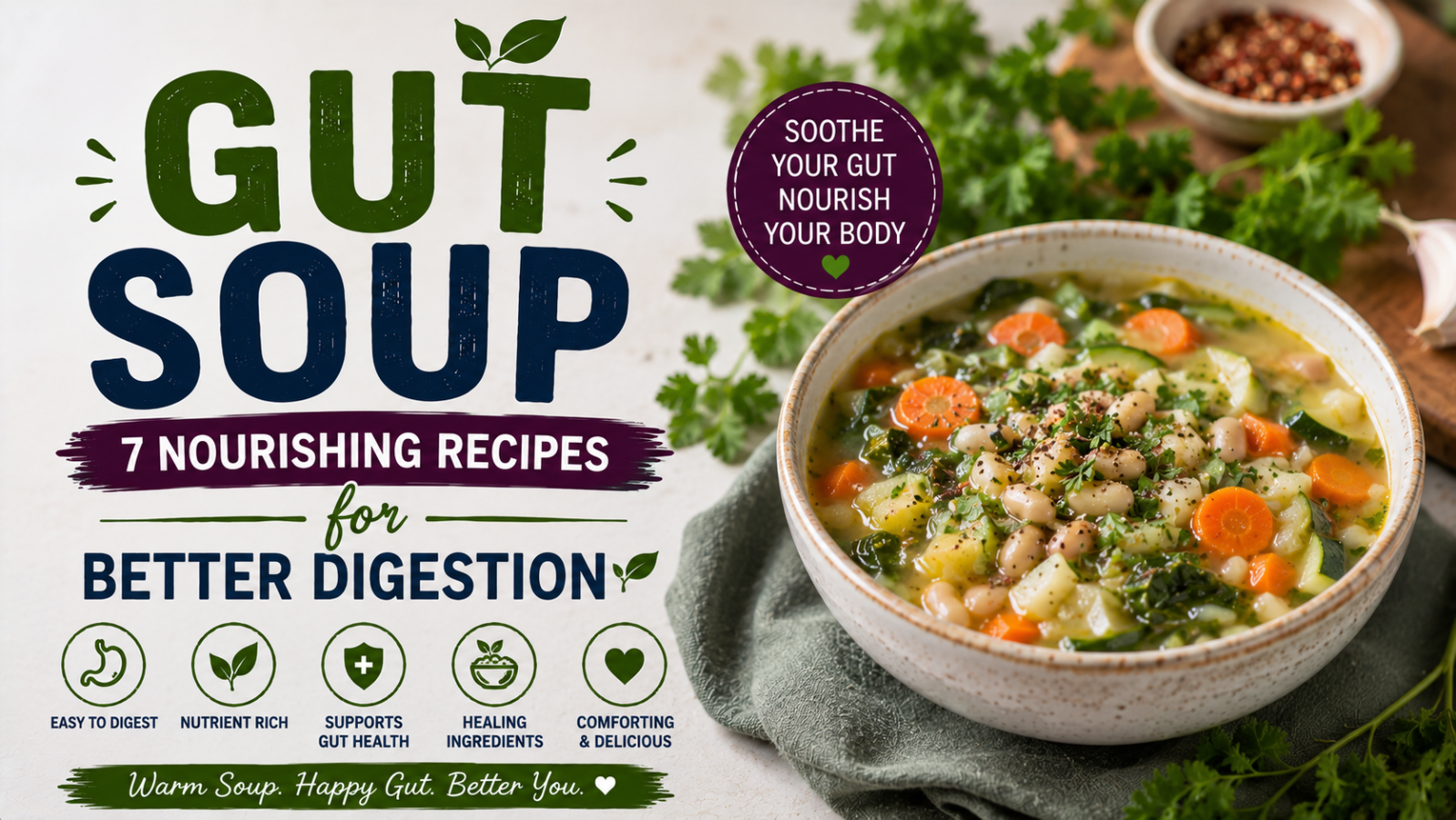
Gut soup is a simple, comforting way to combine vegetables, beans, whole grains, herbs, and broth in one satisfying meal. When my stomach feels like it needs something gentler, a warm bowl packed with vegetables and easy-to-digest ingredients is one of the first meals I reach for.
If you find a useful ingredient or recipe idea here, use your Copy Button to instantly copy the tip and save it for your next grocery trip or meal plan.
Quick Answer: What Is Gut Soup?
Gut soup isn’t a medical term or a single prescribed recipe. It generally refers to soups built around gut-friendly foods, such as vegetables, legumes, whole grains, herbs, lean proteins, and other minimally processed ingredients.
The appeal is practical. Soup makes it easy to combine several plant foods in one meal while adding plenty of fluid. Many ingredients used in these soups also provide dietary fiber, which gut microbes can ferment into compounds such as short-chain fatty acids.
A good gut soup doesn’t need to be complicated. Start with a vegetable-rich broth, add a source of protein and fiber, and adjust the ingredients to your own tolerance.
Why Gut Soup Can Be a Smart Meal Choice
A bowl of soup can quietly pack several helpful foods into one meal.
Vegetables provide different types of fiber and plant compounds. Beans, lentils, oats, barley, and other whole foods can add additional fiber, while chicken, fish, tofu, or beans can make the meal more filling.
Mayo Clinic notes that fiber-rich foods include vegetables, fruits, whole grains, and legumes. Fiber also supports normal bowel function and digestive health.
There’s another advantage: soup is easy to customize. If onions or large portions of beans don’t sit well with you, you can use different vegetables or smaller portions instead.
The best gut soup has variety
Think beyond one “superfood.”
A useful bowl might contain carrots, spinach, lentils, tomatoes, barley, herbs, and olive oil. Another could use chicken, zucchini, potatoes, kale, and white beans.
That variety matters because different plant foods provide different fibers and nutrients. Research suggests that the type and amount of dietary fiber can influence the gut microbiome in different ways.
7 Gut Soup Recipes Worth Making
These recipes are designed for ordinary kitchens rather than complicated meal-prep routines. You can also swap ingredients based on what’s available at your local grocery store.
1. Lentil and Vegetable Gut Soup
This is a great everyday option when you want something hearty without making the meal feel overly heavy.
Ingredients:
- 1 cup dry green or brown lentils
- 2 carrots, chopped
- 2 celery stalks, chopped
- 1 zucchini, chopped
- 1 can diced tomatoes
- 1 small onion, chopped
- 3 cups low-sodium vegetable broth
- 2 cups water
- 2 handfuls spinach
- 1 tablespoon olive oil
- Garlic, cumin, black pepper, and herbs to taste
How to make it: Sauté the vegetables briefly in olive oil. Add lentils, tomatoes, broth, water, and seasonings. Simmer until the lentils are tender, then stir in spinach during the final few minutes.
If lentils tend to cause bloating for you, start with a smaller serving rather than forcing a large bowl.
2. Chicken, Carrot and Rice Gut Soup
This version is especially useful when you want a simple, familiar meal.
Combine shredded cooked chicken with carrots, celery, zucchini, rice, parsley, and a light chicken broth. Simmer until the vegetables are tender and finish with lemon juice.
The rice makes the soup satisfying without adding a strong flavor. You can use brown rice for more fiber or white rice if that’s easier for you to tolerate.
3. Gut Soup With Sweet Potato and White Beans
Sweet potatoes bring natural sweetness and a creamy texture, while white beans add plant protein and fiber.
Cook diced sweet potatoes with carrots, celery, tomatoes, white beans, vegetable broth, rosemary, and black pepper. Mash a small portion of the sweet potato against the side of the pot to thicken the broth naturally.
For a smoother meal, blend part of the soup and leave the rest chunky.
4. Green Gut Soup
When your refrigerator is full of vegetables that need using, this recipe is an easy solution.
Try combining zucchini, spinach, peas, celery, potatoes, parsley, and broth. Add white beans for protein and extra fiber.
Once everything is tender, blend the soup until smooth. A drizzle of extra-virgin olive oil and a squeeze of lemon can brighten the flavor without requiring heavy cream.
5. Gut Soup With Oats and Vegetables
Oats aren’t just for breakfast.
A small amount of rolled oats can give vegetable soup a naturally creamy texture while contributing soluble fiber. Mayo Clinic identifies oats among foods that provide soluble fiber.
Simmer rolled oats with carrots, zucchini, celery, spinach, chicken or white beans, and low-sodium broth. Season with thyme, parsley, black pepper, and a little garlic if you tolerate it.
The result is surprisingly comforting.
6. Tomato, Chickpea and Spinach Gut Soup
This pantry-friendly soup comes together quickly.
Start with canned diced tomatoes, rinsed chickpeas, carrots, spinach, vegetable broth, and Italian herbs. Add a little olive oil and black pepper, then simmer until the carrots soften.
Chickpeas provide fiber and plant protein. However, beans can increase gas in some people, especially when portions suddenly become much larger. If you’re not used to high-fiber meals, increase portions gradually.
7. Ginger Vegetable Gut Soup
For something lighter, build your bowl around ginger, carrots, zucchini, spinach, mushrooms, and broth.
Add shredded chicken or tofu if you’d like more protein. Fresh ginger gives the soup a warm, fresh flavor, while lemon and herbs keep it from tasting flat.
This isn’t a “detox” soup, and it doesn’t need to be. It’s simply an easy way to eat several minimally processed foods together.
How to Build Your Own Gut Soup
Once you understand the formula, you don’t really need a recipe.
Start with one base, such as low-sodium vegetable or chicken broth. Then choose two or three vegetables, one protein source, one fiber-rich carbohydrate, and a few herbs or spices.
For example:
Broth + carrots + zucchini + lentils + spinach + barley + parsley
Or:
Chicken broth + chicken + potatoes + celery + carrots + kale
This approach keeps meals interesting without requiring a completely different recipe every night.
Choose fiber gradually
Fiber is important, but suddenly loading your plate with beans, lentils, vegetables, and whole grains can leave some people feeling uncomfortable.
If your usual diet is low in fiber, increase it gradually and drink enough fluids. Mayo Clinic recommends getting fiber from a variety of plant foods rather than relying on one source.
Your gut may appreciate consistency more than a dramatic overnight change.
Gut Soup Ingredients That Deserve a Place in Your Kitchen
You don’t need an expensive supplement cabinet to make a nourishing soup.
Keep a few versatile ingredients on hand:
- Lentils: Easy to cook and rich in fiber and plant protein.
- Beans: Useful for adding protein and fiber to hearty soups.
- Carrots: Mild, naturally sweet, and easy to combine with other vegetables.
- Spinach: Wilts quickly into almost any soup.
- Sweet potatoes: Add fiber, potassium, and natural sweetness.
- Oats: Useful for adding soluble fiber and body to broth.
- Barley: A chewy whole grain that works well in hearty soups.
- Garlic and herbs: Add flavor without relying on heavy sauces.
- Ginger: Gives lighter soups a fresh, warming flavor.
- Extra-virgin olive oil: A simple way to add richness.
Research on dietary fiber and the gut microbiome suggests that different fibers can influence microbial activity in different ways. That’s another reason to rotate your ingredients instead of eating the exact same soup every day.
Make Gut Soup Easier to Digest
A nutritious recipe isn’t automatically comfortable for everyone.
If you’re sensitive to large amounts of fiber, begin with a smaller serving. You can also cook vegetables until they’re softer, blend the soup, or choose ingredients you already know agree with you.
Beans and lentils are nutritious, but they can produce more gas for some people. Rinsing canned beans thoroughly and increasing portions slowly may make them easier to handle.
Spicy ingredients deserve the same consideration. Chili peppers, heavy garlic, or large amounts of onion may be perfectly comfortable for one person and unpleasant for another.
Pay attention to your own response instead of chasing a universal “perfect” gut diet.
Can You Add Fermented Foods to Gut Soup?
Yes, but don’t cook them aggressively if you’re specifically trying to preserve live cultures.
Fermented foods such as yogurt, kefir, kimchi, sauerkraut, and some other fermented vegetables can contain live microorganisms. Harvard Health notes that fermented foods have attracted attention for their potential role in supporting the gut microbiome.
Instead of stirring yogurt into boiling soup, try adding a spoonful of plain yogurt after the soup has cooled slightly. You can also serve a small portion of fermented vegetables alongside your meal.
Remember that fermented foods aren’t mandatory for a healthy gut. They’re simply another food category you can include if you enjoy them and tolerate them well.
Gut Soup Meal-Prep Tips for Busy Weeknights
Soup is one of the easiest gut-friendly meals to prepare ahead.
Make a large batch on Sunday, then portion it into individual containers. Refrigerate what you’ll eat within a few days and freeze the rest in suitable containers.
Keep toppings separate when possible. Fresh herbs, lemon, yogurt, avocado, or a little olive oil can make reheated soup taste much fresher.
I also like freezing soup in single-serving portions. That way, you don’t end up eating the same recipe for five days simply because you made too much.
For a complete meal, pair soup with a source of protein and, if needed, a side of whole-grain bread or another carbohydrate you enjoy.
Common Gut Soup Mistakes to Avoid
A few simple mistakes can turn a nourishing idea into a meal that doesn’t work well for you.
Adding too much fiber at once: More isn’t always better. Increase high-fiber ingredients gradually.
Relying only on broth: A bowl of mostly broth and a few vegetables may not keep you satisfied. Add protein and a substantial carbohydrate source.
Using excessive sodium: Canned broth, canned beans, bouillon, and packaged seasonings can add up. Choose lower-sodium versions when possible.
Assuming blended means healthier: Blending changes texture, not the basic nutritional value of the ingredients. Choose the preparation that you enjoy and tolerate.
Calling soup a detox: Your body already has organs that handle waste processing. Soup can support a nutritious eating pattern, but it isn’t a magic cleanse.
Ignoring personal tolerance: A food can be nutritious and still disagree with you. Your individual response matters.
Frequently Asked Questions About Gut Soup
Is gut soup actually good for digestion?
It can be. A soup made with vegetables, legumes, whole grains, and other minimally processed foods can provide fiber and fluid while making several nutritious ingredients easy to eat in one meal. However, tolerance varies from person to person.
What is the best gut soup to eat regularly?
There isn’t one universally best recipe. Lentil vegetable soup, chicken vegetable soup, and bean-based soups can all work well. Rotating ingredients gives you more variety in your diet.
Can gut soup help with constipation?
Fiber-rich soups may support regular bowel movements, particularly when they also contribute fluids. However, increasing fiber suddenly can cause bloating or discomfort, so gradual changes are usually more practical.
Is gut soup good for bloating?
It depends on what’s in it and why you’re bloated. Some people find simple cooked vegetables and lighter soups comfortable, while others may react to large amounts of beans, onions, garlic, or certain other fermentable carbohydrates.
Can I eat gut soup every day?
You can include soup frequently if your overall diet remains varied and balanced. Rotate vegetables, protein sources, grains, and legumes instead of eating one identical recipe every day.
The Bottom Line on Gut Soup
Gut soup is less about finding a magical recipe and more about building satisfying meals from foods that support a varied, fiber-rich eating pattern. Vegetables, beans, lentils, whole grains, herbs, and quality protein can all have a place in the pot.
Research suggests that dietary fiber interacts with gut microbes and can influence microbial activity and the production of short-chain fatty acids.
Start with one recipe you genuinely enjoy. Make it again, adjust the ingredients based on how you feel, and gradually build a small rotation of favorites.
And when you find a combination worth keeping, use the Copy Button to save the recipe or share it with someone who could use an easy, nourishing dinner idea.












1 thought on “Gut Soup: 7 Nourishing Recipes for Better Digestion”