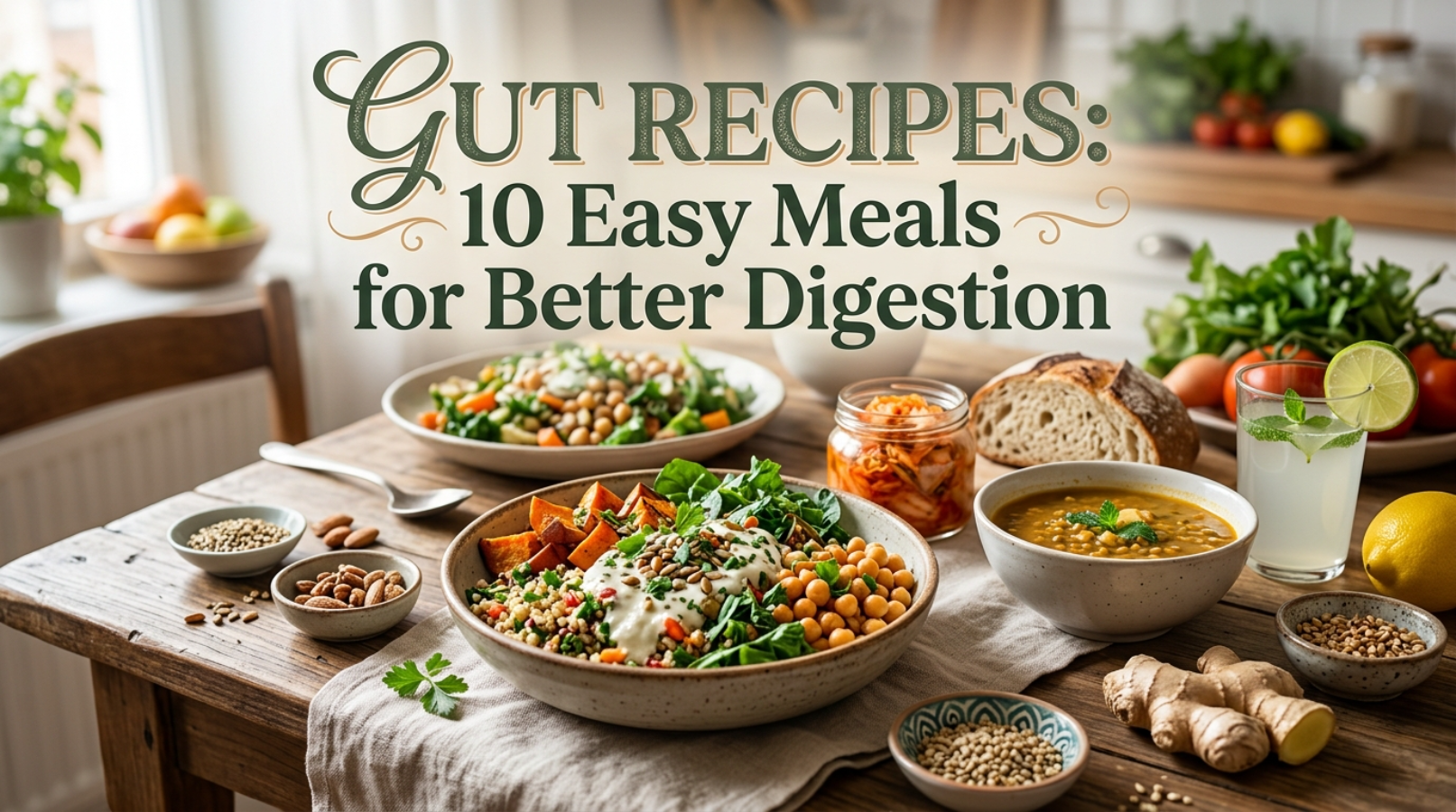
Gut recipes can make healthy eating much easier when they focus on fiber-rich plants, fermented foods, whole grains, healthy fats, and satisfying sources of protein. The best gut-friendly meals don’t need to be complicated; they simply need a thoughtful mix of foods your body can handle well. You can also use the Copy Button on this page to quickly save or share your favorite ideas.
If you’ve ever felt overly full after a heavy meal, you’ve probably noticed that what you eat can affect how comfortable you feel for hours afterward. Fortunately, a few simple changes can turn everyday breakfasts, lunches, dinners, and snacks into more digestion-friendly choices.
Quick Answer: What Makes Gut Recipes Healthy?
Gut recipes generally combine foods that provide fiber, plant compounds, and other nutrients that support digestive health. Good options include vegetables, fruits, beans, lentils, oats, whole grains, nuts, seeds, and fermented foods such as yogurt or sauerkraut.
The key is variety. Instead of relying on one “superfood,” build meals around several different plant foods and adjust portions based on your personal tolerance.
Gut Recipes Start With a Balanced Plate
A useful gut-friendly meal doesn’t have to follow a strict diet. Think about building your plate around four simple elements:
- Fiber-rich carbohydrates: oats, quinoa, brown rice, potatoes, beans, or lentils
- Vegetables: leafy greens, carrots, zucchini, broccoli, peppers, or squash
- Protein: eggs, chicken, fish, tofu, beans, or Greek yogurt
- Healthy fats: olive oil, avocado, nuts, or seeds
This approach gives you flexibility. For example, you could swap chicken for tofu or brown rice for quinoa without changing the basic structure of the meal.
Fiber deserves special attention because it supports regular bowel movements and provides fuel for microbes in the colon. However, suddenly eating much more fiber can cause gas or bloating. Increase it gradually and drink enough fluids.
1. Creamy Berry Oatmeal
Oatmeal is one of the easiest gut recipes to make before a busy morning.
What you’ll need
- ½ cup rolled oats
- 1 cup milk or unsweetened plant milk
- ½ cup blueberries or strawberries
- 1 tablespoon chia seeds
- 1 tablespoon chopped walnuts
- Plain yogurt, if desired
- Cinnamon for flavor
Cook the oats with the milk until creamy. Then add berries, chia seeds, walnuts, and a spoonful of plain yogurt.
The oats and chia seeds provide fiber, while berries add plant compounds and natural sweetness. If chia seeds are new to your diet, start with a smaller amount and increase it slowly.
2. Gut Recipes for a Simple Yogurt Bowl
Plain yogurt makes a convenient breakfast or afternoon meal when you want something quick.
Add plain yogurt to a bowl with sliced banana, berries, oats, walnuts, and ground flaxseed. Choose unsweetened yogurt when possible, then add fruit for sweetness.
Some yogurts contain live cultures, but labels vary. Check the package if you’re specifically looking for yogurt with live and active cultures.
For people who tolerate dairy well, yogurt can also provide protein and calcium. Lactose-free yogurt offers another option for those who have trouble digesting lactose.
3. Warm Lentil and Roasted Vegetable Bowl
This is one of my favorite styles of practical gut recipes because you can prepare the ingredients ahead of time and mix them differently throughout the week.
Ingredients
- Cooked lentils
- Roasted carrots
- Zucchini
- Baby spinach
- Cooked quinoa
- Olive oil
- Lemon juice
- Fresh herbs
Place quinoa and lentils in a bowl, then add the roasted vegetables and spinach. Finish with olive oil, lemon juice, and herbs.
Lentils provide fiber and plant-based protein. Meanwhile, vegetables add additional fiber and variety. If beans or lentils tend to cause discomfort, start with a smaller serving and increase gradually.
4. Gut Recipes With Salmon and Sweet Potato
For dinner, try roasted salmon with sweet potato and green vegetables.
Bake a salmon fillet with olive oil, lemon, garlic, and herbs. Serve it with roasted sweet potato and steamed broccoli or green beans.
Sweet potatoes provide fiber and carbohydrates, while salmon supplies protein and healthy fats. You can also replace salmon with another fish, chicken, tofu, or beans.
The important part is the overall meal rather than one particular ingredient.
5. Easy Vegetable and Bean Soup
Soup can be especially useful when you want a comforting meal without a lot of preparation.
Try this combination
Sauté onions and carrots in olive oil. Add diced tomatoes, zucchini, white beans, low-sodium broth, and herbs. Simmer until the vegetables become tender.
You can add spinach near the end for extra greens. Serve with whole-grain toast if you want a more substantial meal.
Beans are rich in fiber, but they can also cause gas in some people. Rinsing canned beans thoroughly may help, and smaller portions can be easier to tolerate.
6. Quinoa, Avocado, and Chicken Bowl
This flexible lunch works well for meal prep.
Combine cooked quinoa, chopped chicken, cucumber, tomatoes, avocado, and leafy greens. Add a simple dressing made from olive oil, lemon juice, and herbs.
For extra fiber, add chickpeas or pumpkin seeds. You can also use leftover roasted vegetables instead of raw vegetables if you prefer a softer texture.
That flexibility matters. Healthy eating becomes much easier when recipes can adapt to what’s already in your refrigerator.
7. Gut Recipes for a Quick Snack Plate
Not every gut-friendly choice needs to be a full recipe.
Try a snack plate with:
- Apple slices
- Natural peanut butter
- Plain yogurt
- A small serving of walnuts
- Whole-grain crackers
The combination provides fiber, protein, and healthy fats. As a result, it can be more satisfying than reaching for a highly processed snack alone.
If apples cause digestive discomfort, try a banana, kiwi, orange, or berries instead.
8. Fermented Vegetable Toast
Fermented foods can add variety to gut recipes, and you don’t need much to make an impact on flavor.
Toast a slice of whole-grain bread and top it with mashed avocado, a boiled egg, and a small serving of fermented cabbage such as sauerkraut.
Look for refrigerated fermented vegetables that have not been heat-treated after fermentation if you’re specifically seeking live microorganisms. Product labels can vary, so check the package rather than assuming every fermented food contains live cultures.
Because fermented foods can be salty or acidic, a small serving may be enough.
9. Gut Recipes for a Gentle Dinner
Sometimes a simpler dinner feels better than a huge plate of raw vegetables.
Try baked chicken or tofu with roasted carrots, zucchini, and a small serving of rice. Season the meal with olive oil, parsley, ginger, or other herbs you enjoy.
Cooking vegetables softens their texture and can make them easier to eat in larger portions. However, individual digestion varies, so pay attention to what works for you.
A meal doesn’t have to contain every healthy ingredient at once.
10. Overnight Oats With Fruit and Seeds
Overnight oats are ideal when mornings are rushed.
Mix rolled oats with milk or yogurt, chia seeds, cinnamon, and fruit. Refrigerate overnight, then add walnuts or pumpkin seeds before eating.
For extra flavor, try blueberries and lemon zest or banana with cinnamon and peanut butter.
If you haven’t eaten much fiber lately, don’t pile every possible seed, fruit, and grain into one bowl. A gradual increase usually makes more sense than suddenly changing your entire diet.
How to Make Gut Recipes Easier to Digest
Healthy foods can still cause discomfort for some people. Therefore, preparation and portion size matter.
Start by making small changes. If you’re increasing beans, whole grains, or vegetables, add them gradually rather than changing everything overnight.
Cook vegetables if large amounts of raw produce don’t sit well with you. You can also choose smaller meals, chew thoroughly, and give yourself time to eat.
Another useful habit is keeping a simple food-and-symptom journal for a short period. It may help you notice patterns without unnecessarily eliminating large groups of foods.
If certain foods repeatedly cause significant digestive symptoms, talk with a qualified healthcare professional instead of assuming you need to remove them permanently.
A Simple Weekly Gut Recipes Plan
You don’t need ten completely different meals every week. Instead, prepare a few basic ingredients and combine them in different ways.
Breakfast: oatmeal, berries, chia seeds, and yogurt.
Lunch: quinoa, chicken or lentils, roasted vegetables, and avocado.
Snack: fruit with nut butter or plain yogurt with berries.
Dinner: salmon, tofu, or chicken with sweet potato and cooked vegetables.
Extra: fermented vegetables as a small side when you enjoy and tolerate them.
This approach saves time and reduces the temptation to order a heavy meal when you’re tired.
FAQ About Gut Recipes
What are the best foods for gut health?
Fiber-rich vegetables, fruits, legumes, whole grains, nuts, seeds, and fermented foods can all contribute to a varied gut-friendly eating pattern. Variety matters more than depending on one specific food.
Are fermented foods good for gut health?
Fermented foods can contain live microorganisms and may add useful variety to the diet. However, products differ, and not every fermented food contains live cultures when you eat it.
Can gut recipes help with bloating?
Some people find that meals built around simpler portions, cooked vegetables, and gradual fiber increases feel more comfortable. However, bloating has many possible causes, so there isn’t one recipe that works for everyone.
How much fiber should I eat?
Fiber needs vary by age and sex, but adults generally benefit from getting fiber from a range of plant foods. Increase intake gradually if your current diet is low in fiber.
Are gut-friendly meals expensive?
Not necessarily. Beans, lentils, oats, potatoes, frozen vegetables, bananas, brown rice, and canned fish can all be budget-friendly choices. Planning meals around affordable staples can keep costs reasonable.
Conclusion
The best gut recipes aren’t the ones that look perfect on a recipe card. They’re the meals you can prepare, enjoy, and repeat without making food feel complicated.
Start with familiar foods. Add more plant variety over time, include fiber-rich ingredients regularly, and experiment with fermented foods if you tolerate them.
Gut recipes work best as part of an overall eating pattern, not as a quick fix built around one special ingredient.
Save this guide with the Copy Button so you can keep your favorite combinations handy when you’re planning breakfast, lunch, dinner, or snacks. A few dependable meals can make healthy eating feel much more natural.












1 thought on “Gut Recipes: 10 Easy Meals for Better Digestion”