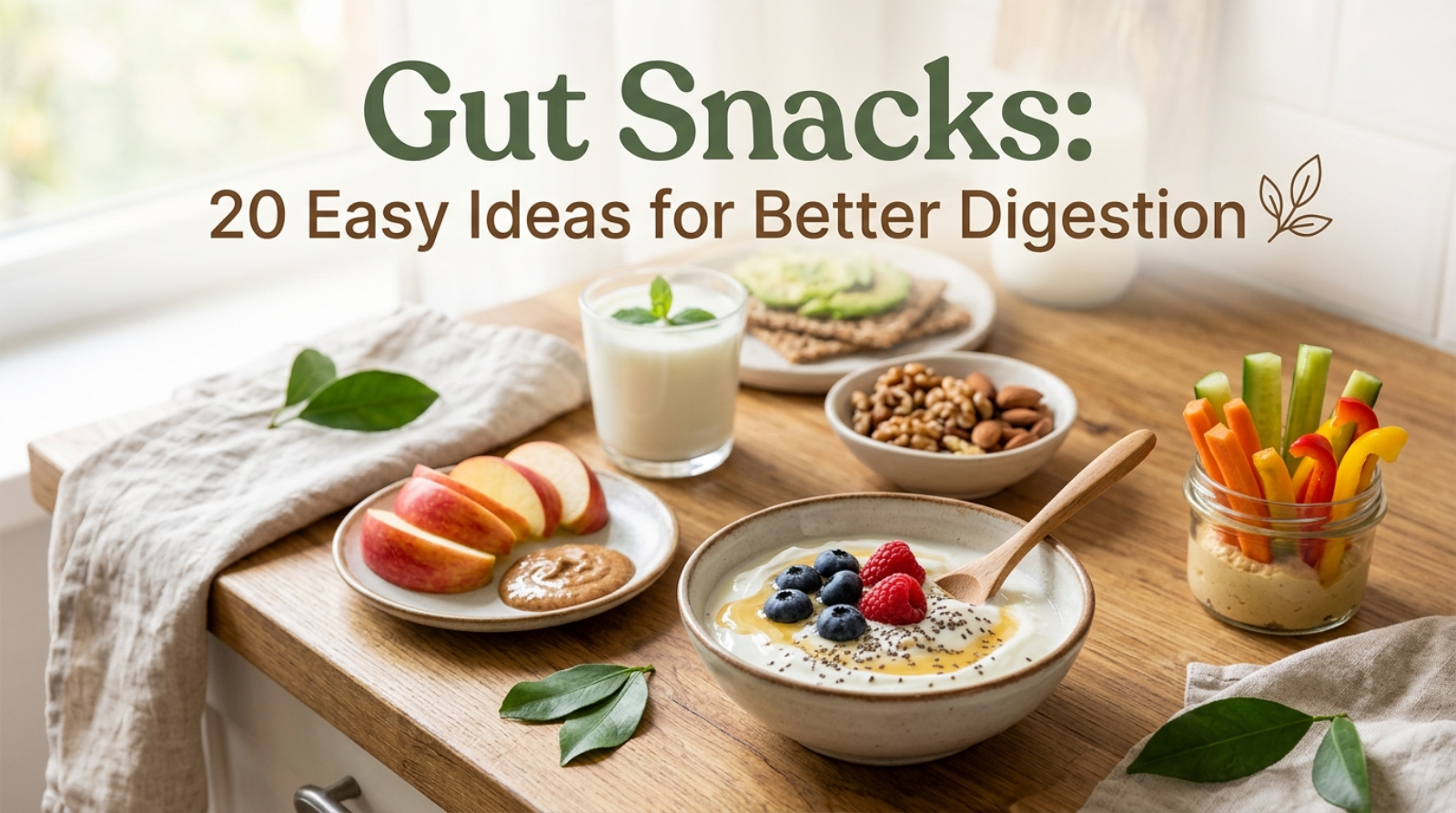
Gut snacks can make it easier to add fiber, plant foods, protein, and healthy fats to your day without turning snack time into a nutrition project. If you often reach for something between meals, the right combination can keep you satisfied while adding more variety to your diet. Use the Copy Button to save your favorite ideas for your next grocery trip.
A good snack doesn’t need to be complicated. In fact, some of the most useful options are foods you may already have in your kitchen.
Quick Answer: What Makes a Good Gut Snack?
A gut-friendly snack usually combines fiber-rich foods with protein, healthy fats, or both. Fruit, vegetables, whole grains, nuts, seeds, beans, and cultured dairy can all fit into a balanced snack routine.
Good examples include:
- Apple with peanut butter
- Plain Greek yogurt with berries
- Carrots with hummus
- Pear with walnuts
- Chia pudding
- Oatmeal with berries
- Edamame
- Whole-grain crackers with avocado
- Kefir with fruit
- Roasted chickpeas
The best choice depends on your appetite, dietary needs, and personal tolerance.
Why Gut Snacks Matter
Snacks aren’t required for everyone. However, they can be useful when there’s a long gap between meals or when you need something small to prevent arriving at your next meal extremely hungry.
They also offer another opportunity to eat foods that support a varied diet.
For example, if breakfast contains little fiber, a snack with berries and chia seeds can add more. Likewise, a handful of nuts can contribute healthy fats and protein.
Think beyond “healthy” labels
A snack marketed as “gut healthy” isn’t automatically a better choice.
Instead, look at the actual ingredients. Does it contain useful fiber? Is there some protein? Does it provide fruit, vegetables, whole grains, nuts, or seeds?
A simple apple and handful of walnuts may be a better everyday option than an expensive snack product with a long ingredient list.
20 Gut Snacks to Keep in Your Rotation
1. Apple and peanut butter
Slice an apple and pair it with natural peanut butter. The fruit provides fiber, while peanut butter adds protein and fat.
Choose a peanut butter without a large amount of added sugar when possible.
2. Greek yogurt and berries
Plain Greek yogurt makes a convenient protein-rich snack. Add blueberries, strawberries, or raspberries for sweetness and additional plant foods.
For extra fiber, sprinkle on chia or ground flaxseed.
3. Carrots and hummus
Crunchy carrots pair well with hummus made from chickpeas.
You can also use cucumber, bell peppers, or snap peas for more variety.
4. Pear and walnuts
A ripe pear with a small handful of walnuts is simple and portable.
If you need something between meetings, this combination takes almost no preparation.
5. Chia pudding
Mix chia seeds with milk or an unsweetened dairy alternative and let the mixture thicken in the refrigerator.
Top it with berries or sliced banana before eating.
Because chia seeds are rich in fiber, start with a modest portion if you’re not used to eating much fiber.
6. Kefir and fruit
Plain kefir can provide protein and live cultures, depending on the product.
Pair it with berries or a banana for a quick snack. Check the label because flavored versions can contain added sugar.
7. Avocado whole-grain toast
Spread avocado on whole-grain toast and add a sprinkle of seeds.
This works especially well when you want a snack that’s substantial enough to bridge a long gap before dinner.
8. Roasted chickpeas
Roasted chickpeas are crunchy and satisfying. Season them with herbs, paprika, or another seasoning you enjoy.
However, large portions may cause gas for some people, so start small if you’re not accustomed to beans.
9. Oatmeal with berries
A small bowl of oatmeal isn’t limited to breakfast.
Add berries, cinnamon, walnuts, or ground flaxseed. It can be especially comforting when you want something warm.
10. Edamame
Steamed edamame provides plant protein and fiber.
Keep frozen edamame in the freezer for a snack you can prepare in minutes.
11. Banana with almond butter
A banana paired with almond butter provides carbohydrates, fiber, and fat.
It’s also easy to take to work or pack for travel.
12. Cottage cheese with fruit
Cottage cheese provides protein and pairs nicely with berries, peaches, or sliced pear.
If you’re sensitive to dairy, choose a product that you tolerate well or use another protein-rich snack.
13. Whole-grain crackers and hummus
This is an easy option when you want something savory.
Look for crackers that provide whole grains and pair them with hummus, cucumber, or sliced peppers.
14. Kiwi and pumpkin seeds
Kiwi adds fruit variety, while pumpkin seeds provide protein, fat, and minerals.
Together, they make a small snack with contrasting textures.
15. Overnight oats
Combine oats with plain yogurt or milk, chia seeds, and fruit. Refrigerate overnight, then grab the container when you need it.
This is particularly useful for busy mornings or afternoon snacks.
16. Berries and walnuts
You don’t always need a recipe.
A bowl of berries with walnuts provides a quick combination of fruit, fiber, and healthy fats.
17. Air-popped popcorn
Plain air-popped popcorn can be a whole-grain snack.
Add herbs or a small amount of olive oil instead of turning it into a heavily buttered treat.
18. Hard-boiled egg and fruit
Pair a hard-boiled egg with an apple, orange, or berries.
The egg provides protein, while fruit adds fiber and plant nutrients.
19. Plain yogurt with oats and seeds
Combine plain yogurt with rolled oats, ground flaxseed, and berries.
It’s an easy way to combine protein and several plant foods in one bowl.
20. Homemade trail mix
Combine walnuts, almonds, pumpkin seeds, unsweetened dried fruit, and a small amount of dark chocolate.
Keep portions reasonable because nuts and dried fruit are nutrient-dense but easy to overeat when you’re snacking straight from the bag.
Fiber-Rich Gut Snacks: Start Slowly
Fiber is important for digestive health, but increasing it too quickly can lead to gas, bloating, or changes in bowel habits.
Therefore, don’t feel pressured to eat huge portions of high-fiber foods right away.
If your current diet is low in fiber, try adding one new source at a time. For example, add berries to yogurt this week and chia seeds later.
Don’t forget fluids
Fiber works alongside adequate fluid intake.
As you increase fiber-rich foods, make sure you’re drinking enough throughout the day. This is especially useful when adding foods such as chia seeds, oats, beans, and whole grains.
Can Fermented Foods Be Good Gut Snacks?
Fermented foods can be convenient snack choices.
Plain yogurt, kefir, and certain fermented vegetables may contain live microorganisms. However, not every fermented food has the same characteristics, and processing can affect the final product.
For example, a small serving of plain yogurt with berries can be an easy snack. You might also pair a savory snack with a little sauerkraut if you enjoy the flavor.
Don’t force fermented foods
You don’t need to eat fermented foods to have a nutritious diet.
If you dislike them or they don’t agree with you, focus on the many other foods that provide fiber and nutritional variety.
Gut Snacks for People Who Get Bloated Easily
If snacks often leave you uncomfortable, portion size is worth considering.
A large bowl of beans, several servings of fruit, and a handful of seeds may provide plenty of nutrition, but combining them all at once can be a lot of fiber for someone who isn’t accustomed to it.
Instead, keep portions moderate and change one thing at a time.
Cooked foods may feel different
Some people find cooked fruits or vegetables easier to tolerate than large portions of raw produce.
For example, try oatmeal with cooked apples instead of a large raw fruit salad. Personal tolerance should guide your choices.
How to Build a More Satisfying Snack
A useful formula is:
Fiber-rich food + protein or healthy fat
Try:
- Apple + peanut butter
- Berries + Greek yogurt
- Carrots + hummus
- Banana + almond butter
- Whole-grain toast + avocado
- Pear + walnuts
This combination can feel more satisfying than eating a highly processed snack on its own.
When you’re still hungry
If a snack doesn’t keep you satisfied, don’t automatically assume you need more willpower.
You may simply need a more substantial combination.
For example, fruit alone may not hold you over for several hours. Adding yogurt, nuts, seeds, or nut butter can make the snack more filling.
A Simple Gut Snack Prep Plan
You can make snack planning easier without spending your entire weekend in the kitchen.
At the start of the week, wash some fruit and vegetables. Portion nuts into small containers and keep yogurt, hummus, and hard-boiled eggs ready in the refrigerator.
Meanwhile, keep shelf-stable options such as oats, whole-grain crackers, chia seeds, and nut butter available.
That way, you can assemble a snack in less than a minute.
FAQ About Gut Snacks
What are the best gut snacks?
Good choices include fruit with nuts or nut butter, plain yogurt with berries, hummus with vegetables, oatmeal, chia pudding, edamame, and other fiber-rich whole foods.
Are snacks good for gut health?
Snacking isn’t necessary for everyone. However, nutritious snacks can help you add more variety, fiber, fruit, vegetables, and protein to your overall diet.
Can high-fiber snacks cause bloating?
Yes. Increasing fiber too quickly can cause gas or bloating. Start with smaller portions and gradually increase fiber as your diet adapts.
Is yogurt a good gut snack?
Plain yogurt can be a convenient protein-rich snack, and some varieties contain live cultures. Choose a product that fits your dietary needs and tolerance.
What should I avoid in gut-friendly snacks?
You don’t need a universal list of foods to avoid. However, snacks high in added sugar, heavily processed ingredients, or very large portions may not fit your goals as well as whole or minimally processed options.
Final Thoughts on Gut Snacks
The best gut snacks aren’t complicated products with impressive packaging. They’re simple foods you can actually enjoy and eat consistently.
Start with fruit, vegetables, whole grains, beans, nuts, seeds, yogurt, or other nutritious staples. Then combine fiber with protein or healthy fats when you want a more satisfying option.
Most of all, pay attention to your own digestion. A snack that works beautifully for one person may feel uncomfortable for another, so your personal tolerance matters.
Use the Copy Button to save the ideas you like, then keep a few dependable options ready at home, at work, or on the go.

Elizabeth Boham is a respected functional medicine physician and wellness educator with a passion for helping people improve their health through nutrition and lifestyle changes. As a contributor to Gutrova, she shares practical insights on gut health, digestive wellness, and healthy living, making complex health topics easy to understand and apply in everyday life.







1 thought on “Gut Snacks: 20 Easy Ideas for Better Digestion”