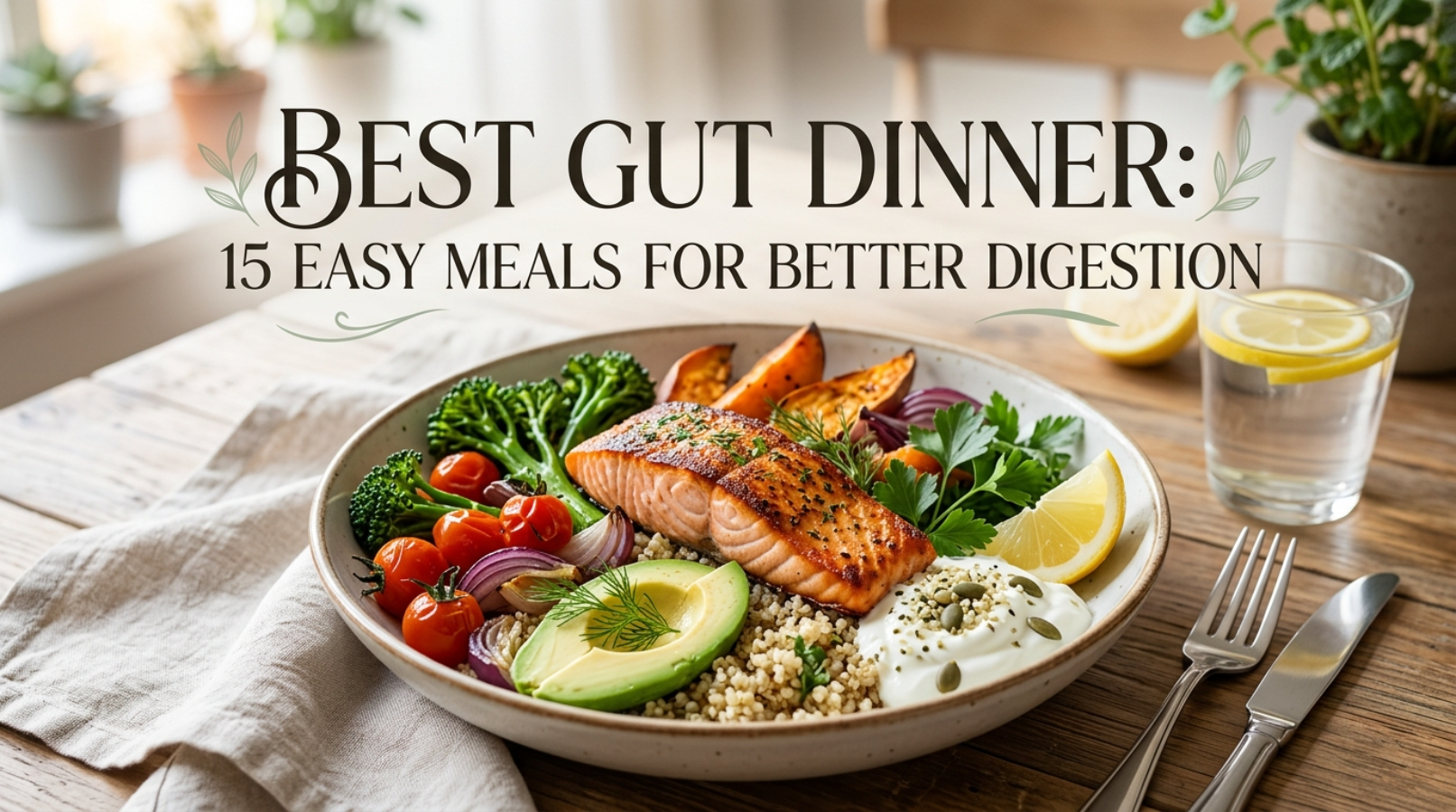
A gut dinner can be satisfying and flavorful while still giving your digestive system plenty of fiber, protein, plant foods, and other useful nutrients. The trick isn’t creating a “perfect” dinner; it’s choosing a combination that feels good and fits your normal routine. Use the Copy Button to save any meal idea you want to revisit when planning dinner.
If you’ve ever finished a heavy evening meal and wished you’d chosen something lighter, you know how much dinner can affect the rest of the night. A few practical changes can make your evening meals more balanced without turning dinner into a complicated nutrition project.
Quick Answer: What Makes a Good Gut Dinner?
A gut-friendly dinner usually combines fiber-rich plant foods, a quality protein source, healthy fats, and a variety of vegetables or fruit. Depending on your tolerance, you can also include fermented foods such as plain yogurt, kefir, sauerkraut, or kimchi.
For an easy formula, build your plate around:
- Protein: salmon, chicken, eggs, tofu, beans, lentils, or fish
- Fiber-rich carbohydrates: quinoa, oats, brown rice, potatoes, sweet potatoes, or whole grains
- Vegetables: leafy greens, carrots, broccoli, peppers, squash, or tomatoes
- Healthy fats: olive oil, avocado, walnuts, or seeds
- Optional fermented food: plain yogurt, kefir, sauerkraut, or kimchi
You don’t need every category at every dinner. Instead, look at your meals across the whole day.
Why a Gut Dinner Can Be Different at Night
Dinner doesn’t need to be dramatically different from lunch. However, many people prefer a meal that feels comfortable and doesn’t leave them overly full before bed.
A huge portion of fried food may feel heavy, while a moderate serving of roasted vegetables, fish, and rice can feel easier to manage. Personal tolerance matters, too.
For example, someone who enjoys beans at lunch may find a large serving at dinner uncomfortable. Another person may have no problem with them.
Your digestion isn’t a one-size-fits-all system
Pay attention to patterns rather than labeling foods as universally “good” or “bad.”
If a particular ingredient repeatedly causes discomfort, adjust the portion, preparation method, or timing. Cooked vegetables may work better for some people than a large raw salad, for instance.
15 Gut Dinner Ideas to Put on Repeat
1. Salmon, sweet potato, and greens
Bake salmon with olive oil and herbs. Serve it with roasted sweet potato and sautéed spinach or another leafy green.
This dinner gives you protein, fiber, healthy fats, and several plant foods without requiring a complicated recipe.
2. Chicken quinoa vegetable bowl
Combine grilled chicken, cooked quinoa, roasted zucchini, carrots, and spinach. Finish with lemon juice and olive oil.
For extra flavor, add fresh herbs instead of a heavy creamy sauce.
3. Lentil vegetable soup
A warm bowl of lentil soup can make an easy evening meal. Add carrots, celery, tomatoes, spinach, and herbs.
Pair it with whole-grain toast if you want something more substantial.
4. Baked potato with beans and vegetables
Top a baked potato with black beans, steamed broccoli, avocado, and a spoonful of plain Greek yogurt.
It sounds simple because it is. Yet this combination can deliver fiber, protein, and plenty of flavor.
5. Mediterranean chicken plate
Serve grilled chicken with cucumber, tomatoes, chickpeas, greens, and a small portion of whole-grain pita.
Drizzle everything with olive oil and lemon. The result feels fresh without requiring much cooking.
6. Tofu and vegetable stir-fry
Cook tofu with broccoli, carrots, bell peppers, and mushrooms. Serve it over brown rice or quinoa.
Use ginger, garlic, and a modest amount of a lower-sodium sauce for flavor.
7. Turkey and vegetable skillet
Brown lean ground turkey with zucchini, tomatoes, spinach, and herbs. Add cooked quinoa or a small serving of whole-grain pasta.
This is especially useful when you want dinner on the table quickly.
8. Chickpea and roasted vegetable bowl
Roast sweet potatoes, carrots, and cauliflower. Add chickpeas, greens, avocado, and a lemon-olive oil dressing.
If you’re new to eating more beans, start with a smaller portion and increase gradually.
9. Egg and vegetable dinner
Eggs aren’t only for breakfast. Try two eggs with sautéed spinach, mushrooms, tomatoes, and roasted potatoes.
A piece of whole-grain toast can round out the meal.
10. Cod with rice and cooked vegetables
Bake cod with lemon, parsley, and olive oil. Serve it with rice and cooked carrots, green beans, or zucchini.
This is a good option when you want something relatively light but still filling.
11. Bean and avocado tacos
Fill whole-grain or corn tortillas with black beans, avocado, cabbage, tomato, and cilantro.
A squeeze of lime adds plenty of brightness. Keep very spicy toppings modest if spicy foods tend to bother your stomach.
12. Greek yogurt dinner bowl
For a lighter evening meal, combine plain Greek yogurt with berries, oats, walnuts, chia seeds, and sliced banana.
Choose plain yogurt and add fruit rather than relying on heavily sweetened versions.
13. Chicken and vegetable soup
Use chicken, carrots, celery, zucchini, greens, and beans or whole grains. A homemade broth-based soup can be both comforting and practical.
I especially like this approach when the weather turns cold because one pot can cover several meals.
14. Sauerkraut salmon bowl
Serve baked salmon with quinoa, roasted vegetables, and a small portion of sauerkraut.
The fermented cabbage adds a sharp, tangy flavor that can wake up an otherwise simple bowl.
15. Simple Mediterranean grain bowl
Start with quinoa or brown rice. Add chickpeas, cucumber, tomatoes, leafy greens, olives, avocado, and grilled chicken or tofu.
Then finish with olive oil, lemon, and herbs. You can change the ingredients based on what you already have in the refrigerator.
How to Build a Gut Dinner Without Overthinking It
A useful dinner doesn’t need a long ingredient list.
Start with one protein. Then choose one fiber-rich carbohydrate and two vegetables. Finally, add a small amount of healthy fat.
For example:
Chicken + sweet potato + broccoli + olive oil
That’s already a balanced foundation.
Another night could be:
Lentils + brown rice + spinach + avocado
The ingredients change, but the basic structure stays easy.
Try cooked vegetables if raw produce feels heavy
Some people prefer cooked vegetables at dinner because they’re softer and easier to eat in larger portions. Steaming, roasting, sautéing, and baking are all useful options.
You don’t need to avoid raw vegetables. Instead, experiment and notice what feels best for you.
Should You Eat Fermented Foods With Dinner?
Fermented foods can be part of a gut-friendly eating pattern, but they aren’t essential at every meal.
Plain yogurt and kefir may contain live cultures, while traditionally fermented vegetables such as sauerkraut and kimchi can provide another source of fermented food.
However, products vary. Some contain added sugar, while others can contain significant amounts of sodium.
Start small
If fermented foods aren’t already part of your diet, there’s no need to pile them onto your plate.
Try a small serving of sauerkraut with dinner or plain yogurt with fruit. Then adjust based on your preferences and tolerance.
Fiber at Dinner: Don’t Go From Zero to Huge
Fiber supports normal bowel function and serves as a food source for some gut microbes. However, suddenly increasing your intake can cause gas or bloating.
Instead, increase high-fiber foods gradually.
Good dinner choices include:
- Lentils
- Beans
- Chickpeas
- Sweet potatoes
- Quinoa
- Brown rice
- Broccoli
- Carrots
- Green peas
- Berries
- Avocado
- Chia seeds
Drink enough fluids throughout the day as you increase fiber.
What to Do If Dinner Makes You Feel Bloated
First, look at the size of the meal.
A nutritious dinner can still leave you uncomfortable if the portion is much larger than you need. Eating quickly can also make a meal feel different from eating slowly.
Next, consider the ingredients.
Large servings of beans, onions, garlic, certain vegetables, or dairy can bother some people. That doesn’t mean everyone needs to remove them.
Instead, try changing the portion or preparation method and see what happens.
A simple evening experiment
For one week, keep dinner portions moderate and eat at a comfortable pace. Choose mostly familiar foods and make notes about how you feel afterward.
That can tell you more about your personal eating patterns than randomly eliminating a long list of foods.
Easy Gut Dinner Prep for Busy Weeks
You don’t have to cook a completely different dinner every night.
Prepare a few basics ahead of time:
- One cooked grain
- A tray of roasted vegetables
- Grilled or baked chicken
- Cooked beans or lentils
- Washed greens
- Hard-boiled eggs
- Plain yogurt
- Fresh fruit
Then mix them into different combinations.
For example, leftover chicken can become a grain bowl one night and a taco filling the next. This approach saves time and reduces the temptation to rely on takeout when you’re tired.
FAQ About Gut Dinner Ideas
What is the best dinner for gut health?
There isn’t one best dinner for everyone. A balanced meal with protein, fiber-rich plant foods, vegetables, and healthy fats is a practical starting point.
Is eating fiber at dinner good?
Yes. Fiber can be included at any meal. However, people who aren’t used to high-fiber foods may feel better increasing their intake gradually.
Are fermented foods good to eat at night?
Fermented foods can fit into dinner if you tolerate them. Plain yogurt, kefir, sauerkraut, and kimchi are common choices, although individual responses vary.
What dinner foods can cause bloating?
Large portions, certain high-fiber foods, carbonated drinks, and foods that an individual doesn’t tolerate can contribute to bloating. The trigger differs from person to person.
Is a late dinner bad for digestion?
Timing matters less than the overall eating pattern for many people, but a very large meal close to bedtime may feel uncomfortable. If late dinners bother you, try a smaller portion and give yourself time to digest before lying down.
Final Thoughts on a Gut Dinner
A gut dinner doesn’t have to look like a restrictive health-food meal. It can be a warm bowl of lentils, a salmon and sweet potato plate, chicken tacos, or a simple vegetable stir-fry.
Focus on variety, fiber, protein, and foods you genuinely enjoy. Then pay attention to your own tolerance instead of following rigid food rules.
A sustainable dinner routine is far more useful than chasing a perfect meal. Use the Copy Button to save the combinations that work for you, and build your weekly dinners around those simple favorites.

Here’s a short Gutrova-style author biography for Josh Axe:
Josh Axe
Josh Axe is a wellness expert, author, and educator known for his work in nutrition, natural health, and gut wellness. As a contributor to Gutrova, he shares practical insights on digestive health, healthy eating habits, and lifestyle strategies that help readers build a stronger foundation for overall well being. His content focuses on making wellness simple, actionable, and accessible for everyday life.











1 thought on “Gut Dinner: 15 Easy Meals for Better Digestion”