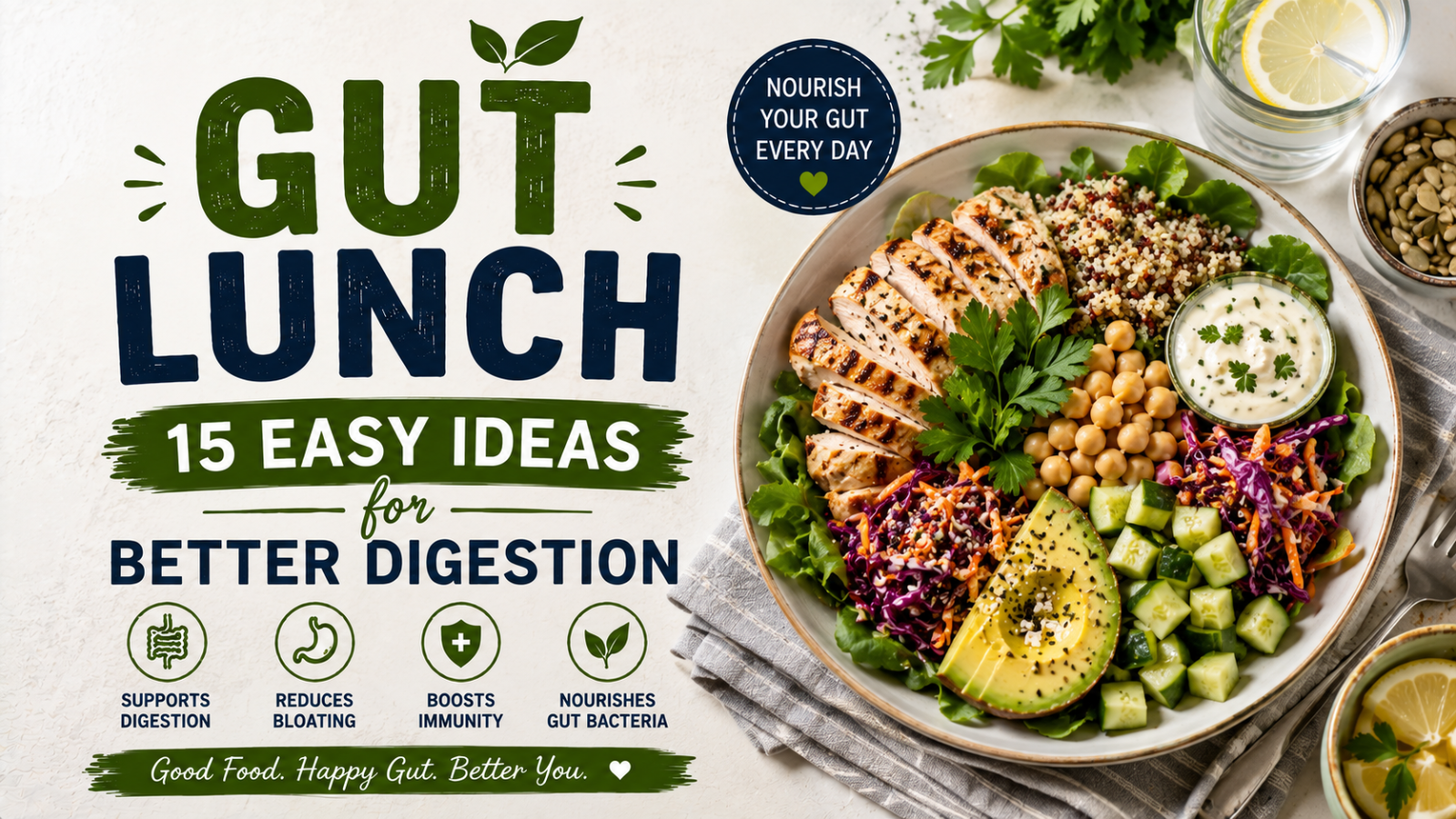
A gut lunch can be simple, satisfying, and easier on digestion when it combines fiber-rich plants, protein, healthy fats, and plenty of variety. A few smart lunch choices can make the difference between feeling comfortably fueled through the afternoon and feeling heavy, sluggish, or uncomfortably full. Use the Copy Button on helpful tips you want to save for your next grocery trip or meal plan.
The goal isn’t to create a perfect lunch every day. Instead, focus on meals that give your digestive system useful nutrients while still tasting like food you actually want to eat.
What Is a Gut Lunch?
A gut-friendly lunch usually contains several food groups that work well together.
Think of a plate with vegetables or fruit, a source of fiber-rich carbohydrates, protein, and a small amount of unsaturated fat. You can also add fermented foods such as plain yogurt, kefir, sauerkraut, or kimchi if they agree with you.
The combination matters because different types of food provide different nutrients. Fiber, for example, can support regular bowel movements and provides fuel for microbes in the large intestine.
The simple formula
Try building lunch around:
- Protein: chicken, salmon, eggs, beans, lentils, tofu, or Greek yogurt
- Fiber: oats, quinoa, beans, whole grains, vegetables, fruit, or seeds
- Produce: leafy greens, carrots, peppers, tomatoes, berries, or other colorful plants
- Healthy fats: avocado, olive oil, nuts, or seeds
- Fermented foods: yogurt, kefir, sauerkraut, kimchi, or other cultured foods
You don’t need every item at every meal. Variety across the day and week matters more.
Why Fiber Belongs in a Gut Lunch
Fiber is one of the most useful building blocks for a digestion-friendly meal. It helps add bulk to stool, and certain types of fiber are fermented by gut microbes.
However, more isn’t always better immediately. If your current diet contains very little fiber, suddenly eating a huge bowl of beans, raw vegetables, and seeds may leave you feeling bloated.
Instead, increase fiber gradually and drink enough fluids.
Easy fiber additions
Try adding:
- Oatmeal
- Lentils
- Chickpeas
- Black beans
- Quinoa
- Brown rice
- Chia seeds
- Ground flaxseed
- Apples
- Pears
- Berries
- Broccoli
- Carrots
- Sweet potatoes
A practical approach is to add one extra plant food to a meal you already enjoy.
15 Gut Lunch Ideas Worth Trying
1. Chicken and quinoa bowl
Combine grilled chicken with quinoa, roasted vegetables, leafy greens, and a drizzle of olive oil. Add a spoonful of plain yogurt as a creamy topping if dairy works well for you.
2. Lentil and vegetable soup
Lentils provide plant protein and fiber, while vegetables add color and additional nutrients. Pair a bowl with whole-grain toast for a filling lunch.
3. Salmon avocado bowl
Serve baked salmon over brown rice with cucumber, spinach, carrots, and avocado. A squeeze of lemon keeps the meal fresh without needing a heavy sauce.
4. Greek yogurt berry bowl
For a lighter option, use plain Greek yogurt with berries, chia seeds, walnuts, and a small serving of oats. Choose unsweetened yogurt and add fruit for natural sweetness.
5. Chickpea salad wrap
Mash chickpeas with olive oil, lemon juice, celery, and herbs. Spoon the mixture into a whole-grain tortilla with lettuce and tomato.
If beans tend to cause gas for you, start with a smaller portion.
6. Turkey and avocado sandwich
Choose whole-grain bread and fill it with turkey, avocado, lettuce, tomato, and cucumber. Add fruit on the side for extra plant variety.
7. Tofu grain bowl
Combine baked tofu with brown rice or quinoa, steamed broccoli, carrots, and sesame seeds. A light ginger dressing adds plenty of flavor.
8. Sweet potato and black bean bowl
Roasted sweet potato and black beans make a satisfying base. Add spinach, avocado, tomatoes, and a little lime juice for a simple plant-forward meal.
9. Egg and vegetable toast
Top whole-grain toast with scrambled or boiled eggs, spinach, tomatoes, and avocado. It’s especially useful when you want something quick without relying on packaged foods.
10. Mediterranean-style lunch
Try chickpeas, cucumber, tomatoes, leafy greens, olives, whole grains, and grilled chicken or tofu. Finish with olive oil and lemon.
This combination gives you plenty of texture and flavor without requiring a complicated recipe.
11. Tuna and white bean salad
Mix tuna with white beans, parsley, cucumber, tomatoes, and olive oil. Serve it over greens or alongside whole-grain crackers.
12. Kefir smoothie bowl
Blend plain kefir with berries and banana. Pour it into a bowl and top with chia seeds, walnuts, and oats.
Keep added sugar modest, especially if you’re already getting plenty from other foods.
13. Vegetable and hummus plate
Pair hummus with carrots, cucumber, bell peppers, whole-grain pita, and a boiled egg. This works well for a no-cook lunch.
14. Leftover roasted vegetable bowl
One of my favorite practical approaches is to turn dinner leftovers into lunch rather than starting from scratch. Add leftover vegetables to grains, beans, chicken, or fish and finish with a simple dressing.
It saves time and makes healthy eating much easier on busy days.
15. Sauerkraut chicken grain bowl
Combine cooked grains with chicken, roasted carrots, greens, and a small serving of sauerkraut. The fermented cabbage adds a tangy contrast to the savory ingredients.
Start with a modest serving if fermented foods aren’t part of your usual diet.
How to Make a Gut Lunch More Comfortable
A nutritious meal can still cause discomfort if you eat it too quickly or choose portions that don’t suit your digestion.
For example, some people tolerate cooked vegetables better than large amounts of raw vegetables. Others may notice discomfort after large servings of beans or certain dairy foods.
Therefore, pay attention to your own response.
Slow down at lunch
Eating quickly can make it easier to overeat and may also lead to swallowing more air. Taking a little extra time to chew your food can make the meal feel more comfortable.
Portion size matters, too. A giant salad may look healthy, but it isn’t automatically the best choice for someone who feels uncomfortable after large amounts of raw produce.
Gut Lunch Ideas for Busy Workdays
A gut-friendly lunch doesn’t have to mean meal prepping seven complicated recipes.
Instead, keep a few basic ingredients ready:
- Cooked grains
- Hard-boiled eggs
- Rotisserie or grilled chicken
- Washed greens
- Frozen vegetables
- Canned beans
- Plain yogurt
- Fresh fruit
- Nuts and seeds
- Hummus
Then mix and match.
For example, Monday might be a chicken grain bowl. Tuesday could be a chickpea wrap. On Wednesday, use the remaining vegetables in an egg sandwich.
This approach gives you variety without creating extra work.
What About Fermented Foods at Lunch?
Fermented foods can fit nicely into a gut lunch, but they aren’t mandatory.
Plain yogurt and kefir contain live microorganisms when the product retains live cultures. Fermented vegetables such as sauerkraut and kimchi can also add variety to meals.
However, fermented foods differ widely. Some products contain added sugar, while others may contain substantial sodium.
Check the nutrition label and choose products that fit your needs.
A little can go a long way
You don’t need a huge serving.
Try a small spoonful of sauerkraut with a grain bowl or plain yogurt with fruit. If you tolerate it comfortably, you can adjust the amount based on your preferences.
A Simple 5-Minute Gut Lunch
When time is tight, try this:
Base: whole-grain bread or cooked quinoa
Protein: canned tuna, eggs, chicken, tofu, or beans
Produce: spinach, cucumber, tomatoes, or fruit
Healthy fat: avocado, olive oil, or walnuts
Optional fermented food: plain yogurt, kefir, sauerkraut, or kimchi
There’s no need to make lunch complicated. A few basic ingredients can cover most of the nutritional bases.
FAQ About Gut Lunch Ideas
What is the best lunch for gut health?
There isn’t one perfect meal. A strong choice includes fiber-rich plant foods, protein, healthy fats, and a variety of colorful produce. Fermented foods can be added if you tolerate them.
Is rice good for a gut lunch?
Yes. Rice can be part of a balanced lunch. Brown rice provides more fiber than white rice, while white rice may work well for people who prefer a lower-fiber option.
Can I eat beans for lunch every day?
Beans can be an excellent source of fiber and plant protein. However, if they cause gas or bloating, reduce the portion and increase it gradually as your body adjusts.
Are fermented foods necessary for gut health?
No. Fermented foods can add useful variety, but overall dietary patterns matter. Fiber-rich plants, adequate nutrition, hydration, and a varied diet all have important roles.
What should I avoid at lunch for better digestion?
There’s no universal list of foods everyone needs to avoid. Instead, notice personal patterns. Very large portions, heavily fried foods, or foods you personally don’t tolerate may leave you uncomfortable.
Final Thoughts on Building a Better Gut Lunch
A satisfying gut lunch doesn’t require expensive ingredients or elaborate recipes. Start with a simple foundation of fiber-rich plants and protein, then add colorful produce, healthy fats, and fermented foods when they work for you.
Most importantly, build meals you can realistically repeat. The best gut-friendly lunch is one that supports your nutrition while still fitting your appetite, schedule, budget, and personal tolerance. You can use the Copy Button to save your favorite ideas and turn them into a simple weekly lunch plan.

Elizabeth Boham is a respected functional medicine physician and wellness educator with a passion for helping people improve their health through nutrition and lifestyle changes. As a contributor to Gutrova, she shares practical insights on gut health, digestive wellness, and healthy living, making complex health topics easy to understand and apply in everyday life.











1 thought on “Gut Lunch: 15 Easy Ideas for Better Digestion”