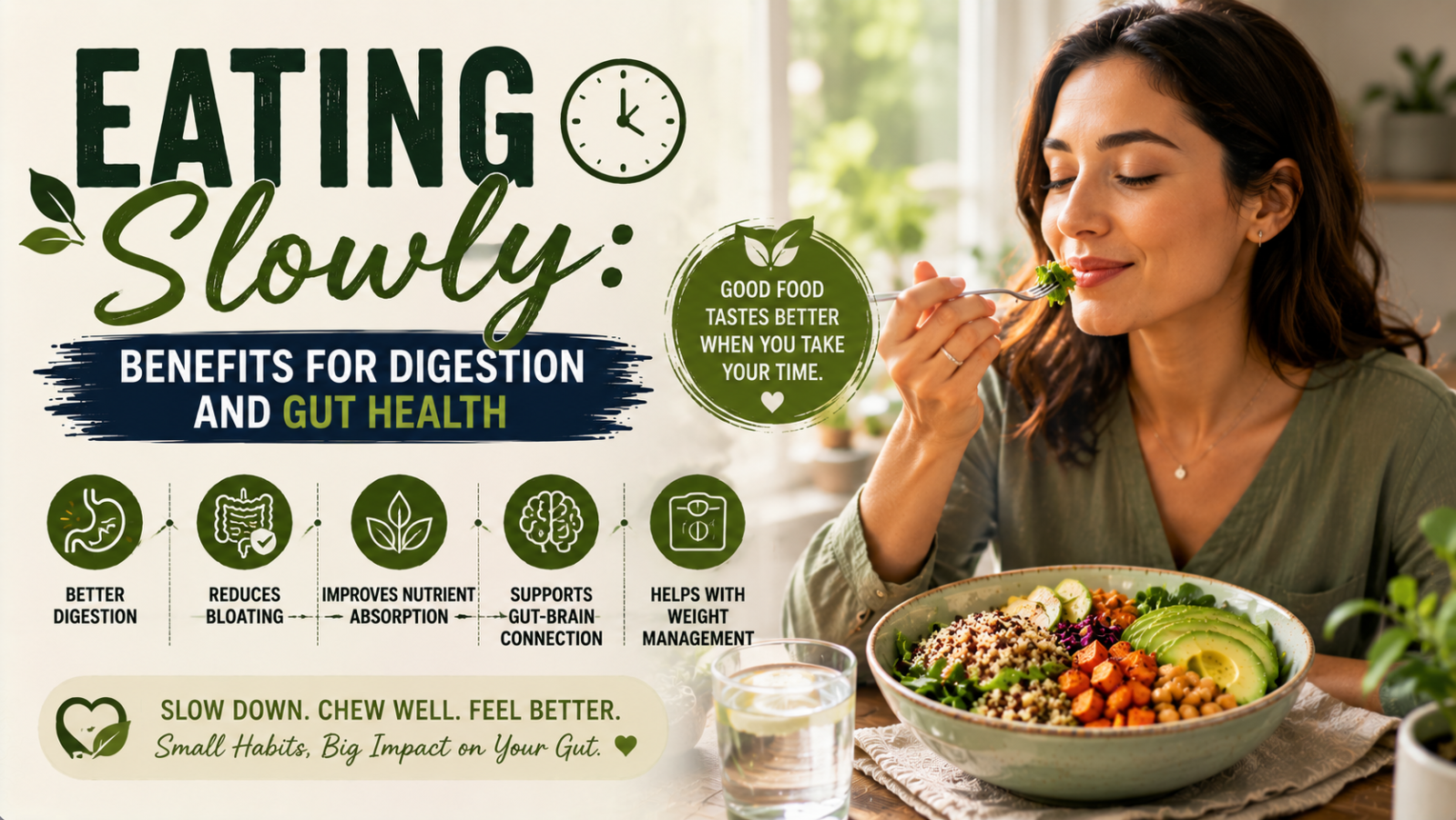
Eating slowly gives your body more time to respond to food, notice fullness, and begin the digestive process comfortably. It can also make meals feel more satisfying, especially when you’re used to eating at your desk, in the car, or between errands. With a few simple changes, you can make slower eating feel natural rather than forced.
Quick Answer: Why Is Eating Slowly Good for You?
Eating slowly may support digestion because it gives you more time to chew food thoroughly and pay attention to fullness signals. Slowing down can also help you notice flavors, textures, and portion size. In addition, a calmer pace may make meals more enjoyable.
It isn’t necessary to turn every meal into a long event. Instead, try putting your fork down between bites, chewing well, and taking a few relaxed breaths during your meal.
How Eating Slowly Supports Digestion
Digestion starts before food reaches your stomach. Seeing, smelling, tasting, and chewing food all help prepare your digestive system for the meal ahead.
When you eat very quickly, large bites may reach the stomach with less chewing. As a result, some people may feel overly full, uncomfortable, or bloated after meals.
Eating slowly gives you a chance to chew food into smaller pieces. Saliva also begins breaking down parts of the food before you swallow it. Then, your stomach and intestines continue the digestive process.
There’s another practical benefit: you get more time to notice how the meal feels.
For example, I’ve found that meals eaten slowly often feel more satisfying than meals rushed through while doing something else. You may notice that you don’t need another serving after all.
Eating Slowly and Chewing Your Food
Chewing isn’t just about making food easier to swallow. It also mixes food with saliva and helps prepare it for the next stages of digestion.
You don’t need to count every chew. That can make eating feel like a chore. Instead, focus on taking smaller bites and chewing until the food feels comfortable to swallow.
Eating Slowly May Help You Notice Fullness
Your body doesn’t always signal fullness the instant you start eating. Therefore, rushing through a meal can make it easier to eat past the point of comfortable fullness.
A slower pace creates small pauses during the meal. Those pauses give you time to check in with yourself.
Ask:
- Am I still hungry?
- Does the food still taste good?
- Am I comfortably full?
- Am I eating because I’m hungry or simply because the food is in front of me?
These questions don’t need to become a strict rule. They’re simply useful reminders.
For instance, imagine eating a sandwich in five minutes because you have a meeting. You may finish it before you really register how much you’ve eaten. If you take your time instead, you may feel satisfied before finishing everything.
That doesn’t mean eating slowly automatically causes weight loss. Food choices, portions, activity, sleep, medications, and many other factors also influence body weight.
Eating Slowly Can Make Meals More Enjoyable
Food can become strangely easy to ignore when you eat while scrolling through your phone or answering emails.
However, slowing down brings some attention back to the meal.
Notice the crunch of vegetables. Taste the herbs in a soup. Pay attention to the creaminess of yogurt or the texture of cooked grains. Small details can make ordinary meals more enjoyable.
This matters because satisfaction isn’t only about how much food you eat. Your surroundings, attention, preferences, and eating pace can all shape the experience.
Try one meal without your phone nearby. You don’t need perfect silence or a beautifully arranged table. Simply give the food more of your attention.
What Happens When You Eat Too Quickly?
Fast eating isn’t automatically harmful, and everyone has rushed through a meal at some point. Still, making it your normal habit may leave you feeling uncomfortable.
Eating quickly can make it easier to:
- Take larger bites
- Chew less
- Eat beyond comfortable fullness
- Miss signs that you’re satisfied
- Swallow more air
- Feel rushed during meals
Some people notice more bloating or stomach discomfort when they eat quickly. However, digestive symptoms have many possible causes, so eating speed isn’t always the explanation.
If symptoms are frequent, severe, or changing, it’s worth discussing them with a qualified health professional rather than blaming one eating habit.
Eating Slowly With Gut-Friendly Foods
A slower eating pace works best alongside a balanced diet. There’s no single food that fixes digestion, but everyday food choices can provide fiber, protein, healthy fats, vitamins, and other nutrients your body needs.
For a gut-friendly meal, consider combining several foods rather than relying on one ingredient.
A Simple Breakfast
Try oatmeal topped with berries, chia seeds, and plain yogurt.
Take a few minutes to taste the meal instead of eating it while getting ready for work. The combination also provides fiber and protein, which can make breakfast more satisfying.
An Easy Lunch
Build a bowl with brown rice, cooked vegetables, beans or chicken, and a simple olive oil dressing.
If you’re not used to eating much fiber, increase high-fiber foods gradually. A sudden jump can cause gas or bloating for some people.
A Comfortable Dinner
A simple dinner might include roasted vegetables, potatoes or whole grains, and fish, tofu, beans, or another protein source.
Eating slowly can help you notice when you’ve had enough, especially with meals that contain several different textures and flavors.
7 Practical Ways to Start Eating Slowly
You don’t need to completely change your routine. Start with one meal a day.
1. Put Your Fork Down
After taking a bite, place your fork or spoon on the table. Pick it up again when you’re ready for another bite.
This creates a natural pause without requiring a timer.
2. Take Smaller Bites
Large bites encourage fast eating. Instead, take a comfortable amount and give yourself time to chew.
3. Remove One Distraction
You don’t have to eat every meal without a screen. Start by putting your phone away for one meal.
As a result, you may notice your eating speed without consciously trying to change it.
4. Take a Breath Before Eating
Before your first bite, take one slow breath. It creates a small transition between whatever you were doing and the meal ahead.
5. Taste the First Few Bites
Pay attention to the first three bites. Notice the temperature, texture, flavor, and seasoning.
After that, simply continue eating normally.
6. Make Meals Last a Little Longer
If you usually finish lunch in 10 minutes, don’t force yourself to eat for 30. Instead, add a few extra minutes.
Small changes are easier to maintain.
7. Stop Checking the Clock
Slow eating isn’t a race in reverse. You don’t need to hit a specific number of minutes.
The goal is to eat at a comfortable pace and give yourself enough time to notice the meal.
Eating Slowly When You’re Short on Time
This is where many healthy eating tips become unrealistic.
You may have children to feed, a busy work schedule, errands to handle, or only a short lunch break. Telling yourself to spend 30 minutes at every meal may simply add stress.
Instead, choose one meal or snack each day for slower eating.
For example, breakfast may be the easiest place to start. Another person may find dinner more practical because there’s less pressure to get back to work.
Even a few small pauses can make a rushed meal feel less rushed.
Does Eating Slowly Help With Gut Inflammation?
Eating slowly may support more comfortable eating and digestion, but it shouldn’t be presented as a treatment for gut inflammation.
Inflammation in the digestive tract can have many causes. These may include infections, inflammatory bowel diseases, certain medications, food-related problems, and other health conditions.
Therefore, slowing down at meals is best viewed as one supportive habit rather than a cure.
A broader gut-health routine may include eating a varied diet, getting enough fiber, staying hydrated, being physically active, sleeping well, and managing stress. The right approach depends on the individual.
A Simple Eating Slowly Routine
Here’s an easy routine to try at your next meal:
Before eating:
Take one relaxed breath and look at your meal.
During the first few bites:
Take smaller bites and chew comfortably.
Halfway through:
Put your utensil down for a moment. Ask yourself how hungry or full you feel.
Near the end:
Notice whether you’re still hungry or simply finishing because the food remains.
After eating:
Give yourself a few minutes before immediately reaching for another snack.
There’s no need to do this perfectly. Missing a step doesn’t undo anything.
FAQ About Eating Slowly
Is eating slowly better for digestion?
It can support comfortable digestion by encouraging thorough chewing and giving you more time to eat calmly. However, digestive health depends on many factors beyond eating speed.
How slowly should I eat?
There’s no universal ideal eating time. Focus instead on smaller bites, thorough chewing, and natural pauses. You should be able to eat comfortably without feeling rushed.
Can eating slowly reduce bloating?
It may help some people, particularly if they tend to eat quickly and swallow a lot of air. However, bloating has many possible causes, so slower eating isn’t a guaranteed solution.
Does eating slowly help with weight management?
It may make it easier to notice fullness and avoid eating past comfortable satisfaction. Still, weight management involves many factors, including overall food intake, activity, sleep, medications, and health conditions.
What if I always eat too fast?
Start with one meal a day. Put your phone away, take smaller bites, and place your utensil down occasionally. Once that feels normal, you can carry the habit into other meals.
The Bottom Line on Eating Slowly
Eating slowly is a simple habit that can make meals calmer, give you more time to chew, and help you notice fullness. It doesn’t require special foods, expensive products, or a strict schedule.
Start small. Choose one meal, put distractions aside, and give yourself permission to actually taste your food. If you find these tips useful, use the Copy Button to save or share the routine so it’s easy to revisit.The goal isn’t to eat perfectly. It’s to give your body a little more time and attention at every meal.

Elizabeth Boham is a respected functional medicine physician and wellness educator with a passion for helping people improve their health through nutrition and lifestyle changes. As a contributor to Gutrova, she shares practical insights on gut health, digestive wellness, and healthy living, making complex health topics easy to understand and apply in everyday life.











1 thought on “Eating Slowly: Benefits for Digestion and Gut Health”