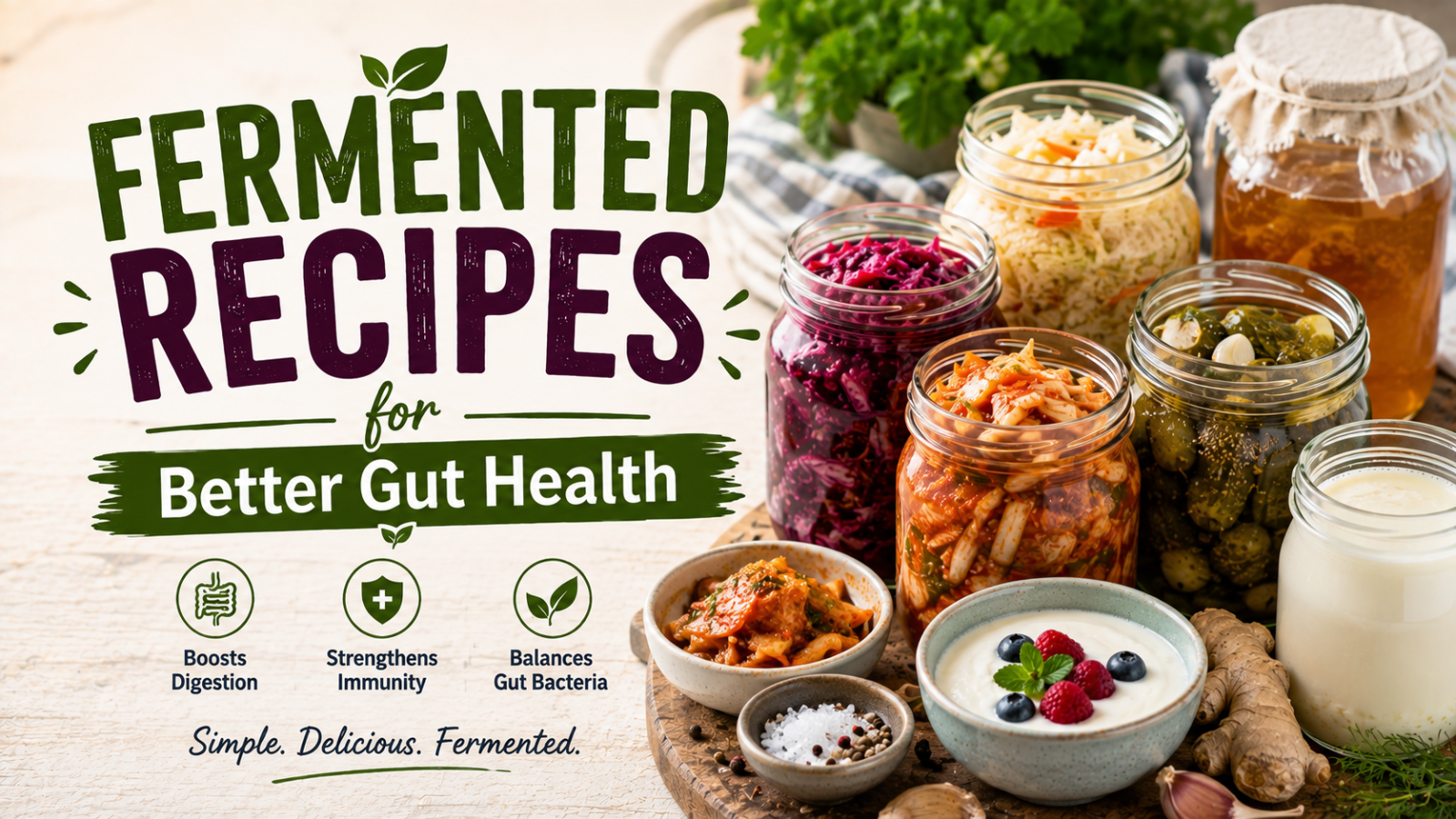
Fermented recipes can turn ordinary vegetables, dairy, grains, and other ingredients into foods with deeper flavors and interesting textures. From crunchy sauerkraut to tangy yogurt and spicy kimchi, fermentation gives home cooks a simple way to explore traditional food preparation.
The trick is to keep the process practical and safe, especially if you’re new to fermentation. Our Copy Button also lets you quickly save your favorite gut health ideas and copy or share useful recipes with family and friends.
Quick Answer
Fermented recipes use beneficial microorganisms to transform ingredients through a controlled fermentation process. Popular examples include sauerkraut, kimchi, fermented carrots, yogurt, kefir, and other cultured foods.
For beginners, vegetable fermentation can be an approachable starting point because the ingredients are easy to find and many recipes require little equipment. However, successful fermentation depends on proper salt ratios, clean equipment, suitable temperatures, and safe storage.Start with a tested recipe rather than improvising. Once you understand the basic process, you can experiment with different vegetables, herbs, and spices.
Why Fermented Recipes Taste So Different
Fermentation changes more than preservation. It can create acidity, aroma, texture, and flavors that aren’t present in the original ingredients.
Cabbage becomes tangy sauerkraut. Milk develops the thicker, tart character of yogurt. Sweetened tea can become the pleasantly sharp beverage known as kombucha.
That transformation happens because microorganisms metabolize components of the food during fermentation.
The result can be surprisingly complex. A simple carrot, for example, can become crisp, sour, slightly salty, and more interesting after fermentation.
Easy Fermented Recipes for Beginners
If you’ve never fermented food at home, don’t start with the most complicated project you can find.
A basic vegetable ferment is a better introduction. Cabbage, carrots, radishes, and cucumbers are common choices because they’re easy to prepare and work well with traditional fermentation methods.
A simple beginner approach involves:
- Fresh vegetables.
- Salt.
- Clean fermentation equipment.
- A suitable fermentation environment.
- A reliable recipe with specific measurements.
Sauerkraut is particularly approachable because shredded cabbage releases moisture when mixed with salt. That liquid can create the brine needed for fermentation.
The exact salt concentration and preparation method matter, so follow a tested recipe rather than estimating.
Fermented Recipes for Homemade Sauerkraut
Sauerkraut is one of the classic fermented recipes for a reason. It requires only a few basic ingredients and can become a versatile addition to everyday meals.
Start with fresh cabbage and prepare it according to a reliable fermentation method. Salt helps draw moisture from the cabbage and creates a brine.
You can keep the flavor simple or add seasonings such as caraway seeds, depending on the recipe you’re following.
Once fermented properly, sauerkraut can add brightness to meals that might otherwise taste heavy.
Try a small serving alongside roasted potatoes, grain bowls, eggs, or sandwiches.
The sharp flavor means you usually don’t need much.
Fermented Recipes for Homemade Kimchi
Kimchi takes vegetable fermentation in a bolder direction.
Traditional versions often combine cabbage or other vegetables with ingredients such as garlic, ginger, chili, and seasonings. Recipes vary widely, so there isn’t just one flavor profile.
For a home cook, kimchi can be more involved than basic sauerkraut because the ingredients and preparation steps can vary.
If you’re trying it for the first time, use a tested recipe and follow its fermentation and storage instructions carefully.
Kimchi works beautifully with rice bowls, eggs, noodles, roasted vegetables, and grilled proteins.
A small amount can completely change the character of a meal.
Fermented Recipes With Carrots and Radishes
Carrots and radishes are excellent choices when you want something crisp and colorful.
Their natural crunch can remain appealing after fermentation, although the final texture depends on preparation and fermentation time.
You can ferment carrots with herbs or spices that complement their natural sweetness. Radishes can develop a sharper, more complex flavor.
These vegetables work well as toppings.
Add them to tacos, grain bowls, salads, sandwiches, or simple lunch plates.
If you’re sensitive to strong flavors, start with a small serving. Fermented vegetables can have a much stronger taste than their fresh counterparts.
Fermented Recipes for Homemade Yogurt
Yogurt is another familiar fermented food, although its preparation differs from vegetable fermentation.
Cultures ferment lactose in milk and produce lactic acid. That acid gives yogurt its characteristic tang and helps create its thick texture.
For homemade yogurt, temperature control matters. Use a tested recipe and follow its instructions closely.
Once your yogurt is ready, keep the additions simple.
Try plain yogurt with berries, oats, chopped walnuts, or ground flaxseed. You can also use it as a base for savory sauces and dips.
Plain yogurt generally gives you more control over added sugar than heavily sweetened flavored varieties.
Fermented Recipes for Kefir
Kefir is a cultured drink made by fermenting milk or, in some preparations, a sugar water mixture.
Milk kefir has a thinner consistency than yogurt and a pleasantly tart flavor. It can be enjoyed by itself or blended into smoothies.
For a simple combination, blend plain kefir with frozen berries and a banana.
You can also add oats or ground flaxseed for a more substantial snack.
However, homemade kefir requires attention to culture handling and storage. Follow a reliable method and keep the finished product refrigerated as directed.
Fermented Recipes With Vegetables You Already Have
You don’t need a long or unfamiliar shopping list to make fermented foods.
Look around your refrigerator. Cabbage, carrots, radishes, cucumbers, cauliflower, green beans, onions, and peppers can all be used in different fermentation preparations.
The important part is choosing a recipe designed for the specific vegetable and fermentation method.
For example, a vegetable that works beautifully in a salt brine may require a different preparation from another ingredient.
This is where following tested recipes becomes especially useful.
Once you understand the basics, you can explore different combinations of vegetables and seasonings without treating fermentation like a guessing game.
Fermented Recipes and Gut Health
Fermented foods have attracted attention because fermentation can involve microorganisms that interact with the food and may remain alive in some finished products.
Research suggests fermented foods may influence the gut microbiome and other areas of health. However, the benefits vary by food, fermentation method, processing, and individual response.
That means fermented recipes should complement your diet rather than become the entire strategy for gut health.
A meal containing fermented cabbage, lentils, whole grains, vegetables, nuts, and seeds offers much more dietary variety than focusing on one fermented ingredient.
Fiber still matters because many gut microbes use certain fibers as fuel.
Fermented foods and fiber rich plant foods can therefore fit naturally into the same eating pattern.
How to Make Fermented Recipes Safely
Food safety deserves as much attention as flavor.
Fermentation is a controlled biological process. The right ingredients, salt concentration, temperature, time, and storage conditions all influence the outcome.
Use clean equipment and follow tested recipes from reliable food safety resources.
Keep fermented vegetables submerged when the recipe requires it. Follow refrigeration instructions once the fermentation period ends.
Don’t taste food that develops obvious mold, a foul odor, or other signs of spoilage.
Also, don’t assume that a longer fermentation automatically makes food better. Fermentation has a suitable range of conditions, and changing those conditions can affect both quality and safety.
How Fermented Recipes Fit Into Everyday Meals
You don’t need to eat fermented foods at every meal.
Instead, think about them as flavorful accents.
A spoonful of sauerkraut can brighten a grain bowl. A little kimchi can make scrambled eggs more interesting. Plain yogurt can become breakfast with berries and nuts.
Similarly, fermented carrots can add acidity to a sandwich or taco.
These small additions can make healthy meals feel less repetitive.
I’ve found that flavor is often what keeps people interested in a food routine. When vegetables taste exciting, it’s easier to keep putting them on the plate.
Fermented Recipes on a Budget
Home fermentation can be relatively inexpensive because many recipes rely on ordinary ingredients.
Cabbage, carrots, radishes, cucumbers, and onions are often affordable compared with specialty fermented products.
You also don’t need a kitchen full of equipment to begin. However, the equipment you use must suit the fermentation method and be properly cleaned.
Buying seasonal produce can make homemade fermentation even more economical.
Start with small batches. That way, you can learn what you enjoy without filling your refrigerator with food you’re not sure you’ll eat.
Common Fermented Recipe Mistakes
One common mistake is guessing the amount of salt.
Salt plays an important role in many vegetable fermentation methods, so changing the amount can alter the fermentation environment.
Another mistake is using visibly damaged produce. Start with fresh, good quality ingredients.
Some beginners also rely too heavily on appearance. Fermentation can change color and texture naturally, so follow the recipe’s guidance rather than assuming every change means spoilage.
Finally, don’t skip storage instructions. Proper refrigeration can matter after fermentation is complete.
Frequently Asked Questions About Fermented Recipes
What are the easiest fermented recipes for beginners
Simple sauerkraut and fermented vegetables are often approachable starting points. Choose a tested recipe with clear measurements and storage instructions.
Are fermented recipes good for gut health
They can be part of a varied gut friendly diet. Some fermented foods may contain live microorganisms, while fermentation can also create other compounds. They don’t replace fiber rich plant foods or a balanced diet.
How long does it take to ferment vegetables
The timing varies by recipe, vegetable, temperature, and desired flavor. Follow the specific instructions for the recipe you’re using instead of relying on a universal fermentation time.
Can homemade fermented food go bad
Yes. Fermentation doesn’t make food immune to spoilage. Clean preparation, correct ingredients, appropriate conditions, and proper storage all matter.
Can I ferment any vegetable
Many vegetables can be fermented, but the ideal method varies. Use a tested recipe for the specific vegetable instead of assuming one technique works for everything.
Conclusion
Fermented recipes give you a practical way to explore traditional food preparation while adding new flavors to everyday meals. Sauerkraut, kimchi, fermented carrots, yogurt, and kefir each offer a different experience, so there’s plenty of room to find foods you genuinely enjoy.
Start small and choose a reliable recipe. Pay close attention to salt measurements, cleanliness, fermentation conditions, and storage.
You also don’t need to build your entire diet around fermented foods. Pair them with vegetables, fruits, legumes, whole grains, nuts, seeds, and other fiber rich foods for a more varied eating pattern.
Once you find fermented recipes that work in your kitchen, use the Copy Button to save them for later and share your favorites with someone who enjoys experimenting with food. The best recipe is one that’s safe, flavorful, practical, and easy enough to make again.

Elizabeth Boham is a respected functional medicine physician and wellness educator with a passion for helping people improve their health through nutrition and lifestyle changes. As a contributor to Gutrova, she shares practical insights on gut health, digestive wellness, and healthy living, making complex health topics easy to understand and apply in everyday life.