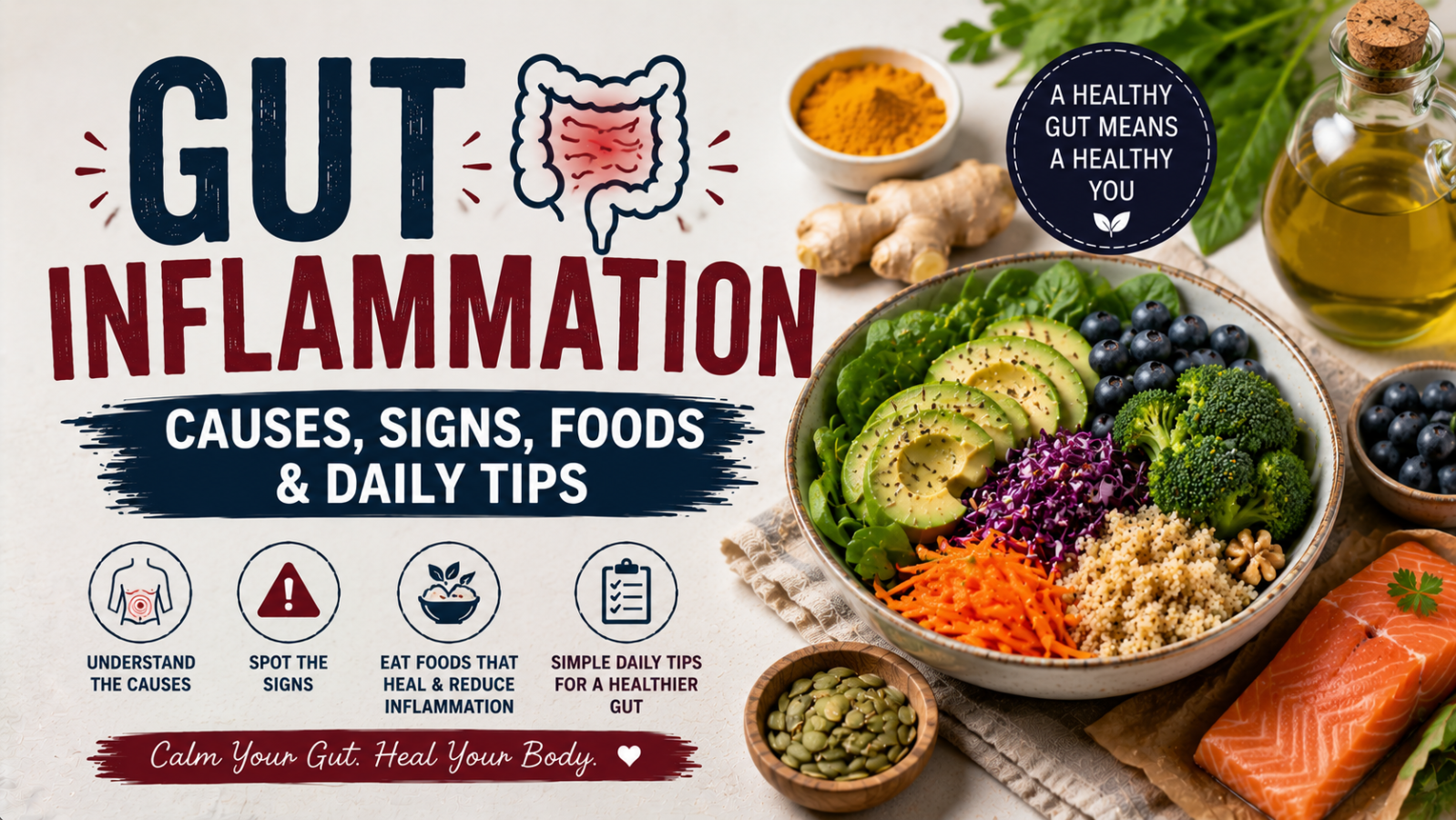
Gut inflammation can affect how your digestive system feels and functions, especially when diet, stress, infections, or an underlying health condition disrupts normal gut function. If you’ve ever dealt with ongoing bloating, abdominal discomfort, or unpredictable digestion, it’s natural to wonder if gut inflammation could be part of the picture.
The good news is that everyday habits can support a healthier digestive environment. You can also use the Copy Button to save helpful food ideas and daily tips for later.
Quick Answer: What Is Gut Inflammation?
Gut inflammation is an immune response involving tissues in the digestive tract. Short-term inflammation can occur when the body responds to an infection or injury. However, ongoing inflammation may occur with certain digestive diseases or other health conditions.
Common symptoms can include abdominal pain, diarrhea, changes in bowel habits, bloating, fatigue, or reduced appetite. Yet these symptoms can have many different causes, so they don’t automatically mean you have an inflamed gut.
Food choices, sleep, stress, movement, medications, alcohol, and overall health can all influence digestive function. Therefore, the most useful approach is to look at the bigger picture rather than blaming one food.
What Causes Gut Inflammation?
There isn’t one universal cause.
Your digestive tract has a complex relationship with the immune system, gut microbes, food, and the rest of your body. When that balance is disrupted, inflammation can sometimes develop.
Some possible contributors include:
- Gastrointestinal infections
- Inflammatory bowel diseases
- Certain food intolerances
- Long-term use of some medications
- Heavy alcohol intake
- Smoking
- A diet low in fiber and high in highly processed foods
- Ongoing physical or emotional stress
- Poor sleep
- Other medical conditions
For example, inflammatory bowel diseases such as Crohn’s disease and ulcerative colitis involve inflammation in the digestive tract. These conditions are different from occasional bloating or temporary digestive discomfort.
That distinction matters.
Feeling bloated after a large meal doesn’t necessarily mean your intestines are inflamed.
Signs of Gut Inflammation to Pay Attention To
Digestive symptoms can be frustrating because they often overlap.
You might notice:
Abdominal pain or tenderness
Persistent pain deserves attention, especially when it keeps returning or interferes with normal activities.
Changes in bowel movements
Diarrhea, constipation, unusually frequent stools, or a major change from your normal pattern can have many causes.
Bloating and abdominal fullness
Bloating can happen after certain foods, large meals, constipation, or changes in gut bacteria. It doesn’t automatically indicate inflammation.
Blood in the stool
Blood should not simply be blamed on food. It can have several causes and deserves medical evaluation.
Unexplained weight loss
Unexpected weight loss alongside ongoing digestive symptoms is another reason to speak with a healthcare professional.
Fatigue
Digestive problems can sometimes occur alongside fatigue, particularly when an underlying condition affects nutrient absorption or causes ongoing inflammation.
The key is persistence and context. One uncomfortable afternoon is very different from symptoms that continue for weeks.
Gut Inflammation vs. Everyday Digestive Discomfort
This is one of the most useful distinctions to understand.
You can experience gas, bloating, reflux, or an upset stomach without having an inflammatory disease.
For instance, eating a huge restaurant meal can leave you feeling uncomfortable for several hours. Eating quickly can do the same. So can drinking a lot of carbonated beverages.
In contrast, inflammatory conditions involve an immune response within the digestive tract and may cause more persistent symptoms.
That’s why trying to diagnose yourself from one symptom rarely works.
If your digestion has changed and doesn’t return to normal, it’s worth discussing the pattern with a healthcare professional.
Foods That May Support a Healthier Gut
Food doesn’t need to be labeled as a treatment to be useful.
A balanced eating pattern can provide fiber, vitamins, minerals, plant compounds, protein, and other nutrients that support overall health.
1. Oats
Oats provide soluble fiber and can be an easy breakfast base.
Try oatmeal with banana, berries, walnuts, or plain yogurt.
If you’re increasing fiber, start with a comfortable portion.
2. Berries
Blueberries, strawberries, raspberries, and blackberries provide fiber and plant compounds.
Add them to oatmeal, yogurt, or a smoothie.
3. Cooked vegetables
Carrots, zucchini, squash, spinach, and green beans can be useful choices when raw vegetables feel too heavy.
Cooking also makes vegetables softer and easier to chew.
4. Avocado
Avocado provides fiber and unsaturated fats.
Add a small portion to whole-grain toast, eggs, or a grain bowl.
5. Beans and lentils
Legumes provide fiber and plant protein.
However, they can increase gas in some people. Start with smaller portions and increase gradually.
6. Whole grains
Brown rice, quinoa, oats, and other whole grains can add fiber and nutrients to meals.
If a particular grain doesn’t agree with you, choose another one. There is no prize for forcing yourself to eat a food you dislike.
7. Yogurt with live cultures
Some yogurts contain live microorganisms that may support the gut microbiome.
Choose a plain option when possible, then add fruit or cinnamon for flavor.
Not everyone tolerates dairy well, so a suitable non-dairy yogurt can also be an option.
Foods to Limit When Your Gut Feels Irritated
There’s no universal “inflammation food list” that applies to everyone.
Still, some eating patterns may make digestive symptoms worse.
Pay attention to meals that contain large amounts of:
- Fried foods
- Highly processed snacks
- Added sugars
- Alcohol
- Very spicy ingredients
- Heavy sauces
- Large portions of processed meats
You don’t have to eliminate every food on this list.
Instead, look for patterns.
If you consistently feel uncomfortable after eating very greasy meals, reducing those meals may be more useful than following a restrictive diet.
Gut Inflammation and Fiber: Finding the Right Balance
Fiber is important for digestive health, but increasing it too quickly can backfire.
Imagine someone who normally eats very little fiber. They suddenly add oatmeal, beans, chia seeds, lentils, bran cereal, and several servings of vegetables.
That’s a big change.
Gas and bloating may follow.
Instead, add one fiber-rich food at a time. Drink enough fluids and give your digestive system time to adjust.
There are also different types of fiber, so variety matters. Oats, fruits, vegetables, legumes, nuts, and seeds can all contribute different types.
What if high-fiber foods make you uncomfortable?
Don’t assume that fiber is the problem itself.
The amount, type, preparation, and timing can all matter.
For example, you might tolerate cooked carrots but struggle with a huge raw salad. You may also tolerate a small serving of beans better than a large bowl.
Experiment with portions and preparation rather than removing every fiber-rich food.
Gut Inflammation and the Gut Microbiome
Your digestive tract contains trillions of microorganisms that interact with food, the intestinal environment, and the immune system.
The gut microbiome is not simply a collection of “good” and “bad” bacteria. It’s a complex ecosystem.
Diet is one factor that can influence it.
A varied diet containing different plant foods can provide different types of fiber and other compounds that gut microbes can use.
That doesn’t mean you need to eat dozens of plant foods every day.
Start where you are.
Add berries to breakfast. Eat vegetables with lunch. Try lentils in soup. Sprinkle nuts or seeds over yogurt.
Small changes can build variety without making meals feel like a project.
Gut Inflammation and Stress
Your brain and digestive system communicate constantly.
That’s one reason stress can affect digestion.
You may notice more stomach discomfort before an important meeting, during a stressful week, or when you’re sleeping poorly.
Stress doesn’t mean your symptoms are imaginary. The digestive system responds to signals from the nervous system, and stress can influence gut movement and sensitivity.
Try simple habits:
- Take a short walk after meals.
- Eat without rushing when possible.
- Practice slow breathing.
- Give yourself enough time to sleep.
- Take breaks during stressful workdays.
- Avoid making every meal a screen-time event.
You don’t need a complicated wellness routine.
Sometimes a ten-minute walk and a calmer dinner are more realistic than a long list of habits.
Gut Inflammation and Sleep
Sleep affects far more than energy.
Poor sleep can influence appetite, stress, immune function, and daily food choices. Those factors can indirectly affect digestive health.
Aim for a consistent sleep schedule when possible.
Keep your bedroom comfortable and reduce stimulating activities close to bedtime.
If late-night meals consistently leave you uncomfortable, consider eating dinner earlier or choosing a lighter evening meal.
There isn’t one perfect bedtime routine. Consistency is the useful part.
A Simple Day of Gut-Friendly Meals
Here’s an example of how these ideas can fit together without creating a restrictive menu.
Breakfast: Oatmeal with blueberries, banana, and walnuts.
Lunch: Chicken, quinoa, cooked zucchini, and spinach with olive oil.
Snack: Plain Greek yogurt with strawberries.
Dinner: Baked salmon, roasted sweet potato, and cooked green beans.
Drinks: Water throughout the day.
This isn’t a prescription or a perfect menu.
It’s simply an example of a varied eating pattern with fiber-rich plant foods, protein, whole foods, and healthy fats.
You can swap ingredients based on your preferences and tolerance.
Everyday Habits That May Help Your Gut
Food gets most of the attention, but your daily routine matters too.
Eat at a comfortable pace
Slow down when you can. Eating quickly may make it harder to notice fullness and can contribute to swallowing more air.
Stay physically active
Regular movement supports overall health and can help maintain normal bowel function.
A daily walk is a perfectly reasonable starting point.
Drink enough fluids
Fluids become especially important when you increase fiber.
Keep water available during the day rather than trying to drink a huge amount at night.
Be careful with alcohol
Alcohol can irritate the digestive tract and may worsen symptoms for some people.
If you notice a clear connection, reducing your intake may be worth trying.
Avoid unnecessary food restriction
Cutting out large numbers of foods can make your diet less varied and harder to maintain.
Instead, identify specific foods or patterns that repeatedly cause problems.
When Gut Inflammation Symptoms Need Attention
Persistent digestive symptoms shouldn’t be ignored.
Talk with a healthcare professional if you experience ongoing abdominal pain, persistent diarrhea, repeated vomiting, unexplained weight loss, blood in your stool, black stools, fever, or a major change in bowel habits.
Some digestive conditions need proper testing and treatment.
Trying elimination diets or supplements on your own can sometimes delay finding the real cause.
Your symptoms are useful information. Write down when they happen, what you ate, your bowel habits, medications or supplements you take, and anything else that seems relevant.
That record can make a medical appointment much more productive.
Frequently Asked Questions About Gut Inflammation
What is the main cause of gut inflammation?
There isn’t one main cause. Infections, inflammatory bowel diseases, medications, lifestyle factors, and other health conditions can contribute to inflammation in the digestive tract.
Can gut inflammation go away?
The answer depends on the cause. Temporary inflammation from an acute problem may resolve, while chronic inflammatory conditions may require ongoing medical care.
What foods are best for gut inflammation?
A varied diet with vegetables, fruits, whole grains, legumes, nuts, seeds, and other minimally processed foods can support overall digestive health. However, individual tolerance matters.
Does sugar cause gut inflammation?
Eating large amounts of added sugar isn’t considered a healthy dietary pattern, but it would be too simple to blame sugar alone for gut inflammation. Overall diet quality and individual health factors matter.
Can stress cause gut inflammation?
Stress can affect digestive function and gut-brain signaling. It may also worsen symptoms in some people. However, persistent digestive inflammation has many possible causes and shouldn’t automatically be attributed to stress.
The Bottom Line on Gut Inflammation
Gut inflammation is more complicated than simply identifying a few “inflammatory foods” and removing them from your diet. The digestive tract interacts with your immune system, gut microbes, nervous system, medications, lifestyle, and overall health.
Start with practical changes. Eat a wider range of whole foods, increase fiber gradually, stay hydrated, move regularly, sleep well, and notice which meals seem to trigger discomfort.
At the same time, don’t dismiss persistent symptoms as something you simply need to eat your way out of. Ongoing pain, bleeding, unexplained weight loss, or lasting bowel changes deserve proper medical attention.
If you want to keep these ideas handy, use the Copy Button to save the food and lifestyle tips that fit your routine. Small, sustainable habits are much easier to maintain than an overly restrictive plan.












1 thought on “Gut Inflammation: Causes, Signs, Foods & Daily Tips”