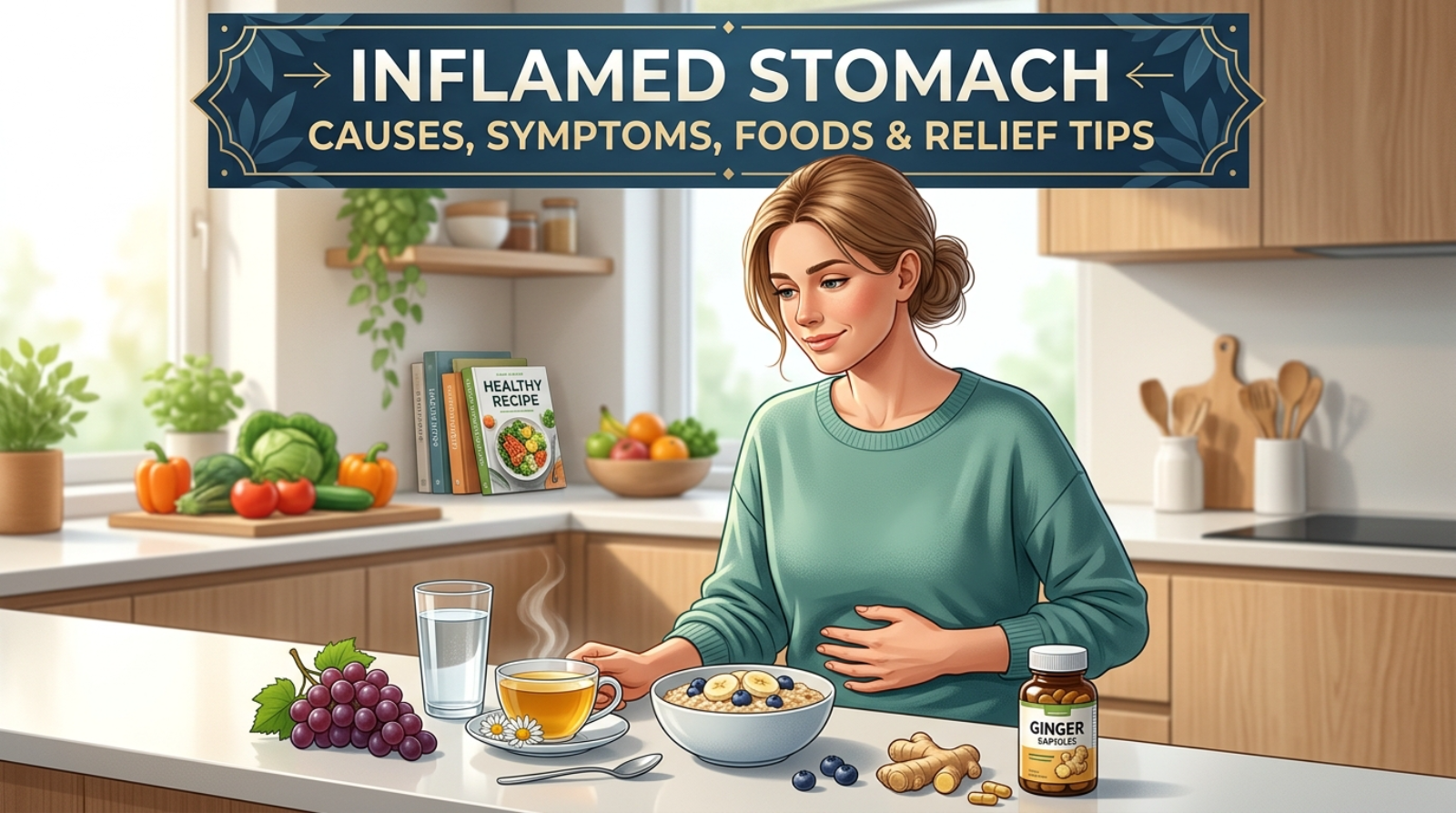
An inflamed stomach can leave you dealing with burning pain, nausea, fullness, or discomfort that makes even a normal meal feel like a bad idea. If you’ve ever felt that uncomfortable ache after eating, you’re probably familiar with how quickly stomach irritation can change your entire day.
The tricky part is that stomach discomfort has many possible causes. You can use the Copy Button to save the practical food and lifestyle tips below for later.
Quick Answer: What Is an Inflamed Stomach?
An inflamed stomach usually refers to inflammation of the stomach lining, commonly called gastritis. Gastritis can happen suddenly or develop gradually, depending on its cause.
Common causes include Helicobacter pylori infection, regular use of certain pain relievers, heavy alcohol use, and some illnesses or physical stress on the body. Cleveland Clinic notes that gastritis can cause symptoms such as upper abdominal pain, nausea, vomiting, and feeling full sooner than usual.
However, not every episode of stomach pain means you have gastritis. Indigestion, reflux, ulcers, food intolerance, and other digestive conditions can feel similar.
That’s why persistent symptoms deserve attention rather than guesswork.
What Causes an Inflamed Stomach?
Your stomach has a protective lining that helps shield its tissue from stomach acid. When that lining becomes irritated or damaged, inflammation can develop.
Several factors can contribute.
H. pylori infection
H. pylori is a type of bacteria that can live in the stomach. It is a common cause of gastritis and can also contribute to peptic ulcers.
If a healthcare professional suspects H. pylori, testing can help determine if the infection is present.
Certain pain relievers
Nonsteroidal anti-inflammatory drugs, commonly called NSAIDs, include medicines such as ibuprofen and naproxen.
Regular use can irritate the stomach lining in some people. The risk can increase with higher doses or prolonged use.
Don’t stop a prescribed medication without discussing it with your healthcare professional.
Alcohol
Alcohol can irritate the stomach lining.
If you notice that stomach burning or nausea tends to appear after drinking, reducing or avoiding alcohol may help reduce that trigger.
Severe physical stress
Serious illness, injury, surgery, or other major physical stress can sometimes contribute to acute gastritis.
This type of inflammation isn’t simply caused by eating the wrong meal.
Autoimmune conditions
In some cases, the immune system attacks cells in the stomach lining. This can lead to autoimmune gastritis.
It’s less common than everyday stomach irritation, but it shows why the cause matters when symptoms persist.
Inflamed Stomach Symptoms to Watch For
An inflamed stomach can feel different from person to person.
Possible symptoms include:
- Burning or aching pain in the upper abdomen
- Nausea
- Vomiting
- Feeling unusually full after eating
- Loss of appetite
- Indigestion
- Bloating
- Belching
Some people with gastritis have few or no obvious symptoms.
Meanwhile, more serious signs can include vomiting blood or passing black, tarry stools. These symptoms can indicate gastrointestinal bleeding and need prompt medical attention.
Don’t try to manage those symptoms with food changes alone.
Inflamed Stomach or Simple Indigestion?
This is where things can get confusing.
You might feel uncomfortable after a large meal and assume your stomach is inflamed. However, temporary indigestion doesn’t automatically mean gastritis.
For example, eating quickly, consuming a very large meal, drinking alcohol, or eating foods that don’t agree with you can cause short-term discomfort.
Gastritis involves inflammation of the stomach lining.
The symptoms can overlap, but the conditions aren’t identical.
If symptoms keep returning, become stronger, or interfere with eating, it’s worth finding out what’s actually happening rather than removing more and more foods from your diet.
Foods to Eat With an Inflamed Stomach
Food can’t treat every cause of gastritis. Still, choosing simpler meals may make eating more comfortable while your stomach feels irritated.
The right foods also depend on your personal tolerance.
Oatmeal
Plain oatmeal is soft and easy to customize.
Try it with banana or cooked apples rather than a large amount of rich toppings.
If dairy bothers you, use water or a milk alternative that you tolerate.
Bananas
Bananas are soft, convenient, and easy to add to oatmeal or yogurt.
Choose a ripe banana if you prefer a softer texture.
Rice
Plain white rice can be a practical choice when you’re looking for a mild carbohydrate.
You don’t have to eat it forever. It’s simply an option for days when your stomach feels sensitive.
Cooked vegetables
Steamed or roasted carrots, zucchini, squash, and potatoes can be easier to manage than a huge raw salad.
Cook them until tender and keep the seasoning simple.
Lean protein
Eggs, chicken, turkey, tofu, or fish can provide protein without requiring a heavy sauce.
Baking, steaming, poaching, or grilling usually requires less added fat than frying.
Yogurt, if tolerated
Some people tolerate plain yogurt well, while others don’t.
If dairy tends to cause discomfort, choose a suitable non-dairy alternative instead.
There isn’t a reason to force a food simply because someone online says it’s “good for the gut.”
Foods to Limit When Your Stomach Feels Irritated
You don’t need a giant forbidden-food list.
Instead, pay attention to foods that clearly worsen your symptoms.
Common triggers can include:
- Alcohol
- Very spicy foods
- Fried foods
- Very fatty meals
- Large portions
- Excessive caffeine for some people
- Highly acidic foods for some people
Tolerance varies.
Tomatoes might bother one person but cause no trouble for another. The same can happen with coffee, citrus, chocolate, or spicy foods.
Rather than removing everything at once, keep a simple food and symptom log.
Write down what you ate, how much you ate, and how you felt afterward.
Patterns become easier to see.
How to Eat With an Inflamed Stomach
Your eating habits can matter almost as much as the ingredients.
Keep portions moderate
A huge meal can leave you feeling overly full and uncomfortable.
Try smaller portions, especially if large meals consistently trigger symptoms.
Eat slowly
Put your fork down occasionally. Chew thoroughly and give yourself time to notice fullness.
This sounds simple, but it’s surprisingly easy to rush through breakfast or lunch.
Choose gentler cooking methods
Baking, steaming, poaching, and simmering can help you prepare meals without large amounts of added fat.
For example, baked chicken with rice and cooked carrots is very different from fried chicken with a heavy cream sauce.
Don’t lie down immediately after eating
If reflux or upper digestive discomfort is also an issue, staying upright after meals may be more comfortable.
Your healthcare professional can help you sort out whether reflux is contributing to your symptoms.
Inflamed Stomach and Coffee
Coffee is a common question.
Some people can drink coffee without problems. Others notice burning, nausea, or discomfort afterward.
If you suspect coffee is making your symptoms worse, try reducing the amount for a short period and observe what happens.
You don’t necessarily need to assume coffee is permanently off the menu.
Also consider what you’re adding to it. Large amounts of cream, sugar, or flavored syrups can turn a simple drink into a much heavier one.
Pay attention to your actual response.
Inflamed Stomach and Alcohol
Alcohol can irritate the stomach lining, so it may be especially unpleasant when your stomach already feels sensitive.
If alcohol consistently causes burning, nausea, or upper abdominal discomfort, taking a break can be a sensible experiment.
However, persistent symptoms shouldn’t be blamed on alcohol alone.
A healthcare professional may need to check for other causes, particularly if symptoms continue after you stop drinking.
Does Stress Cause an Inflamed Stomach?
Stress and digestion are closely connected, but it’s too simple to say that stress alone causes gastritis.
Stress can affect stomach function, appetite, sleep, and how strongly you notice digestive sensations.
During a stressful week, you might also eat faster, skip meals, drink more coffee, or sleep poorly.
Those changes can make your stomach feel worse.
Simple habits can help support your routine:
- Take a short walk.
- Eat meals at regular times.
- Get enough sleep.
- Slow down during meals.
- Practice relaxed breathing.
- Limit alcohol if it worsens symptoms.
These steps aren’t substitutes for treatment when an underlying condition is present.
A Simple Meal Plan for Stomach Comfort
When your stomach feels irritated, simplicity can be useful.
Breakfast: Oatmeal with banana and cinnamon.
Lunch: White rice with baked chicken and cooked carrots.
Snack: Plain yogurt if tolerated, or a banana.
Dinner: Baked fish with mashed potatoes and cooked zucchini.
Drinks: Water throughout the day.
This isn’t a required diet.
You can swap ingredients based on your tolerance, appetite, culture, and normal eating habits.
The goal is to avoid turning temporary stomach discomfort into an unnecessarily restrictive diet.
What Not to Do With an Inflamed Stomach
A few common mistakes can make the situation harder to manage.
Don’t assume every symptom is gastritis. Several digestive problems can feel similar.
Don’t take pain relievers repeatedly just to push through stomach pain. Some NSAIDs can irritate the stomach lining.
Don’t eliminate dozens of foods at once. You’ll have a harder time identifying actual triggers.
Don’t rely on supplements as a quick fix. Some supplements can irritate the digestive tract or interact with medications.
Don’t ignore recurring symptoms. Repeated pain deserves a closer look.
Don’t drastically increase fiber during a flare of digestive discomfort. A sudden increase can cause additional bloating and gas.
When to See a Doctor
Occasional stomach discomfort may pass, but persistent or severe symptoms deserve medical attention.
Contact a healthcare professional if you have ongoing upper abdominal pain, repeated nausea or vomiting, unexplained weight loss, loss of appetite, or symptoms that keep returning.
Seek urgent medical care if you vomit blood or notice black, tarry stools. These can be signs of gastrointestinal bleeding.
If H. pylori is suspected, a healthcare professional can recommend appropriate testing.
Likewise, if you regularly use NSAIDs and develop stomach symptoms, discuss your medication use with your healthcare professional rather than simply stopping a prescribed medicine.
Frequently Asked Questions About an Inflamed Stomach
How long does an inflamed stomach take to heal?
It depends on the cause. Symptoms from temporary irritation may improve after the trigger is removed, while gastritis caused by H. pylori, medications, or another condition may require specific treatment.
What is the best food for an inflamed stomach?
There isn’t one best food. Simple options such as oatmeal, rice, bananas, cooked vegetables, and lean proteins may be comfortable for many people, but individual tolerance matters.
Can drinking water help an inflamed stomach?
Staying hydrated is important for overall health. However, water doesn’t treat the underlying cause of gastritis.
Can coffee make an inflamed stomach worse?
It can for some people. Coffee may increase symptoms such as stomach discomfort or burning in sensitive individuals. If you notice a clear connection, reducing your intake can help you assess your response.
Is an inflamed stomach the same as gastritis?
The phrase “inflamed stomach” commonly refers to gastritis, which means inflammation of the stomach lining. However, people sometimes use the phrase loosely to describe general stomach discomfort.
The Bottom Line on an Inflamed Stomach
An inflamed stomach isn’t simply a sign that you ate one unhealthy meal. Gastritis and stomach irritation can have several causes, including H. pylori, certain medications, alcohol, autoimmune conditions, and severe physical stress.
For everyday comfort, keep meals simple when needed, choose cooking methods that don’t rely on heavy fat, eat moderate portions, and pay attention to your personal triggers.
At the same time, don’t let food changes delay proper care. Persistent pain, repeated vomiting, unexplained weight loss, blood in vomit, or black stools require medical attention.
If you want to keep the practical tips from this guide nearby, use the Copy Button to save them for your next meal-planning session.

Elizabeth Boham is a respected functional medicine physician and wellness educator with a passion for helping people improve their health through nutrition and lifestyle changes. As a contributor to Gutrova, she shares practical insights on gut health, digestive wellness, and healthy living, making complex health topics easy to understand and apply in everyday life.











1 thought on “Inflamed Stomach: Causes, Symptoms, Foods & Relief Tips”