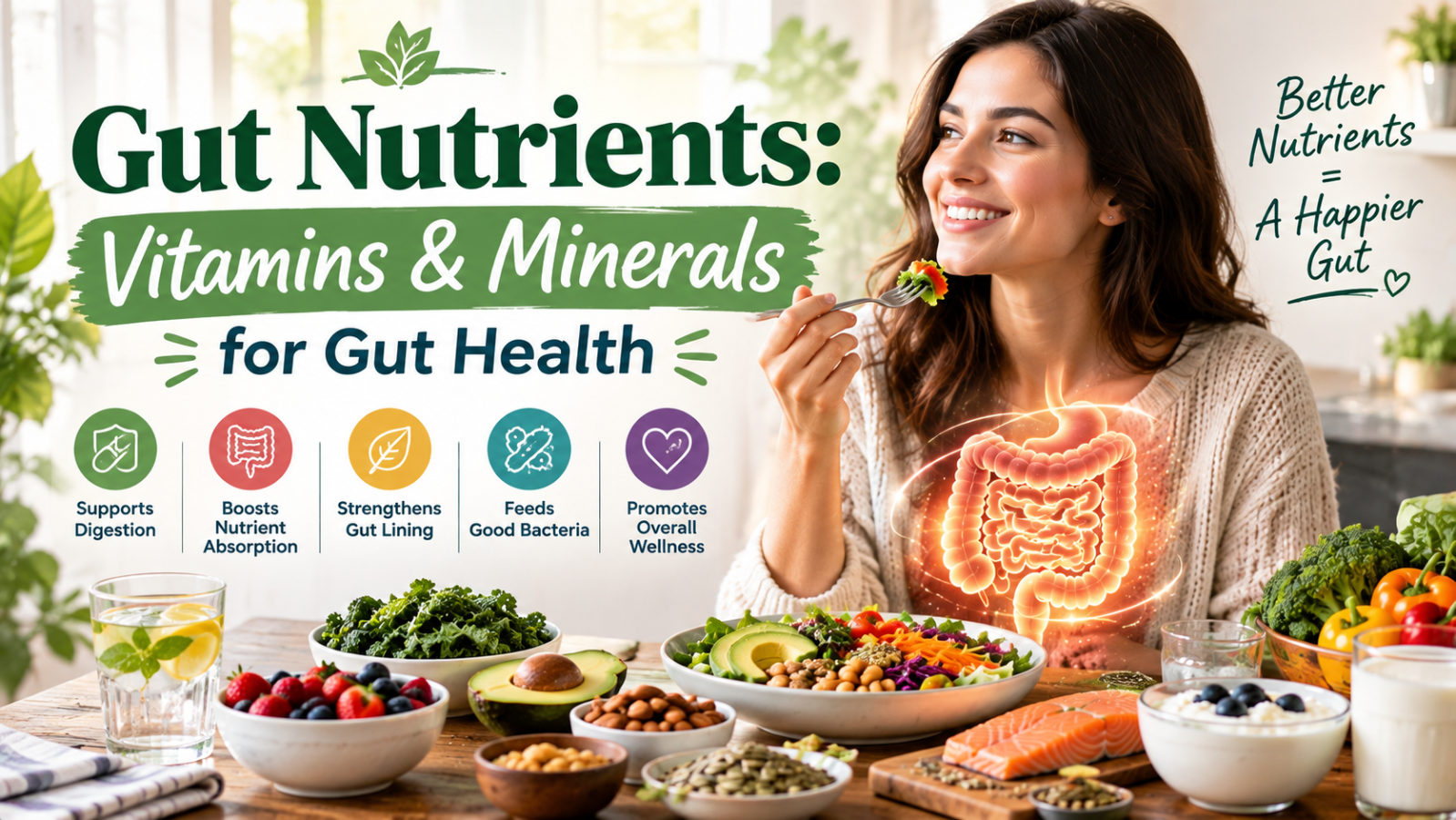
Gut nutrients play an important role in digestion, nutrient absorption, energy production, and the normal function of your digestive tract. Your gut needs a steady supply of essential vitamins and minerals, but that doesn’t mean you need a cabinet full of supplements. In fact, a varied diet usually provides many of the nutrients your digestive system needs. You can also use Gutrova’s Copy Button to quickly save or share the practical tips you want to remember.
Quick Answer: What Are Gut Nutrients?
Gut nutrients are vitamins, minerals, and other dietary nutrients that support normal digestive function, nutrient absorption, intestinal tissues, and the broader gut environment.
They include nutrients such as vitamins A, B vitamins, C, D, E, and K, along with minerals including zinc, magnesium, calcium, and iron. The small intestine absorbs most nutrients from food, while the digestive system uses acids, enzymes, bile, hormones, nerves, and gut microbes to process what you eat.
However, there isn’t one official medical category called “gut nutrients.” The term is best understood as a practical way to describe nutrients that matter to digestive health.
Why Gut Nutrients Matter for Digestion
Digestion is much more than breaking food into smaller pieces. Your digestive tract has to process food, absorb useful nutrients, move waste, and communicate with the rest of your body.
The small intestine does much of the nutrient absorption. Meanwhile, the liver, pancreas, gallbladder, stomach, and large intestine each have important jobs. Gut bacteria also participate in digestion and help break down some compounds that reach the colon.
That means poor nutrition can affect more than energy levels. If your diet consistently lacks important nutrients, your body may have fewer raw materials for normal cell function, tissue maintenance, and other physiological processes.
Gut nutrients vs. digestive supplements
These terms aren’t interchangeable.
A nutrient is something your body needs. A supplement is one possible way to obtain it.
For example, vitamin C from oranges and peppers is still vitamin C. You don’t need a supplement simply because a nutrient has a connection to digestive health.
In practice, I often think of supplements as a tool rather than the starting point. If someone’s diet is already varied and balanced, adding several high-dose products may offer little benefit and can sometimes create unnecessary problems.
Key Gut Nutrients Your Digestive System Uses
Different vitamins and minerals have different jobs. Instead of searching for one “best” nutrient, focus on covering a broad range through food.
Vitamin A
Vitamin A supports normal cell function and helps maintain tissues throughout the body.
Orange and yellow vegetables, leafy greens, eggs, dairy products, and some animal foods can contribute vitamin A or its precursors to the diet.
Carrots and sweet potatoes are particularly useful plant sources because they provide beta-carotene, which the body can convert to vitamin A.
B Vitamins
B vitamins are a large family rather than a single nutrient. They participate in energy metabolism and numerous cellular processes.
Whole grains, legumes, eggs, dairy foods, meat, seafood, nuts, seeds, and leafy greens can all contribute different B vitamins.
Vitamin B12 deserves special attention because its absorption involves the stomach. Hydrochloric acid helps release B12 from food proteins, after which the vitamin binds to intrinsic factor before absorption in the small intestine.
Vitamin C
Vitamin C is best known for its antioxidant role, but it also supports collagen formation and helps the body absorb non-heme iron from plant foods.
For example, adding strawberries, oranges, kiwi, tomatoes, or bell peppers to a meal containing beans or lentils can be a simple nutrition pairing.
Vitamin D
Vitamin D is not a digestive aid in the usual sense. Still, it matters because it helps the body absorb calcium and supports several other functions.
Vitamin D is absorbed in the small intestine, and the presence of fat in the gut enhances its absorption.
Fatty fish, fortified milk, fortified plant beverages, and certain other fortified foods can provide vitamin D.
Vitamins E and K
Vitamin E helps protect cells from oxidative damage, while vitamin K has important roles in blood clotting and bone metabolism.
Leafy greens are excellent sources of vitamin K. Nuts, seeds, vegetable oils, spinach, and broccoli can contribute vitamin E.
These vitamins also highlight why digestive health and nutrient absorption are connected. If fat digestion or absorption is impaired, the body can have difficulty obtaining enough fat-soluble vitamins.
Gut Nutrients That Support the Intestinal Environment
Your digestive tract isn’t simply a hollow tube. It contains a living lining that interacts with food, microbes, immune cells, nerves, and circulating nutrients.
Several nutrients help maintain normal tissues and cellular activity throughout the body, including the digestive tract.
Zinc
Zinc supports normal immune function, protein synthesis, DNA synthesis, and wound healing.
Food sources include meat, shellfish, dairy foods, beans, nuts, and seeds.
Magnesium
Magnesium participates in hundreds of biochemical reactions. It also contributes to normal muscle and nerve function.
Leafy greens, beans, whole grains, nuts, and seeds are useful dietary sources.
A food-first approach is especially practical here because magnesium-rich foods often bring fiber and other nutrients along with them.
Iron
Iron is needed for hemoglobin production and oxygen transport.
Lean meat, seafood, beans, lentils, fortified grains, spinach, and other foods can contribute iron. Plant-based iron is absorbed less efficiently than heme iron from animal foods, so pairing plant sources with vitamin C can be helpful.
Calcium
Calcium is important for bones, teeth, muscles, nerves, and other body functions. Vitamin D helps the body absorb calcium through the digestive tract.
Dairy products, calcium-fortified foods, canned fish with edible bones, tofu made with calcium, and some leafy greens can contribute calcium.
How Gut Nutrients Get Absorbed
Eating a nutrient-rich meal is only part of the story. Your body also has to digest and absorb those nutrients.
The process begins in the mouth and continues through the stomach and small intestine. Digestive juices from the stomach, pancreas, liver, and intestine help break food down, while the small intestine absorbs most of the resulting nutrients. (NIDDK)
Vitamin B12 is a good example of why absorption can be complicated.
Food-based B12 is attached to protein. Stomach acid and digestive enzymes help release it, and intrinsic factor then helps the vitamin reach the point where it can be absorbed. )
Vitamin D provides another useful example. Although it’s a vitamin, its absorption is influenced by fat in the digestive tract. (
So, simply counting nutrients on a food label doesn’t tell the entire story. Your digestive system has to process and absorb them properly.
Gut Nutrients and the Gut Microbiome
The gut microbiome adds another layer to the nutrition picture.
Your digestive tract contains many microorganisms that interact with the food reaching the intestine. Some bacteria help break down components of food that your own digestive enzymes don’t fully process.
The large intestine is particularly important for microbial activity. NIDDK notes that bacteria in the large intestine help break down remaining nutrients and produce vitamin K.
That doesn’t mean you need to chase a specific “microbiome vitamin.” Instead, think about the overall dietary pattern.
Fiber-rich vegetables, fruits, legumes, whole grains, nuts, and seeds provide a range of compounds that can support a diverse diet and give gut microbes material to work with.
A simple everyday example
Consider a lunch of grilled salmon, roasted sweet potato, spinach, and a side of berries.
You’d get protein and healthy fats from the salmon, beta-carotene from the sweet potato, vitamin K and other nutrients from spinach, and vitamin C plus plant compounds from the berries.
No special “gut formula” is required. The variety itself is doing useful work.
Food Sources of Gut Nutrients
The easiest way to increase your intake is usually to build meals around variety rather than individual supplements.
Try combining several of these foods throughout the week:
- Leafy greens: spinach, kale, collards, and romaine
- Colorful vegetables: carrots, sweet potatoes, peppers, tomatoes, and broccoli
- Fruit: oranges, berries, kiwi, melon, and avocado
- Legumes: lentils, chickpeas, black beans, and peas
- Whole grains: oats, brown rice, quinoa, and whole-grain bread
- Nuts and seeds: almonds, pumpkin seeds, chia seeds, and sunflower seeds
- Eggs: a convenient source of several vitamins and minerals
- Fish: salmon, sardines, tuna, and trout
- Dairy foods: yogurt, milk, and cheese
- Fortified foods: selected cereals, plant beverages, and other fortified products
You don’t need every item at every meal. Instead, aim for variety across the day and week.
For instance, oatmeal with berries and chia seeds offers a different nutrient combination than eggs with spinach and whole-grain toast. Both can fit into a gut-friendly eating pattern.
Gut Nutrients and Signs You May Need More Attention
Most people don’t need to assume that digestive symptoms automatically mean they have a vitamin deficiency.
Bloating after a large meal, occasional gas, or a temporary change in bowel habits can have many possible causes. Nutrient deficiency is only one piece of a much larger picture.
Persistent symptoms deserve more attention, particularly when they occur alongside signs that could point toward poor nutrient absorption.
These can include:
- Ongoing diarrhea
- Greasy or unusually foul-smelling stools
- Unexplained weight loss
- Persistent fatigue
- Signs of anemia
- Recurrent nutritional deficiencies
- Numbness or tingling
- Digestive symptoms after gastrointestinal surgery
- Long-term digestive disease
For example, malabsorption can occur when the small intestine cannot absorb enough nutrients. NIDDK notes that certain digestive conditions can result in low levels of vitamins and minerals.
Exocrine pancreatic insufficiency is another example. Problems with pancreatic digestive enzymes can interfere with nutrient absorption and may contribute to low levels of fat-soluble vitamins A, D, E, and K.
That is very different from simply having an occasional upset stomach.
Gut Nutrients From Food vs. Supplements
Supplements have a place in nutrition, but they’re not automatically better than food.
A targeted supplement may make sense when testing shows a deficiency, a person has increased nutritional needs, a medical condition affects absorption, or a clinician recommends supplementation.
On the other hand, taking multiple high-dose vitamins “for gut health” without a clear reason can complicate things. Some supplements interact with medications, and excessive amounts of certain nutrients can cause harm.
Vitamin B12 provides a useful example. Certain medications that reduce stomach acid can interfere with B12 absorption from food, while metformin can also reduce B12 absorption in some people.
The better question isn’t, “Which gut supplement should I buy?”
Instead, ask, “Am I getting enough nutrients, and is my digestive system absorbing them properly?”
That shift can lead to much better decisions.
Simple Ways to Get More Gut Nutrients
You don’t need to overhaul your entire diet overnight.
Start with a few practical habits:
- Add one fruit or vegetable to meals that currently lack one.
- Rotate your produce instead of buying the same few foods every week.
- Include beans or lentils several times a week if they agree with you.
- Choose whole grains more often.
- Add nuts or seeds to oatmeal, yogurt, salads, or snacks.
- Pair plant-based iron sources with vitamin C-rich foods.
- Include healthy sources of dietary fat with meals.
- Eat fatty fish when it fits your diet.
- Use fortified foods when they help fill a nutritional gap.
- Don’t eliminate entire food groups without a good reason.
- Read supplement labels before combining multiple products.
- Avoid taking high doses simply because a nutrient is marketed for digestion.
- Keep meals varied instead of chasing one “superfood.”
- Pay attention to persistent digestive changes.
- Ask a healthcare professional about nutrient testing when symptoms or medical history suggest a possible deficiency.
One habit I find especially useful is looking at the whole plate rather than obsessing over one nutrient. A colorful meal with protein, fiber-rich plants, healthy fats, and a reasonable carbohydrate source often covers far more nutritional ground than a single “gut health” product.
Frequently Asked Questions About Gut Nutrients
What are the best gut nutrients?
There isn’t one best nutrient for everyone. Vitamins A, B vitamins, C, D, E, and K, along with minerals such as zinc, magnesium, calcium, and iron, all have different roles in normal body function and nutrition.
Can vitamins improve digestion?
Vitamins don’t automatically improve digestion in someone who already gets enough. However, adequate nutrient intake supports normal physiological processes, and correcting a deficiency can be important for overall health.
Which nutrients help with nutrient absorption?
Vitamin D helps the body absorb calcium, while vitamin C improves absorption of non-heme iron from plant foods. Some nutrients, such as B12, also require specific digestive steps before absorption can occur.
Can poor digestion cause vitamin deficiencies?
Yes. Certain digestive diseases, intestinal damage, pancreatic problems, surgeries, and other conditions can interfere with nutrient digestion or absorption. Malabsorption can result in low levels of vitamins and minerals.
Should I take a gut vitamin supplement?
Not necessarily. If your diet provides adequate nutrients, an additional supplement may not be needed. A targeted supplement can be appropriate when a deficiency, medical condition, medication, or increased nutritional requirement creates a specific need.
The Bottom Line on Gut Nutrients
Gut nutrients aren’t about finding one magic vitamin for digestion. Instead, they’re about giving your body a broad range of vitamins, minerals, and other nutrients while supporting the digestive system that processes and absorbs them.
Build meals around variety, include plenty of nutrient-dense whole foods, and pay attention to persistent digestive changes. If absorption may be an issue, finding the underlying reason is more useful than simply adding more supplements.
Gut nutrients work best as part of an overall eating pattern, not as a shortcut around good nutrition. And if you find a tip in this guide worth keeping, Gutrova’s Copy Button makes it easy to save or share it for later.
The article is structured to keep the exact keyphrase naturally distributed, including the title, H1, opening sentence, conclusion, and multiple subheadings, while avoiding the focus phrase in link-anchor text that can trigger Yoast’s competing-links assessment. The factual digestion and absorption points are grounded in NIDDK and NIH sources.
If you want, I can also create the matching 1600×900 realistic Gutrova feature image for “Gut Nutrients.”

Elizabeth Boham is a respected functional medicine physician and wellness educator with a passion for helping people improve their health through nutrition and lifestyle changes. As a contributor to Gutrova, she shares practical insights on gut health, digestive wellness, and healthy living, making complex health topics easy to understand and apply in everyday life.









1 thought on “Gut Nutrients: Vitamins & Minerals for Gut Health”