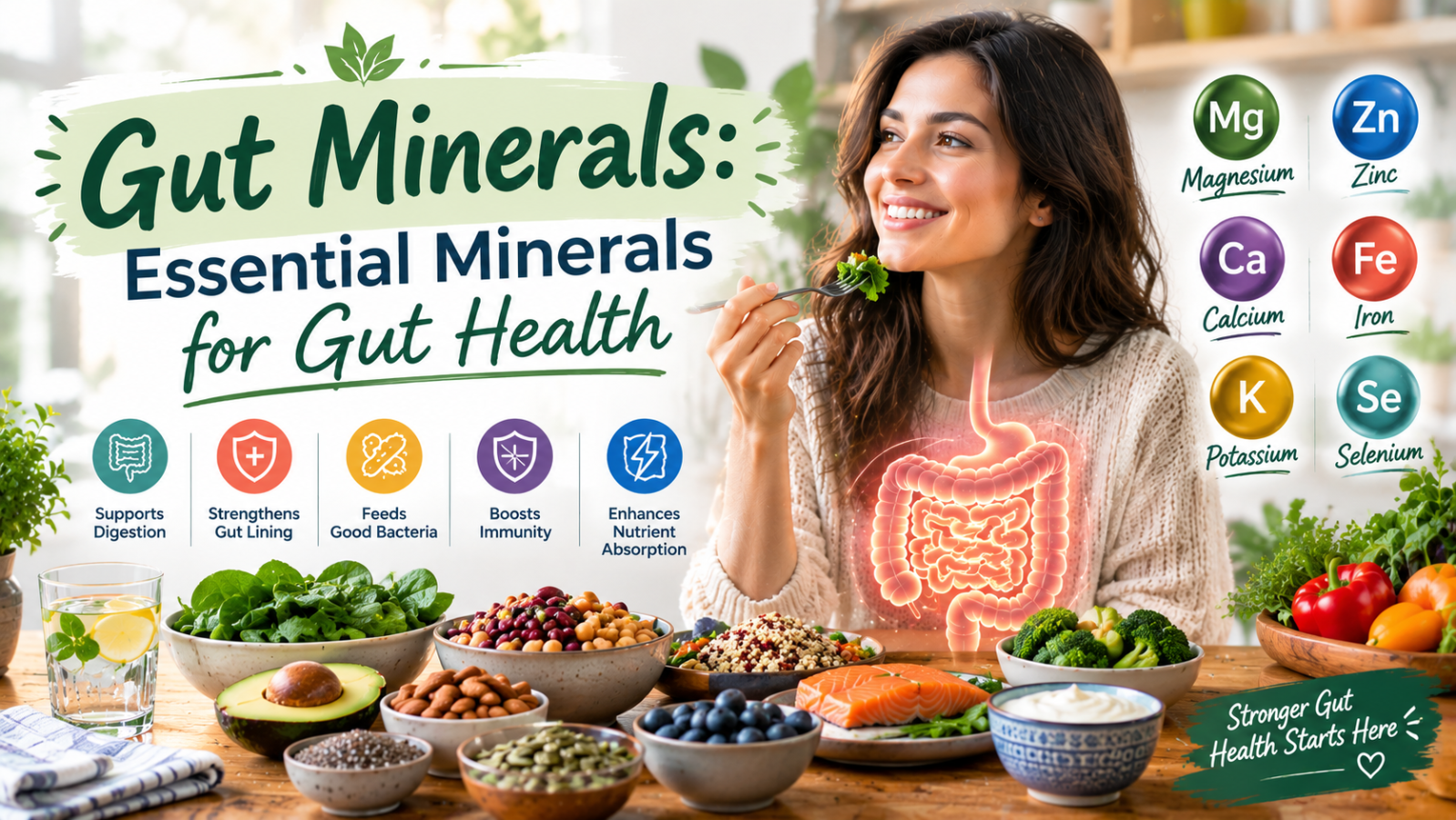
Gut minerals help support many of the processes your digestive system and the rest of your body rely on every day.
Magnesium, zinc, iron, calcium, and other minerals each have different jobs, so getting a variety from food matters more than chasing one “best” mineral. If you find a useful tip in this guide, Gutrova’s Copy Button also makes it easy to save or share it for later.
Quick Answer: What Are Gut Minerals?
Gut minerals are essential minerals that support normal digestion, nutrient absorption, muscle and nerve function, enzyme activity, and other processes connected with digestive health.
Important examples include magnesium, zinc, iron, calcium, potassium, and selenium. These minerals don’t work as a single group, and they aren’t a special medical category. Instead, the term “gut minerals” is a simple way to describe minerals that contribute to normal body and digestive function.
Your digestive system breaks food down into nutrients that your body can absorb and use. Most nutrient absorption takes place in the small intestine, while the large intestine absorbs water and hosts many gut bacteria that help break down remaining food components.
Why Gut Minerals Matter to Your Digestive System
Digestion requires more than stomach acid and digestive enzymes. Your body also needs minerals to support cellular reactions, muscles, nerves, fluid balance, and other basic functions.
For example, magnesium participates in hundreds of biochemical reactions. Zinc supports normal immune function and helps with protein and DNA synthesis. Iron is essential for making hemoglobin, while calcium supports muscles, nerves, bones, and other body functions.
That variety is important. A meal doesn’t need to contain every mineral at once. Instead, your eating pattern should provide different foods across the week.
I like to think about this in terms of the whole plate. A bowl of oatmeal with pumpkin seeds and berries brings a different mineral mix than salmon with spinach and a baked potato. Both can contribute to a well-rounded diet.
Gut minerals aren’t the same as digestive supplements
The phrase can sound like it describes a special group of supplements. It doesn’t.
A mineral is a nutrient your body needs. A supplement is simply one way to consume it.
For most people, food should be the starting point. The NIH notes that magnesium, for example, can come from legumes, nuts, seeds, whole grains, leafy greens, dairy products, and fortified foods.
Consequently, adding a high-dose mineral supplement isn’t automatically the best way to support digestion.
Key Gut Minerals to Know
Different minerals contribute to different parts of nutrition and normal body function. Here are the ones worth knowing first.
Magnesium
Magnesium is one of the most useful minerals to include in a varied diet. It supports normal muscle and nerve function and takes part in many chemical reactions throughout the body.
Food sources include spinach and other leafy greens, beans, lentils, nuts, seeds, whole grains, yogurt, and fortified foods.
That food list is especially helpful for gut-conscious eating because many magnesium-rich foods also provide fiber. Beans, seeds, whole grains, and vegetables can therefore bring several useful nutrients to the same meal.
One practical idea is adding pumpkin seeds to oatmeal or yogurt. Another is tossing chickpeas into a salad instead of relying on a mineral capsule.
Zinc
Zinc supports immune function, protein synthesis, DNA synthesis, and wound healing.
Oysters contain particularly high amounts of zinc, while meat, seafood, eggs, and dairy foods are also useful sources. Beans, nuts, and whole grains provide zinc too, although compounds called phytates can reduce zinc absorption from some plant foods.
That doesn’t mean you need to avoid beans or whole grains. Far from it. These foods provide fiber and many other nutrients, so they can still fit comfortably into a balanced diet.
People with certain digestive disorders or a history of gastrointestinal surgery may have more difficulty getting enough zinc because absorption can be affected.
Iron
Iron helps your body make hemoglobin, which carries oxygen through your blood.
There are two main forms of dietary iron. Heme iron occurs in meat and seafood, while nonheme iron comes mainly from plant foods and fortified foods.
Here’s a simple food pairing: add tomatoes or bell peppers to a lentil meal. Vitamin C can improve the absorption of nonheme iron.
Iron supplements deserve more care, however. They can interact with medications, including levothyroxine and some other drugs. For that reason, taking iron simply because you’re tired isn’t a good substitute for figuring out the cause of the problem.
Calcium
Calcium is commonly associated with bones, but its role doesn’t stop there. It also supports normal muscle contraction, nerve signaling, and other body processes.
Dairy products, fortified foods, tofu made with calcium, certain fish, and some leafy greens can contribute calcium.
Vitamin D also plays an important role in calcium absorption. So rather than looking at one nutrient in isolation, it’s useful to consider how nutrients work together.
Potassium
Potassium helps maintain normal fluid balance, muscle contraction, and nerve function.
Bananas are a familiar source, but they’re hardly the only option. Potatoes, beans, yogurt, leafy greens, squash, and several fruits and vegetables can contribute potassium as well.
For digestive health, this is another reminder that variety usually beats food trends. You don’t need to build your diet around one famous “superfood.”
Gut Minerals and Nutrient Absorption
Eating a mineral-rich food doesn’t mean every milligram automatically enters your bloodstream.
Your digestive system has to break food down, release nutrients, and absorb them. The small intestine performs most nutrient absorption, with specialized cells moving nutrients across the intestinal lining and into circulation.
Several factors can influence this process.
For instance, the form of a mineral can affect how well your body absorbs it. Other compounds in food can also influence absorption. Phytates in some plant foods can bind minerals such as zinc, while dietary factors can affect iron absorption.
That sounds complicated, but you don’t need to calculate absorption percentages at every meal.
Instead, focus on food variety and sensible combinations.
A bean-and-pepper salad, for example, gives you plant-based iron alongside vitamin C. Yogurt with pumpkin seeds provides several minerals in one simple snack. Small choices like these can add up across the week.
Gut Minerals and the Gut Microbiome
Your gut isn’t just responsible for moving food from one end of your body to the other.
The digestive tract contains a large community of microorganisms, and gut bacteria participate in digestion. The large intestine is also home to bacteria that help break down some remaining food components.
Minerals and the gut microbiome have an important connection, but it’s easy to overstate it.
There isn’t a single mineral that magically creates a healthy microbiome. Instead, many mineral-rich foods also contain fiber and other plant compounds that can fit into a diverse eating pattern.
Consider lentils, pumpkin seeds, spinach, oats, and beans. These foods can contribute minerals while also supplying other nutrients. As a result, the overall food pattern may matter more than focusing on one isolated nutrient.
What about magnesium and bowel habits?
Magnesium has a particularly interesting digestive connection because certain forms of supplemental magnesium are used in some laxative products.
That doesn’t mean everyone should take magnesium for constipation.
Supplement form, dose, individual needs, medications, and health conditions all matter. Food sources are a more sensible starting point for general nutrition unless a healthcare professional recommends a supplement.
Best Food Sources of Gut Minerals
A mineral-rich diet doesn’t have to be expensive or complicated.
Try building meals around a mix of these foods:
- Leafy greens: spinach, kale, collards, and Swiss chard
- Beans and lentils: black beans, chickpeas, kidney beans, and lentils
- Nuts: almonds, cashews, and peanuts
- Seeds: pumpkin, chia, sesame, and sunflower seeds
- Whole grains: oats, brown rice, quinoa, and whole-grain bread
- Seafood: salmon, sardines, oysters, and other fish
- Lean meats: beef, chicken, and turkey
- Dairy foods: yogurt, milk, and cheese
- Eggs: a convenient source of several nutrients
- Vegetables: potatoes, broccoli, squash, and peppers
- Fruit: bananas, oranges, avocado, and dried fruit in reasonable portions
- Fortified foods: selected cereals and other fortified products
You don’t have to eat perfectly.
A breakfast of oatmeal, yogurt, berries, and pumpkin seeds can cover several nutritional bases. Later, a lunch with lentils, greens, peppers, and whole grains adds another mix.
That kind of variety is far more practical than trying to design every meal around a single mineral.
When Gut Minerals May Need Extra Attention
Most occasional digestive discomfort doesn’t automatically point to a mineral deficiency.
Bloating, gas, constipation, loose stools, or changes after a large meal can have many causes. However, persistent digestive problems can sometimes interfere with nutrient intake or absorption.
Certain digestive conditions can make it harder for the body to absorb nutrients. NIDDK notes that problems involving the small intestine can lead to inadequate nutrient absorption.
Zinc is one example. People with some digestive disorders or a history of gastrointestinal surgery may have trouble absorbing enough zinc.
Pay attention to ongoing symptoms such as:
- Persistent diarrhea
- Repeated unexplained weight loss
- Greasy or unusually foul-smelling stools
- Ongoing fatigue
- Signs of anemia
- Repeated nutrient deficiencies
- Digestive problems after gastrointestinal surgery
- Significant changes in bowel habits
These signs don’t prove a mineral deficiency. Still, they can be reasons to discuss nutrition and absorption with a healthcare professional rather than simply buying another supplement.
Should You Take Gut Mineral Supplements?
Not automatically.
A supplement can be useful when a confirmed deficiency exists, dietary intake is inadequate, absorption is impaired, or a healthcare professional recommends one for a specific reason.
However, more isn’t always better.
High doses of certain minerals can cause side effects, and supplements can interact with medications. Iron is a good example because supplemental iron can interfere with some medicines, including levothyroxine.
Zinc also deserves caution at high doses. Meanwhile, magnesium supplements can have a laxative effect depending on the form and amount.
So before starting several products at once, check what you’re already getting from food, fortified products, and other supplements.
A simple food diary for a few days can sometimes reveal more than you expect.
Easy Ways to Get More Gut Minerals
You don’t need a complete diet makeover.
Start with these practical changes:
- Add pumpkin or sunflower seeds to oatmeal, salads, or yogurt.
- Include beans or lentils in several meals each week.
- Eat leafy greens alongside other vegetables.
- Choose whole grains more often.
- Pair plant-based iron foods with vitamin C-rich produce.
- Include seafood when it fits your eating pattern.
- Keep nuts available for a simple snack.
- Choose yogurt or another nutrient-rich dairy food if you tolerate it.
- Use fortified foods when they help fill a nutritional gap.
- Rotate your food choices instead of eating the same few meals every day.
- Check supplement labels before adding another mineral product.
- Ask about testing if persistent digestive symptoms raise concerns about absorption.
One change I particularly like is adding rather than restricting. Instead of asking, “What food should I cut out for my gut?” try asking, “What nutrient-rich food could I add to this meal?”
That small shift can make healthy eating feel much more manageable.
Frequently Asked Questions About Gut Minerals
What are the most important gut minerals?
Magnesium, zinc, iron, calcium, and potassium are important minerals with different roles in normal body function. Your needs depend on your age, sex, diet, health, and other individual factors.
Can gut minerals improve digestion?
Minerals support normal physiological processes, but they aren’t universal digestion boosters. If someone has a deficiency, correcting it may be important, yet taking extra minerals without a nutritional need isn’t guaranteed to improve digestive symptoms.
Which foods are highest in gut minerals?
Beans, lentils, leafy greens, nuts, seeds, whole grains, seafood, meat, dairy foods, eggs, vegetables, and fortified foods can all contribute important minerals.
Can digestive problems cause mineral deficiencies?
Yes. Some digestive disorders, intestinal conditions, and gastrointestinal surgeries can interfere with nutrient absorption. The small intestine is responsible for most nutrient absorption, so problems affecting it can have nutritional consequences.
Is it better to get minerals from food or supplements?
Food is generally the best starting point because it provides minerals alongside protein, fiber, vitamins, and other useful compounds. Supplements can have a role when a specific nutritional need exists.
The Bottom Line on Gut Minerals
Gut minerals aren’t a magic solution for digestive discomfort. Instead, they are part of the basic nutrition your body needs to support normal digestion, absorption, muscles, nerves, blood, immune function, and other processes.
Focus on variety first. Beans, leafy greens, whole grains, nuts, seeds, seafood, dairy foods, fruits, and vegetables can give your meals a broad nutritional foundation.
If digestive symptoms persist or you have a condition that may affect nutrient absorption, don’t simply pile on supplements. Finding the reason for the problem is usually more useful.
Gut minerals work best as part of a varied, nutrient-rich eating pattern rather than as a shortcut to better digestion. When you find a tip worth keeping, use Gutrova’s Copy Button to save or share it so you can come back to it later.
The factual sections above are grounded primarily in NIDDK and NIH Office of Dietary Supplements guidance on digestion, nutrient absorption, magnesium, zinc, and iron.

Elizabeth Boham is a respected functional medicine physician and wellness educator with a passion for helping people improve their health through nutrition and lifestyle changes. As a contributor to Gutrova, she shares practical insights on gut health, digestive wellness, and healthy living, making complex health topics easy to understand and apply in everyday life.











1 thought on “Gut Minerals: Essential Minerals for Gut Health”