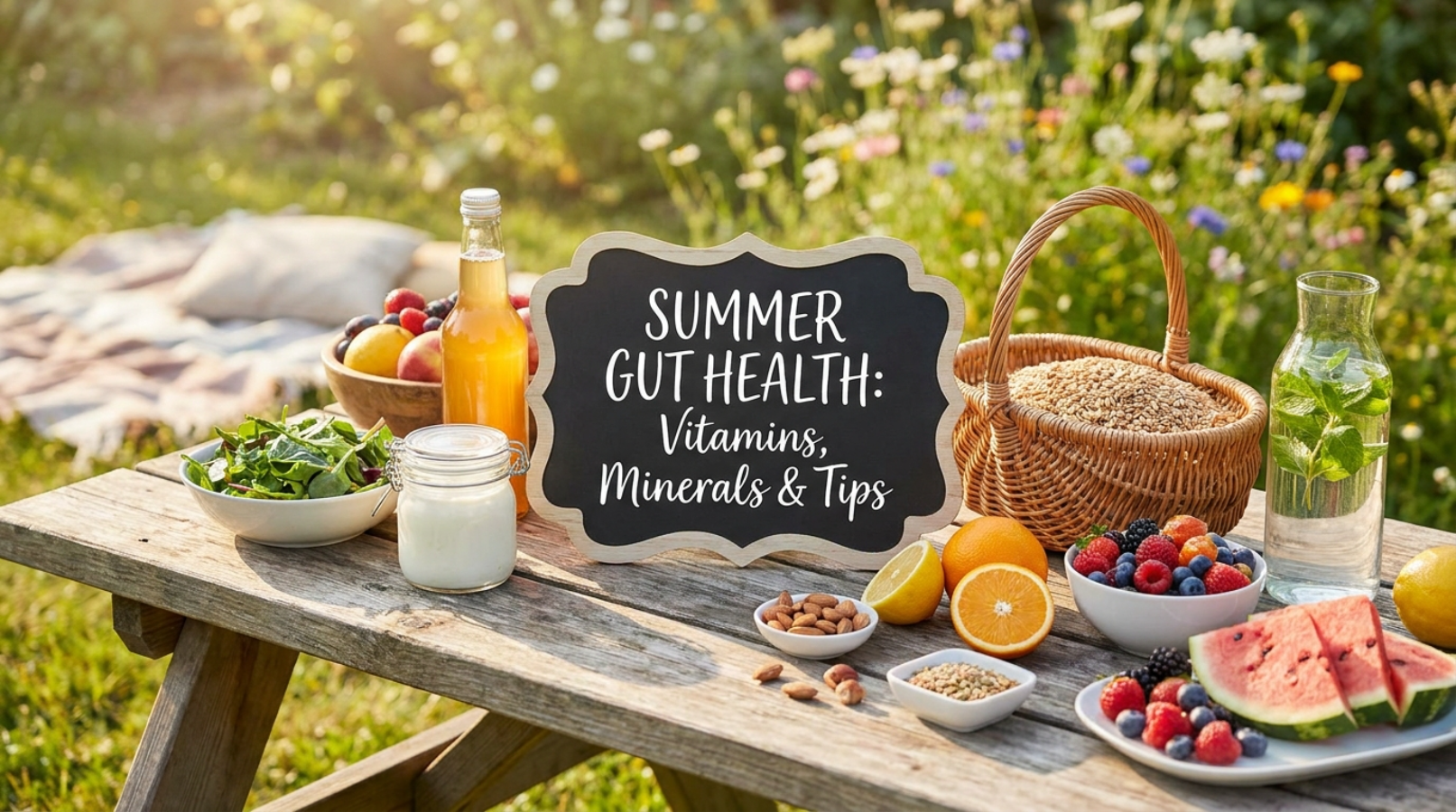
Summer gut health can take a little extra attention when hotter days change your appetite, hydration, meals, and daily routine. Summer gut health starts with simple habits such as drinking enough fluids, eating a variety of produce, getting key vitamins and minerals, and handling food safely. Gutrova’s Copy Button also lets you quickly save or share the tips you find most useful.
Quick Answer: What Supports Summer Gut Health?
The best approach to summer gut health is simple: stay hydrated, eat fiber-rich foods gradually, include a variety of vitamins and minerals, choose lighter balanced meals when needed, and keep perishable foods properly chilled.
Hot weather can increase fluid needs, especially during exercise or prolonged outdoor activity. The CDC recommends staying hydrated during hot weather, while NIH guidance notes that people generally need more fluids when they sweat more from heat or physical activity.
At the same time, summer brings plenty of colorful foods that can support a varied diet. Berries, leafy greens, tomatoes, peppers, beans, whole grains, yogurt, nuts, seeds, and fish can all contribute useful nutrients.
Food safety matters just as much. Picnics, cookouts, beach days, and outdoor meals can make it easier for perishable foods to sit in unsafe temperatures.
Why Summer Gut Health Can Feel Different
Have you ever noticed that your eating habits change once summer arrives?
Maybe breakfast becomes lighter. You drink more cold beverages. A regular lunch gets replaced by fruit, a sandwich, or something grabbed between activities. Later, a cookout brings heavier foods, desserts, and a different meal schedule.
None of that is automatically a problem. However, sudden changes in hydration, fiber intake, alcohol consumption, meal timing, and activity can affect how your digestive system feels.
Heat adds another factor. Sweating increases fluid loss, and dehydration can make constipation more likely. NIDDK recommends enough fluids alongside adequate fiber because water helps fiber work properly.
So instead of trying to follow a strict “summer gut diet,” focus on consistency.
Summer Gut Health Starts With Hydration
Water is easy to overlook until you’re already thirsty.
During hot weather, your body loses more fluid through sweating. Physical activity can increase that loss further, so keeping water nearby throughout the day is a practical habit. CDC guidance recommends carrying water and drinking regularly during hot weather.
Hydration also matters for bowel regularity. Fiber draws water into stool, helping it stay softer and easier to pass. If you suddenly increase fiber while barely drinking, you may end up feeling more bloated instead of better.
Easy summer hydration ideas
Plain water doesn’t have to be your only option.
Try:
- Water with lemon, lime, or fresh berries
- Sparkling water
- Unsweetened iced tea
- Milk or fortified milk alternatives
- Water-rich fruits
- Broth-based meals
- Smoothies with whole fruit
You don’t need to turn every drink into a sugary summer beverage. In fact, NIH guidance suggests choosing water and other low-calorie beverages for most fluid intake rather than relying heavily on sugary drinks.
If you’re exercising intensely or sweating for a long period, electrolyte needs can differ. In those situations, sodium and other electrolytes may matter more than they do during an ordinary day at home.
Summer Gut Health Benefits From Seasonal Produce
One of the nicest things about summer is the amount of fresh produce available.
Berries, peaches, tomatoes, cucumbers, zucchini, leafy greens, corn, melons, and peppers can make meals more colorful without requiring complicated recipes.
These foods also provide fiber, vitamins, minerals, water, and plant compounds. For digestive health, that combination can be more useful than focusing on one trendy ingredient.
Build meals around variety
A simple summer lunch could include:
- Grilled chicken or salmon
- A large serving of leafy greens
- Tomatoes and cucumber
- Beans or lentils
- Whole-grain bread or quinoa
- Fresh berries
- Water or unsweetened iced tea
Another option might be Greek yogurt with berries, chia seeds, and walnuts for breakfast.
Neither meal needs to be perfect. The goal is to create a pattern that gives your body different nutrients throughout the day.
Vitamins That Matter for Summer Gut Health
Summer foods can make it easier to get a broad range of vitamins.
Vitamin C is abundant in foods such as citrus, strawberries, peppers, tomatoes, and broccoli. It also helps the body absorb non-heme iron from plant foods.
B vitamins are found across many food groups, including whole grains, beans, eggs, dairy foods, meat, seafood, nuts, and seeds. They support normal energy metabolism and many cellular functions.
Vitamin D has a different role. It helps the body absorb calcium and supports other important functions. Food sources include fatty fish and fortified foods, while sunlight contributes to vitamin D production in the skin.
Vitamin A and its precursors appear in foods such as sweet potatoes, carrots, spinach, and other colorful vegetables.
The key point is variety. You don’t need to chase a single “summer vitamin” to support your digestive system.
Minerals for Summer Gut Health
Minerals become especially interesting during hot weather because sweating can increase fluid and electrolyte losses.
Sodium and potassium help maintain normal fluid balance and support nerves and muscles. Magnesium also plays a role in normal muscle and nerve function and is found in foods such as beans, nuts, seeds, whole grains, and leafy greens.
Potassium-rich foods include potatoes, beans, yogurt, leafy greens, bananas, and several other fruits and vegetables.
Magnesium is another reason summer salads can be useful. Toss spinach, chickpeas, pumpkin seeds, avocado, and vegetables together, and you get a meal that provides several nutrients at once.
Still, don’t assume that every sweaty day requires an electrolyte supplement. For many everyday situations, regular meals and adequate fluids can provide plenty of nutrients. Individual needs can change with prolonged exercise, heavy sweating, illness, medications, and certain health conditions.
Fiber and Summer Gut Health
Fiber is one of the most useful nutrients for digestive health, but more isn’t always better.
A sudden jump from very little fiber to large amounts of beans, raw vegetables, fruit, and whole grains can lead to gas or bloating. NIDDK recommends increasing fiber gradually so the digestive system has time to adjust.
That advice is particularly helpful during summer because people often increase produce intake quickly.
Instead, add fiber step by step.
For example, start with berries at breakfast. Add vegetables to lunch. Later, include beans or lentils with dinner. Drink enough fluids as your fiber intake rises.
Good summer fiber choices
Consider:
- Berries
- Apples and pears
- Beans
- Lentils
- Chickpeas
- Oatmeal
- Whole-grain bread
- Chia seeds
- Flaxseeds
- Avocado
- Broccoli
- Carrots
- Peas
If certain high-fiber foods regularly cause discomfort, you don’t have to force them. Try smaller portions or different sources instead.
Keep Summer Gut Health Safe at Picnics and Cookouts
A healthy meal can become a very different experience if food sits outside too long.
Summer heat creates favorable conditions for harmful germs to multiply in perishable foods. The CDC recommends keeping hot foods hot and cold foods cold, with cold foods kept at 40°F or below and hot foods above 140°F.
The same rule applies to leftovers.
CDC guidance says perishable foods should generally be refrigerated within two hours, or within one hour when temperatures are above 90°F.
That matters for foods such as:
- Potato salad
- Pasta salad
- Cut fruit
- Dairy-based dips
- Cooked meat
- Seafood
- Eggs
- Leftovers
At a cookout, I pay attention to how long food has been sitting out rather than assuming it’s fine because it still looks and smells normal. Foodborne germs don’t always give you an obvious warning.
Summer Gut Health and Smarter Meal Timing
Long summer days can make regular meals surprisingly difficult.
You might skip lunch because you’re at the pool, eat a large dinner late at night, or snack continuously during a road trip. Again, an occasional change isn’t a disaster.
However, large meals after a long period without eating can leave some people feeling overly full or uncomfortable.
A simple strategy is to keep a few reliable foods available.
Try packing:
- A piece of fruit
- Nuts or seeds
- Yogurt kept properly chilled
- Whole-grain crackers
- A simple sandwich
- Hummus with vegetables
- A small container of berries
That way, you have something nourishing available before you’re extremely hungry.
A Simple Summer Gut Health Plate
You don’t need a complicated meal plan.
Picture a warm evening with no desire to spend an hour cooking. A practical plate could contain grilled salmon, roasted potatoes, cucumber and tomato salad, and a handful of berries.
The salmon contributes protein and healthy fats. Potatoes provide potassium and other nutrients. Vegetables add fiber and plant compounds, while berries provide fiber and vitamin C.
Another night, try a bean-and-grain bowl with spinach, avocado, peppers, corn, pumpkin seeds, and a squeeze of lime.
These meals are flexible, colorful, and easy to adjust. Most importantly, they provide different nutrients instead of relying on a single “gut health” food.
Habits That Can Make Summer Gut Health Easier
A few small routines can make a noticeable difference in how manageable your summer eating feels.
Keep water visible. A bottle sitting beside you is easier to remember than one buried in a bag.
Increase fiber gradually. Your digestive system may need time to adapt.
Eat a variety of plants. Rotate fruits, vegetables, beans, whole grains, nuts, and seeds instead of eating the same foods every day.
Include protein. Eggs, fish, poultry, beans, yogurt, tofu, and other protein foods can make lighter meals more satisfying.
Don’t forget minerals. Potassium, magnesium, calcium, iron, and zinc come from many ordinary foods.
Be careful with alcohol. It can contribute to dehydration and may also affect how some people feel after eating.
Wash fresh produce. Summer markets and backyard gardens are great sources of produce, but fresh fruits and vegetables still need proper handling.
Refrigerate leftovers promptly. Don’t let a warm evening turn yesterday’s dinner into a food-safety problem.
When Summer Digestive Changes Need Attention
Not every stomach change during summer is caused by diet.
Heat, travel, changes in routine, infections, medications, stress, and food choices can all affect digestion.
Persistent diarrhea, repeated vomiting, severe abdominal pain, significant dehydration, unexplained weight loss, blood in the stool, or symptoms that keep returning deserve medical attention.
Heat-related illness can also cause nausea, weakness, headache, dizziness, and other symptoms. The CDC advises taking heat symptoms seriously and staying hydrated during hot conditions.
Don’t assume every summer stomach problem is something you simply need to “detox.”
Frequently Asked Questions About Summer Gut Health
What should I eat for summer gut health?
Focus on a varied diet containing fruits, vegetables, whole grains, beans, nuts, seeds, lean proteins, and other nutrient-rich foods. Hydrating foods can also contribute to your overall fluid intake.
Does hot weather affect digestion?
Heat can change hydration, appetite, activity, and daily eating habits. Dehydration can also contribute to constipation, so maintaining adequate fluid intake becomes especially important during hot weather.
Are electrolytes important for summer gut health?
Electrolytes such as sodium and potassium help support fluid balance, nerves, and muscles. They can become more important during prolonged or intense sweating, although most people don’t need large amounts of electrolyte supplements for ordinary daily activity.
Can too much summer fruit cause digestive problems?
It can for some people. Large amounts of fruit can increase fiber and certain fermentable carbohydrates quickly, which may cause gas or bloating in sensitive people. Start with reasonable portions and notice how your body responds.
How can I protect my gut at summer cookouts?
Keep cold foods properly chilled, keep hot foods hot, wash produce, avoid cross-contamination, and refrigerate perishable leftovers promptly. The CDC recommends following the basic food-safety steps of clean, separate, cook, and chill.
The Bottom Line on Summer Gut Health
Good summer gut health doesn’t require a strict seasonal diet or a shelf full of supplements. The basics are surprisingly practical: drink enough fluids, increase fiber gradually, eat a colorful range of foods, include important vitamins and minerals, and handle summer meals safely.
Think about the habits you can repeat, not the ones that look impressive on social media. A cold glass of water, a bowl of berries, a bean-and-vegetable lunch, a handful of seeds, and properly chilled leftovers can all fit into a realistic summer routine.
If your digestion changes, pay attention to patterns rather than blaming one food immediately. Small adjustments often make meals more comfortable, while persistent or severe symptoms deserve a closer look.
Summer gut health is really about giving your digestive system steady support while enjoying the season. If you find a tip that you want to keep handy, Copy Button makes it easy to save or share it for your next grocery trip or summer meal.
The seasonal guidance above is grounded in current CDC recommendations on heat, hydration, and summer food safety, along with NIH and NIDDK guidance on hydration and fiber.

Here’s a short Gutrova-style author biography for Josh Axe:
Josh Axe
Josh Axe is a wellness expert, author, and educator known for his work in nutrition, natural health, and gut wellness. As a contributor to Gutrova, he shares practical insights on digestive health, healthy eating habits, and lifestyle strategies that help readers build a stronger foundation for overall well being. His content focuses on making wellness simple, actionable, and accessible for everyday life.











1 thought on “Summer Gut Health: Vitamins, Minerals & Tips”