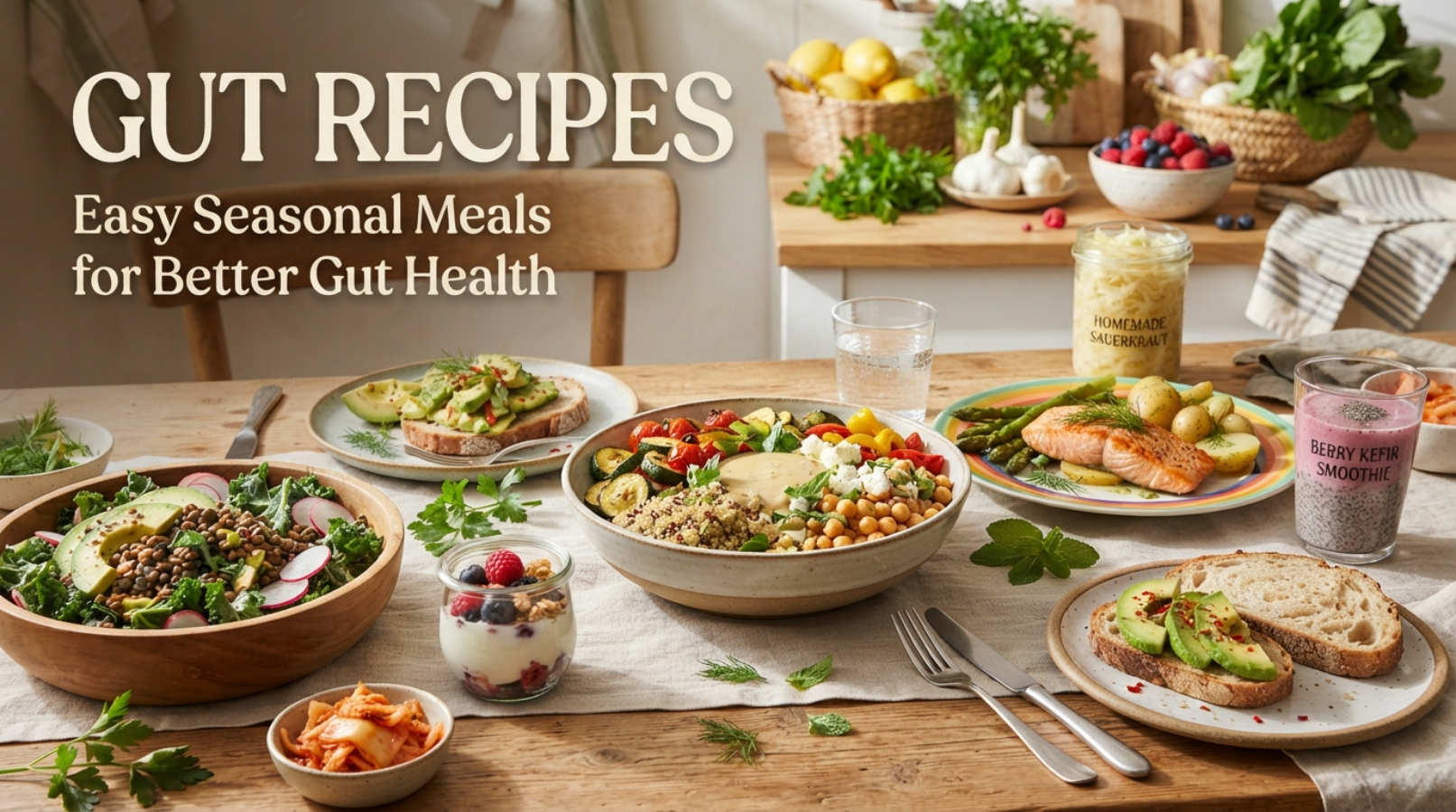
Gut Recipes can make healthy eating feel much easier when they’re built around simple, familiar foods you actually enjoy. Instead of chasing complicated ingredients, you can combine vegetables, fruits, whole grains, beans, nuts, seeds and fermented foods into meals that fit the season.
At Gutrova, our Copy Button makes it easy to copy and save a favorite wellness tip or recipe idea for later. That can be especially useful when you find a meal you want to make again during a busy week.
Quick Answer: What Are Gut Recipes?
Gut Recipes are meals and snacks that emphasize foods that support normal digestion, such as fiber-rich plants, whole grains, legumes, nuts, seeds, fruits and vegetables. Some also include fermented foods like yogurt, kefir, sauerkraut or kimchi.
The key is variety. A gut-friendly meal doesn’t need to be perfect, expensive or complicated. Instead, build your plate around several minimally processed foods and adjust ingredients to your taste and digestive comfort.
Why Gut Recipes Work Well With Seasonal Eating
Seasonal eating gives you an easy way to add variety without turning meal planning into a project.
In spring, you might reach for leafy greens, peas, strawberries and fresh herbs. During summer, tomatoes, berries, zucchini, cucumbers and peaches can bring color and freshness to simple meals. Fall makes room for squash, apples, pears, sweet potatoes and hearty grains. Winter, meanwhile, is ideal for warm soups, roasted vegetables, oats and bean-based dishes.
That variety matters because different plant foods provide different types of fiber and other nutrients. Fiber also becomes a food source for microbes in the digestive tract.
However, you don’t need to eat a completely different menu every season. Think of seasonal ingredients as an easy way to rotate your choices.
Gut Recipes for a Fiber-Rich Breakfast
Breakfast is an easy place to add more plants without making your morning complicated.
Berry Walnut Overnight Oats
Try this simple combination:
- ½ cup rolled oats
- ½ cup plain yogurt or unsweetened kefir
- ½ cup berries
- 1 tablespoon chia seeds
- 1 tablespoon chopped walnuts
- Cinnamon to taste
Mix everything in a jar or bowl and refrigerate overnight. Add a splash of milk in the morning if you prefer a softer texture.
Oats, berries, chia seeds and walnuts provide fiber, while yogurt or kefir can add fermented food to the meal. If you’re not used to eating much fiber, start with smaller portions and increase gradually.
I’ve found that simple breakfasts like this are easier to stick with than elaborate recipes that require ten different ingredients.
Warm Apple Cinnamon Oatmeal
For cooler months, cook oats with milk or water, then top them with:
- Chopped apple
- Ground cinnamon
- Chopped pecans
- Ground flaxseed
Keep the apple skin on if you enjoy the texture. Add a spoonful of plain yogurt after cooking for extra creaminess.
Gut Recipes for Easy Seasonal Lunches
Lunch doesn’t need to be a giant salad. A warm grain bowl can be just as practical, especially during colder months.
Roasted Vegetable Grain Bowl
Start with cooked quinoa, brown rice or another whole grain. Then add roasted vegetables such as:
- Sweet potato
- Carrots
- Broccoli
- Zucchini
- Bell peppers
Finish with chickpeas, pumpkin seeds and a simple olive-oil-and-lemon dressing.
For extra flavor, add a small spoonful of sauerkraut or kimchi on the side. If fermented foods don’t agree with you, simply leave them out.
This is one of those Gut Recipes that can change with the season. Swap zucchini for roasted squash in fall or use fresh tomatoes and cucumber during summer.
Gut Recipes for Simple Dinners
Dinner is where a balanced combination of protein, plants and whole grains can become especially satisfying.
Lentil and Vegetable Soup
Add the following to a large pot:
- Lentils
- Carrots
- Celery
- Diced tomatoes
- Spinach or kale
- Onion
- Garlic
- Low-sodium broth
- Herbs and spices
Simmer until the lentils and vegetables are tender.
Serve the soup with whole-grain toast or a small side of brown rice. Lentils provide fiber and plant protein, while the vegetables add more variety.
If beans or lentils tend to make you gassy, don’t assume you need to avoid them forever. Smaller portions, thorough cooking and gradual increases may be easier to tolerate.
Sheet-Pan Salmon and Seasonal Vegetables
Place salmon, broccoli, carrots and sweet potato on a sheet pan. Add olive oil, lemon juice, garlic and your favorite herbs. Roast until the vegetables are tender and the salmon is cooked through.
Serve it with quinoa or another whole grain if you want a more filling meal.
The beauty of this dinner is the cleanup. One pan, a few ingredients and leftovers for the next day.
Gut Recipes With Fermented Foods
Fermented foods can add another dimension to a meal. Common choices include yogurt, kefir, sauerkraut, kimchi and some fermented vegetables.
However, fermented foods aren’t interchangeable, and not every product contains live cultures after processing. Check the label and choose products that fit your preferences.
Simple Yogurt and Berry Bowl
Combine plain yogurt with:
- Fresh or frozen berries
- Chia or ground flaxseed
- Walnuts
- A small amount of oats
- Cinnamon
You can serve it for breakfast or an afternoon snack.
Easy Kimchi Grain Bowl
Combine cooked brown rice or quinoa with roasted vegetables, edamame or tofu, avocado and a small serving of kimchi.
Start with a modest amount if spicy or fermented foods aren’t a regular part of your diet. Your digestive system doesn’t get extra points for handling a huge serving.
Gut Recipes for Summer
Summer meals can be lighter without becoming nutritionally empty.
Fresh Berry and Spinach Salad
Combine baby spinach, strawberries or blueberries, cucumber, avocado and pumpkin seeds. Add grilled chicken, salmon, tofu or chickpeas for a more substantial meal.
Use a simple dressing made from olive oil, lemon juice, Dijon mustard and a little black pepper.
For hot days, this type of meal can feel much more appealing than a heavy dinner.
Chilled Overnight Oats
Mix oats, yogurt or milk, chia seeds, berries and cinnamon in a jar. Refrigerate overnight and add nuts just before eating.
Frozen berries work well too, so you can keep a bag in the freezer for quick breakfasts.
Gut Recipes for Fall and Winter
Cold weather calls for meals that feel warm and comforting.
Roasted Squash and Chickpea Bowl
Roast cubed butternut squash with chickpeas, olive oil and herbs. Serve over quinoa or brown rice, then add spinach and pumpkin seeds.
A spoonful of plain yogurt can make a simple sauce when mixed with lemon juice and herbs.
Cozy Bean and Vegetable Chili
Combine black beans, kidney beans, tomatoes, bell peppers, carrots and corn with chili powder, cumin and paprika.
Serve it with avocado and a small amount of plain yogurt. If beans aren’t comfortable for you, begin with a smaller serving and see how your body responds.
How to Make Gut Recipes Easier to Digest
A nutritious ingredient can still cause discomfort if you suddenly eat much more of it than you’re used to.
Fiber is a good example. Increasing fiber too quickly can cause gas, bloating or cramping. Instead, increase fiber gradually and drink enough fluids.
Meal size matters, too. Eating very quickly or having a very large meal can leave you feeling overly full. Slowing down gives you more time to notice when you’ve had enough.
If a particular ingredient repeatedly causes symptoms, keep a simple food and symptom note for a few days. Look for patterns instead of immediately cutting out entire food groups.
People with digestive conditions may have different food needs. For example, some people with IBS may be advised to try a low-FODMAP eating plan with professional guidance.
A Simple Gut Recipes Formula You Can Reuse
You don’t need a new recipe every night.
Use this five-part formula instead:
1. Choose a fiber-rich base:
Oats, quinoa, brown rice, barley, potatoes or whole-grain pasta.
2. Add two or three plants:
Pick vegetables or fruit in different colors.
3. Include a protein source:
Beans, lentils, tofu, eggs, fish, chicken, yogurt or another option you enjoy.
4. Add healthy fats:
Avocado, nuts, seeds or olive oil.
5. Finish with flavor:
Fresh herbs, spices, lemon, garlic, ginger or a small serving of fermented food.
This approach gives you countless Gut Recipes without forcing you to follow a strict meal plan.
Practical Tips for Better Gut Recipes
A few small habits can make seasonal cooking easier.
Keep frozen produce available. Frozen berries, spinach, peas and mixed vegetables can rescue a busy dinner.
Cook extra grains. Make a larger batch of quinoa, brown rice or barley and refrigerate portions for quick meals.
Wash and prep vegetables early. When vegetables are ready to use, you’re more likely to add them to lunch or dinner.
Change one thing at a time. If you’re increasing fiber, don’t suddenly add huge amounts of beans, bran, seeds and raw vegetables all in one day.
Use leftovers creatively. Yesterday’s roasted vegetables can become today’s grain bowl, soup or omelet.
Pay attention to comfort. A food can be nutritious and still not suit every person in every portion.
A One-Day Seasonal Gut-Friendly Menu
Here’s an easy example for a normal day.
Breakfast: Berry walnut overnight oats with plain yogurt.
Lunch: Quinoa bowl with roasted vegetables, chickpeas, pumpkin seeds and lemon dressing.
Snack: Apple slices with peanut butter.
Dinner: Lentil vegetable soup with whole-grain toast and a side of greens.
Optional addition: A small serving of yogurt, kefir or another fermented food you tolerate well.
The goal isn’t to eat this exact menu every day. Instead, use it as a template and switch ingredients as seasons change.
Frequently Asked Questions About Gut Recipes
Are Gut Recipes good for everyone?
There isn’t one perfect gut-health diet for every person. Many people can build balanced meals around plants, fiber-rich foods, whole grains and other minimally processed ingredients. However, individual tolerance matters, especially for people with digestive conditions.
What are the best ingredients for Gut Recipes?
Good starting points include oats, berries, vegetables, beans, lentils, whole grains, nuts, seeds, yogurt and other foods you tolerate well. Variety is more useful than relying on one so-called superfood.
Can Gut Recipes help with constipation?
Fiber-rich foods can help support regular bowel movements, especially when paired with enough fluids. However, increase fiber gradually instead of making a sudden large change.
Can I eat Gut Recipes if I get bloated easily?
Yes, but portion size and food choice matter. Start with moderate portions, eat slowly and introduce high-fiber foods gradually. Keep track of foods that repeatedly trigger symptoms.
Do Gut Recipes need fermented foods?
No. Fermented foods can be one useful part of a varied diet, but you don’t need them in every meal. Fiber-rich plants, whole grains, fruits, vegetables, nuts and seeds can all contribute to a balanced eating pattern.
Final Thoughts
Gut Recipes don’t have to be complicated to fit into a healthy seasonal routine. Start with familiar foods, add more plant variety, include fiber-rich ingredients gradually and build meals around foods that leave you feeling satisfied and comfortable.
As the seasons change, simply rotate your produce, grains, beans, herbs and favorite flavors. Save the Gut Recipes that work for your household, and use Gutrova’s Copy Button to quickly copy and keep the tips you want to revisit. Small, repeatable choices are often much easier to maintain than a rigid food plan.
Source basis for the nutrition guidance
The article’s core guidance on fiber, hydration, gradual fiber increases, whole-food fiber sources, and constipation support is consistent with guidance from the National Institute of Diabetes and Digestive and Kidney Diseases and Mayo Clinic. NIDDK recommends fiber-rich foods and adequate liquids, while Mayo notes that increasing fiber too quickly can cause gas and bloating.
Guidance on fermented foods, plant variety and gut-microbiome-focused eating was cross-checked against Cleveland Clinic and Harvard T.H. Chan School of Public Health.
The article also keeps individual tolerance in mind because NIDDK notes that dietary changes can affect people with IBS differently, and fiber may need to be increased gradually.
This version is structured to keep the exact Gut Recipes phrase in the SEO title, meta description, H1, opening sentence, multiple subheadings, body copy, FAQ, and conclusion while avoiding excessive repetition.

Elizabeth Boham is a respected functional medicine physician and wellness educator with a passion for helping people improve their health through nutrition and lifestyle changes. As a contributor to Gutrova, she shares practical insights on gut health, digestive wellness, and healthy living, making complex health topics easy to understand and apply in everyday life.










2 thoughts on “Gut Recipes: Easy Seasonal Meals for Better Gut Health”