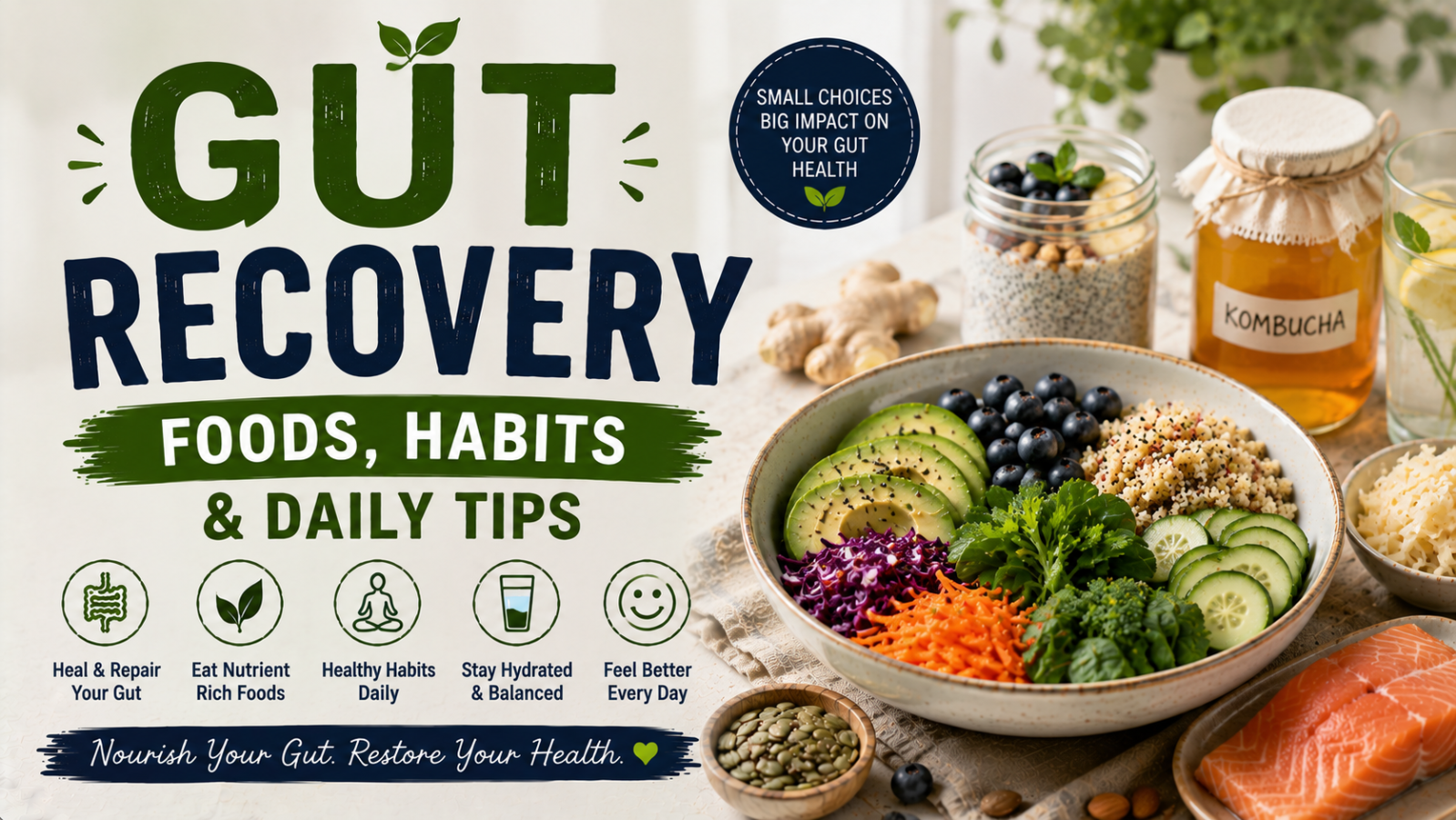
Gut recovery is about giving your digestive system the food, routines, and care it needs to function well after periods of digestive trouble. If your stomach has been sensitive lately, you don’t need a complicated reset; simple, consistent habits can be a much better place to start.
The right approach depends on what’s causing your symptoms. You can also use the Copy Button to save the food ideas and daily habits that work best for your routine.
Quick Answer: What Is Gut Recovery?
Gut recovery isn’t a single medical treatment or a fixed seven-day program. It generally refers to supporting normal digestive function while addressing factors that may be contributing to symptoms.
A practical gut recovery routine can include:
- Eating a varied, nutrient-rich diet
- Getting enough fiber, gradually
- Drinking adequate fluids
- Choosing foods you tolerate well
- Including fermented foods when appropriate
- Getting regular physical activity
- Prioritizing consistent sleep
- Managing ongoing stress
- Limiting alcohol and foods that clearly trigger symptoms
- Getting persistent digestive problems evaluated
Your digestive tract already has natural maintenance and repair processes. The goal is to support those processes rather than chase a quick “detox.”
Can Your Gut Recover Naturally?
The digestive tract is constantly working, renewing cells, interacting with food, and communicating with the immune system.
Your gut microbiome also changes in response to diet, medications, lifestyle, and other factors. Because of that, there isn’t one universal gut recovery plan.
For example, someone recovering from a short bout of digestive upset may need a temporary return to simple meals. Someone with ongoing constipation may need a gradual increase in fiber and fluids. A person with a diagnosed digestive condition may need a very different approach.
I’ve found that people often make gut health harder than it needs to be. They buy several supplements, eliminate dozens of foods, and then struggle to maintain the plan.
A calmer approach is usually easier: start with the basics and change one or two things at a time.
Gut Recovery Starts With the Basics
Before worrying about specialized diets, look at your everyday routine.
Are you eating enough? Are your meals mostly made from whole or minimally processed foods? Are you drinking enough fluids? Do you get regular movement and adequate sleep?
These questions may sound simple, but they matter.
A balanced diet provides protein, carbohydrates, healthy fats, vitamins, minerals, and fiber. Together, these nutrients support normal body functions, including digestion.
Build meals instead of chasing superfoods
A useful plate might contain:
- A protein source
- A whole-grain or starchy carbohydrate
- Vegetables or fruit
- A source of healthy fat
For example, try baked salmon with brown rice, roasted vegetables, and avocado.
Another day could be oatmeal with berries and walnuts for breakfast, a lentil soup for lunch, and chicken with sweet potato and cooked green beans for dinner.
Variety is more useful than relying on one “gut-healing” food.
Foods That May Support Gut Recovery
There isn’t one perfect gut recovery food.
Instead, focus on foods that provide fiber, protein, healthy fats, and a wide range of plant nutrients.
Oats
Oats provide soluble fiber and make an easy breakfast.
Try them with berries, banana, chia seeds, or ground flaxseed.
Berries
Blueberries, strawberries, raspberries, and blackberries provide fiber and plant compounds.
Add them to oatmeal, yogurt, or a smoothie.
Beans and lentils
Legumes provide fiber and plant protein.
However, they can cause gas if your digestive system isn’t used to them. Start with a smaller serving and increase gradually.
Cooked vegetables
Carrots, zucchini, squash, spinach, and green beans can be easier to tolerate than large amounts of raw vegetables for some people.
Cooking also gives you plenty of ways to change flavor without relying on heavy sauces.
Nuts and seeds
Walnuts, almonds, chia seeds, and ground flaxseed can add fiber and healthy fats.
A small serving can go a long way.
Fermented foods
Yogurt with live cultures, kefir, sauerkraut, and kimchi can be useful additions to a varied diet.
Still, more isn’t always better. If fermented foods increase your bloating or discomfort, reduce the portion and see how you respond.
Gut Recovery and Fiber: Go Slowly
Fiber is important for digestive health, but increasing it too quickly can backfire.
If your current diet contains very little fiber, suddenly adding several servings of beans, bran cereal, chia seeds, and raw vegetables can lead to more gas and bloating.
Instead, make gradual changes.
You might add berries to breakfast first. A few days later, add a serving of vegetables at lunch. Then try beans or lentils in a small portion.
Drink enough fluids as your fiber intake increases.
This gradual approach is especially useful for people who aren’t accustomed to high-fiber meals.
Gut Recovery and Hydration
Fluids help your body perform many normal functions, and they become particularly important when you’re increasing fiber.
Water is the easiest option, but soups, fruits, and vegetables also contribute fluids.
Keep water nearby during the day rather than waiting until you’re extremely thirsty.
If you’re exercising, sweating heavily, or dealing with vomiting or diarrhea, your fluid needs may change.
For ongoing fluid loss, talk with a healthcare professional about the best way to replace fluids and electrolytes.
Gut Recovery After Digestive Upset
After a period of nausea, diarrhea, or stomach discomfort, a huge meal may not sound appealing.
That’s okay.
Start with foods you tolerate comfortably. Smaller meals may feel easier than trying to eat a normal-sized dinner immediately.
Simple options can include:
- Oatmeal
- Bananas
- Rice
- Toast
- Potatoes
- Eggs
- Soup
- Cooked vegetables
- Lean chicken
- Yogurt, if tolerated
As your appetite and digestion improve, gradually return to a wider variety of foods.
There’s no need to stay on a bland diet indefinitely unless a healthcare professional has given you specific instructions.
What Foods Should You Limit During Gut Recovery?
There’s no universal “bad gut food” list.
However, certain foods can make digestive symptoms worse for some people.
Common examples include:
- Large fried meals
- Heavy cream-based dishes
- Excessive alcohol
- Very spicy foods
- Very large portions
- Highly processed snacks
- Foods that you already know trigger symptoms
Pay attention to patterns rather than blaming individual ingredients.
For example, if a greasy restaurant meal repeatedly causes discomfort, the issue may be the large, high-fat meal rather than one specific ingredient.
A simple food and symptom journal can help you identify patterns.
Gut Recovery and the Microbiome
Your gut microbiome contains many microorganisms that interact with the food you eat.
Diet is one factor that influences this community. A varied eating pattern can provide different types of fiber and plant compounds.
Therefore, eating the same three foods every day isn’t necessarily the goal.
Try rotating fruits, vegetables, whole grains, legumes, nuts, and seeds across the week.
For instance, use oats one morning and whole-grain toast another. Have lentils for lunch one day, then beans later in the week.
Small changes create more variety without turning meal planning into a project.
Gut Recovery and Probiotics
Probiotics receive plenty of attention, but they aren’t a universal answer.
Different probiotic strains have different effects. Evidence can also vary depending on the digestive condition being addressed.
For some people, probiotic foods such as yogurt or kefir fit naturally into a balanced diet.
For others, a supplement may be worth discussing with a healthcare professional.
Don’t assume that a more expensive product will produce better results.
Food, sleep, movement, hydration, and appropriate treatment still matter.
Sleep Matters for Gut Recovery
Sleep affects many systems throughout the body, including immune and metabolic function.
Poor sleep can also change appetite and make it harder to stick with balanced meals.
Instead of creating a complicated bedtime routine, focus on consistency.
Try to keep your sleep and wake times fairly regular. Reduce activities that keep you wired late at night. If large meals close to bedtime make you uncomfortable, move dinner earlier.
Even small improvements can make your daily routine easier to manage.
Stress and Gut Recovery
Your digestive tract and brain communicate constantly.
Stress can influence gut movement, appetite, and digestive sensitivity. As a result, some people notice more bloating, constipation, diarrhea, or abdominal discomfort during stressful periods.
That doesn’t mean symptoms are imaginary.
They’re real physical experiences.
A short walk, slow breathing, stretching, meditation, or simply taking time to eat without rushing can help you build a calmer routine.
You don’t need to eliminate all stress. That’s not realistic.
Instead, look for small ways to lower the amount of stress your body carries throughout the day.
Exercise Can Support Gut Recovery
Regular movement supports overall health and may help maintain normal bowel function.
You don’t need an intense workout plan.
Walking after meals can be a practical starting point. You might also enjoy cycling, swimming, strength training, or yoga.
If you spend most of your day sitting, add short movement breaks.
The best activity is one you can continue.
A Simple One-Day Gut Recovery Menu
Here’s an example of a balanced day:
Breakfast: Oatmeal with blueberries, banana, chia seeds, and walnuts.
Lunch: Chicken and rice bowl with cooked carrots, spinach, and avocado.
Snack: Plain yogurt with strawberries, if tolerated.
Dinner: Baked salmon with a sweet potato and roasted zucchini.
Drinks: Water throughout the day.
This isn’t a required meal plan.
If certain foods bother you, swap them for alternatives that you tolerate. For example, replace dairy yogurt with a suitable non-dairy option or use potatoes instead of rice.
The goal is flexibility.
Common Gut Recovery Mistakes
Changing everything at once
If you change your entire diet overnight, you won’t know which change helped or caused a problem.
Start with one or two habits.
Increasing fiber too quickly
More fiber isn’t automatically better. Increase your intake gradually.
Following an extremely restrictive diet
Cutting out many food groups can make meals difficult and may reduce your nutrient intake.
Depending on supplements
Supplements can have a role, but they shouldn’t distract from basic nutrition and appropriate medical care.
Expecting instant results
Digestive symptoms can have many causes. Sustainable habits often require patience.
Ignoring persistent symptoms
If your symptoms continue, changing your diet repeatedly isn’t a substitute for finding out what’s causing them.
When Gut Recovery Needs Medical Care
Food and lifestyle changes can support general digestive health, but some symptoms require professional evaluation.
Talk with a healthcare professional if you have persistent:
- Abdominal pain
- Diarrhea
- Constipation
- Nausea or vomiting
- Unexplained weight loss
- Changes in bowel habits
- Difficulty eating normally
Blood in the stool, black or tarry stools, vomiting blood, severe abdominal pain, or other signs of possible bleeding require prompt medical attention.
The right treatment depends on the underlying cause. Conditions such as infections, inflammatory bowel disease, ulcers, celiac disease, and other digestive disorders may require specific care.
Frequently Asked Questions About Gut Recovery
How long does gut recovery take?
There isn’t a standard timeline. It depends on what’s causing the digestive symptoms and how your body responds. Temporary digestive upset may settle relatively quickly, while chronic conditions can require ongoing management.
What is the best food for gut recovery?
No single food can do the job. A varied diet containing fiber-rich plants, whole grains, fruits, vegetables, legumes, nuts, seeds, and suitable protein sources is a stronger foundation.
Can you repair your gut naturally?
Your digestive system has natural maintenance and renewal processes. Nutritious food, adequate fluids, regular movement, good sleep, and appropriate treatment can support normal digestive function.
Are probiotics good for gut recovery?
Some probiotics may benefit certain digestive conditions, but effects depend on the specific strain and person. They aren’t necessary for everyone.
Should you avoid dairy during gut recovery?
Not automatically. If dairy doesn’t cause symptoms, there’s usually no reason to remove it solely because you’re focusing on gut health. If dairy consistently causes discomfort, discuss alternatives with a healthcare professional.
The Bottom Line on Gut Recovery
Gut recovery isn’t about finding a miracle supplement or following a strict diet for a few days. Your digestive system already has natural processes that maintain and renew its tissues, and everyday habits can support normal digestive function.
Focus on variety, gradual fiber increases, adequate fluids, regular movement, good sleep, and foods you tolerate well. At the same time, don’t overlook persistent symptoms.
If something feels consistently wrong, finding the cause is more valuable than repeatedly starting another gut-health reset.
Use the Copy Button to save the meal ideas and daily habits from this guide, then choose one small change you can realistically keep doing.












1 thought on “Gut Recovery: Foods, Habits & Daily Tips”