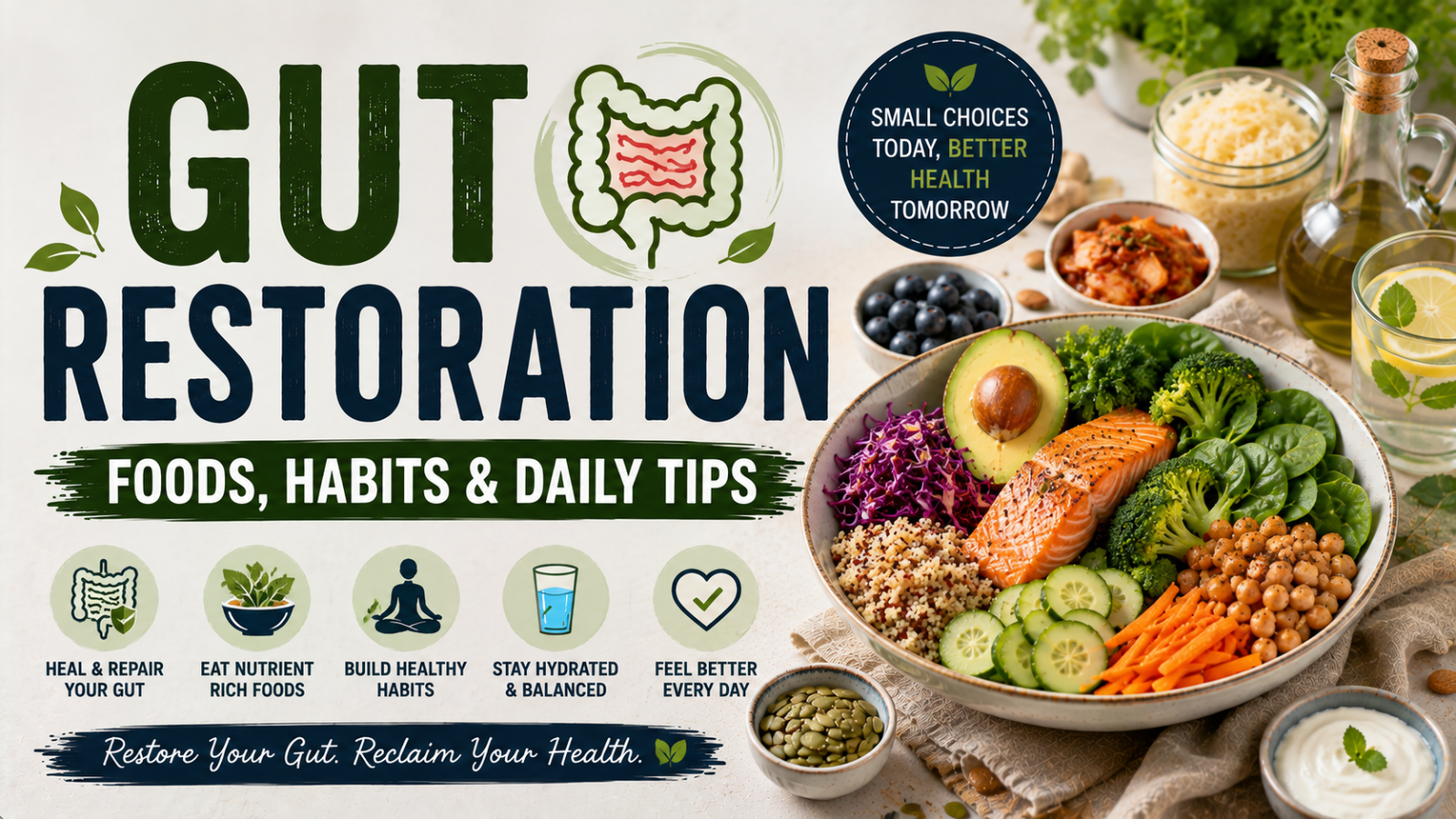
Gut restoration is a practical way to think about supporting your digestive system with better food, regular movement, sleep, hydration, and daily habits. If your stomach often feels unsettled after meals, small consistent changes can be more useful than another extreme cleanse or restrictive diet.
The gut has its own protective and maintenance systems, and your diet can influence the gut microbiome, bowel habits, and overall digestive comfort. You can also use the Copy Button to save the tips, foods, and simple meal ideas you want to try later.
Quick Answer: What Is Gut Restoration?
Gut restoration refers to lifestyle and nutrition habits that support normal digestive function and a healthy gut environment.
A practical approach includes:
- Eating a varied, nutrient-rich diet
- Increasing fiber gradually
- Drinking enough fluids
- Eating adequate protein
- Including fruits and vegetables
- Choosing minimally processed foods more often
- Adding fermented foods when tolerated
- Getting regular physical activity
- Prioritizing consistent sleep
- Managing ongoing stress
- Identifying personal food triggers
- Getting medical care for persistent digestive symptoms
There isn’t one food, supplement, or cleanse that restores everyone’s gut.
Instead, think of gut restoration as building a supportive routine that your digestive system can handle and that you can maintain.
How Gut Restoration Actually Works
Your digestive tract is constantly working.
It breaks down food, absorbs nutrients, supports immune activity, and interacts with trillions of microorganisms that live throughout the gastrointestinal tract.
The gut lining also has protective mechanisms that help separate the contents of the digestive tract from surrounding tissues.
Because of this, gut health isn’t simply about adding a probiotic or eliminating a handful of foods.
Your overall pattern matters.
For example, someone who eats very little fiber may benefit from gradually adding oats, berries, vegetables, beans, and seeds. Meanwhile, someone with persistent abdominal pain may need medical evaluation instead of another dietary experiment.
That’s an important distinction.
Gut restoration should support good habits, not become a reason to ignore ongoing symptoms.
Gut Restoration Starts With Your Everyday Plate
You don’t need complicated recipes to build a gut-friendly eating pattern.
Start with meals that contain several food groups.
A simple lunch could include grilled chicken, brown rice, cooked vegetables, and avocado. Another option might be lentil soup with whole-grain toast and a side of fruit.
For breakfast, oatmeal with berries, chia seeds, and walnuts is an easy combination.
I find meals like these more realistic for everyday life than complicated “detox” plans. You can make them at home, adjust the ingredients, and repeat them without feeling like you’re following a temporary diet.
Best Foods for Gut Restoration
No single food can restore the gut on its own. However, a wide variety of whole and minimally processed foods can provide nutrients and different types of dietary fiber.
Oats
Oats contain soluble fiber and work well in breakfast bowls, overnight oats, and smoothies.
Add berries, banana, chia seeds, or ground flaxseed for extra variety.
Berries
Blueberries, strawberries, raspberries, and blackberries provide fiber and plant compounds.
Frozen berries work just as well for many meals, so you don’t have to rely on fresh produce.
Vegetables
Carrots, spinach, zucchini, broccoli, sweet potatoes, and squash can all fit into a balanced diet.
If raw vegetables make you uncomfortable, try steaming or roasting them instead.
Beans and lentils
Legumes provide both fiber and plant protein.
However, increase portions slowly if your current diet contains little fiber. A sudden increase can cause temporary gas or bloating.
Nuts and seeds
Almonds, walnuts, chia seeds, and ground flaxseed are easy additions to oatmeal, yogurt, salads, and snacks.
A small serving can add fiber and healthy fats without requiring much preparation.
Fermented foods
Yogurt with live cultures, kefir, sauerkraut, and kimchi can add variety to your diet.
Still, fermented foods don’t agree with everyone. Start with small portions and pay attention to how you feel.
Gut Restoration and Fiber: Don’t Rush It
Fiber is one of the most important parts of a healthy eating pattern.
It supports normal bowel function, and some types of fiber can be used by gut microorganisms.
The catch is that more isn’t always better right away.
If your usual breakfast contains white toast and you suddenly add bran cereal, chia seeds, several servings of fruit, and a large smoothie, your digestive system may respond with gas and bloating.
Instead, build up slowly.
Try adding one extra serving of fruit or vegetables first. Then introduce beans, lentils, oats, whole grains, or seeds as your body adjusts.
Drink enough fluids as you increase fiber.
A gradual approach is usually much easier to maintain.
Hydration Matters During Gut Restoration
Water supports many normal body functions, including digestion and bowel regularity.
Your fluid needs can vary based on activity, weather, diet, and other factors.
Rather than waiting until you’re very thirsty, keep water nearby throughout the day.
Soups, fruits, vegetables, and other beverages can contribute to your total fluid intake as well.
If you’re dealing with significant vomiting or diarrhea, hydration becomes especially important. In that situation, appropriate electrolyte replacement may also matter.
Gut Restoration After Digestive Upset
After a stomach bug or a period of digestive discomfort, a large meal may sound unappealing.
That’s okay.
Start with smaller portions of foods you tolerate.
You might choose:
- Oatmeal
- Rice
- Toast
- Bananas
- Potatoes
- Eggs
- Soup
- Cooked vegetables
- Lean chicken
- Yogurt if tolerated
As your appetite returns, gradually bring more foods back.
You don’t need to survive on a tiny list of “safe foods” indefinitely unless a healthcare professional has given you a specific diet for a medical reason.
If symptoms keep returning, finding the cause is more useful than continually removing foods.
Foods to Limit During Gut Restoration
There isn’t a universal “bad food” list for gut health.
Still, some people notice more digestive discomfort after large amounts of:
- Fried foods
- Very spicy meals
- Heavy sauces
- Alcohol
- Highly processed foods
- Very large portions
- Foods they personally don’t tolerate
Pay attention to your own patterns.
For instance, one person may have trouble with a large greasy meal but tolerate a small serving without a problem. Another person may notice discomfort after a particular dairy product.
Instead of labeling an entire food group as harmful, look for repeat patterns.
A simple food and symptom journal can help.
Gut Restoration and the Microbiome
Your gut microbiome is influenced by many factors, including diet, medications, health conditions, and lifestyle.
Dietary variety can provide different fibers and plant compounds that interact with gut microorganisms.
Therefore, try rotating your choices.
Have oatmeal one morning and eggs with whole-grain toast another day. Choose berries sometimes, then apples or oranges. Rotate vegetables instead of eating the same one every night.
You don’t need rare ingredients.
Beans, oats, lentils, vegetables, nuts, seeds, and fruit are practical foods that can contribute to a varied diet.
Can Stress Get in the Way of Gut Restoration?
Your brain and digestive system communicate constantly.
Stress can affect gut movement, appetite, and how strongly you experience digestive sensations. As a result, some people notice more bloating, constipation, diarrhea, or abdominal discomfort during stressful periods.
That doesn’t mean the symptoms are imaginary.
They’re real physical experiences.
Still, stress management can be one useful part of gut restoration.
Try a short walk after dinner. Take a few slow breaths before eating. Stretch for five minutes. Put your phone away during meals.
Small habits count.
Sleep Is Part of Gut Restoration Too
Sleep often gets left out of conversations about digestive health.
Yet adequate, consistent sleep supports many normal body processes, including immune and metabolic function.
Start with a realistic routine.
Keep your bedtime fairly consistent. Give yourself time to wind down. If eating late makes you uncomfortable, experiment with finishing dinner earlier.
You don’t need an elaborate sleep routine.
A simple routine that you actually follow is more useful.
Exercise and Gut Restoration
Regular physical activity supports overall health and can help maintain normal bowel function.
You don’t have to train like an athlete.
Walking is an excellent starting point. You can also try cycling, swimming, strength training, dancing, or yoga.
If you spend most of your workday sitting, take short movement breaks.
Even a brief walk after meals can become an easy daily habit.
The goal isn’t perfection. It’s regular movement.
Do You Need Supplements for Gut Restoration?
Supplements are heavily marketed for gut health, but they aren’t automatically necessary.
Probiotics, fiber supplements, digestive enzymes, and other products have different purposes. Their usefulness can also depend on the specific product and the digestive problem involved.
Before buying a supplement, ask yourself what you’re trying to improve.
If your diet lacks fiber, increasing food-based fiber may be a sensible first step. If you have a diagnosed digestive condition, talk with a healthcare professional before relying on supplements.
More products don’t necessarily mean better gut health.
A Simple Gut Restoration Day
Here’s a realistic example of how these habits can come together.
Breakfast: Oatmeal with blueberries, banana, chia seeds, and walnuts.
Lunch: Chicken and rice with cooked carrots, spinach, and avocado.
Snack: Plain yogurt with strawberries, if tolerated.
Dinner: Baked salmon, sweet potato, and roasted zucchini.
Drinks: Water throughout the day.
You don’t have to copy this menu exactly.
Swap foods based on your preferences, budget, culture, and tolerance. If dairy bothers you, choose another protein-rich option. If raw vegetables cause discomfort, cook them.
Flexibility makes healthy habits much easier to keep.
Common Gut Restoration Mistakes
Changing everything at once
A completely new diet can be difficult to follow and makes it harder to identify what actually helps.
Increasing fiber too quickly
Your gut may need time to adjust to a major change.
Following an unnecessarily restrictive diet
Cutting out numerous foods can reduce variety and make balanced nutrition harder.
Depending on supplements
A supplement can’t compensate for an overall poor eating pattern.
Expecting immediate results
Digestive changes don’t always happen overnight.
Ignoring persistent symptoms
Ongoing digestive problems deserve attention rather than repeated rounds of self-treatment.
When to Get Help for Digestive Symptoms
Nutrition can support digestive health, but it can’t explain every symptom.
Speak with a healthcare professional if you have persistent or recurring:
- Abdominal pain
- Diarrhea
- Constipation
- Nausea
- Vomiting
- Unexplained weight loss
- Significant changes in bowel habits
- Difficulty eating normally
Blood in the stool, black or tarry stools, vomiting blood, or severe abdominal pain warrant prompt medical attention.
Conditions such as celiac disease, inflammatory bowel disease, ulcers, and infections may require specific testing and treatment.
Finding the cause is often far more useful than continuing to remove foods from your diet.
Frequently Asked Questions About Gut Restoration
How long does gut restoration take?
There isn’t a universal timeline. It depends on your diet, symptoms, overall health, and any underlying digestive condition.
What is the best food for gut restoration?
There isn’t one best food. A varied diet containing fiber-rich plants, suitable protein sources, healthy fats, and minimally processed foods is a stronger foundation.
Can probiotics restore the gut?
Probiotics may help with certain digestive issues, but they don’t work the same way for everyone. The specific strain and health problem matter.
Is fasting necessary for gut restoration?
No. Fasting isn’t required to support digestive health. Some people choose time-restricted eating for personal reasons, but adequate nutrition remains important.
Can gut restoration cure digestive problems?
Gut restoration habits can support overall digestive health, but they aren’t a guaranteed treatment for medical conditions. Persistent symptoms need appropriate evaluation.
The Bottom Line on Gut Restoration
Gut restoration isn’t about a miracle powder, extreme cleanse, or perfect meal plan. It’s about giving your digestive system a supportive environment through nutritious food, enough fluids, regular movement, adequate sleep, and manageable daily routines.
Start small. Add more variety to your meals, increase fiber gradually, drink enough water, and notice your personal food patterns.
At the same time, don’t try to solve persistent digestive symptoms with diet alone. If something keeps bothering you, finding the underlying cause matters.
Save this guide with the Copy Button, then choose one or two gut restoration habits you can realistically follow this week. Consistent basics are often a better place to start than another drastic reset.












1 thought on “Gut Restoration: Foods, Habits & Daily Tips”