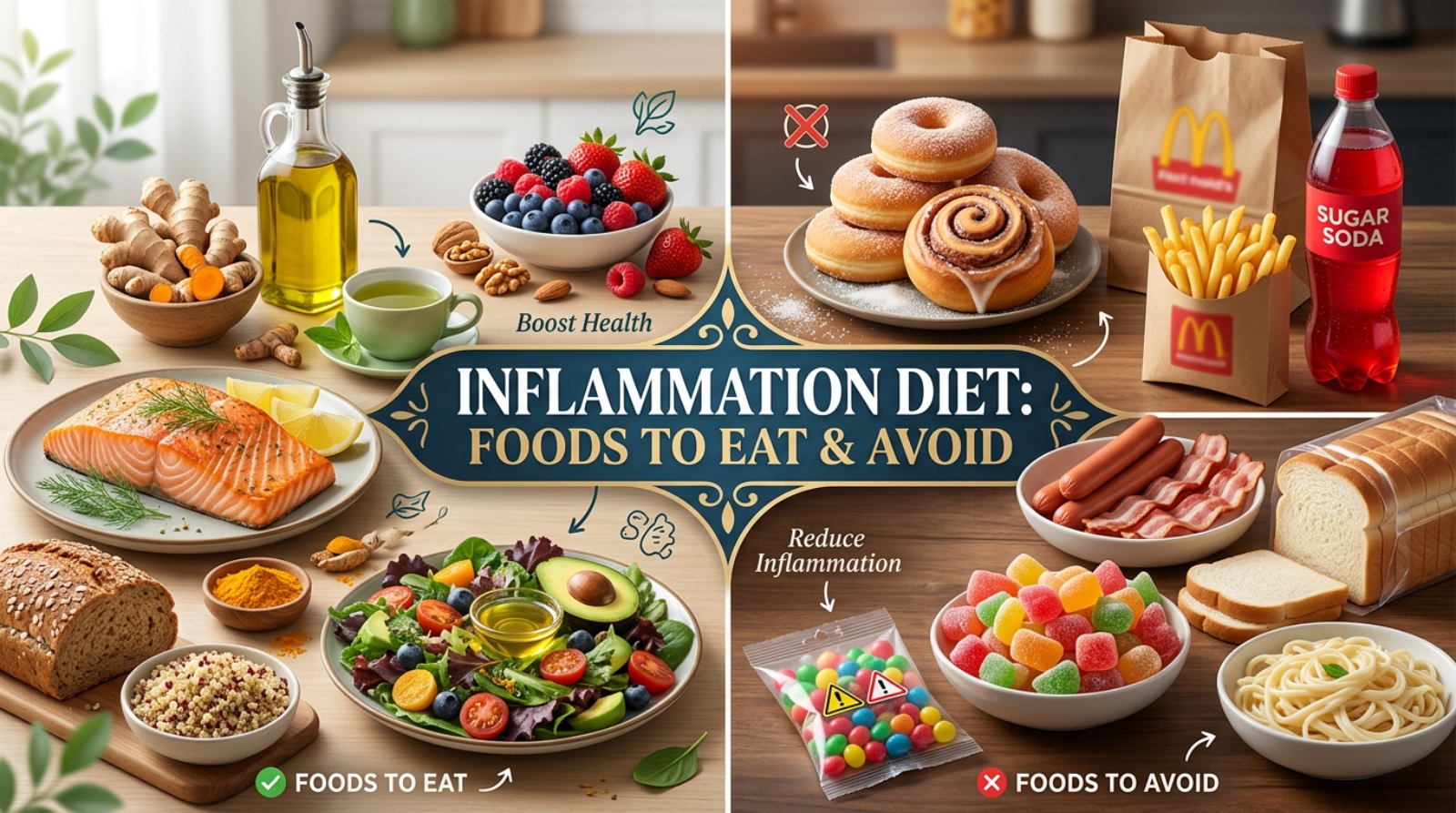
Inflammation diet choices can make everyday meals more supportive of gut health, especially when you focus on fiber-rich plants, healthy fats, lean proteins, and minimally processed foods. The goal isn’t to follow a rigid menu; it’s to build meals that are nourishing, satisfying, and realistic to maintain. You can also use the Copy Button on helpful tips in this article to save or share them for later.
Quick Answer: What Is an Inflammation Diet?
An inflammation diet is an eating pattern that emphasizes foods rich in fiber, vitamins, minerals, healthy fats, and plant compounds while reducing foods that are heavily processed or high in added sugar, refined carbohydrates, and certain unhealthy fats.
For gut health, a practical approach includes:
- Vegetables and fruits
- Beans and lentils
- Oats and other whole grains
- Nuts and seeds
- Olive oil
- Fatty fish
- Plain yogurt or kefir with live cultures
- Herbs and spices
- Adequate water
- Fewer ultra-processed foods
You don’t need to remove every food that you enjoy. Instead, think about what you can add to your plate more often.
How an Inflammation Diet May Support Gut Health
The digestive tract interacts constantly with the food you eat. Your diet also influences the environment in which gut microbes live.
Fiber is especially important. Foods such as oats, beans, vegetables, berries, chia seeds, and flaxseed provide different types of fiber. Gut bacteria can ferment some of these fibers and produce compounds that help support the intestinal environment.
However, suddenly eating huge amounts of fiber can backfire. If you’re not used to beans, lentils, or large servings of vegetables, increase them gradually and drink enough fluid.
I find this is one of the easiest mistakes to make when trying to improve gut health. Someone goes from very little fiber to a giant bowl of raw vegetables every day, then wonders why they’re uncomfortable. A slower change is usually much easier to tolerate.
Build a balanced plate
A simple meal might include grilled salmon, roasted vegetables, brown rice, and a drizzle of olive oil. Another option could be lentil soup with whole-grain toast and a side salad.
These meals don’t require specialty ingredients. They’re simply built around foods that provide useful nutrients.
Best Foods for an Inflammation Diet
The strongest approach isn’t about finding one “superfood.” Instead, build variety into your meals.
1. Colorful vegetables
Broccoli, carrots, spinach, sweet potatoes, bell peppers, tomatoes, and leafy greens all bring different nutrients and plant compounds to the table.
Cooked vegetables can also be easier to tolerate than large portions of raw vegetables for some people.
2. Berries and other fruits
Blueberries, strawberries, raspberries, oranges, apples, and kiwi provide fiber and plant compounds.
For a simple breakfast, add berries to oatmeal or plain yogurt. You can also keep washed fruit nearby for an easy snack.
3. Beans and lentils
Black beans, chickpeas, kidney beans, and lentils are excellent sources of fiber and plant-based protein.
If beans tend to cause gas, start with a small portion. Rinsing canned beans thoroughly may also make them easier for some people to handle.
4. Whole grains
Oats, barley, quinoa, brown rice, and whole-grain bread can provide more fiber than refined grain products.
You don’t have to replace every grain at once. Switching one meal a day is a practical starting point.
5. Nuts and seeds
Walnuts, almonds, chia seeds, pumpkin seeds, and ground flaxseed provide fiber, minerals, and unsaturated fats.
A tablespoon of ground flaxseed can be mixed into oatmeal or a smoothie. Chia seeds work well in overnight oats or yogurt.
6. Fatty fish
Salmon, sardines, trout, and mackerel provide omega-3 fatty acids.
Try baked salmon with roasted vegetables for dinner, or add canned salmon to a grain bowl when you need something quick.
7. Fermented foods
Plain yogurt, kefir, sauerkraut, kimchi, and other fermented foods can fit into a gut-friendly eating pattern.
Not everyone tolerates fermented foods equally well, though. Start with small amounts and pay attention to how you feel.
Foods to Limit on an Inflammation Diet
An inflammation diet doesn’t have to mean a long list of forbidden foods. Still, some foods are worth eating less often.
Ultra-processed foods
Many packaged foods contain combinations of refined starches, added sugars, sodium, and fats that can make it harder to build a nutrient-dense diet.
That doesn’t mean you can never eat chips, cookies, frozen pizza, or fast food. Instead, consider them occasional foods rather than the foundation of most meals.
Added sugar
Sweetened drinks, candy, pastries, and many desserts can add substantial amounts of sugar without providing much fiber or protein.
Try water, sparkling water, unsweetened tea, or coffee without large amounts of added sugar as everyday options.
Refined carbohydrates
White bread, many sugary cereals, and other refined grain products tend to contain less fiber than their whole-grain counterparts.
You don’t need to avoid them completely. Pairing them with protein, vegetables, or healthy fats can create a more satisfying meal.
Deep-fried foods
Fried foods can be high in calories and certain fats. They may also feel heavy for people who already experience digestive discomfort.
Instead, try roasting, baking, grilling, or air-frying.
Simple Inflammation Diet Meals You Can Actually Make
Healthy eating gets much easier when you have a few dependable meals.
Breakfast
Try oatmeal topped with blueberries, chia seeds, walnuts, and plain yogurt.
For another option, make scrambled eggs with spinach and tomatoes and serve them with whole-grain toast.
Lunch
A simple grain bowl works well:
- Brown rice or quinoa
- Chickpeas or grilled chicken
- Spinach
- Cucumber
- Carrots
- Pumpkin seeds
- Olive oil and lemon
It’s filling without requiring complicated cooking.
Dinner
Try baked salmon with sweet potatoes and roasted broccoli.
If fish isn’t your preference, use chicken, tofu, beans, or lentils instead.
Snack
Keep it simple with an apple and a handful of walnuts, plain yogurt with berries, or carrots with hummus.
The best snack is often the one you’ll actually remember to prepare.
Inflammation Diet Tips for Sensitive Digestion
A nutritious diet can still cause digestive trouble if you change too much too quickly.
For example, a large serving of beans, broccoli, onions, and bran cereal on the same day may overwhelm someone who isn’t accustomed to high-fiber foods.
Instead, make one change at a time.
You might start by adding fruit to breakfast. A week later, add beans to lunch. Then increase your vegetable portions gradually.
Cooking can help, too. Steamed, roasted, or sautéed vegetables may be easier to tolerate than large raw salads.
Also, keep a simple food-and-symptom journal if you’re trying to identify patterns. Record the food, portion size, timing, and symptoms rather than labeling individual foods as universally “bad.”
That distinction matters. A food that causes discomfort for one person may be perfectly well tolerated by another.
Inflammation Diet and Healthy Fats
Not all dietary fats deserve the same treatment.
Olive oil, avocados, walnuts, almonds, seeds, and fatty fish provide mostly unsaturated fats. These foods can fit comfortably into a balanced eating pattern.
For example, use olive oil in a homemade salad dressing instead of relying on a creamy bottled dressing. Add avocado to a sandwich or grain bowl. Sprinkle walnuts over oatmeal.
Portion still matters because fats are calorie-dense, but they can make meals more satisfying.
A 7-Day Inflammation Diet Starting Point
You don’t need a complicated meal plan. Use this as a flexible framework.
Day 1: Oatmeal with berries and walnuts; chicken grain bowl; salmon with broccoli and sweet potato.
Day 2: Eggs with spinach and whole-grain toast; lentil soup; chicken with brown rice and roasted vegetables.
Day 3: Plain yogurt with chia seeds and fruit; tuna and avocado whole-grain toast; bean tacos with lettuce and tomato.
Day 4: Overnight oats with berries; chickpea salad; baked trout with quinoa and vegetables.
Day 5: Vegetable omelet; leftover salmon grain bowl; turkey, bean, and vegetable soup.
Day 6: Oatmeal with banana and flaxseed; hummus and chicken wrap; roasted vegetables with lentils.
Day 7: Eggs, avocado, and whole-grain toast; vegetable soup with beans; grilled fish or tofu with brown rice.
You can swap ingredients freely. The pattern matters more than following the menu perfectly.
Daily Habits That Complement an Inflammation Diet
Food is only one part of digestive wellness.
First, stay hydrated throughout the day. Water helps fiber move through the digestive tract and is especially important when you increase fiber intake.
Next, eat slowly. Taking a few extra minutes to chew thoroughly can make meals more comfortable and may help you notice fullness sooner.
Regular movement matters as well. A short walk after dinner is an easy habit that fits into many schedules.
Sleep deserves attention, too. Poor sleep can affect appetite, energy, and overall well-being, making consistent food choices harder.
Finally, don’t turn healthy eating into an all-or-nothing project. One restaurant meal won’t erase your usual habits.
Can an Inflammation Diet Reduce Gut Inflammation?
An inflammation diet may support overall dietary quality and gut health, but food alone cannot explain or treat every cause of digestive inflammation.
Conditions such as inflammatory bowel disease, celiac disease, gastritis, and certain infections have different causes and treatment needs. Persistent abdominal pain, blood in the stool, unexplained weight loss, ongoing vomiting, or significant changes in bowel habits deserve medical attention.
For general wellness, however, emphasizing minimally processed foods, fiber-rich plants, healthy fats, and adequate protein is a sensible foundation.
FAQ About an Inflammation Diet
What is the best food for an inflammation diet?
There isn’t one best food. A varied diet containing vegetables, fruits, beans, whole grains, nuts, seeds, olive oil, and fish provides a broad mix of nutrients and beneficial plant compounds.
Can an inflammation diet help with bloating?
It may help some people when it replaces heavily processed foods with balanced meals. However, bloating has many possible causes, so adding large amounts of fiber suddenly can actually make symptoms worse.
Should I avoid gluten on an inflammation diet?
Not necessarily. Gluten avoidance is important for people with celiac disease and may be appropriate in some other situations. For everyone else, whole grains containing gluten can be part of a nutritious diet.
Are dairy foods allowed?
Yes. Plain yogurt and kefir can provide protein and, when they contain live cultures, beneficial microorganisms. If dairy causes symptoms, lactose-free options may be easier to tolerate.
How long should I follow an inflammation diet?
Think of it as a long-term eating pattern rather than a short cleanse. Sustainable habits are more useful than strict rules that are difficult to maintain.
Final Thoughts on an Inflammation Diet
A practical inflammation diet doesn’t require expensive products, extreme restrictions, or a perfect meal plan. Start with more vegetables, fruit, whole grains, beans, nuts, seeds, healthy fats, and quality protein, then gradually reduce heavily processed foods.
Most of all, pay attention to your own digestion. Small changes you can repeat every week are far more useful than an aggressive diet you abandon after a few days.
If you’ve found a helpful meal or habit in this guide, use the Copy Button to save it for your next grocery trip or share it with someone who wants simpler gut-friendly meals.

Here’s a short Gutrova-style author biography for Josh Axe:
Josh Axe
Josh Axe is a wellness expert, author, and educator known for his work in nutrition, natural health, and gut wellness. As a contributor to Gutrova, he shares practical insights on digestive health, healthy eating habits, and lifestyle strategies that help readers build a stronger foundation for overall well being. His content focuses on making wellness simple, actionable, and accessible for everyday life.










1 thought on “Inflammation Diet: Foods to Eat and Avoid”