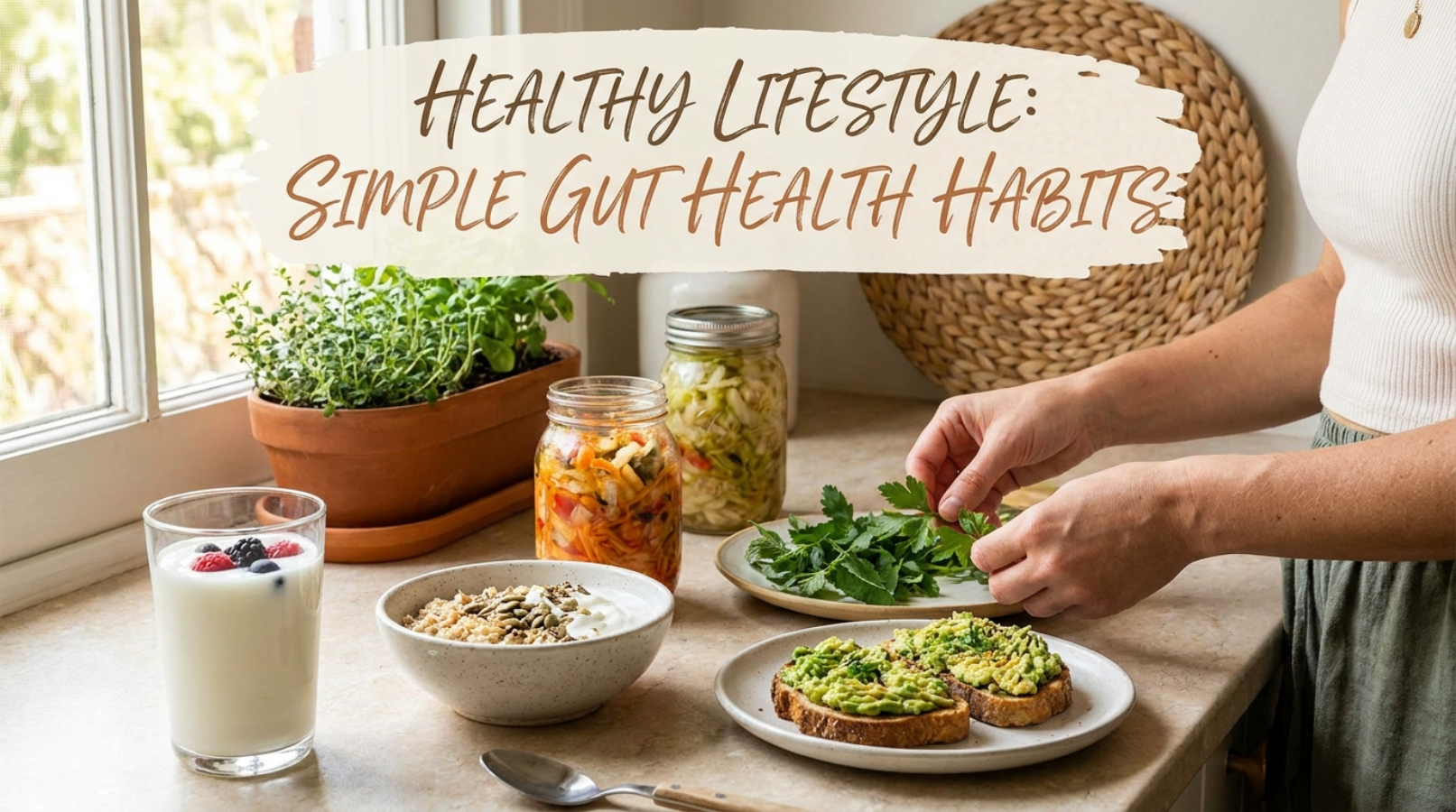
A healthy lifestyle can support better digestion by bringing more consistency to the way you eat, move, sleep, hydrate, and handle everyday stress. You don’t need a perfect schedule or a strict diet; small habits that fit your real life can make a much better foundation for long-term gut health.
At Gutrova, the Copy Button makes it simple to save or share the wellness tips that work best for you, so useful habits don’t get lost when life gets busy.
Quick Answer: What Is a Healthy Lifestyle for Gut Health?
A healthy lifestyle for gut health includes a varied, fiber-rich diet, enough fluids, regular movement, mindful eating, consistent bathroom habits, quality sleep, and practical stress management. These habits work together rather than existing as separate rules. The goal is a routine you can maintain through busy weeks, weekends, travel, and changing seasons.
Why a Healthy Lifestyle Matters for Your Gut
Your digestive system doesn’t operate in isolation.
What you eat matters, but so do your activity level, hydration, sleep, stress, and daily schedule. For example, changes in diet, travel, low fluid intake, inactivity, and ignoring the urge to use the bathroom can contribute to constipation.
That connection is one reason a healthy lifestyle is more useful than chasing one “perfect” food.
Think about a typical week. You might eat well on Monday, spend most of Tuesday sitting at your desk, rush through lunch Wednesday, sleep poorly Thursday, and eat restaurant food Friday night. None of those days defines your gut health.
Instead, look at the pattern.
I’ve found that this is a much more realistic way to approach wellness. A good day doesn’t need to be perfect, and a less-than-ideal meal doesn’t need to turn into an entire weekend of giving up.
The aim is to create enough supportive habits that your routine can bend without breaking.
Healthy Lifestyle Habits Start With More Fiber
Fiber is one of the simplest places to strengthen your everyday diet.
Whole grains, beans, lentils, fruits, vegetables, nuts, and seeds can all contribute fiber. NIDDK notes that adults generally need around 22 to 34 grams of fiber a day, depending on age and sex.
However, more isn’t always better when you increase it too quickly.
If your usual breakfast is toast and coffee, suddenly adding several servings of beans, bran, vegetables, and seeds could leave you feeling uncomfortable. Instead, make gradual changes.
Try adding:
- Berries to oatmeal or yogurt
- Chia or ground flaxseed to overnight oats
- Lentils to soup
- Chickpeas to salads
- Vegetables to sandwiches and wraps
- Beans to tacos or grain bowls
- Apples or pears as an afternoon snack
- Whole grains instead of refined grains
As your fiber intake increases, fluids matter too. Water and other liquids help fiber work properly and can support softer stools.
Don’t Forget Variety
Gut-friendly eating doesn’t have to mean eating the same “healthy” foods every day.
Rotate your choices.
One day, you might have oats and berries. The next, eggs with whole-grain toast and avocado. Lunch could be a lentil soup, while dinner might include roasted vegetables, brown rice, and fish.
That variety keeps meals interesting and makes a healthy lifestyle easier to maintain.
Build a Healthy Lifestyle Around Hydration
Hydration is easy to overlook because there isn’t always a strong reminder to drink.
You get busy. Your water bottle stays on the desk. Then you realize hours have passed.
Instead of trying to catch up at night, make fluids part of your normal day.
Drink water with meals. Keep a bottle nearby while working. Have some before heading out for a walk. During hot weather or after exercise, pay closer attention to fluid needs.
There isn’t one perfect amount of water that applies to everyone. Your needs can change with activity, weather, age, health, and other factors.
Also, don’t worry that drinking water with a meal will “dilute” your digestion. Mayo Clinic notes that drinking water doesn’t interfere with normal digestion and recommends adequate fluids alongside a fiber-rich diet.
A simple habit works best: make water easy to reach.
Healthy Lifestyle Movement Doesn’t Have to Mean the Gym
When people hear “exercise,” they often imagine a long workout.
Your gut doesn’t require a gym membership.
Walking, cycling, swimming, gardening, stretching, dancing, and household activities can all add movement to your day. Regular physical activity may also help with constipation.
For a busy weekday, try a short walk after lunch. On the weekend, take a longer walk with your family or spend some time outdoors.
The important part is finding movement you don’t constantly have to force yourself to do.
Mayo Clinic also notes that physical activity can help with stress, mood, and sleep. So one habit can support several parts of your lifestyle at the same time.
Try the Ten-Minute Rule
Don’t have an hour?
Start with ten minutes.
Walk around the neighborhood. Take the stairs. Stretch between work tasks. Put on music and move around the house.
Ten minutes isn’t a replacement for all physical activity, but it can be a useful starting point. Once movement becomes normal, adding more often feels much easier.
Make Mealtimes Part of Your Healthy Lifestyle
The food on your plate isn’t the only thing that matters.
How you eat can affect how comfortable a meal feels.
Eating quickly while answering emails makes it easy to miss signs of fullness. Large portions can also leave you feeling uncomfortable, especially when you eat them quickly.
Instead, sit down when possible. Put your phone aside for a few minutes. Take smaller bites and give yourself time to chew.
Mayo Clinic recommends eating slowly, paying attention to portion sizes, staying active, getting enough fiber, and managing stress as practical ways to support digestion.
You don’t have to turn every meal into a mindfulness exercise.
Simply slowing down is a good start.
Create a Better Lunch
Lunch is often the meal that gets rushed.
A simple formula can help:
Protein + fiber-rich carbohydrate + vegetables or fruit + healthy fat
For example, try a chicken and bean bowl with brown rice, vegetables, and avocado. Or choose a whole-grain turkey sandwich with a side of fruit and a handful of nuts.
The goal isn’t to create a perfect plate every time. You’re simply making balanced choices easier.
A Healthy Lifestyle Includes Bathroom Habits
Nobody talks about bathroom routines at the dinner table, but they’re part of digestive health.
Ignoring the urge to have a bowel movement can contribute to constipation. NIDDK also notes that some people may benefit from trying to have a bowel movement around the same time each day.
Morning can be a practical opportunity because eating stimulates movement in the colon.
Give yourself enough time rather than rushing out the door. If you feel the urge, try not to repeatedly postpone it.
You also don’t need to sit on the toilet for a long time trying to force a bowel movement. A relaxed, consistent approach is more practical.
If your normal bowel pattern suddenly changes and doesn’t settle, pay attention to it instead of simply adding more fiber or supplements.
Healthy Lifestyle Habits Change With the Seasons
A routine that works beautifully in January may need a few adjustments in July.
Winter often brings more indoor time and heavier meals. You might naturally reach for oatmeal, soups, beans, roasted vegetables, and warm whole-grain dishes.
Summer brings different opportunities. Fresh berries, peaches, watermelon, cucumbers, tomatoes, leafy greens, and other seasonal produce can make meals lighter and more varied.
Hydration also deserves extra attention during hot weather and after activities that make you sweat.
Travel is another seasonal challenge. Long flights, road trips, restaurant meals, unusual meal times, and less movement can disrupt your normal rhythm.
You don’t have to recreate your entire home routine while traveling.
Keep a few anchors instead:
- Drink water regularly.
- Include produce or another fiber-rich food with meals.
- Walk when you have an opportunity.
- Don’t routinely ignore bathroom urges.
- Return to your normal eating pattern after the trip.
Those small habits can make your routine feel more familiar even when your surroundings aren’t.
Let Sleep and Stress Into Your Healthy Lifestyle
Gut health isn’t only about food.
Stress can affect how you eat, sleep, move, and experience digestive discomfort. At the same time, poor sleep can make healthy choices harder the next day.
That creates a cycle.
Maybe you’ve experienced it yourself: you stay up late, wake up tired, grab something quick for breakfast, rely on extra caffeine, skip your walk, and then feel too drained to cook dinner.
One rough night isn’t the problem. Repeating that pattern is where your routine can start to suffer.
So give sleep a real place in your healthy lifestyle.
Try keeping a fairly consistent bedtime. Put your phone away before sleep. Make your bedroom comfortable and quiet. If your mind is busy, spend a few minutes writing down tomorrow’s tasks before getting into bed.
For stress, keep it simple.
A walk outside, gentle stretching, breathing exercises, music, reading, gardening, or time with people you enjoy can all create space between you and the day’s pressure.
Mayo Clinic recommends regular physical activity, healthy eating, adequate sleep, and relaxation strategies as useful parts of stress management.
What a Healthy Lifestyle Looks Like on a Busy Day
Your routine shouldn’t collapse just because Tuesday got hectic.
Here’s a realistic example.
Morning:
Drink water and eat oatmeal with berries, nuts, or seeds.
Midmorning:
Take a few minutes to stand, stretch, or walk.
Lunch:
Choose a meal with vegetables, a protein source, and a fiber-rich carbohydrate.
Afternoon:
Keep water nearby and have fruit or another satisfying snack if you’re hungry.
Evening:
Take a short walk after dinner instead of going straight to the couch.
Before bed:
Dim the lights, step away from work, and give yourself time to unwind.
That’s a healthy lifestyle in practice. It isn’t complicated.
You can adjust the foods, timing, and activities to suit your own schedule.
Common Healthy Lifestyle Mistakes to Avoid
Trying to change everything overnight
A strict new diet, intense workout plan, early bedtime, and long list of supplements can become exhausting quickly.
Instead, start with two habits.
Increasing fiber too fast
A sudden jump in fiber can cause gas and bloating for some people. Increase fiber gradually and drink enough fluids.
Treating one unhealthy meal as failure
Pizza night doesn’t erase your healthy habits.
Enjoy the meal, then return to your normal routine at the next opportunity.
Following someone else’s exact schedule
Your neighbor may love a 5 a.m. workout. Your best routine might begin at 7 a.m.
A healthy lifestyle should fit your responsibilities, preferences, and energy levels.
Forgetting enjoyment
Food isn’t simply fuel.
Make room for meals you genuinely enjoy. Try new produce, cook with friends, eat outside, or make a favorite family recipe with a few simple upgrades.
A routine that’s enjoyable has a much better chance of becoming a lasting routine.
Healthy Lifestyle FAQ
What is a healthy lifestyle for better gut health?
A healthy lifestyle includes balanced meals, enough fiber and fluids, regular physical activity, slower eating, consistent bathroom habits, adequate sleep, and practical stress management.
Can a healthy lifestyle help digestion?
Healthy habits can support normal digestive function. Eating enough fiber, drinking adequate fluids, staying active, eating at a comfortable pace, and managing stress can all contribute to better digestive habits.
How much fiber should I get each day?
NIDDK says adults generally need about 22 to 34 grams of fiber per day, depending on age and sex. However, individual needs can vary, and increasing fiber gradually may help reduce gas and bloating.
Does a healthy lifestyle need to be the same every season?
No. Your routine can adapt to weather, food availability, travel, work, and family schedules. Keeping a few basic habits consistent is more practical than following an identical schedule all year.
What’s the easiest healthy lifestyle habit to start today?
Start with one habit that requires almost no planning. Drink water regularly, add a serving of fruit or vegetables to a meal, take a ten-minute walk, or slow down during your next meal. Once that habit feels normal, add another.
Conclusion: Keep Your Healthy Lifestyle Realistic
A healthy lifestyle isn’t about having a flawless diet or following a rigid wellness schedule. It’s about creating everyday habits that support digestion while still leaving room for holidays, restaurant meals, travel, busy workdays, and ordinary life.
Start small. Eat more fiber-rich foods, drink fluids regularly, move your body, slow down at meals, protect your sleep, and find simple ways to manage stress.
Then let your routine change with the seasons.
The best habits aren’t necessarily the most complicated ones. They’re the habits you can return to again and again.
When you find a Gutrova tip that fits your life, use the Copy Button to save or share it for later. A few practical habits, repeated consistently, can become the foundation of a healthier lifestyle and a happier relationship with your gut.
The nutrition, hydration, activity, bowel-routine, and digestion guidance is grounded in current guidance from NIDDK and Mayo Clinic. NIDDK specifically supports gradual fiber increases, adequate fluids, regular physical activity, and consistent bathroom habits; Mayo Clinic similarly recommends slower eating, adequate fiber and water, activity, stress management, and practical meal routines.
For the stress-and-movement sections, Mayo Clinic also supports regular physical activity and relaxation practices as useful parts of stress management.

Here’s a short Gutrova-style author biography for Josh Axe:
Josh Axe
Josh Axe is a wellness expert, author, and educator known for his work in nutrition, natural health, and gut wellness. As a contributor to Gutrova, he shares practical insights on digestive health, healthy eating habits, and lifestyle strategies that help readers build a stronger foundation for overall well being. His content focuses on making wellness simple, actionable, and accessible for everyday life.











1 thought on “Healthy Lifestyle: Simple Gut Health Habits”