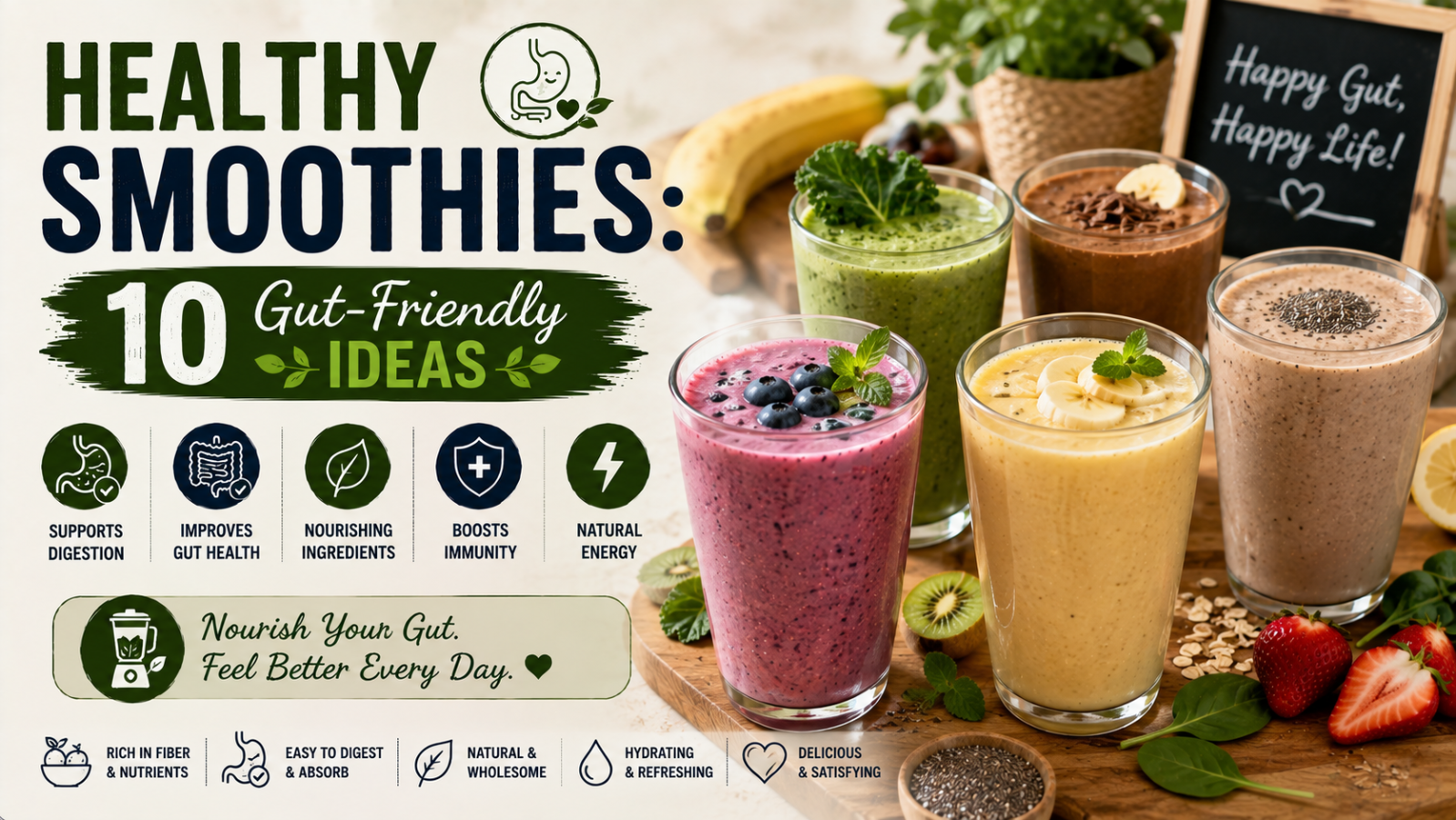
Healthy smoothies can make it easier to add fruit, vegetables, fiber, protein, and healthy fats to your day without much prep. The best healthy smoothies aren’t simply low in calories; they’re satisfying, balanced, and easy on your digestive system.
If you’ve ever rushed out the door with coffee and then felt hungry again an hour later, a well-built smoothie can be a much better option. You can also use the Copy Button on this article to quickly save or share your favorite smoothie combinations.
Quick Answer: What Makes Healthy Smoothies?
Healthy smoothies combine whole-food ingredients such as fruit, vegetables, unsweetened dairy or fortified alternatives, seeds, nuts, and other nutrient-rich foods. For better digestion, include a source of fiber and protein while keeping added sugar modest.
A simple formula is:
Fruit or vegetables + protein + fiber-rich ingredient + healthy fat + unsweetened liquid
For example, blend berries, plain Greek yogurt, chia seeds, spinach, and unsweetened milk. Start with smaller amounts of high-fiber ingredients if your digestive system isn’t used to them.
Why Healthy Smoothies Can Support Digestion
Smoothies can be a practical way to increase your intake of foods that contain fiber. Fiber helps support normal bowel function, while certain types of fiber are fermented by gut bacteria.
Fruit and vegetables also provide water, vitamins, minerals, and plant compounds. In addition, ingredients such as berries, leafy greens, and seeds can add a variety of fibers to your diet.
Still, blending doesn’t magically make every ingredient gut-friendly. A huge smoothie loaded with fruit juice, sweeteners, and several scoops of fiber powder may leave some people feeling uncomfortable.
I find that simpler combinations tend to work better in real life. You can always add more ingredients later if your stomach handles the basic recipe well.
Healthy Smoothies Need More Than Fruit
A fruit-only smoothie may taste great, but it often won’t keep you satisfied for long. Adding protein and fat can make the drink more substantial.
Greek yogurt, cottage cheese, silken tofu, nut butter, or unsweetened soy milk can provide protein. Meanwhile, chia seeds, ground flaxseed, avocado, or nut butter can add fat and fiber.
That balance matters at breakfast. For instance, a banana blended with milk may be fine as a quick snack. Add Greek yogurt, peanut butter, and a small amount of oats, and you’ve created a much more complete meal.
A simple smoothie-building guide
Try these portions as a starting point:
- 1 cup fruit or a mixture of fruit and vegetables
- ¾ to 1 cup unsweetened liquid
- ½ to 1 cup protein-rich food
- 1 tablespoon seeds or nut butter
- A small handful of leafy greens
- Ice as needed
You don’t need every ingredient in every smoothie.
Healthy Smoothies for a Fiber Boost
Fiber is one of the most useful nutrients to consider when building healthy smoothies. Adults generally need a substantial amount of dietary fiber each day, yet many people don’t consistently get enough from their diets.
Berries, pears, apples, kiwi, oats, chia seeds, flaxseed, and vegetables can all contribute fiber. However, suddenly adding a large amount can cause gas or bloating.
Instead, increase fiber gradually and drink enough fluids throughout the day. Your digestive system often needs time to adjust.
Try this berry-oat blend
- 1 cup frozen blueberries
- ½ cup strawberries
- ½ cup plain Greek yogurt
- 2 tablespoons rolled oats
- 1 tablespoon ground flaxseed
- ¾ cup unsweetened milk
- Ice if needed
This combination brings together fruit, protein, whole grains, and seeds without relying on juice or added sugar.
Healthy Smoothies for a Calmer Morning
Some people want a smoothie that feels light rather than heavy first thing in the morning. If that’s you, keep the ingredient list short.
Try spinach, kiwi, banana, plain yogurt, and unsweetened milk. Kiwi and banana provide carbohydrates and fiber, while yogurt adds protein.
Another option is a cucumber, pineapple, spinach, and Greek yogurt smoothie. Keep the pineapple portion moderate if you find very sweet drinks uncomfortable.
The trick is to pay attention to your own response. If a particular ingredient repeatedly causes bloating, don’t force yourself to include it simply because it’s considered “healthy.”
Healthy Smoothies With Probiotic Foods
Fermented foods can provide live microorganisms, although the specific cultures vary by product. Yogurt and kefir are common smoothie ingredients.
Choose plain varieties when possible. Flavored versions can contain considerable added sugar, depending on the product.
For a creamy probiotic-style smoothie, combine:
- ¾ cup plain kefir
- ½ cup frozen berries
- ½ banana
- 1 tablespoon chia seeds
- A handful of spinach
- Cinnamon to taste
Kefir can be tangy, so the banana helps soften the flavor. If dairy doesn’t agree with you, use a suitable nondairy alternative instead.
Remember that probiotics aren’t a universal solution for digestive symptoms. Different strains can have different effects, and individual responses vary.
Healthy Smoothies That Help You Stay Full
A smoothie becomes more satisfying when it contains enough protein, fiber, and fat. This is especially helpful if you’re using it as breakfast rather than a small snack.
One of my favorite practical approaches is to start with the protein source. Once that’s in the blender, add fruit for flavor, vegetables for variety, and a small amount of seeds or nut butter.
Peanut butter banana smoothie
Blend:
- 1 small banana
- ¾ cup unsweetened soy milk
- ½ cup plain Greek yogurt
- 1 tablespoon natural peanut butter
- 1 tablespoon ground flaxseed
- Cinnamon
- Ice
This has a richer texture than a fruit-and-water smoothie. It also gives you several different food groups in one glass.
If you’re sensitive to large portions, drink half and save the rest for later rather than forcing down a giant serving.
Healthy Smoothies Without Excess Sugar
Fruit contains naturally occurring sugar, but that doesn’t make whole fruit the same as a sugary beverage. Whole fruits also bring fiber and other nutrients.
Still, smoothie ingredients can push the sugar content upward quickly. Fruit juice, honey, maple syrup, sweetened yogurt, dates, and multiple bananas can turn a nutritious drink into a very sweet one.
Instead, let berries, citrus, kiwi, and a small amount of banana provide most of the sweetness.
You can also use cinnamon, vanilla, unsweetened cocoa powder, ginger, or fresh mint for more flavor.
A lower-sugar green smoothie
- ½ green apple
- ½ cup cucumber
- 1 cup spinach
- ½ kiwi
- ½ cup plain Greek yogurt
- ¾ cup unsweetened milk
- Fresh ginger
- Ice
The result is refreshing without needing syrup or juice.
Healthy Smoothies for Sensitive Digestion
Not everyone tolerates the same smoothie ingredients. Large amounts of raw vegetables, certain fruits, dairy products, sugar alcohols, or concentrated fiber can cause problems for some people.
So start small.
If you normally eat very little fiber, adding several tablespoons of chia, flax, oats, and fiber powder at once isn’t a great experiment. Give your body time to adapt.
Texture can matter, too. A very thick smoothie may be harder to finish comfortably than a thinner one.
For a gentler option, blend banana, oats, plain yogurt, and unsweetened milk. You can gradually introduce other ingredients as you learn what works for you.
Persistent digestive symptoms deserve more attention than simply changing smoothie recipes. Don’t assume food is always the cause.
How to Make Healthy Smoothies More Gut-Friendly
Small changes can make your daily smoothie more useful and easier to tolerate.
1. Use whole fruit instead of juice.
You’ll get fiber along with the fruit’s natural sweetness.
2. Add protein.
Greek yogurt, kefir, soy milk, tofu, or nut butter can make a smoothie more filling.
3. Introduce fiber slowly.
Increase chia, flax, oats, and other high-fiber foods gradually.
4. Choose unsweetened liquids.
Milk, unsweetened soy milk, or water can work well.
5. Rotate your ingredients.
Different plants provide different types of fiber and plant compounds.
6. Keep portions reasonable.
A 20-ounce smoothie isn’t automatically healthier than a 10-ounce one.
7. Don’t hide everything in one drink.
Eating whole foods also gives you texture and helps make meals more varied.
8. Watch added sweeteners.
You usually don’t need honey or syrup if your fruit is ripe.
9. Chew other meals normally.
A smoothie shouldn’t replace every solid-food meal.
10. Notice your personal response.
Keep a simple food-and-symptom note if you’re trying to identify patterns.
A Practical 5-Day Healthy Smoothies Plan
You don’t need a different complicated recipe every morning. Try this simple rotation:
Monday: Blueberry, Greek yogurt, oats, flaxseed, and milk.
Tuesday: Banana, spinach, kiwi, plain kefir, and chia.
Wednesday: Strawberry, tofu or Greek yogurt, peanut butter, oats, and unsweetened soy milk.
Thursday: Pineapple, cucumber, spinach, Greek yogurt, ginger, and milk.
Friday: Blueberry, banana, plain yogurt, ground flaxseed, cinnamon, and unsweetened milk.
On busy mornings, frozen fruit can save time. It also gives smoothies a thick texture without requiring lots of ice.
For variety, change one ingredient at a time. That makes it easier to figure out which combinations you enjoy and which ones your digestion doesn’t appreciate.
When a Smoothie Isn’t the Best Choice
Smoothies are convenient, but they aren’t automatically better than eating the same foods whole.
For some people, drinking calories quickly can make it harder to notice fullness. Others may find that large smoothies cause bloating simply because they contain a lot of food in liquid form.
Solid meals also provide chewing, texture, and a different eating experience. Therefore, think of smoothies as one useful option rather than a requirement for good gut health.
If you’re dealing with ongoing diarrhea, constipation, abdominal pain, unexplained weight changes, blood in your stool, or other persistent symptoms, a smoothie shouldn’t become a substitute for finding the underlying issue with a qualified healthcare professional.
Healthy Smoothies: Common Mistakes to Avoid
The biggest mistake is assuming that every “healthy” ingredient needs to go into one blender.
A smoothie with spinach, berries, banana, oats, chia, flax, avocado, nut butter, protein powder, dates, and several supplements may sound impressive. In practice, it can be huge, very high in fiber, and difficult to digest for some people.
Another common mistake is drinking smoothies that are mostly fruit and liquid. They may taste delicious but leave you searching for another meal soon afterward.
Finally, don’t overlook taste. If your smoothie is unpleasant, you won’t want to make it regularly. A simple recipe you enjoy beats a complicated one you dread.
FAQ About Healthy Smoothies
Are healthy smoothies good for digestion?
They can be. Smoothies made with whole fruits, vegetables, fiber-rich foods, and suitable protein sources can contribute to a nutritious diet. However, some people experience bloating from large portions or specific ingredients.
Are smoothies better than eating fruit whole?
Not necessarily. Blending fruit can make it easier to consume several foods quickly, but whole fruit provides texture and requires chewing. Both can fit into a balanced eating pattern.
Can healthy smoothies help with constipation?
Fiber and adequate fluid intake can support normal bowel function. A smoothie containing foods such as berries, kiwi, oats, chia, or ground flaxseed may help you increase dietary fiber. Increase fiber gradually to reduce the chance of gas and bloating.
Should I put probiotics in my smoothie?
You can use foods such as plain yogurt or kefir that contain live cultures. However, probiotic effects depend on the specific microorganisms and the person consuming them, so more isn’t automatically better.
What is the best time to drink a smoothie?
There isn’t one universally best time. Breakfast, an afternoon snack, or another meal can all work. Choose a timing that fits your appetite, schedule, and digestive comfort.
The Bottom Line on Healthy Smoothies
Healthy smoothies work best when they’re simple, balanced, and built around foods you genuinely enjoy. Combine produce with protein, fiber, and a modest amount of healthy fat, then adjust the ingredients based on how your body responds.
You don’t need expensive powders or a blender packed with a dozen ingredients. A few everyday foods can make a satisfying drink that fits comfortably into a healthy eating routine.
If you want to keep the practical ideas from this guide handy, use the Copy Button to save or share your favorite smoothie formula. And remember, healthy smoothies are one tool for supporting a nutritious diet—not a replacement for the variety and texture that come from eating whole foods.

Here’s a short Gutrova-style author biography for Josh Axe:
Josh Axe
Josh Axe is a wellness expert, author, and educator known for his work in nutrition, natural health, and gut wellness. As a contributor to Gutrova, he shares practical insights on digestive health, healthy eating habits, and lifestyle strategies that help readers build a stronger foundation for overall well being. His content focuses on making wellness simple, actionable, and accessible for everyday life.











1 thought on “Healthy Smoothies: 10 Gut-Friendly Ideas”