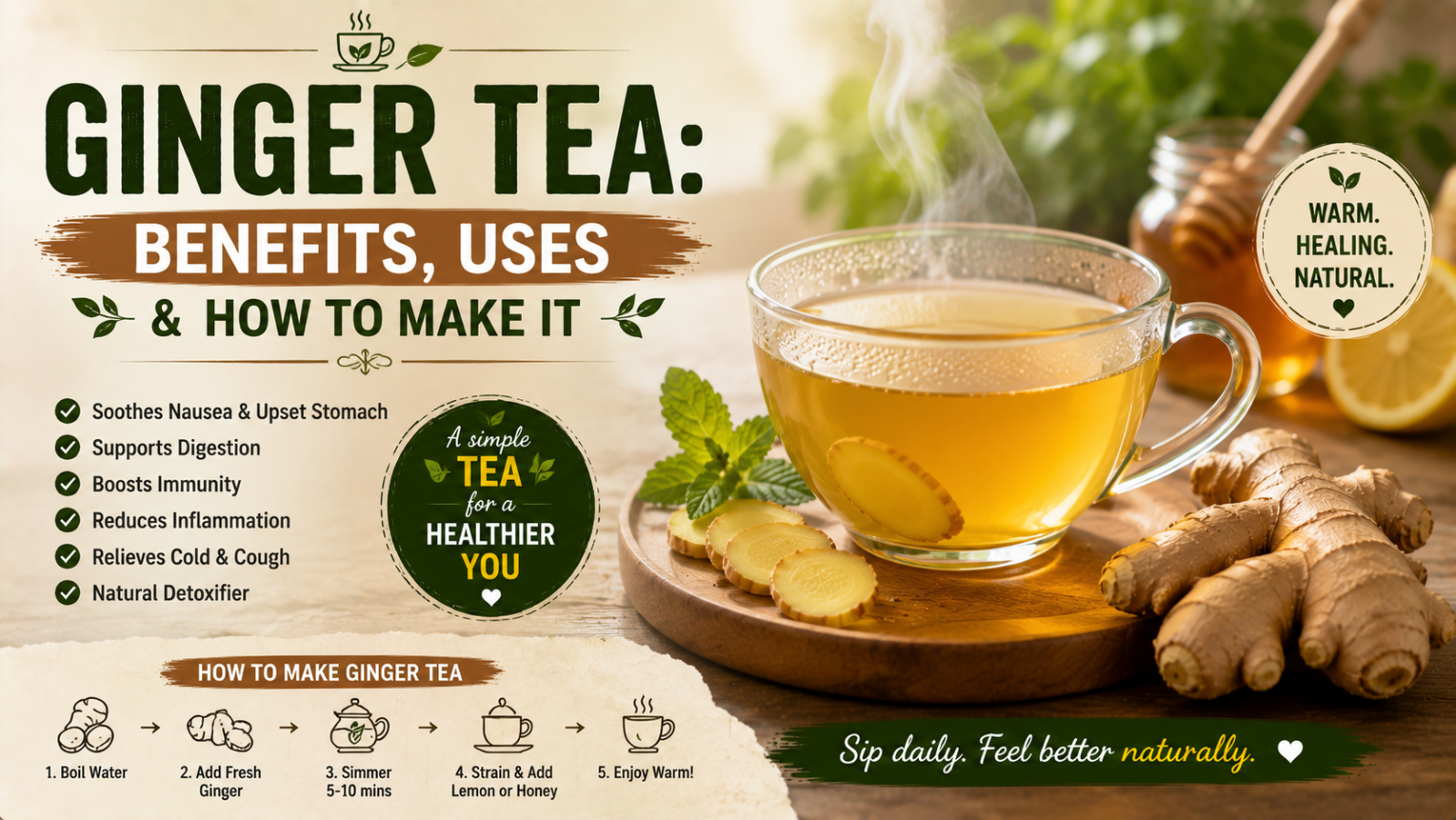
Ginger tea is a simple, warming drink that many people reach for when their stomach feels unsettled or digestion feels sluggish. Made from fresh ginger or dried ginger, it delivers a spicy flavor without relying on added sugar, while also fitting easily into a healthy daily routine.
If you’ve ever felt overly full after a heavy meal, a warm cup can be surprisingly comforting. You can also use the Copy Button to quickly save or share the ginger tea tips and recipes you want to try.
Quick Answer: Is Ginger Tea Good for Digestion?
Ginger tea may support digestion and can help some people manage occasional nausea or stomach discomfort. Ginger contains natural compounds called gingerols and shogaols, which researchers have studied for their effects on the digestive system and inflammation.
However, ginger tea isn’t a cure for digestive disorders. Its effects can vary from person to person, and concentrated amounts may actually irritate the stomach in some people.
For everyday use, a mild cup made with fresh ginger and hot water is a sensible place to start.
Ginger Tea and the Digestive System
Ginger has a long history of culinary and traditional use. Modern research has also examined ginger for nausea, gastric emptying, and other aspects of digestive function.
One reason ginger gets attention is its potential effect on how quickly the stomach moves food into the small intestine. Some research suggests ginger may support gastric motility, although results vary by situation and study design.
That matters because slow stomach emptying can contribute to feelings of fullness or discomfort. Still, you don’t need a strong ginger drink to potentially benefit.
A lightly brewed cup may be enough to make a pleasant addition to your routine.
Ginger Tea Benefits Worth Knowing
Ginger tea offers several potential benefits, although the strength of the evidence differs depending on the specific use.
1. It may help with nausea
Ginger is best known for its potential anti-nausea effects. Research has explored ginger for several types of nausea, including nausea associated with pregnancy and some medical treatments.
The amount and form of ginger used in research can differ considerably from a typical cup of tea. So, don’t assume that a homemade beverage will produce the same effect.
2. It may support comfortable digestion
Ginger may influence digestive movement and stomach function. As a result, some people find ginger tea pleasant after a meal.
That doesn’t mean it will fix chronic bloating, reflux, constipation, or abdominal pain. Persistent symptoms need a closer look.
3. It provides a flavorful alternative to sugary drinks
This benefit is easy to overlook.
A cup of ginger tea can have plenty of flavor without requiring soda, sweetened coffee drinks, or fruit juice. If you enjoy its natural heat, you may not need much sweetener at all.
4. It contains plant compounds
Fresh ginger contains naturally occurring compounds with antioxidant and anti-inflammatory activity in laboratory and research settings.
Still, drinking ginger tea shouldn’t be presented as a way to treat systemic inflammation. Food works best as part of an overall dietary pattern.
How Ginger Tea May Affect Bloating
Bloating is one of those symptoms with many possible causes. Eating quickly, swallowing air, constipation, certain carbohydrates, food intolerances, and digestive conditions can all play a role.
Ginger tea may feel soothing for some people, particularly when digestive discomfort follows a large meal. However, there’s no guarantee that ginger will reduce bloating.
If you’re frequently bloated, pay attention to the pattern instead of simply adding more ginger.
For example, suppose you notice bloating every afternoon after a large lunch. The useful question isn’t only, “Should I drink ginger tea?” It might also be, “What am I eating, how quickly am I eating it, and what else happens on those days?”
That broader view can reveal more useful information.
Ginger Tea After Meals: Does It Help?
A warm drink after eating can become a relaxing part of your routine. Ginger tea may be especially appealing after a rich or heavy meal because of its warming flavor.
You don’t need to drink it immediately after your last bite. Try a cup sometime after the meal and see how you feel.
Personally, I prefer a mild brew after a meal rather than an intensely concentrated ginger drink. It’s easier to sip, and the flavor doesn’t overwhelm everything else.
Keep the portion comfortable. If a strong cup causes burning, nausea, or stomach irritation, use less ginger or stop drinking it.
The Best Way to Make Ginger Tea
Making ginger tea at home takes only a few minutes.
Fresh ginger tea recipe
Ingredients:
- 1–2 inches fresh ginger root
- 1½–2 cups water
- Lemon slice, optional
- Honey, optional
Directions:
- Rinse the ginger well.
- Slice it thinly or grate it.
- Bring the water to a gentle boil.
- Add the ginger.
- Reduce the heat and simmer for about 5–10 minutes.
- Strain into a mug.
- Add lemon or a small amount of honey if desired.
For a milder drink, use fewer ginger slices or steep for less time. If you want stronger flavor, increase the ginger gradually.
There’s no need to make it extremely concentrated.
Fresh Ginger vs. Ginger Powder
Both fresh ginger and powdered ginger can work for tea.
Fresh ginger produces a bright, sharp flavor and is easy to adjust by changing the number of slices. Powdered ginger is convenient and stores well, making it useful when you don’t keep fresh ginger on hand.
However, they’re not identical. Processing can change the levels of individual ginger compounds.
For a casual daily beverage, choose the form you enjoy and can use consistently. The best cup is the one you’ll actually make.
Ginger Tea for Nausea and an Upset Stomach
Ginger is often used when nausea strikes. Research supports potential benefits in some types of nausea, but results depend on the cause and the amount consumed.
A mild cup may be worth trying for occasional queasiness. Sip it slowly rather than drinking a large mug quickly.
If nausea keeps returning, though, don’t keep masking the symptom with tea. Repeated nausea can have many causes, and finding the reason matters more than choosing the perfect beverage.
Also, ginger tea shouldn’t replace fluids or food when you’re struggling to stay hydrated or nourished.
When Ginger Tea May Not Feel Good
Natural doesn’t always mean suitable for everyone.
Ginger can cause heartburn, stomach upset, diarrhea, or mouth irritation in some people, especially at higher amounts. Those effects are more likely to matter if you’re already sensitive to spicy foods.
If you have acid reflux, notice how your body responds. Ginger may feel fine for one person and aggravate symptoms in another.
People taking medications that affect blood clotting should also discuss regular or high-dose ginger use with a healthcare professional. The same applies if you’re considering concentrated ginger supplements rather than ordinary food amounts.
Tea and supplements aren’t interchangeable.
7 Simple Ways to Improve Ginger Tea
Once you have the basic recipe down, small additions can change the flavor without turning the drink into a sugary beverage.
1. Add lemon.
A squeeze of fresh lemon gives ginger tea a bright, tart finish.
2. Try cinnamon.
A small cinnamon stick creates a warmer, sweeter-tasting flavor without sugar.
3. Add fresh mint.
Mint makes the drink lighter and more refreshing.
4. Use a little honey.
If the ginger tastes too sharp, a small amount can soften it.
5. Make iced ginger tea.
Brew it normally, cool it, and pour it over ice.
6. Pair ginger with turmeric.
Turmeric adds earthy flavor and more plant compounds, although it doesn’t turn the drink into a treatment.
7. Keep it simple.
Ginger and water are enough. You don’t need a long list of powders and supplements.
How Much Ginger Tea Should You Drink?
There isn’t one universal amount that everyone needs.
A normal food-level serving is different from a concentrated ginger supplement. If you’re new to ginger tea, start with a mild cup and see how you respond.
More isn’t necessarily better. A stronger brew won’t automatically provide greater digestive benefits, and it may be harder on your stomach.
You can also drink ginger tea occasionally rather than treating it as something you must consume every day.
Your overall diet, hydration, sleep, movement, and eating habits have a much larger role in digestive health.
Ginger Tea as Part of a Gut-Friendly Routine
A healthy gut routine doesn’t need to be complicated.
Start with regular meals that include fiber-rich foods such as vegetables, fruits, beans, whole grains, nuts, and seeds. Drink enough fluid for your individual needs, stay physically active, and give yourself time to eat.
Then consider simple beverages such as ginger tea.
For example, you might have oatmeal with berries for breakfast, a balanced lunch with vegetables and whole grains, and ginger tea after dinner. The tea isn’t doing all the work. It’s simply one small habit within a bigger pattern.
That distinction is important.
Ginger Tea FAQ
Is ginger tea good for your gut?
Ginger tea may support comfortable digestion and can help with nausea for some people. However, evidence varies by digestive concern, and ginger tea isn’t a treatment for underlying gut disorders.
Can I drink ginger tea every day?
Many people can enjoy moderate amounts as part of their diet. However, daily use may not suit everyone. Reduce the strength or frequency if you experience heartburn, stomach irritation, or diarrhea.
Is ginger tea good after eating?
It can be a pleasant post-meal drink. Some research suggests ginger may influence digestive movement, but individual responses vary.
Does ginger tea help with bloating?
It may help some people feel more comfortable, but bloating has many possible causes. If it happens often, look beyond beverages and consider your overall eating pattern and digestive symptoms.
Can ginger tea help with nausea?
Ginger has been studied for several forms of nausea and may help in some situations. However, persistent or severe nausea needs attention rather than repeated reliance on tea.
The Bottom Line on Ginger Tea
Ginger tea is a simple, flavorful drink that may support digestion and help with occasional nausea. Its biggest advantage is how easy it is to make: fresh ginger, hot water, and a few minutes are all you need.
Keep expectations realistic. A cup of ginger tea can complement healthy habits, but it can’t replace a balanced diet or address the underlying cause of ongoing digestive symptoms.
If this guide gave you a recipe or tip worth keeping, use the Copy Button to save or share it. Then make a mild cup of ginger tea, sip it slowly, and pay attention to how your own body responds.

Elizabeth Boham is a respected functional medicine physician and wellness educator with a passion for helping people improve their health through nutrition and lifestyle changes. As a contributor to Gutrova, she shares practical insights on gut health, digestive wellness, and healthy living, making complex health topics easy to understand and apply in everyday life.











1 thought on “Ginger Tea: Benefits, Uses & How to Make It”