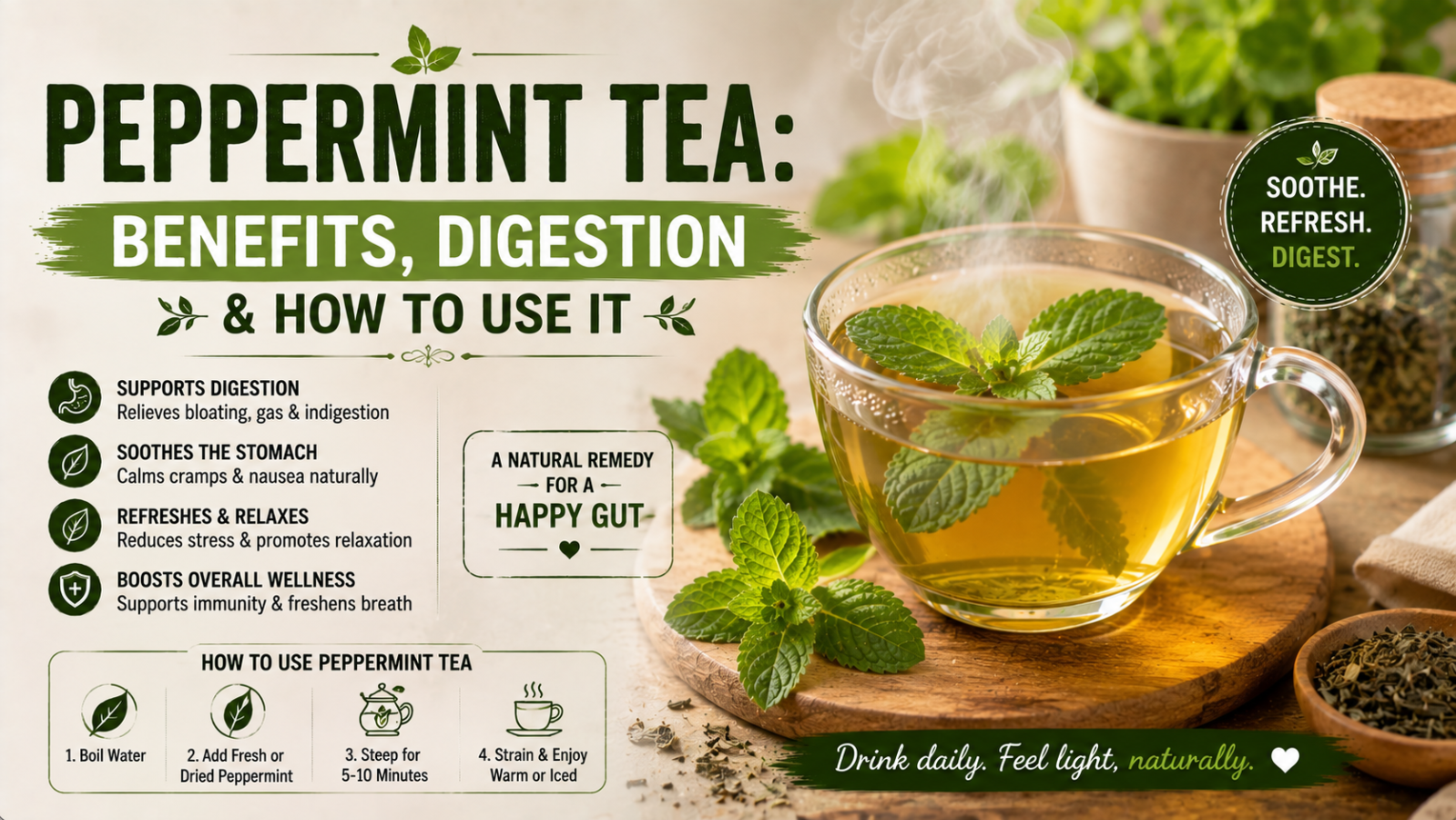
Peppermint tea is a refreshing, caffeine-free drink that many people enjoy after meals or when their stomach feels unsettled. Its naturally cooling flavor comes from peppermint leaves, which contain menthol and other plant compounds that have been studied for digestive effects.
If you’ve ever wanted something warm and soothing after a big dinner, peppermint tea can be an easy choice. You can also use the Copy Button to save or share the practical tips in this guide for later.
Quick Answer: Is Peppermint Tea Good for Digestion?
Peppermint tea may help some people feel more comfortable after eating, particularly because peppermint can have a relaxing effect on smooth muscle in the digestive tract. However, research on peppermint tea itself is more limited than research on peppermint oil preparations.
A warm cup can fit into a healthy routine, but it isn’t a treatment for chronic digestive problems. People with acid reflux may need to be especially cautious because peppermint can worsen reflux symptoms in some individuals.
Peppermint Tea and Your Digestive System
Peppermint has been used traditionally for digestive discomfort for a long time. Modern research has focused heavily on peppermint oil, especially its effects on intestinal smooth muscle.
Menthol is one of peppermint’s main compounds. It contributes to the cooling sensation you notice when drinking or tasting peppermint.
Research suggests peppermint may relax smooth muscle in parts of the gastrointestinal tract. That effect helps explain why peppermint products have attracted interest for symptoms such as abdominal discomfort and bloating.
However, there’s an important distinction between peppermint tea and peppermint oil capsules. Studies involving concentrated peppermint oil don’t automatically prove that a regular cup of tea will have the same effects.
That’s why it’s better to think of peppermint tea as a potentially soothing beverage rather than a digestive treatment.
Peppermint Tea Benefits to Know
A few potential benefits make peppermint tea worth considering.
1. It can be a caffeine-free drink
Traditional peppermint tea contains no caffeine when it’s made solely from peppermint leaves. That’s useful if you want a warm evening beverage without adding caffeine late in the day.
2. It may feel soothing after meals
The combination of warmth, hydration, and peppermint’s characteristic cooling sensation can make the drink pleasant after eating.
Some people also find that sipping a warm beverage encourages them to slow down after a meal instead of immediately reaching for dessert or another snack.
3. Peppermint may affect intestinal muscle activity
Peppermint’s smooth-muscle effects have been studied more extensively with peppermint oil. Therefore, the evidence should not be overstated when discussing ordinary tea.
Still, the biological effects of peppermint help explain its long-standing reputation as a digestive herb.
4. It adds flavor without much sugar
Unsweetened peppermint tea contains very little energy and no need for added sweeteners. If you’re replacing sugary drinks, that can be a practical dietary improvement.
You can enjoy the minty flavor on its own, too.
Peppermint Tea for Bloating
Bloating can feel frustrating because the cause isn’t always obvious. A large meal, constipation, swallowed air, certain carbohydrates, food intolerances, and digestive conditions can all contribute.
Peppermint may help some digestive discomfort because of its effects on smooth muscle. However, evidence for peppermint tea specifically remains limited.
For an occasional uncomfortable evening, a cup may be worth trying.
If you’re bloated most days, though, don’t keep adding peppermint tea without looking for patterns. Notice your meals, bowel habits, eating speed, stress, and other symptoms.
That information can be far more useful.
Peppermint Tea After Meals: A Good Habit?
For many people, yes.
There’s nothing magical about drinking peppermint tea immediately after eating. Instead, think of it as a pleasant way to finish a meal and stay hydrated.
Try a cup about 15 to 30 minutes after dinner if you enjoy it. You can also drink it later in the evening.
I like this approach because it turns a simple beverage into a small pause in the day. The goal isn’t to “fix” digestion. It’s simply to create a comfortable routine around eating.
If peppermint triggers heartburn for you, choose another caffeine-free tea instead.
How to Make Peppermint Tea at Home
Fresh peppermint leaves and dried peppermint both work well.
Simple peppermint tea recipe
Ingredients:
- 1–2 tablespoons fresh peppermint leaves, or about 1 teaspoon dried peppermint
- 8–12 ounces hot water
- Lemon, optional
- Honey, optional
Directions:
- Place the peppermint leaves in a mug or teapot.
- Pour hot water over the leaves.
- Cover and steep for about 5–10 minutes.
- Strain the leaves.
- Add lemon or a small amount of honey if you prefer.
Covering the mug while the tea steeps can help retain some of the aromatic compounds.
For a stronger flavor, use more leaves or steep longer. If the taste feels too intense, simply dilute it with more hot water.
Peppermint Tea vs. Peppermint Oil
This distinction deserves attention.
Peppermint oil capsules are concentrated products. Some enteric-coated peppermint oil preparations have been studied for irritable bowel syndrome symptoms.
Peppermint tea is much less concentrated.
So, you shouldn’t assume that research on peppermint oil means peppermint tea will produce the same results. The preparation, dose, and delivery method all matter.
For everyday drinking, tea is primarily a beverage. Peppermint oil supplements are a different category and may carry different considerations.
If you’re thinking about using concentrated peppermint oil for digestive symptoms, it’s worth discussing that choice with a healthcare professional.
Peppermint Tea and Acid Reflux
This is where peppermint tea may not be the best choice.
Peppermint can relax the muscle between the esophagus and stomach. For some people, that may allow stomach contents to move upward more easily and worsen reflux or heartburn.
Therefore, if you regularly experience:
- Heartburn
- Acid taste in your mouth
- Burning in your chest
- Regurgitation
- Symptoms that worsen after lying down
peppermint tea may aggravate the problem.
Instead, consider a non-mint herbal tea that you tolerate well.
This is a good example of why “good for digestion” doesn’t mean “good for every digestive symptom.”
When Should You Drink Peppermint Tea?
There’s no universally correct time.
After lunch
A cup can provide a refreshing break without caffeine.
After dinner
It can become a calming part of your evening routine, provided peppermint doesn’t trigger reflux.
Between meals
Unsweetened tea can be an easy way to increase your fluid intake.
Before bed
Because plain peppermint tea is naturally caffeine-free, some people enjoy it in the evening. However, any beverage close to bedtime may increase nighttime bathroom trips for some people.
Choose the timing that feels comfortable rather than following a rigid schedule.
7 Ways to Make Peppermint Tea More Enjoyable
You don’t need sugar to make peppermint tea interesting.
1. Add lemon.
Lemon brings brightness and balances the strong mint flavor.
2. Try fresh ginger.
A few slices create a warmer, spicier drink.
3. Add cinnamon.
Cinnamon gives the tea a softer, naturally sweet aroma.
4. Make it iced.
Brew peppermint tea, cool it, and pour it over ice.
5. Use fresh mint.
Fresh leaves create a lighter flavor than many dried teas.
6. Add a small amount of honey.
If you prefer sweetness, keep the amount modest.
7. Blend herbs carefully.
Chamomile or lemon balm can create a gentler herbal combination, as long as you tolerate those ingredients.
If you have reflux, don’t assume every mint combination will suit you. Mint remains the ingredient to watch.
How Much Peppermint Tea Can You Drink?
For most healthy adults, an occasional or moderate cup of peppermint tea can fit comfortably into a balanced diet.
There’s no need to drink several large mugs simply because one cup felt good.
Pay attention to your response. If you notice heartburn, abdominal discomfort, diarrhea, or another unwanted effect after drinking it, reduce the amount or stop.
Also, check the ingredient label on packaged teas. Some “peppermint” blends contain caffeine, added sweeteners, or several other herbs.
Pure peppermint tea is the simplest option when you want to know exactly what you’re drinking.
Peppermint Tea as Part of a Gut-Friendly Routine
Your digestive health depends on far more than one beverage.
Regular meals, adequate fiber, enough fluid, physical activity, sleep, and a varied diet all matter. So does finding foods that your own body tolerates well.
Peppermint tea can fit into that picture.
For example, you might eat a fiber-rich dinner with roasted vegetables, beans, whole grains, and a protein source. Then you take a short walk and later enjoy a cup of unsweetened peppermint tea.
The tea isn’t responsible for the whole routine. It’s simply one small piece.
That mindset helps prevent unrealistic expectations about “detox” drinks or quick digestive fixes.
When to Skip Peppermint Tea
Although peppermint tea is generally a gentle beverage, it isn’t right for everyone.
Consider avoiding it if peppermint consistently triggers your heartburn or reflux. You should also be cautious with herbal products if you’re pregnant, breastfeeding, taking medications, or managing a medical condition, because herbs can have specific safety considerations.
And don’t use peppermint tea to cover up symptoms that keep returning.
Persistent abdominal pain, ongoing vomiting, blood in the stool, unexplained weight loss, or major changes in bowel habits deserve proper medical attention.
A soothing drink should complement good care, not delay it.
Common Peppermint Tea Mistakes
One mistake is assuming stronger means better.
A very concentrated brew isn’t necessary for a pleasant cup. In fact, stronger peppermint may be unpleasant for people who are sensitive to it.
Another issue is adding lots of sugar. If you’re drinking peppermint tea for its light, refreshing qualities, several teaspoons of sugar can work against that goal.
Finally, don’t use peppermint simply because someone online said it’s good for “gut health.” Your symptoms matter more than a generic recommendation.
If peppermint makes you feel better, enjoy it. If it makes you feel worse, choose something else.
Peppermint Tea FAQ
Does peppermint tea help digestion?
It may help some people feel more comfortable after meals. Peppermint has compounds that can affect smooth muscle in the digestive tract, although research is stronger for peppermint oil than for peppermint tea.
Can peppermint tea help with bloating?
It may provide relief for some types of digestive discomfort, but evidence for tea specifically is limited. Frequent bloating can have many causes, so persistent symptoms deserve further attention.
Is peppermint tea good for acid reflux?
Usually, peppermint isn’t the best choice for people with reflux. It may relax the lower esophageal sphincter and worsen heartburn in some individuals.
Is peppermint tea caffeine-free?
Pure peppermint tea is naturally caffeine-free. However, check blended tea labels because other ingredients may contain caffeine.
Can I drink peppermint tea every day?
Many people can enjoy moderate amounts regularly. However, if it causes heartburn or stomach discomfort, daily use may not be a good fit for you.
The Bottom Line on Peppermint Tea
Peppermint tea is an easy, flavorful beverage that can add variety to a healthy drinking routine. Its peppermint compounds have interesting digestive effects, and some people find a warm cup soothing after meals.
Still, keep the claims realistic. Evidence for peppermint tea itself is more limited than evidence for concentrated peppermint oil, and peppermint can make reflux worse for some people.
Start with a mild cup and notice how you feel. If you enjoy it and your stomach tolerates it, peppermint tea can be a simple addition to your day.
Use the Copy Button to save the preparation tips or share them with someone who enjoys herbal drinks. The best digestive routine isn’t the most complicated one—it’s the collection of small habits that consistently make you feel good.

Here’s a short Gutrova-style author biography for Josh Axe:
Josh Axe
Josh Axe is a wellness expert, author, and educator known for his work in nutrition, natural health, and gut wellness. As a contributor to Gutrova, he shares practical insights on digestive health, healthy eating habits, and lifestyle strategies that help readers build a stronger foundation for overall well being. His content focuses on making wellness simple, actionable, and accessible for everyday life.











1 thought on “Peppermint Tea: Benefits, Digestion & How to Use It”