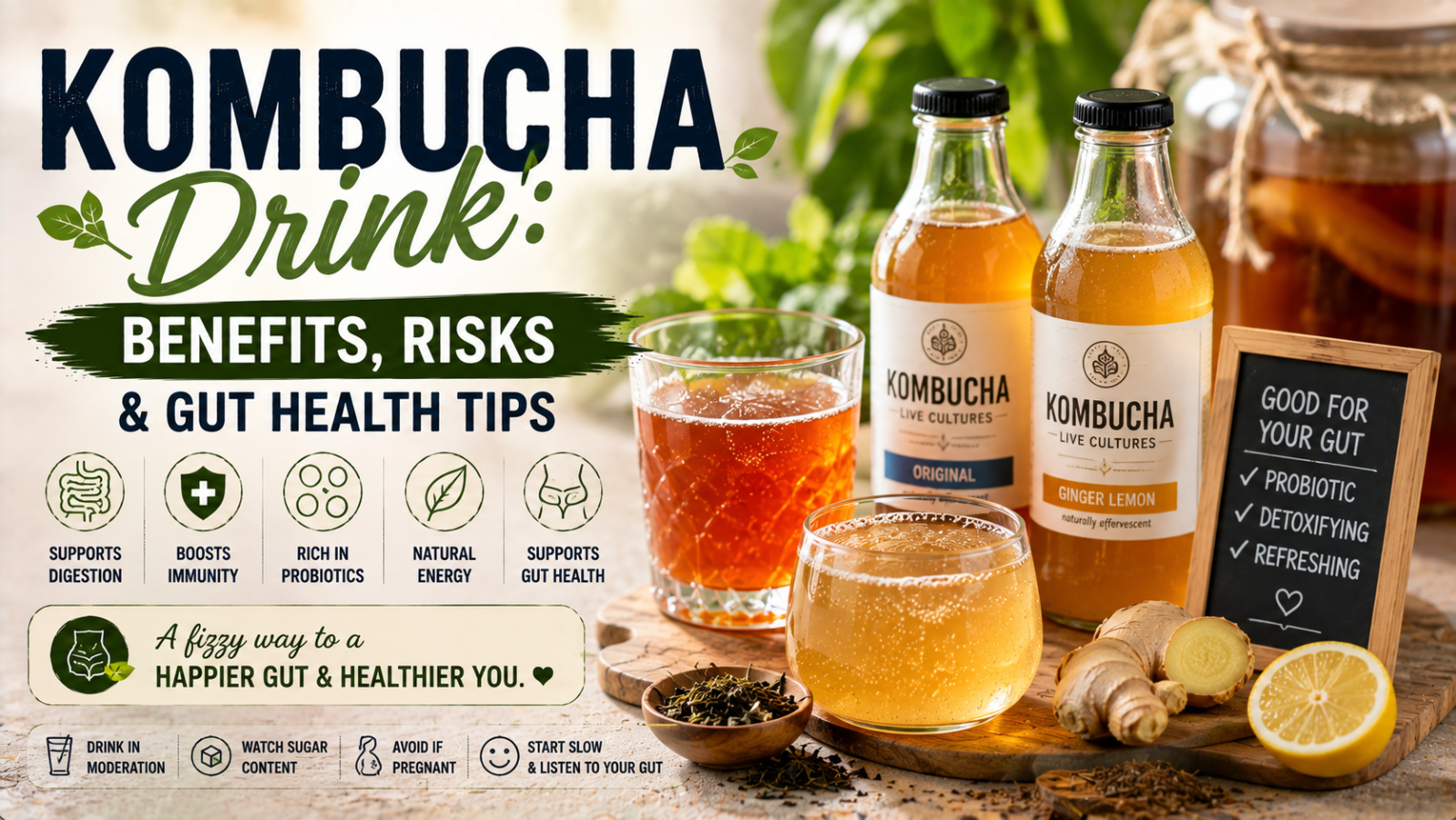
A kombucha drink can be a refreshing way to add a fermented food to your routine, especially if you enjoy a tart, lightly fizzy beverage. However, its gut-health reputation has grown faster than the research, so it helps to separate realistic benefits from big marketing claims. (Mayo Clinic)
If you’ve ever swapped soda for a cold bottle of kombucha, you know how satisfying that tangy fizz can be. I also like the practical side of it: a fermented drink can fit into an ordinary lunch or afternoon break without requiring a complicated wellness routine. Use the Copy Button on this article to save or share the tips that fit your routine.
Quick Answer: Is a Kombucha Drink Good for You?
A kombucha drink is a fermented tea made from tea, sugar, bacteria, and yeast. Fermentation produces organic acids and other compounds, and some products contain living microorganisms. However, human research remains limited, so kombucha shouldn’t be treated as a cure for digestive problems or inflammation.
For most healthy adults, a commercially prepared kombucha from a reputable source can be an occasional part of a balanced diet. Choose products with less added sugar, pay attention to serving size, and start with a small amount if you’re not accustomed to fermented drinks.
How a Kombucha Drink Is Made
Kombucha starts with brewed tea, commonly black or green tea. Producers add sugar along with a culture containing bacteria and yeast. The mixture then ferments, which changes the flavor and creates the drink’s familiar acidity and carbonation. (Mayo Clinic)
The sugar isn’t simply there to make kombucha sweet. Microorganisms use some of it during fermentation. Still, the finished product can contain meaningful amounts of sugar, especially in flavored varieties.
Because recipes differ, two bottles sitting side by side in a grocery store can have very different nutrition profiles. That’s why the label matters more than the word “kombucha” on the front.
What fermentation changes
Fermentation can produce organic acids and other compounds. Kombucha made with tea may also contain compounds associated with tea, including polyphenols.
Some kombucha products also contain living microorganisms. However, not every fermented drink provides the same organisms or the same amount, so it’s better not to assume that every bottle works like a probiotic supplement.
Can a Kombucha Drink Support Gut Health?
This is where the topic gets interesting.
The gut microbiome contains a huge community of microorganisms that interact with the foods we eat. Fermented foods and drinks can introduce microorganisms into the diet, but the effect varies by product and by person.
Research on kombucha itself is still limited. Mayo Clinic notes that only a small amount of research has explored possible human health benefits, and there isn’t enough strong evidence to support many of the claims made about the beverage.
That doesn’t mean kombucha has no place at the table. It simply means we should keep its role realistic.
For example, you might enjoy a small serving with lunch instead of reaching for a sugary soda. That’s a useful dietary swap even if you don’t experience some dramatic change in your digestion.
Kombucha and probiotics aren’t identical
You’ll often see kombucha described as a probiotic drink. Yet the term “probiotic” has a specific meaning. A probiotic must contain live microorganisms that have been shown to provide a health benefit when consumed in an appropriate amount.
So, don’t assume that every bottle labeled kombucha contains the same probiotic benefits.
Instead, think of kombucha as one fermented food option. Yogurt, kefir, kimchi, sauerkraut, and other fermented foods can also contribute microorganisms to your diet.
Kombucha Drink and Gut Inflammation: What We Know
Inflammation is a complicated biological process. It isn’t something you can reliably “turn off” by drinking one beverage.
Some kombucha contains tea-derived polyphenols and fermentation products that have attracted scientific interest. However, evidence from laboratory and preliminary research doesn’t automatically mean that drinking kombucha will reduce inflammation in people.
That’s an important distinction.
If your goal is to support a healthier gut environment, look at the entire pattern of your diet. Fiber-rich vegetables, fruits, whole grains, legumes, nuts, seeds, adequate fluids, and a variety of minimally processed foods offer a much broader nutritional foundation.
A kombucha drink can fit into that pattern. It shouldn’t replace it.
A better way to think about inflammation
Instead of asking, “Which drink stops inflammation?” try asking, “What does my overall eating pattern look like?”
That’s a much more useful question.
For instance, consider a lunch with grilled salmon, lentils, roasted vegetables, and water. Adding a small kombucha may be enjoyable, but the meal itself provides far more nutritional variety than the drink alone.
Choosing a Better Kombucha Drink at the Store
Walk into almost any large grocery store and you’ll find plenty of kombucha options. Some are lightly sweetened. Others taste more like fruit soda.
So, what should you look for?
1. Check the added sugar
Fermentation requires sugar, but that doesn’t mean every finished product needs to be heavily sweetened.
Compare labels and look for a product that fits comfortably within your overall daily eating pattern. If you’re replacing soda, a lower-sugar kombucha may be a more useful choice.
2. Look at serving size
A bottle may contain more than one serving. That’s easy to miss when you’re drinking directly from the container.
Before judging the sugar content, check the serving size and multiply the numbers if necessary.
3. Consider caffeine
Because kombucha usually starts with black or green tea, it may contain caffeine. The amount varies by product and preparation.
If you’re sensitive to caffeine, avoid treating kombucha like caffeine-free herbal tea.
4. Buy from a reputable producer
Commercially produced kombucha offers an important advantage: controlled production and sanitation.
Mayo Clinic warns that improperly prepared homemade kombucha can carry risks, including contamination. (Mayo Clinic)
For that reason, I wouldn’t treat homemade fermentation as a casual kitchen experiment. Food safety matters.
When a Kombucha Drink May Not Feel Good
A fermented drink isn’t automatically comfortable for every stomach.
Some people may experience digestive upset after drinking kombucha. Its acidity, carbonation, caffeine, sugar, or fermentation byproducts may simply not agree with them. Mayo Clinic also notes reports of stomach upset, allergic reactions, and infections associated with kombucha.
If you’re new to it, start small.
For example, instead of drinking a large bottle quickly, try a modest serving with food. Then pay attention to how your body responds.
Bloating, cramping, loose stools, or reflux can be useful signals that the beverage isn’t working well for you. You don’t need to force a food simply because it’s marketed as healthy.
How Much Kombucha Should You Drink?
There isn’t one universal amount that everyone needs.
Kombucha isn’t an essential nutrient, so you don’t need to drink it every day to have a healthy gut. Your overall diet matters much more.
If you enjoy it, a small serving can be a reasonable addition to meals or snacks. However, drinking more won’t necessarily produce greater health benefits.
In fact, larger amounts may mean more sugar, acidity, caffeine, or digestive discomfort.
A simple approach is to treat kombucha like other flavorful beverages: enjoy it because you like it, while keeping water as your main source of hydration.
Simple Ways to Add Kombucha to Your Routine
You don’t need a special “gut health protocol” to enjoy kombucha.
Try these practical ideas:
- Have a small glass alongside lunch.
- Choose a lower-sugar variety instead of a sugary soft drink.
- Keep portions modest if carbonation bothers you.
- Pair it with a meal rather than drinking it quickly on an empty stomach.
- Alternate it with plain or sparkling water.
- Try different flavors until you find one you genuinely enjoy.
- Check the label for caffeine if you drink it later in the day.
- Refrigerate the product according to the manufacturer’s directions.
- Don’t assume an expensive bottle is automatically healthier.
- Think of kombucha as one part of a varied diet.
Meanwhile, build your gut-health routine around foods that provide fiber and overall nutritional value. Beans, oats, berries, vegetables, nuts, seeds, and whole grains give your gut microbes much more dietary variety than a single beverage can provide.
Kombucha Drink vs. Soda: Is It a Better Swap?
This depends on the products you’re comparing.
A lower-sugar kombucha may make a reasonable alternative to a sugar-heavy soda. You may also enjoy the carbonation and bold flavor without needing the same sweetness.
However, kombucha isn’t automatically a “healthy soda.” Some varieties contain substantial added sugar, and the nutritional differences can be smaller than the front label suggests.
Therefore, compare the nutrition facts rather than relying on health-focused packaging.
If you’re replacing a regular sugary soda with a lower-sugar kombucha, that’s a practical change. If you’re replacing plain water with several sweetened bottles every day, the picture looks different.
A Simple Gut-Friendly Drink Strategy
Your beverage routine doesn’t have to be complicated.
Start with water. Add unsweetened tea or coffee if they suit you. Then, if you enjoy fermented beverages, consider a modest serving of kombucha.
Food still does most of the heavy lifting.
A gut-supportive eating pattern can include plenty of plant foods, fiber, fermented foods, adequate fluids, and a manageable amount of highly processed food. Cleveland Clinic similarly recommends fermented foods such as kombucha alongside fiber-rich foods as part of a broader approach to gut health. (Cleveland Clinic)
And remember something easy to overlook: your gut doesn’t need perfection.
If you have a burger and fries one night, you haven’t ruined your microbiome. Likewise, adding kombucha to an otherwise poor diet won’t transform it.
Consistency beats chasing individual “superfoods.”
Who Should Be More Careful With Kombucha?
Some people should take extra care with kombucha.
Mayo Clinic specifically advises people who are pregnant or breastfeeding, or who have weakened immune systems, to avoid kombucha.
People who are sensitive to caffeine, acidic drinks, or carbonation may also find that kombucha doesn’t suit them.
If you have a known digestive condition and notice that fermented drinks repeatedly worsen your symptoms, it’s reasonable to leave kombucha out rather than forcing it into your routine.
Frequently Asked Questions About Kombucha Drink
Is a kombucha drink good for digestion?
It may be a useful fermented food for some people, but strong human evidence for specific digestive benefits remains limited. Fermented foods can provide live microorganisms, yet individual products vary. (Mayo Clinic)
Can kombucha reduce gut inflammation?
There’s not enough human evidence to say that drinking kombucha reduces gut inflammation. Some of its compounds are being studied for potential effects, but kombucha shouldn’t be used as an inflammation treatment.
Is kombucha better than soda?
A lower-sugar kombucha can be a reasonable swap for a sugary soda. However, compare the labels because some kombucha products contain considerable sugar.
Can I drink kombucha every day?
Some healthy adults may enjoy a modest amount regularly, but there is no requirement to drink kombucha daily. If it causes bloating, stomach upset, or other symptoms, reduce the amount or skip it.
Does kombucha contain caffeine?
Usually, yes, because kombucha is commonly made with black or green tea. The amount varies by product, so check the label if caffeine matters to you.
Final Thoughts on Kombucha Drink
A kombucha drink can be a flavorful addition to a balanced diet, especially when it replaces a heavily sweetened beverage. Its fermented nature makes it interesting from a gut-health perspective, but current evidence doesn’t justify treating it as a cure-all or a guaranteed way to reduce inflammation.
Choose a reputable product, check the sugar and caffeine, start with a modest serving, and pay attention to how your body responds. Most of all, remember that your gut benefits from the bigger picture: fiber-rich plants, varied foods, adequate hydration, movement, sleep, and a sustainable eating pattern.
If this guide helped, use the Copy Button to save your favorite kombucha tips or share them with someone who enjoys fermented drinks.












1 thought on “Kombucha Drink: Benefits, Risks & Gut Health Tips”