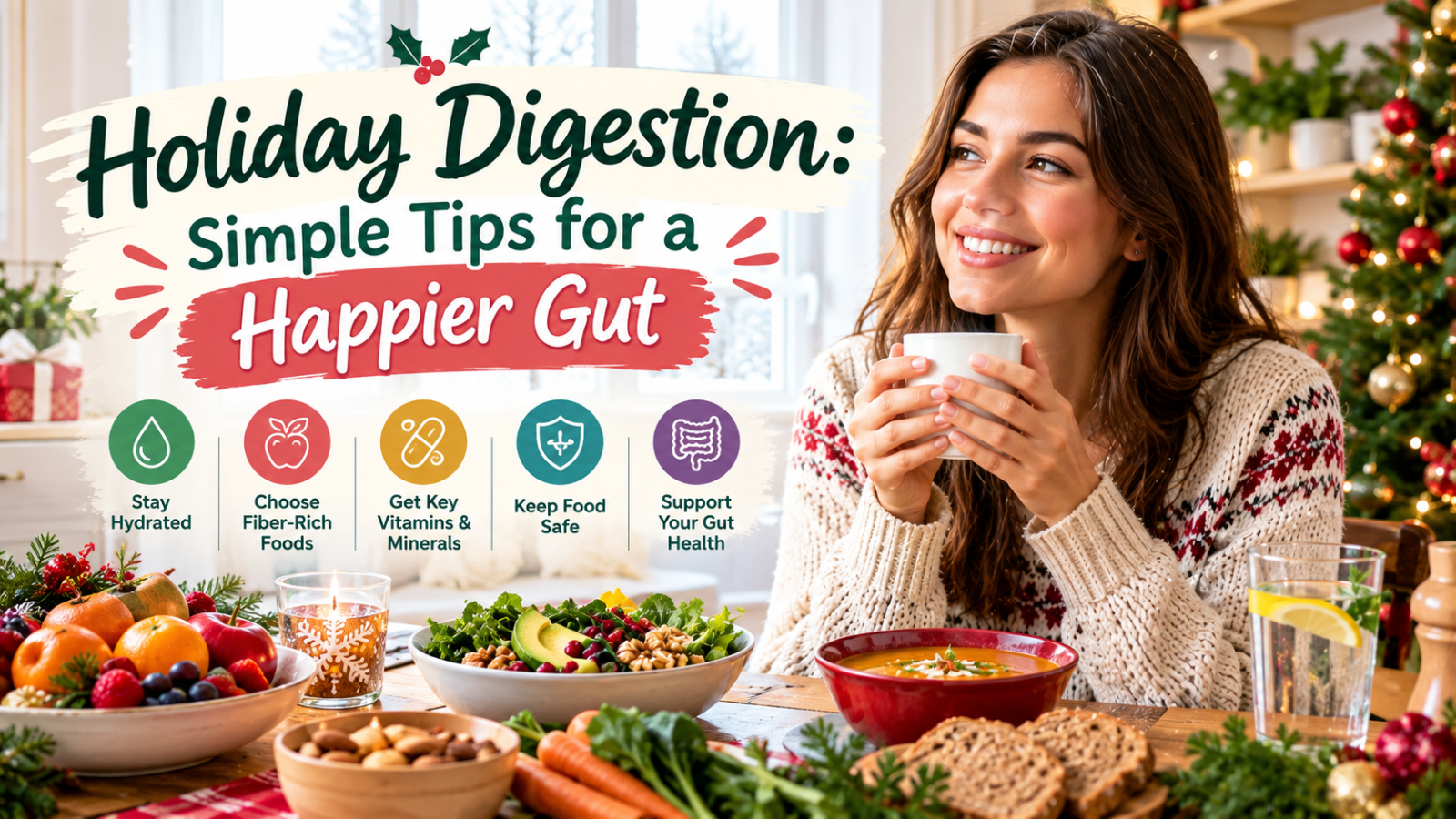
Holiday digestion can feel a little off when rich meals, busy schedules, travel, desserts, and late-night eating replace your normal routine. A few simple habits can help you enjoy holiday food without making your stomach the center of attention.
I’ve found that the hardest part isn’t one big holiday meal. It’s the combination of several small changes over a few days. That’s why I like saving practical Gutrova tips with the Copy Button before the holidays, so useful ideas are easy to find when the kitchen is full and the schedule gets hectic.
Quick Answer: How Can You Support Holiday Digestion?
The simplest way to support holiday digestion is to keep a few everyday habits in place. Drink enough fluids, eat some fiber-rich foods, stay active, slow down during meals, and give your body time between large meals.
You don’t need to avoid your favorite holiday foods. Instead, balance richer dishes with vegetables, fruit, whole grains, beans, nuts, seeds, and other nutrient-dense foods.
Regular movement also helps. NIDDK notes that changes in routine, diet, hydration, and physical activity can contribute to constipation, including during travel. Fiber, enough fluids, and regular activity can help support regular bowel habits.
Why Holiday Digestion Gets Tricky
Holiday eating has its own rhythm.
Breakfast might be skipped because dinner will be large. Lunch can turn into a plate of appetizers. Then dinner arrives with turkey, stuffing, potatoes, rolls, casseroles, desserts, and another round of snacks later in the evening.
None of these foods are automatically a problem. The challenge comes from the sudden change in quantity, timing, and variety.
Large meals can also feel uncomfortable when you eat quickly. Add alcohol, sugary drinks, less water, and hours of sitting, and it’s easy to end the day feeling overly full or bloated.
Stress can play a role, too. Holiday shopping, cooking, family gatherings, and travel can disrupt sleep and normal bathroom routines. Your digestive system doesn’t stop responding to those changes just because it’s a celebration.
A little structure can help without taking the fun out of the season.
Holiday Digestion Starts With Your First Meal
One of the easiest mistakes is saving all your appetite for the main event.
Skipping breakfast or lunch may seem like a clever way to “make room” for dinner. However, arriving at the table extremely hungry can make it much harder to eat slowly or notice when you’re comfortably full.
Instead, start the day with a normal meal.
Try oatmeal with berries and nuts, eggs with whole-grain toast and fruit, or yogurt with fruit and seeds. These choices provide a mix of protein, carbohydrates, fiber, and other nutrients.
You don’t need a perfect breakfast. You simply want to avoid turning a holiday dinner into your first substantial meal of the day.
A Simple Holiday Morning
A practical morning could look like this:
- Drink water after waking.
- Eat a normal breakfast.
- Include fruit or another fiber-rich food.
- Take a short walk if you have time.
- Leave some room for the special foods you’ll enjoy later.
That approach makes holiday eating feel more like one enjoyable meal instead of an all-day eating marathon.
Holiday Digestion and Fiber: Keep It Steady
Fiber often disappears from holiday meals because many traditional favorites are low in it.
White rolls, creamy casseroles, desserts, chips, and other refined foods can crowd out fruits, vegetables, beans, and whole grains. If you eat much less fiber than usual for several days, your bathroom routine may notice.
NIDDK recommends getting enough fiber and adding it gradually rather than making a sudden, dramatic increase. Fluids also help fiber work properly.
You can add fiber without changing the holiday menu completely.
Put berries or sliced fruit on the breakfast table. Add a vegetable side to dinner. Choose oatmeal earlier in the day. Keep nuts available for snacking. If beans are part of the meal, enjoy them.
The goal is consistency, not a giant bowl of raw vegetables after eating three slices of pie.
Easy Holiday Fiber Swaps
Small changes can make a difference:
- Add berries to breakfast.
- Choose a whole-grain side when available.
- Keep fruit visible on the kitchen counter.
- Add roasted vegetables to the dinner table.
- Use nuts or seeds as a snack.
- Include beans or lentils in soups and salads.
These choices also bring vitamins and minerals into meals that might otherwise be heavy on refined carbohydrates and added fats.
Holiday Digestion Benefits From Smart Portions
Portion control doesn’t have to mean measuring every bite.
Instead, build your plate with a little variety. Start with the foods you genuinely want to enjoy, then add vegetables, fruit, or another fiber-rich option when available.
I use a simple rule during big family meals: take what looks worth eating, but don’t feel obligated to sample every dish just because it’s there.
That makes room for special foods without turning the meal into a test of how much you can eat.
Eating slowly helps, too. Put the fork down occasionally, talk with the people around you, and give yourself time before going back for seconds.
There’s another benefit to slowing down: you actually get to taste the food.
Holiday meals are often prepared with more care than everyday dinners. Rushing through them means missing part of the experience.
Holiday Digestion and Hydration
Water can be surprisingly easy to forget during the holiday season.
You may spend hours cooking, shopping, visiting relatives, or traveling. Meanwhile, coffee, soda, cocktails, and other drinks can take the place of your usual water intake.
NIDDK recommends drinking enough liquids, particularly when increasing fiber, because fluids help fiber work better and can support softer stools.
Keep water available throughout the day. Drink with meals and between them instead of waiting until you’re very thirsty.
Alcohol deserves some attention as well. If you’re drinking, alternate alcoholic beverages with water. That simple habit can make the evening easier on your overall routine.
You don’t need a complicated hydration schedule. A water bottle on the counter or beside you during a movie can be enough to remind you to drink.
Vitamins and Minerals That Fit Holiday Meals
Holiday meals can actually provide plenty of useful nutrients when you look beyond the desserts.
Leafy greens, vegetables, beans, nuts, seeds, whole grains, dairy foods, eggs, seafood, and lean meats all contribute different vitamins and minerals.
Magnesium is one example. The NIH Office of Dietary Supplements lists legumes, nuts, seeds, whole grains, and leafy green vegetables among good food sources. Magnesium supports normal muscle and nerve function and many other processes in the body.
That makes foods such as spinach, pumpkin seeds, almonds, beans, oatmeal, and whole grains useful additions to a holiday eating pattern.
Vitamin D is another nutrient worth keeping in mind. It is fat-soluble and is best absorbed when taken with a meal or snack that contains some fat.
Still, you don’t need to turn holiday meals into a supplement checklist. Food provides a combination of nutrients, fiber, and other useful components that supplements can’t fully replicate.
If you already use a vitamin or mineral supplement because of an established nutritional need, stick with the guidance you’ve been given instead of adding several new products during the holidays.
Holiday Digestion Needs Movement, Too
After a big dinner, the couch can look incredibly inviting.
A short walk, however, may feel better than spending the next three hours sitting. Regular physical activity is one of the lifestyle measures NIDDK recommends for constipation prevention and relief.
You don’t need to exercise hard after a holiday meal.
Walk around the block. Help clean the kitchen. Play outside with the kids. Take the dog out. Even better, make movement part of the family tradition.
A post-meal walk can become something people actually look forward to instead of another health task.
During the rest of the day, avoid sitting for extremely long stretches when you can. A few minutes of movement here and there can help break up a sedentary holiday schedule.
Holiday Digestion and Leftover Safety
Holiday leftovers are one of the best parts of the season. They can also become a food-safety problem if they’re left sitting out for too long.
CDC recommends refrigerating perishable food within two hours. If food has been exposed to temperatures above 90°F, such as at a hot outdoor gathering, refrigerate it within one hour.
Don’t wait for a large pot of food to cool completely on the counter. CDC advises dividing large amounts into smaller, shallow containers so they cool more quickly.
The same principle applies to holiday buffets. Hot foods should stay hot, while cold foods should stay cold. Lukewarm dishes that have been sitting out for a long time aren’t worth the risk.
Good food safety is part of good holiday digestion because a foodborne illness can turn a celebration into several uncomfortable days.
What to Do After a Very Heavy Meal
It happens.
Maybe you had seconds of stuffing, a generous slice of pie, and a few extra appetizers because everything looked too good to pass up.
Don’t try to “undo” the meal by starving yourself the next day.
Instead, return to your normal routine. Drink water, eat a balanced breakfast, include fiber-rich foods, and get some gentle movement.
The next meal doesn’t need to be extremely restrictive. A bowl of oatmeal with fruit, eggs with vegetables, or a simple soup can help you return to your usual pattern.
One large meal doesn’t define your diet. Your habits across the entire season matter much more.
A Simple Holiday Digestion Game Plan
If you want an easy routine, keep these seven habits in mind:
1. Eat breakfast.
Start with a normal meal instead of saving all your appetite for dinner.
2. Keep water nearby.
Make hydration part of your day rather than an afterthought.
3. Add fiber.
Include fruit, vegetables, whole grains, beans, nuts, or seeds.
4. Eat slowly.
Give yourself time to enjoy the meal and recognize fullness.
5. Move after meals.
A relaxed walk can be more useful than immediately sitting down for hours.
6. Enjoy the foods you love.
You don’t need to eliminate holiday favorites to support your digestive routine.
7. Handle leftovers safely.
Refrigerate perishable foods promptly and keep an eye on how long dishes sit out.
This approach is realistic because it doesn’t ask you to eat like you’re following a strict diet during Thanksgiving, Christmas, Hanukkah, New Year’s, or another holiday gathering.
Holiday Digestion: Foods to Keep Around
Your holiday kitchen doesn’t have to be filled with “diet foods.”
Keep a few simple staples available:
- Apples, pears, oranges, or berries
- Oatmeal
- Plain yogurt
- Nuts and seeds
- Whole-grain bread
- Beans or lentils
- Leafy greens
- Carrots and other vegetables
- Eggs
- Soups with vegetables and beans
- Plenty of water
These foods give you easy options between larger celebrations.
For example, if dinner is going to be rich, breakfast can stay simple. If lunch was mostly appetizers, a balanced dinner can bring vegetables, protein, and whole grains back into the day.
That flexibility is much easier to maintain than trying to follow rigid food rules.
FAQs About Holiday Digestion
Why does my stomach feel bloated during the holidays?
Large meals, eating quickly, changes in food choices, carbonated drinks, alcohol, and a disrupted routine can all contribute to digestive discomfort. Eating more slowly and keeping regular meals can help.
How can I prevent constipation during the holidays?
Keep fiber in your diet, drink enough fluids, and stay physically active. NIDDK specifically recommends adequate fiber, fluids, and regular activity as part of constipation prevention.
Should I skip meals before a big holiday dinner?
Usually, skipping meals isn’t necessary. Eating a normal breakfast and lunch can help you arrive at dinner comfortably hungry rather than extremely hungry.
Are holiday leftovers safe to eat?
Yes, when they’re handled properly. Refrigerate perishable leftovers within two hours, or within one hour if they’ve been exposed to temperatures above 90°F. CDC recommends eating many cooked leftovers within three to four days.
Do I need vitamins or minerals after eating a lot of holiday food?
Not simply because you ate a large meal. Focus on a varied diet that includes nutrient-rich foods. Supplements can be useful for specific nutritional needs, but taking extra vitamins or minerals isn’t a substitute for balanced eating.
Conclusion: Make Holiday Digestion Easier
Good holiday digestion doesn’t require giving up pie, stuffing, cookies, family recipes, or the foods you look forward to all year. Instead, keep a few dependable habits in place: drink enough water, include fiber-rich foods, eat at a comfortable pace, move regularly, and handle leftovers safely. The holidays are meant to be enjoyed. A balanced approach lets you share meals with family and friends without feeling like you have to choose between festive food and digestive comfort.











2 thoughts on “Holiday Digestion: Simple Tips for a Happier Gut”