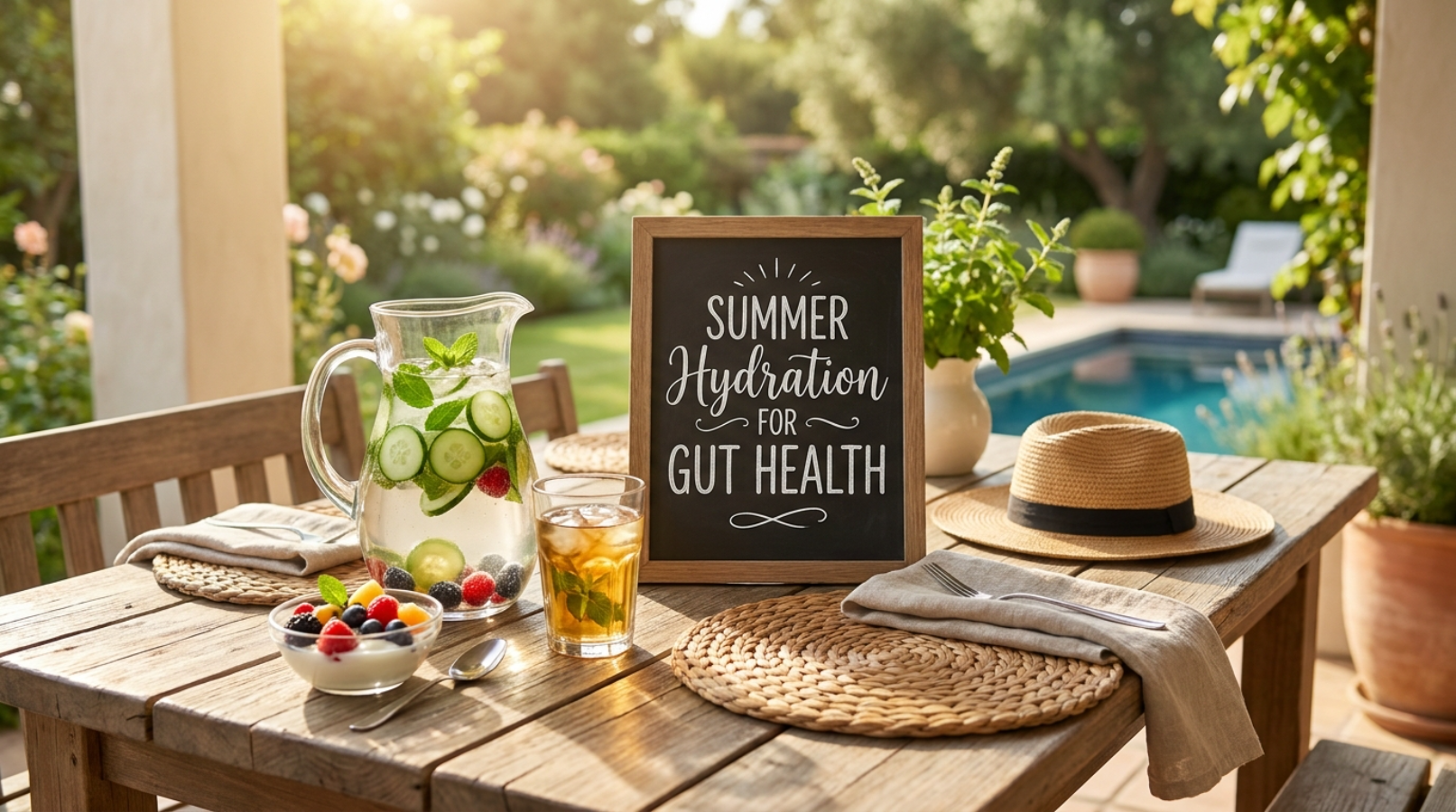
Summer hydration becomes especially important when hot weather, outdoor activities, travel, and sweating increase your fluid needs. Staying hydrated isn’t only about avoiding thirst; fluids also support digestion, regular bowel movements, temperature control, and the body’s normal daily functions.
I notice how easy it is to forget water during a busy summer day. A few hours outside, an iced coffee, and a long lunch can pass before you realize you haven’t had much plain water. A few simple habits can make hydration feel much more automatic.
Quick Answer: What Is the Best Approach to Summer Hydration?
The best approach to summer hydration is to drink fluids regularly throughout the day rather than waiting until you’re very thirsty. Water should be your main drink, while water-rich foods such as watermelon, berries, cucumbers, oranges, and leafy vegetables can add to your daily fluid intake.
During hot weather or exercise, you may need more fluids because you lose water through sweat. In addition, replacing electrolytes can become useful during prolonged, intense activity or heavy sweating.
For everyday summer activities, you don’t need complicated hydration routines. Keep water nearby, drink with meals, eat plenty of water-rich foods, and pay attention to thirst and urine color as practical signs of hydration.
Why Summer Hydration Matters for Digestion
Water plays a quiet but important role in the digestive system.
Your body needs fluids to help break down food and absorb nutrients. Water also helps soften stool, which can make regular bowel movements easier. When you’re not drinking enough, constipation may become more noticeable, especially if your usual routine also changes during vacation or travel.
That’s one reason summer hydration and gut health can go hand in hand.
Heat can add another challenge. Sweating causes fluid loss, and a busy outdoor schedule can make it easy to replace those fluids too slowly. Meanwhile, summer travel may mean more restaurant meals, less movement, and different bathroom routines.
You don’t need to obsess over every glass. Instead, make hydration part of the rhythm of your day.
Water and Fiber Work Together
Fiber is an important part of a gut-friendly eating pattern, but fluids matter too.
Foods such as beans, oats, berries, vegetables, chia seeds, and whole grains provide fiber. Adequate fluid intake helps your digestive system handle fiber more comfortably.
If you’ve recently increased your fiber intake, increase fluids gradually as well. A sudden jump in fiber without enough fluid may leave some people feeling more bloated or constipated.
So, think of fiber and fluids as partners rather than separate nutrition goals.
Summer Hydration Starts With Simple Habits
You don’t need to carry a giant water bottle everywhere to stay hydrated.
Small habits can work surprisingly well because they fit naturally into things you already do.
Start Your Morning With Water
After waking up, have a glass of water with breakfast.
It doesn’t need to be ice-cold or flavored with anything. Plain water works perfectly well.
Starting early also gives you a chance to build hydration into the rest of your morning rather than trying to catch up later.
Keep Water Within Reach
A bottle sitting beside your desk is much easier to remember than one hidden in a bag.
Take it with you when you leave home. Keep another bottle in the car when practical. At work, refill it during natural breaks.
The goal is simple: make drinking water convenient.
Drink With Meals
Meals provide easy hydration reminders.
Have water with breakfast, lunch, and dinner. Then add fluids between meals based on thirst, weather, activity, and your individual needs.
This approach feels less like a chore because the habit already has a place in your schedule.
Build Summer Hydration Into Outdoor Activities
Summer walks, gardening, hiking, cycling, beach days, and outdoor sports all change the hydration equation.
When temperatures rise, your body works harder to regulate its temperature. Sweating helps cool you, but it also causes fluid loss.
Before heading outside, drink some water and take a bottle with you. During longer activities, drink regularly instead of waiting until you feel extremely thirsty.
What About Electrolytes?
Electrolytes include minerals such as sodium and potassium that help regulate fluid balance and support normal muscle and nerve function.
For a typical day at home or a short casual walk, water and regular meals are usually enough for many people. However, longer or more intense exercise in hot conditions can lead to substantial sweat loss.
In those situations, an electrolyte drink may be useful.
The key is context. Sports drinks and electrolyte products can contain added sugar or other ingredients, so they don’t automatically make a better everyday drink than water.
If you’re exercising lightly, don’t feel pressured to reach for a specialized hydration product.
Eat Your Water: Summer Foods That Help
Summer offers plenty of naturally hydrating foods.
Watermelon is an obvious favorite, but it isn’t the only option. Cucumbers, strawberries, peaches, oranges, grapes, tomatoes, lettuce, zucchini, and cantaloupe can all contribute fluids while adding vitamins, minerals, and other nutrients.
This is one of my favorite ways to make summer hydration feel less repetitive. Instead of thinking only about how much water is in your bottle, look at what’s on your plate, too.
Easy Hydrating Food Ideas
Try adding:
- Watermelon with breakfast or as an afternoon snack
- Cucumber slices to sandwiches and salads
- Berries with yogurt or oatmeal
- Orange segments with lunch
- Tomatoes in a summer salad
- Homemade fruit-and-yogurt bowls
- Chilled soups such as gazpacho
- Fresh fruit after an outdoor activity
These foods won’t replace your need for fluids, but they can complement your normal drinking habits.
Summer Hydration Without Relying on Sugary Drinks
Hot weather can make sweet drinks especially tempting.
Lemonade, sweet tea, soda, flavored coffee drinks, and frozen beverages can all provide fluid. However, many also contain substantial amounts of added sugar.
You don’t have to eliminate them completely.
Instead, make water your everyday default and enjoy sweeter drinks when you genuinely want them. Sparkling water with fresh berries, cucumber, lemon, or mint can also add variety without turning every drink into a sugary treat.
Unsweetened tea is another option.
If caffeine tends to bother your stomach or affects your sleep, adjust your intake accordingly. Your ideal summer beverage routine should support both hydration and how you feel.
Summer Hydration While Traveling
Travel can make healthy habits surprisingly difficult.
A road trip might involve several hours in the car. An airport day can mean rushing between gates. Hotel breakfasts may look different from your normal meals, and sightseeing can keep you moving for hours.
Plan for hydration before the day gets busy.
Carry a reusable water bottle when practical. Refill it at safe drinking-water stations or other appropriate locations. If you’re flying, bring an empty reusable bottle through security and fill it afterward.
Food can help, too.
Pack snacks such as fruit, nuts, or other foods you already tolerate well. That makes it easier to maintain some normal eating habits while you’re away.
During long drives, stop regularly to stretch and move. Besides supporting general activity, those breaks can make it easier to maintain a comfortable routine.
Don’t Forget Hydration at the Beach or Pool
Beach days can be deceptive.
You may be sitting in the water or relaxing under an umbrella, yet the heat can still increase fluid loss. Sun exposure and physical activity can add to the challenge.
Bring more water than you think you’ll need for a short outing, especially when you’re sharing it with family. Keep drinks somewhere convenient and take regular sips.
Alcohol deserves extra attention here. It can contribute to fluid loss and may make it easier to overlook your body’s normal signals.
If you’re enjoying a summer gathering, alternate alcoholic drinks with water and keep food available.
How to Tell If You Need More Fluids
Thirst is one useful signal, although it’s not the only one.
Dark yellow urine can indicate that you may need more fluids, while pale yellow urine is often associated with better hydration. However, urine color can change for other reasons, including certain foods, medications, and supplements.
Other signs of dehydration can include a dry mouth, fatigue, dizziness, headache, or reduced urination.
Don’t wait for severe symptoms before paying attention.
On especially hot days, consider your environment as well as your activity. You may need more fluids after spending several hours outside than you would during a cool day indoors.
Common Summer Hydration Mistakes
Even people who drink water regularly can fall into a few summer traps.
Waiting Until You’re Extremely Thirsty
Thirst is a useful reminder, but constantly playing catch-up isn’t ideal.
Instead, take regular drinks throughout the day.
Drinking Huge Amounts at Once
More water isn’t always better.
Drinking excessive amounts quickly can be dangerous because it can disrupt the body’s sodium balance. A steady approach makes more sense than forcing down large quantities.
Forgetting About Food
Hydration isn’t just about beverages.
Fresh produce, yogurt, soups, smoothies, and other water-containing foods can contribute to your overall fluid intake.
Treating Every Sweat Session the Same
A 20-minute neighborhood walk and a two-hour hike in extreme heat aren’t the same.
Adjust your hydration habits to the activity, temperature, duration, and amount you sweat.
A Simple Daily Summer Hydration Routine
You can make summer hydration easier with a loose routine rather than a strict schedule.
Morning: Start with water alongside breakfast.
Midday: Keep water nearby during work or errands. Add water-rich foods to lunch.
Afternoon: Refill your bottle before heading outside. If you’re exercising, drink according to your thirst and activity.
Evening: Have fluids with dinner and continue drinking as needed.
Before bed: Avoid forcing large amounts of water right before sleep, especially if nighttime bathroom trips disrupt your rest.
The routine doesn’t need to be perfect. Consistency matters more than hitting an arbitrary number every day.
Summer Hydration and Your Gut: Keep It Balanced
Good hydration is one part of a healthy digestive routine, not a standalone solution.
Pair regular fluids with fiber-rich foods, balanced meals, movement, and enough rest. During hot weather, these basics become even more valuable because your routine can change quickly.
If constipation appears after travel or a change in eating habits, return to regular meals, drink enough fluids, include fiber gradually, and move your body when you can.
Likewise, don’t assume that every digestive symptom means you simply need more water. Persistent or unusual digestive problems deserve a closer look rather than endless fluid intake.
Your body gives you useful signals. Pay attention to them.
Summer Hydration FAQ
How much water should I drink in summer?
Fluid needs vary based on body size, activity, temperature, diet, and other individual factors. Rather than forcing a fixed amount, drink regularly throughout the day and increase fluids when heat or activity causes greater fluid loss.
Does summer heat affect digestion?
Heat itself isn’t necessarily a digestive problem, but hot weather can increase sweating and fluid loss. If you don’t replace those fluids, dehydration may contribute to constipation and general discomfort.
Are fruits good for summer hydration?
Yes. Fruits such as watermelon, strawberries, oranges, peaches, grapes, and cantaloupe contain substantial amounts of water. They also provide nutrients and can complement your normal fluid intake.
Do I need electrolytes every day in summer?
Not necessarily. For ordinary daily activities, water and balanced meals may provide what many people need. Electrolytes can become more relevant during prolonged or intense exercise and heavy sweating.
Can drinking more water help constipation?
Adequate fluid intake can support softer stools and normal bowel movements, particularly when paired with enough dietary fiber. However, constipation can have many causes, so simply drinking excessive amounts of water isn’t a universal fix.
Conclusion: Make Summer Hydration Easy
Summer hydration doesn’t need to become another complicated health goal. Keep water nearby, drink regularly, eat plenty of water-rich produce, and adjust your intake when heat, exercise, or travel changes your usual routine.
Your gut benefits from these simple habits, too. Adequate fluids can support regular bowel movements and work alongside fiber-rich foods as part of a balanced digestive routine.
Enjoy the cold watermelon, crisp cucumber salads, fresh berries, and long summer evenings. Then keep your water bottle close and let hydration become one of those healthy habits you barely have to think about.
If you find a tip worth keeping, use Gutrova’s Copy Button to save or share your favorite summer hydration idea for the next hot day.












1 thought on “Summer Hydration for Gut Health”