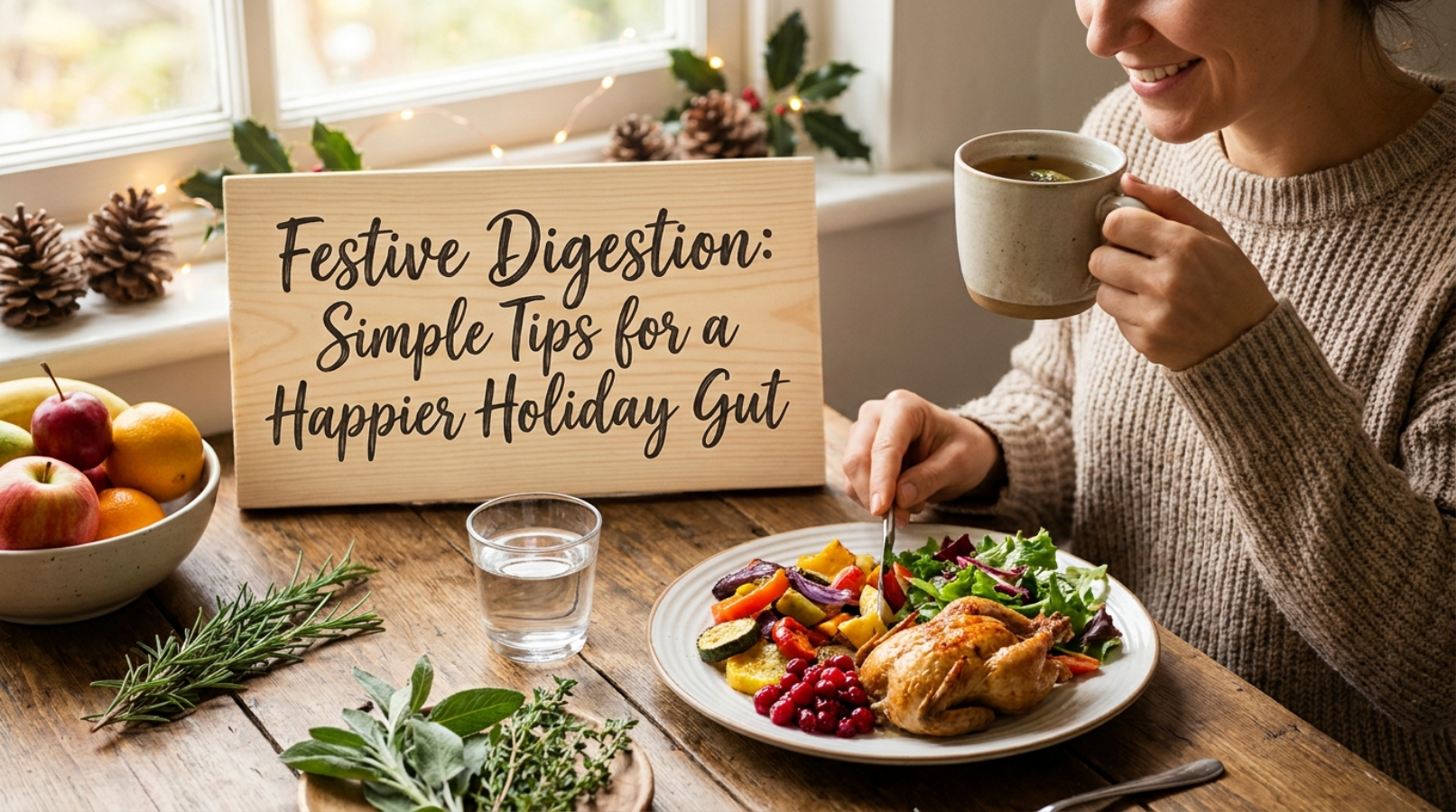
Festive digestion can feel harder when holiday meals bring richer foods, larger portions, extra desserts, travel, and changes to your normal routine. The good news is that you don’t have to skip your favorite foods to support your gut during the season.
If you’ve ever felt uncomfortably full after a big holiday dinner, you’re not alone. With a few simple changes to how you eat, move, hydrate, and plan your meals, you can enjoy the celebrations while giving your digestive system a little more breathing room.
Quick Answer: What Helps Festive Digestion?
The simplest way to support festive digestion is to avoid turning one celebration into an all-day eating marathon. Eat regular meals, slow down at the table, choose reasonable portions, drink water throughout the day, and take a gentle walk after eating.
It also helps to keep some familiar foods in your routine. Fruits, vegetables, whole grains, nuts, seeds, and other fiber-rich foods can support regular bowel movements, while adequate fluids help fiber do its job. NIDDK recommends increasing fiber gradually and drinking enough liquids, especially if constipation is a concern.
Most of all, don’t treat holiday food as something you need to “earn” or “undo.” A balanced approach is much easier on your body and your mindset.
Why Festive Digestion Can Feel Different
Holiday eating often changes several things at once.
You might eat a larger dinner than usual, snack more frequently, drink more carbonated beverages, sit for longer periods, sleep differently, or try foods you don’t normally eat. Travel can add another layer by disrupting your usual meal and activity schedule.
Large meals can leave you feeling overly full, while rich, fatty, spicy, or acidic foods may bother people who are prone to indigestion or heartburn. Mayo Clinic notes that overeating and certain foods and drinks can contribute to indigestion symptoms.
There’s also the simple matter of eating speed.
At a holiday gathering, it’s easy to talk, laugh, reach for another serving, and realize later that you’ve eaten much more than planned. I’ve noticed this myself at long family meals: the food isn’t necessarily the problem. It’s the combination of eating quickly, going back for seconds before I’ve really registered fullness, and then adding dessert on top.
That distinction matters.
Festive Digestion Starts Before the Big Meal
You don’t need to arrive at dinner extremely hungry.
Skipping breakfast and lunch to “save calories” can make a large holiday meal harder to manage. By the time dinner arrives, you’re more likely to eat quickly and pile your plate high.
Instead, keep your earlier meals simple and familiar.
A breakfast of oatmeal with berries and nuts, for example, gives you fiber and keeps your usual routine intact. A light lunch with vegetables, whole grains, and a protein source can also help you arrive at dinner comfortably hungry rather than ravenous.
Keep Fiber in Your Routine
Holiday meals don’t have to be fiber-free.
Add fruit to breakfast, vegetables to lunch, beans or lentils to a meal, or a handful of nuts as a snack. These small choices can help you maintain your normal eating pattern even when dinner is more indulgent.
Fiber also feeds gut bacteria and supports digestive regularity. However, suddenly adding huge amounts of fiber isn’t a smart holiday strategy. NIDDK recommends increasing fiber gradually because a rapid increase can contribute to gas and bloating in some people.
So, keep your normal fiber intake steady rather than trying to compensate for a heavy meal with an enormous salad the next day.
Simple Festive Digestion Tips at the Dinner Table
Your eating habits can matter just as much as what’s on the plate.
Slow Down Without Making Dinner Feel Restrictive
You don’t need to chew every bite a certain number of times. Instead, simply give yourself more time between bites.
Put your fork down occasionally. Take a sip of water. Enjoy the conversation. Check in with your hunger before automatically reaching for more food.
Eating slowly and choosing smaller meals can help reduce digestive discomfort for some people. NIDDK includes slower eating and smaller meals among strategies that may help reduce gas symptoms.
Build a Plate You Actually Want to Eat
A holiday plate doesn’t need to look like a diet plate.
Choose the foods that make the meal special, then add foods that help round it out. You might have roasted turkey, mashed potatoes, stuffing, green beans, cranberry sauce, and a small serving of your favorite dessert.
There’s no need to reject the foods you love.
Instead, decide which dishes are genuinely worth enjoying. A smaller serving of a favorite holiday recipe can be much more satisfying than eating several foods you don’t really want simply because they’re available.
Be Careful With the Second Helping
Give your first plate a little time before going back for more.
Fullness doesn’t always register immediately. Mayo Clinic also recommends smaller portions and avoiding overeating as part of managing holiday eating and digestive discomfort.
If you’re still hungry after a short pause, have more. That’s a very different approach from automatically refilling your plate while you’re still eating the first serving.
Festive Digestion and Holiday Drinks
Drinks can quietly change how you feel after a meal.
Carbonated beverages may contribute to gas and bloating for some people. Alcohol can also aggravate digestive symptoms in certain individuals, while caffeine may bother people who are sensitive to it. Mayo Clinic lists carbonated drinks, caffeine, alcohol, and certain foods among possible indigestion triggers.
Water is an easy default.
Keep a glass nearby during meals and continue drinking throughout the day. If you’re having an alcoholic drink, alternating it with water can also help you stay hydrated.
You don’t need a special “detox” drink afterward. Your digestive system already has its own processes for breaking down food and absorbing nutrients. NIDDK explains that the digestive tract works with organs, nerves, hormones, and gut bacteria to process food and absorb nutrients.
Move a Little After Holiday Meals
You don’t need an intense workout after dinner.
A relaxed walk around the neighborhood, around the house, or through a nearby park can be a simple way to get moving after a long meal. It also gives you a chance to step away from the dessert table without turning the evening into a punishment.
Cleveland Clinic notes that physical activity such as walking may help move gas through the digestive tract and recommends avoiding prolonged sitting when dealing with bloating.
Try a 10- to 20-minute walk if it feels comfortable.
The goal isn’t to burn off what you ate. You’re simply adding movement to a day that may otherwise involve hours around a dining table.
Don’t Let Travel Disrupt Festive Digestion
Holiday travel can throw off your usual routine.
Long car rides, airport meals, unfamiliar foods, reduced activity, and changes in sleep can all make your digestive routine feel different. Constipation can become especially frustrating when your normal schedule disappears.
Pack a few familiar snacks when possible.
Fruit, nuts, oatmeal packets, whole-grain crackers, or another simple food you already tolerate can make it easier to avoid relying entirely on convenience foods. Keep water accessible, too.
During long trips, get up and move around when practical. Even small breaks can make a travel day feel less sedentary.
If you’re staying with family, you also don’t need to eat every snack simply because it’s sitting on the counter. Give yourself permission to choose what sounds good and leave the rest for later.
What to Do When Festive Digestion Feels Off
Sometimes you eat more than intended. It happens.
Don’t respond by starving yourself the next day or suddenly cutting out entire food groups. Instead, return to your normal routine.
Start with a comfortable breakfast. Drink water. Eat familiar foods. Include vegetables and fruit as you normally would, and take a walk if you feel up to it.
If you feel bloated, temporarily reducing foods that you already know trigger your symptoms may help. Cleveland Clinic notes that bloating can result from eating too much or too quickly, dietary changes, certain foods, constipation, and other digestive issues.
For people who regularly experience digestive symptoms, the answer may be more individual. A food diary can help you notice patterns instead of blaming the entire holiday menu.
Persistent or worsening bloating, particularly when accompanied by symptoms such as vomiting, bleeding, fever, unexplained weight loss, or significant pain, deserves medical attention.
A Better Festive Digestion Mindset
Holiday meals are about more than nutrients.
They’re about traditions, family recipes, birthdays, religious celebrations, office gatherings, travel, and time with people you care about. That matters, too.
You don’t need perfect eating to have good festive digestion.
Think in terms of your whole day instead of one plate. If dinner is rich, breakfast can be simple. If you have dessert at lunch, you can enjoy a lighter snack later. If you spend an afternoon sitting, take a walk in the evening.
Small adjustments are usually easier to maintain than strict rules.
And remember that one large meal doesn’t erase your normal habits. Your digestive system doesn’t need punishment. It needs a chance to return to its usual rhythm.
Festive Digestion FAQ
What is the best way to support festive digestion?
Eat slowly, keep portions comfortable, drink water, maintain your normal fiber intake, and stay gently active. Most people don’t need to avoid all holiday foods to support digestion.
Can holiday meals cause bloating?
They can. Large portions, eating quickly, carbonated beverages, sudden dietary changes, constipation, and individual food sensitivities can all contribute to bloating.
Should I skip meals before a big holiday dinner?
Usually, skipping meals isn’t necessary. Having regular, balanced meals earlier in the day can help prevent arriving at dinner extremely hungry and eating too quickly.
Is walking after a holiday meal good for digestion?
A gentle walk can be a practical way to add movement after eating. It may also help with feelings of bloating and prolonged sitting.
How can I support festive digestion while traveling?
Keep familiar foods available, drink enough water, move during long journeys when practical, and try to maintain regular meal and sleep patterns. Small routines can make travel easier on your digestive system.
Conclusion: Keep Festive Digestion Simple
Good festive digestion doesn’t require a perfect holiday menu. It comes down to a handful of realistic habits: eat at a comfortable pace, choose portions that satisfy you, keep fiber and fluids in your routine, move after meals, and give your body time to settle.
Most of all, enjoy the food.
The holidays don’t need to become a battle between celebration and healthy habits. A little planning lets you enjoy the stuffing, pie, family recipes, and shared meals while still giving your digestive system the support it needs.
And if you find a tip that makes your holiday routine easier, use Gutrova’s Copy Button to save or share that favorite wellness tip for your next festive meal.

Here’s a short Gutrova-style author biography for Josh Axe:
Josh Axe
Josh Axe is a wellness expert, author, and educator known for his work in nutrition, natural health, and gut wellness. As a contributor to Gutrova, he shares practical insights on digestive health, healthy eating habits, and lifestyle strategies that help readers build a stronger foundation for overall well being. His content focuses on making wellness simple, actionable, and accessible for everyday life.