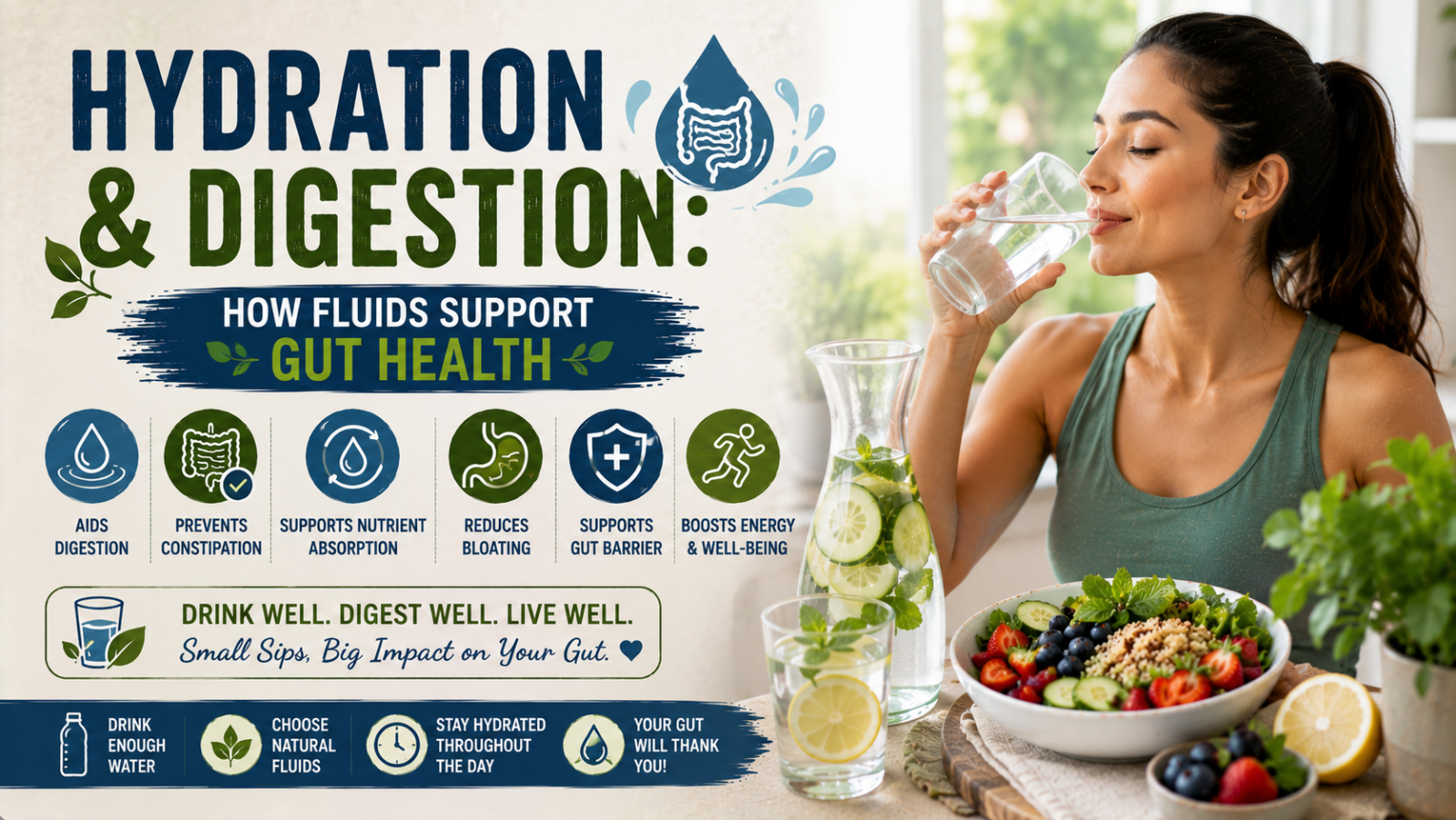
Hydration and digestion go hand in hand because your digestive system relies on fluids to help move and process food. When you’re busy, it’s easy to go hours without drinking much, then wonder why you feel sluggish or uncomfortable after meals. The good news is that better hydration doesn’t require a complicated routine, and you can use the Copy Button to save these practical tips for later.
Quick Answer: Does Hydration Help Digestion?
Yes. Adequate fluid intake supports normal digestion by helping your body break down food, soften stool, and move waste through the digestive tract.
Water is especially important, but fluids also come from foods such as fruits, vegetables, soups, and yogurt. However, your fluid needs aren’t identical to everyone else’s.
Heat, exercise, body size, diet, illness, pregnancy, and certain medications can all affect how much fluid you need.
The goal isn’t to force yourself to drink huge amounts. Instead, drink regularly throughout the day and pay attention to your body’s thirst signals.
How Hydration and Digestion Work Together
Your digestive system needs water to function normally.
When you eat, food moves through the stomach and intestines while your body breaks nutrients down and absorbs them. Fluids support several parts of this process.
For example, water contributes to saliva and digestive secretions. It also helps keep stool softer as it moves through the large intestine.
I’ve noticed that drinking consistently during the day feels much better than realizing at dinner that I barely had anything to drink. By then, catching up can feel uncomfortable.
That’s why regular hydration tends to be more practical than trying to drink a large amount all at once.
Hydration and Digestion: Why Water Matters
Water is one of the simplest choices for supporting hydration.
It has no added sugar and can be consumed throughout the day with meals or between them. You don’t need to avoid drinking water during meals, either. For most people, having water with food is perfectly reasonable.
If plain water feels boring, try adding:
- Lemon or lime
- Fresh berries
- Cucumber slices
- Mint
- A small amount of fruit for flavor
Unsweetened tea can also contribute to daily fluid intake.
The key is consistency. A water bottle on your desk can serve as a simple reminder to drink before thirst becomes intense.
Can Dehydration Affect Bowel Movements?
It can.
Your large intestine absorbs water from the material passing through it. When you’re dehydrated, your body may conserve available water, which can contribute to harder stools in some people.
That doesn’t mean dehydration is the only cause of constipation. Low fiber intake, lack of physical activity, changes in routine, certain medications, and other factors can also contribute.
Still, staying hydrated is one useful part of a constipation-friendly routine.
Try combining fluids with fiber-rich foods such as:
- Oatmeal
- Beans
- Lentils
- Berries
- Pears
- Chia seeds
- Vegetables
- Whole grains
Increase fiber gradually if your current diet is low in it. A sudden increase can cause gas and bloating.
Hydration and Digestion After a High-Fiber Meal
Fiber and fluids work well together.
Some types of fiber absorb water and help add bulk or softness to stool. Therefore, if you increase fiber while barely drinking, you may not feel your best.
Imagine adding a large serving of beans, vegetables, and whole grains to your diet overnight. That’s a major change for your digestive system.
Instead, increase fiber little by little and keep fluids consistent.
For example, add berries to breakfast, beans to lunch, and another serving of vegetables at dinner. Your gut gets time to adjust.
How Much Water Do You Need?
There’s no single amount that works for every person.
The National Academies of Sciences, Engineering, and Medicine has established general adequate intake levels for total water from all beverages and foods, but individual needs vary.
Your needs can increase during hot weather, exercise, fever, vomiting, or diarrhea.
Rather than obsessing over an exact number, use several everyday signals.
Thirst is one. The color of your urine can also offer a rough clue about hydration, although certain foods, supplements, and medications can change urine color.
If you have a medical condition that affects fluid balance or have been told to limit fluids, follow the guidance from your healthcare professional.
Hydration and Digestion During Exercise
Exercise increases fluid loss through sweat, especially in hot or humid conditions.
That’s important because dehydration can affect how you feel during and after physical activity. You may become tired, thirsty, or lightheaded.
For ordinary workouts, water is often enough. During prolonged or intense exercise, especially in heat, electrolyte-containing fluids may sometimes be useful.
However, sports drinks can contain added sugar, so they’re not necessary for every short workout.
A simple approach is to drink before exercise, take fluids during longer sessions, and replace fluids afterward based on your thirst and sweat loss.
Hydration and Digestion in Hot Weather
Summer can sneak up on you.
You might spend hours outside, work in a warm environment, or exercise without realizing how much fluid you’re losing.
In hot weather, keep a bottle nearby and drink regularly. Foods with high water content can help too.
Good options include:
- Watermelon
- Cantaloupe
- Oranges
- Strawberries
- Cucumbers
- Tomatoes
- Lettuce
- Broth-based soups
These foods don’t replace drinking water, but they can contribute to total fluid intake.
If you’re sweating heavily, you’ll also lose electrolytes, so your needs may differ from an ordinary day indoors.
8 Simple Hydration Habits for Better Digestion
1. Start the Day With a Drink
Have water when you wake up.
You don’t need a giant glass. A normal serving is enough to get your day started.
2. Keep Water Within Reach
A bottle on your desk or kitchen counter makes drinking easier.
Visibility matters because you’re more likely to remember something that’s already in front of you.
3. Drink With Meals
Water with breakfast, lunch, or dinner can contribute to your daily fluid intake.
There’s no need to avoid fluids because you’re worried they’ll “dilute” digestion.
4. Eat Water-Rich Foods
Add fruit, vegetables, soups, and other foods that naturally contain water.
This can make hydration feel less like another task.
5. Pair Fiber With Fluids
If you’re adding more whole grains, beans, fruits, vegetables, or seeds, increase fluids too.
That combination can be more comfortable for your digestive system.
6. Carry Water When You Exercise
Don’t wait until you’re extremely thirsty after a workout.
For longer sessions, plan ahead based on the temperature, exercise intensity, and how much you sweat.
7. Flavor Your Water
If plain water isn’t appealing, add lemon, mint, cucumber, or berries.
A little flavor can make it easier to drink regularly.
8. Build Hydration Into Your Routine
Drink when you wake up, with meals, during breaks, and around exercise.
A routine is often easier to maintain than relying on memory alone.
Can Drinking Too Much Water Be a Problem?
More isn’t always better.
Drinking excessive amounts of water in a short period can dangerously lower blood sodium levels, a condition called hyponatremia. This is uncommon in everyday situations but can occur when people consume very large amounts of fluid, particularly during prolonged exercise.
So don’t force yourself to drink far beyond thirst just because you believe more water means better digestion.
Steady, sensible hydration is the better goal.
What About Coffee and Digestion?
Coffee contributes fluid, although caffeine can affect people differently.
For most healthy adults, moderate coffee intake can fit into an overall hydration routine. However, coffee may trigger stomach discomfort, urgency, or reflux symptoms in some people.
If you notice that coffee consistently bothers your stomach, pay attention to the pattern rather than assuming coffee is unhealthy for everyone.
You might try drinking it with food, choosing a smaller serving, or switching to a lower-caffeine option.
Your personal response matters.
Hydration and Gut Inflammation
Hydration supports normal body function, but drinking more water isn’t a treatment for inflammatory digestive diseases.
Conditions that cause inflammation in the digestive tract can have different causes and require individualized care.
Still, maintaining adequate fluids is useful for general digestive health, especially when diarrhea or vomiting causes additional fluid loss.
If you’re experiencing persistent diarrhea, repeated vomiting, blood in the stool, severe abdominal pain, or signs of significant dehydration, seek medical care rather than trying to manage the problem with water alone.
A Simple Daily Hydration Routine
Here’s a realistic way to put these ideas together:
Morning: Drink water after waking.
Breakfast: Have water, tea, or another preferred beverage with your meal.
Midday: Keep water nearby while working or running errands.
Lunch: Include a water-rich food such as fruit or vegetables.
Afternoon: Drink during your break, especially if you’ve been active.
Exercise: Bring water and drink according to your needs.
Dinner: Have fluids with your meal if you’re thirsty.
Evening: Drink as needed, but don’t force large amounts right before bed.
The routine doesn’t need to be perfect. What matters is keeping fluids reasonably consistent.
FAQ About Hydration and Digestion
Does drinking water help digestion?
Adequate hydration supports normal digestive function and helps keep stool softer. However, water alone can’t solve every digestive problem.
Can dehydration cause constipation?
Dehydration can contribute to harder stools, but constipation often has several causes. Fiber, activity, medications, diet, and changes in routine can also play a role.
Should I drink water while eating?
Yes. For most people, drinking water with meals is fine and can contribute to overall fluid intake.
Does drinking more water reduce bloating?
Not necessarily. Dehydration can affect digestion, but bloating has many possible causes. Drinking excessive amounts of water won’t automatically fix it.
Is water better than sugary drinks for hydration?
Water is an excellent everyday choice because it hydrates without added sugar. Other beverages can contribute to fluid intake too, but sugary drinks are best kept moderate.
Final Thoughts on Hydration and Digestion
Hydration and digestion are connected through several basic processes, from saliva and digestive fluids to stool consistency and normal intestinal function.
You don’t need an elaborate hydration plan. Keep water nearby, drink regularly, eat water-rich foods, and pair higher-fiber meals with adequate fluids.
Most of all, don’t turn hydration into a numbers game. Your needs change from day to day, and your body gives you useful signals along the way.
If you want to keep these practical tips handy, use the Copy Button to save or share this hydration routine. A few consistent habits can go a long way toward supporting comfortable digestion.

Here’s a short Gutrova-style author biography for Josh Axe:
Josh Axe
Josh Axe is a wellness expert, author, and educator known for his work in nutrition, natural health, and gut wellness. As a contributor to Gutrova, he shares practical insights on digestive health, healthy eating habits, and lifestyle strategies that help readers build a stronger foundation for overall well being. His content focuses on making wellness simple, actionable, and accessible for everyday life.











1 thought on “Hydration and Digestion: How Fluids Support Gut Health”