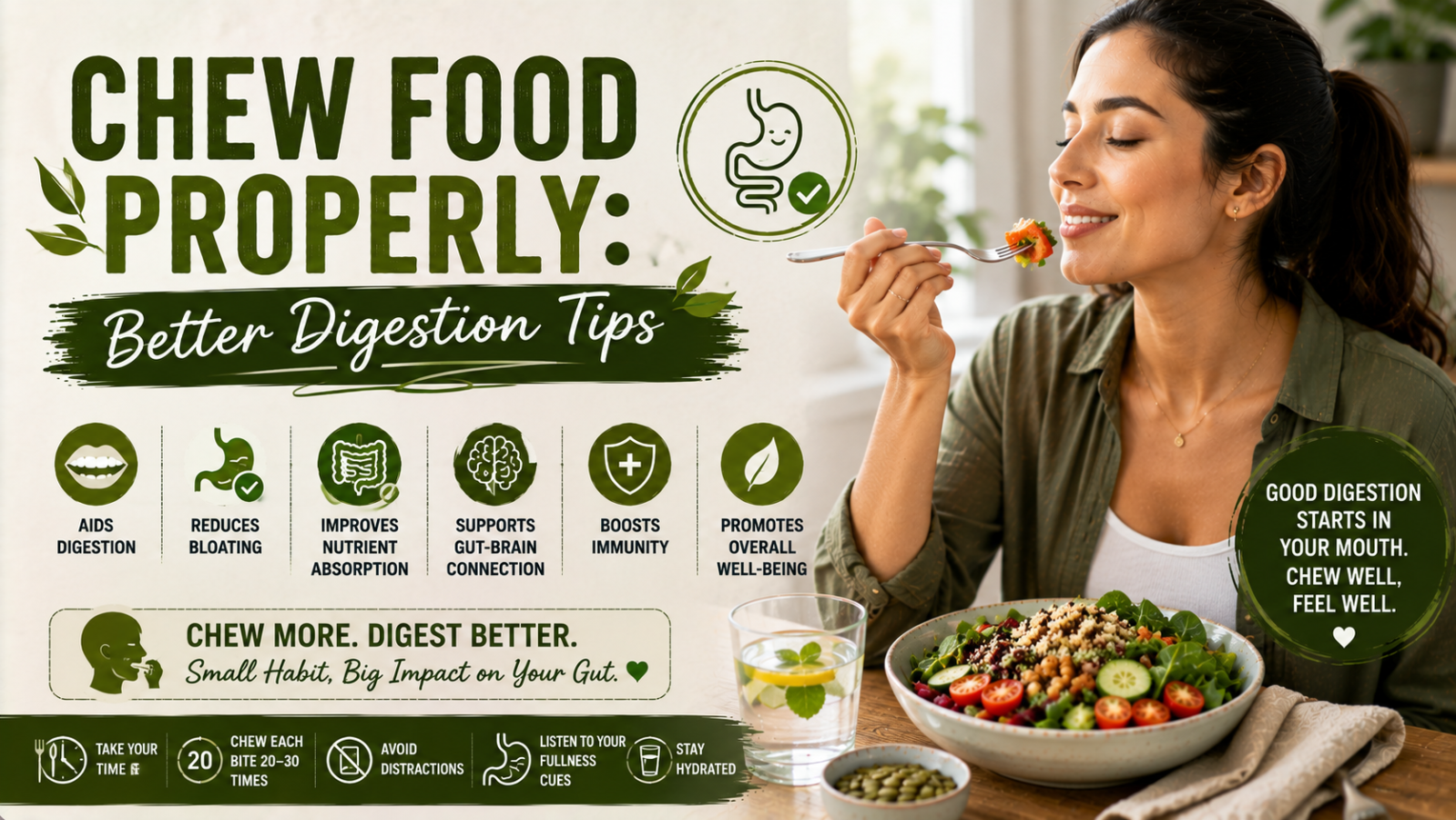
Learning to chew food properly is one of the simplest ways to support comfortable digestion. Chewing breaks food into smaller pieces and mixes it with saliva, giving your digestive system a better start.
If you tend to rush through meals, try slowing down for a few bites at a time. You can also use the Copy Button to save these practical tips for your next meal.
Quick Answer: How Should You Chew Food Properly?
To chew food properly, take smaller bites, close your mouth while chewing, and chew until the food feels soft and well mixed with saliva before swallowing. Eating slowly can also help you notice fullness and enjoy your meal.
There isn’t a magic number of chews that everyone needs. Foods differ in texture, so focus on how the food feels rather than counting every bite.
What Happens When You Chew Your Food?
Digestion begins before food reaches your stomach. As you chew, your teeth break food into smaller pieces. At the same time, saliva moistens the food and begins the digestive process.
That matters because smaller pieces are easier to move through the digestive tract. Saliva also helps form food into a softer bolus that you can swallow comfortably.
In practical terms, think about the difference between swallowing a large piece of carrot and chewing it until it’s soft. Your stomach doesn’t have teeth, so the work you do in your mouth matters.
Chew Food Properly Without Counting Every Bite
You don’t need to sit at the table counting 20 or 30 chews for every mouthful. That can make eating feel like a chore.
Instead, pay attention to texture.
- Take a moderate bite.
- Put your fork down occasionally.
- Chew until the food loses most of its original firmness.
- Notice the flavor as it changes.
- Swallow before taking another bite.
- Give yourself enough time to finish your meal without rushing.
For softer foods, you may need fewer chews. Crunchy vegetables, meat, nuts, and dense foods usually need more.
I’ve found that focusing on texture works better than following a rigid chewing rule. It keeps the habit practical.
Eating Slowly Can Support Comfortable Digestion
Chewing and eating slowly often go together. When you slow down, you have more time to notice how much you’re eating and how your stomach feels during the meal.
However, slow eating doesn’t mean turning lunch into an hour-long event. Even adding a few extra minutes can make meals feel less rushed.
Try this simple approach:
First few bites: Eat slowly and focus on the food.
Middle of the meal: Keep a comfortable pace instead of rushing.
Last few bites: Check whether you’re still hungry before automatically finishing everything.
This can be especially useful when you’re eating in front of a computer or television, where it’s easy to lose track of the meal.
Chew Food Properly With Different Types of Foods
Not every food needs the same amount of chewing.
Crunchy foods
Apples, carrots, nuts, and raw vegetables usually need more chewing because they’re firm and fibrous. Take smaller bites and let your teeth do the work.
Meat and poultry
Dense foods such as steak or chicken can be harder to break down. Cut larger pieces into smaller portions, then chew them thoroughly before swallowing.
Whole grains
Brown rice, whole-grain bread, and other grain foods vary in texture. Softer grains may require less chewing, while dense or dry foods take longer.
Soft foods
Yogurt, oatmeal, smoothies, and mashed vegetables don’t require extensive chewing. Still, eating them slowly can help you stay aware of your meal.
Could Chewing Help With Bloating?
Chewing itself isn’t a cure for bloating, and digestive symptoms can have many different causes. Still, rushed eating can make meals less comfortable for some people.
When you eat quickly, you may also swallow more air. That can contribute to belching or a feeling of fullness in some people.
Therefore, try slowing down if you notice that fast meals regularly leave you uncomfortable. Eat smaller bites, chew thoroughly, and give yourself time between bites.
If bloating happens often or comes with significant pain, vomiting, unexplained weight loss, blood in the stool, or other concerning symptoms, it’s worth discussing the symptoms with a healthcare professional.
A Simple 10-Minute Chewing Practice
You don’t have to change every meal at once. Pick one meal each day and practice for about 10 minutes.
Start by putting your phone away. Then take a smaller first bite than usual.
Notice the texture. Chew until the food becomes soft, and only then swallow.
Afterward, pause briefly before your next bite.
This sounds almost too simple, but that’s the point. A habit is easier to maintain when it doesn’t require special equipment, supplements, or a complicated routine.
Other Habits That Pair Well With Better Chewing
Chewing works best as part of a broader eating routine.
Sit down to eat
Whenever possible, sit at a table rather than eating while walking around or working.
Take smaller bites
Large bites often encourage faster eating. Smaller portions are easier to chew thoroughly.
Put your fork down
Set your fork down between bites occasionally. This naturally creates a little more space between mouthfuls.
Limit distractions
You don’t need a perfectly quiet room. However, constantly scrolling or working during meals can make it harder to notice your eating pace.
Drink normally
Sip fluids as needed rather than forcing yourself to drink large amounts during meals.
Pay attention to fullness
Give your body time to register the meal. You may notice that you feel satisfied before your plate is completely empty.
What If You Always Eat Too Fast?
Don’t try to become a slow eater overnight.
Instead, choose one meal and change just one behavior. For example, put your fork down after every few bites.
Another option is to make your first five bites deliberately slow. Once that feels natural, extend the habit to the rest of the meal.
You can also eat without checking your phone for the first few minutes. That small change often makes it easier to notice flavor, texture, and fullness.
The goal isn’t perfect eating. It’s simply giving your body a little more time.
FAQ About Chewing Food Properly
How many times should you chew each bite?
There isn’t one ideal number for every food or person. Chew until the food becomes soft and easy to swallow rather than relying on a fixed number.
Can chewing food properly help digestion?
Yes, chewing starts the digestive process by mechanically breaking food into smaller pieces and mixing it with saliva. However, good digestion depends on many parts of the digestive system, not chewing alone.
Does chewing help with bloating?
Eating more slowly and chewing thoroughly may help some people feel more comfortable, particularly if they tend to eat quickly or swallow a lot of air. Persistent bloating can have other causes, though.
Is eating slowly better than eating quickly?
Eating slowly gives you more time to chew and may help you notice fullness. It can also make meals more enjoyable and less rushed.
Do I need to chew soft foods a lot?
No. Soft foods already require less mechanical breakdown. Focus instead on eating at a comfortable pace and swallowing easily.
The Bottom Line
To chew food properly, forget rigid chewing rules and focus on simple habits: take smaller bites, slow your pace, chew until the food feels soft, and give yourself time between mouthfuls.
Pair that habit with mindful meals, fewer distractions, and reasonable portions. These small changes won’t fix every digestive problem, but they can make eating feel calmer and more comfortable.Save this guide with the Copy Button so you can come back to it when you need a simple reminder: slow down, chew well, and give your meal the time it deserves.

Here’s a short Gutrova-style author biography for Josh Axe:
Josh Axe
Josh Axe is a wellness expert, author, and educator known for his work in nutrition, natural health, and gut wellness. As a contributor to Gutrova, he shares practical insights on digestive health, healthy eating habits, and lifestyle strategies that help readers build a stronger foundation for overall well being. His content focuses on making wellness simple, actionable, and accessible for everyday life.











1 thought on “Chew Food Properly: Better Digestion Tips”