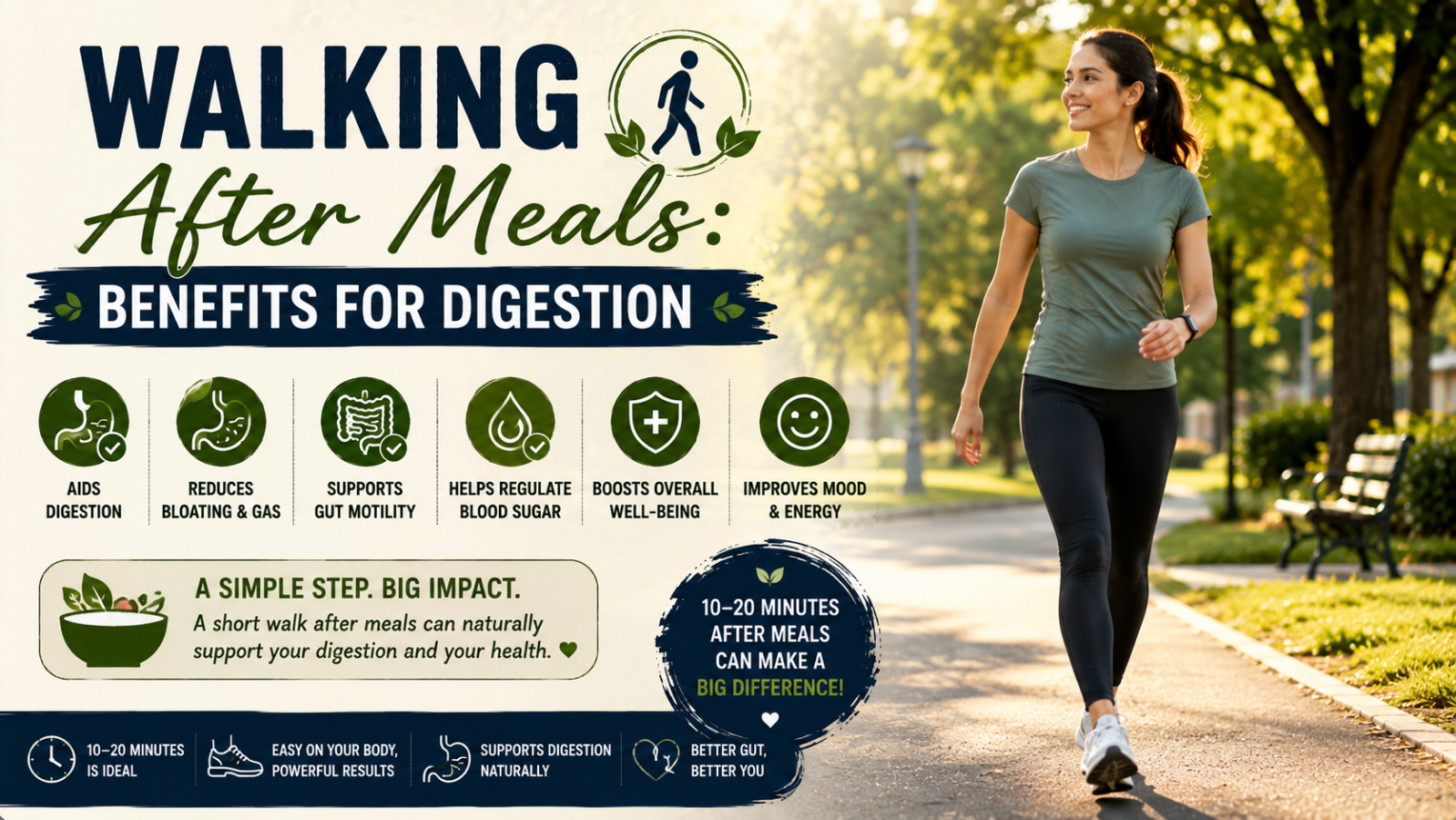
Walking after meals is a simple habit that may support digestion, steadier blood sugar, and overall gut comfort.
A short, easy walk can be one of the most practical things you do after eating, especially when a heavy meal leaves you feeling sluggish.
You don’t need a long workout or special equipment. In fact, I find that a relaxed walk is much easier to stick with than trying to squeeze a hard workout into an already busy day. The key is keeping the pace comfortable and making it part of your normal routine.
Quick Answer: Is Walking After Meals Good for Digestion?
Yes, walking after meals can support normal digestion and may help your body manage the rise in blood sugar that happens after eating. Gentle movement encourages the muscles of the digestive tract to keep food moving through the gastrointestinal system.
A short walk may also feel more comfortable than sitting completely still after a large meal. However, intense exercise immediately after eating can feel unpleasant for some people, so an easy pace is usually the better choice.
How Walking After Meals Supports Digestion
Your digestive system doesn’t work in isolation. Movement throughout the body can influence how your gastrointestinal tract functions.
After you eat, your stomach begins breaking down food while your small intestine absorbs nutrients. Gentle physical activity can complement this process by keeping your body moving rather than leaving you sedentary for hours.
Walking also uses large muscle groups without putting excessive stress on the body. As a result, it’s a practical option for people who want to add more movement without turning every meal into a workout session.
For example, try taking a relaxed walk around your neighborhood after dinner. Even walking around your home or office can be useful when going outside isn’t convenient.
Walking After Meals and Blood Sugar
One reason walking after meals has gained attention is its relationship with blood sugar.
Your body turns carbohydrates from food into glucose. After eating, blood glucose naturally rises. Muscle activity can help your body use glucose for energy, which may reduce the size of the post-meal rise.
Research on post-meal activity suggests that short periods of walking can be useful for blood sugar management. The effect can depend on factors such as meal composition, activity level, timing, and individual health.
That doesn’t mean you need to count every minute. Instead, think of walking after meals as an easy way to add movement at a time when your body can benefit from it.
A practical routine might look like this:
- Finish breakfast.
- Wait a little if you need to settle your stomach.
- Take a comfortable 5- to 15-minute walk.
- Return to your normal activities.
The same approach can work after lunch or dinner.
When Should You Start Walking After a Meal?
You don’t have to rush out the door the moment you put your fork down. For many people, starting a gentle walk soon after eating feels comfortable. Others prefer to give themselves a few minutes first. Your meal size matters, too. A small breakfast may feel very different from a large restaurant dinner. If you feel overly full, start slowly. A leisurely stroll is enough.
You can also experiment with different times. Try walking shortly after dinner for several days, then notice how you feel. If that timing doesn’t suit you, adjust it.
The best routine is the one you can repeat without discomfort.
How Long Should You Walk After Meals?
There isn’t one perfect duration for everyone.
A 5- to 15-minute walk can be an easy starting point. If you enjoy it, you can walk longer. The goal isn’t to turn digestion into a fitness challenge.
A short walk around the block may be enough to break up a long period of sitting. Likewise, walking through your home while cleaning up after dinner can add movement without requiring extra planning.
For a simple daily habit, try:
After breakfast: 5–10 minutes
After lunch: 5–15 minutes
After dinner: 10–20 minutes
You don’t need to do all three. Pick the meal that fits your schedule best.
Walking After Meals for Bloating and Fullness
Bloating can make you want to curl up on the couch. However, staying completely still isn’t always the most comfortable option.
Gentle walking may help some people feel less heavy after eating because movement supports normal gastrointestinal activity. It can also prevent you from spending the next few hours sitting in one position.
Still, bloating has many possible causes. Food intolerances, constipation, eating too quickly, large meals, digestive disorders, and other factors can contribute.
So don’t treat walking as a cure for persistent bloating. Instead, use it as one small habit within a broader approach to digestive health.
If I feel especially full after a meal, a slow walk is much more appealing than vigorous exercise. There’s no need to push the pace.
Walking After Meals vs. Sitting on the Couch
Picture two evenings.
On the first, you finish dinner and immediately sit on the couch for two hours. On the second, you spend 10 minutes walking around the block before settling down.
Neither evening needs to be perfect. However, the second routine adds a small amount of movement without taking much time.
Walking can also help break up prolonged sitting. That’s useful because daily movement isn’t only about formal workouts. Small bursts of activity throughout the day can add up.
Instead of thinking, “I need to exercise tonight,” try thinking, “I’ll walk for 10 minutes after dinner.”
That shift makes the habit feel much more manageable.
Simple Ways to Make Walking After Meals a Habit
The hardest part is often remembering to do it.
Fortunately, you can attach your walk to something you already do.
Use an existing routine
Walk after you wash the dishes. Or put on your shoes as soon as you finish your evening coffee or tea.
Keep the pace easy
You should be able to breathe comfortably and carry on a conversation. A post-meal walk isn’t the time to chase a personal speed record.
Walk with someone
A partner, friend, or family member can make the routine more enjoyable. It also gives you a reason to step away from screens.
Take an indoor route
Bad weather doesn’t have to end the habit. Walk through your house, use a hallway, or visit an indoor shopping center.
Start with one meal
Don’t create a complicated schedule. Pick dinner and make that your regular walking time.
Use the time to unwind
Leave your phone in your pocket. Notice the temperature, sounds, and surroundings. That can turn a basic walk into a relaxing transition between meals and the rest of your evening.
What to Avoid When Walking After Meals
Walking should feel comfortable. Therefore, there’s no need to make it intense.
Avoid sprinting, heavy lifting, or demanding workouts immediately after a large meal if they make you feel nauseated, cramped, or overly full.
Also, don’t force yourself to walk through significant abdominal pain. Normal fullness is one thing; persistent or severe symptoms deserve more attention.
If exercise consistently causes digestive discomfort, changing the timing, intensity, or meal size may help. Persistent symptoms are worth discussing with a healthcare professional.
A Gut-Friendly Evening Routine
Walking after dinner can become part of a simple gut-friendly routine.
Start with a balanced meal that includes vegetables, a source of protein, healthy fats, and fiber-rich carbohydrates that you tolerate well. Eat at a comfortable pace rather than rushing through the meal.
Then give yourself a little time to settle and take an easy walk.
Afterward, return home and allow your evening to slow down. Good sleep, regular movement, adequate hydration, and a varied diet all contribute to healthy digestion.
You don’t need to overhaul your entire lifestyle at once. Small routines tend to work better when they’re realistic enough to repeat.
Does Walking After Meals Help With Weight Management?
It can contribute to an active lifestyle, but it shouldn’t be viewed as a shortcut for weight loss.
Walking uses energy, supports daily activity, and may help with blood sugar regulation. However, body weight is influenced by many factors, including overall food intake, activity, sleep, medications, genetics, and health conditions.
So focus on the habit rather than expecting a specific result.
A 10-minute walk after dinner might seem insignificant on a busy Tuesday. Yet repeating that habit several times a week creates a meaningful pattern of daily movement.
Practical Example: A 10-Minute Post-Meal Walk
Here’s a routine that’s easy to test:
Minute 0–2: Finish your meal and get comfortable.
Minute 3–5: Walk slowly and let your body settle.
Minute 6–8: Pick up the pace slightly if you feel good.
Minute 9–10: Slow down and finish comfortably.
That’s it.
You don’t need special clothing, a gym membership, or a complicated workout plan. If you have more time, keep walking. If you only have 10 minutes, that’s fine too.
FAQ About Walking After Meals
Is it OK to walk immediately after eating?
For many people, a gentle walk soon after eating is comfortable. However, a large meal may make some people feel better after a short pause. Listen to your body’s response.
How long should I walk after dinner?
Start with 5 to 15 minutes. You can walk longer if it feels comfortable and fits your schedule.
Can walking after meals help with bloating?
Gentle movement may support normal digestion and help some people feel less full or sluggish. However, persistent bloating can have many causes and may require further evaluation.
Is walking after meals better than exercising before eating?
Neither approach is automatically better. They serve different purposes. A post-meal walk is especially convenient because it adds light movement without requiring a separate workout session.
Can I walk after every meal?
Yes, if it feels comfortable and fits your routine. You can also start with just one meal per day and build from there.
Final Takeaway: Make Walking After Meals Simple
Walking after meals is a small habit with several potential benefits for digestion, daily movement, and post-meal blood sugar management. You don’t need to walk far or fast. A comfortable 5- to 15-minute stroll can be a realistic place to start.
Most of all, don’t make the habit harder than it needs to be. Pick one meal, put on your shoes, and take a relaxed walk. If the routine works for you, keep it going.
Walking after meals works best as part of a bigger picture that includes nourishing foods, adequate hydration, regular movement, and good sleep.And if you find a tip here that fits your routine, use the site’s Copy Button to save or share it for later.












1 thought on “Walking After Meals: Benefits for Digestion”