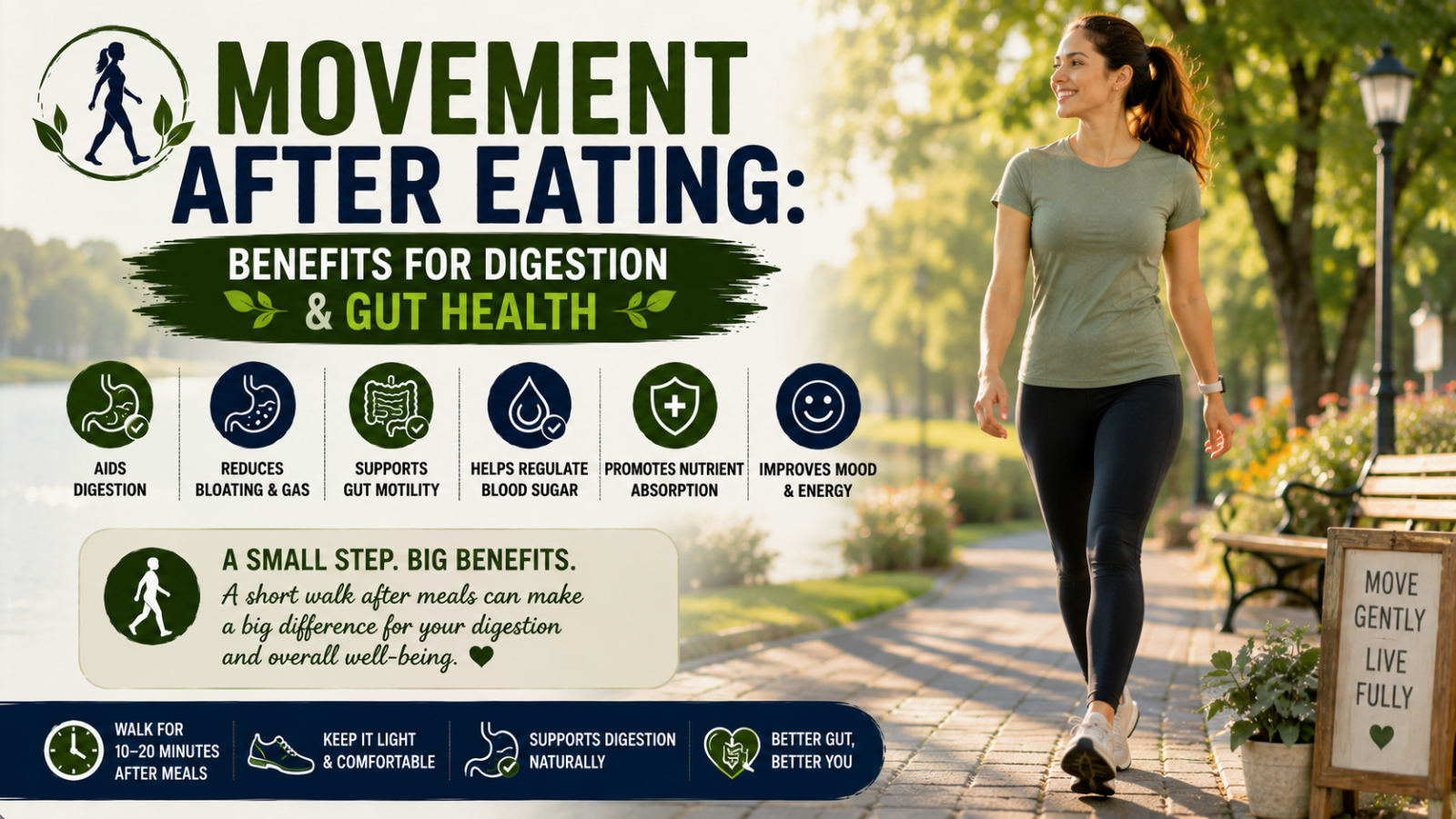
Movement after eating can be a simple way to support digestion, especially after a large or heavy meal. A gentle walk or a few minutes of light activity may also help with fullness, bloating, and post-meal blood sugar levels. (Harvard Health)
You don’t need a workout or special equipment. I often find that the easiest health habits are the ones attached to something you already do, such as taking a short walk after dinner. You can also use a Copy Button to save or share the practical tips below.
Quick Answer: Is Movement After Eating Good for Digestion?
Yes. Gentle movement after eating may support stomach emptying, reduce feelings of fullness, and help regulate the rise in blood sugar that follows a meal. A relaxed 10- to 20-minute walk is a practical option for many people.
You don’t have to walk for miles. Even standing up and moving around your home can be useful if a longer walk isn’t realistic.
Why Movement After Eating May Help
Digestion doesn’t stop when you finish your meal. Your stomach continues mixing food with digestive juices before gradually moving it into the small intestine. Meanwhile, your body absorbs nutrients and responds to the carbohydrates, protein, and fat you consumed.
Because of this, sitting completely still after a large meal isn’t always the most comfortable choice. Staying upright and taking a gentle stroll can help you feel less sluggish.
Harvard Health notes that a short walk after eating may help relieve bloating. One study cited by Harvard found that people who walked for 10 to 15 minutes after meals reported less bloating.
It may also support blood sugar
There is another reason to make post-meal movement part of your routine.
Your muscles use glucose for energy. Therefore, light activity after eating can help your body handle the glucose entering your bloodstream. Research reviews have found that exercise after meals can reduce post-meal glucose excursions.
That doesn’t mean a walk cancels out an unbalanced diet. Instead, think of it as one small habit that works alongside nutritious meals, regular exercise, sleep, and other healthy routines.
Movement After Eating and Bloating
Bloating can make a normal meal feel surprisingly uncomfortable. You may feel pressure in your abdomen, notice your waistband getting tighter, or simply feel too full to relax.
In that situation, lying down immediately may not feel great. Instead, try staying upright and taking a slow walk around the block or through your home.
Harvard Health recommends a stroll after meals as one possible way to help with bloating. Staying upright and moving can also help with feelings of fullness and trapped gas.
Still, bloating has many possible causes. Large portions, carbonated drinks, certain carbohydrates, constipation, food intolerances, and digestive disorders can all play a role. A daily walk may help symptoms, but it won’t identify the underlying cause.
How Long Should You Move After Eating?
You don’t need a strict number of minutes.
For everyday digestion support, 10 to 20 minutes of easy walking is a reasonable starting point. Cleveland Clinic gastroenterology guidance also suggests that walking within roughly 15 to 30 minutes after a meal may be helpful.
However, your comfort matters more than the clock.
Try these simple options:
- Walk around your neighborhood for 10 minutes.
- Pace gently while talking on the phone.
- Walk around your house after dinner.
- Put away dishes and tidy the kitchen.
- Take the stairs at an easy pace.
- Walk around your office after lunch.
- Stand up and move for a few minutes if walking isn’t practical.
Even small bursts of movement can make an otherwise sedentary day more active. Harvard Health also recommends short activity breaks throughout the day, including walks after meals.
The Best Type of Movement After Eating
You don’t need intense exercise immediately after a meal.
A comfortable walk is usually the easiest choice because it doesn’t require much planning. Keep your pace relaxed enough that you can breathe comfortably and carry on a conversation.
For example, after a big family dinner, you might walk with your spouse, kids, or dog instead of sitting on the couch right away.
Light household chores can work, too. Washing dishes, putting groceries away, or walking around while cleaning keeps you upright and moving.
What about a hard workout?
That’s different.
A strenuous workout immediately after a large meal may feel uncomfortable for some people. Cleveland Clinic recommends waiting longer after eating before more vigorous exercise.
So, save intense training for a time that fits your body and schedule. After meals, gentle movement is often enough.
Movement After Eating for a Heavy Dinner
Dinner is often the meal most likely to be followed by several hours of sitting.
You eat, watch television, scroll through your phone, and eventually head to bed. That routine may leave you feeling overly full.
A short post-dinner walk creates a useful buffer.
For instance, finish dinner, clean up the kitchen, then walk for 10 or 15 minutes. Afterward, you can return home and relax.
An earlier dinner can also give your body more time before bedtime. Cleveland Clinic recommends aiming to finish dinner around three hours before going to sleep when possible, while noting that schedules don’t always make this practical.
A Simple Routine You Can Actually Keep
The biggest mistake is making a healthy habit too complicated.
You don’t need to track every step or plan a perfect route. Instead, connect movement to meals you already eat.
Try this routine:
Breakfast: Walk around your home for five minutes before starting work.
Lunch: Take a 10-minute walk outside or around your workplace.
Dinner: Walk for 10 to 20 minutes after cleaning up.
Busy day: Stand up and move around the room for a few minutes.
Large meal: Choose gentle movement rather than immediately lying down.
You can also start with just one meal. Dinner is often the easiest because there’s usually less pressure to get back to work.
What If You Feel Too Full to Walk?
Don’t force it.
If you’ve eaten a very large meal, start slowly. A few minutes of easy movement may feel better than immediately going for a brisk walk.
Cleveland Clinic notes that even changing position or walking around the house may affect stomach emptying.
If walking feels uncomfortable, simply remain upright. Sit comfortably rather than bending tightly at the waist or lying flat immediately after eating.
And remember: you don’t have to compensate for overeating with exercise. If you occasionally eat more than planned, give your body time to digest and return to your normal routine at the next meal.
Movement After Eating: 7 Easy Daily Tips
- Start with 10 minutes. A short walk is easier to maintain than an ambitious routine.
- Keep the pace comfortable. You aren’t trying to set a personal record.
- Walk after your largest meal. This can be especially practical if dinner tends to leave you feeling heavy.
- Stay upright. If you can’t walk, stand or move gently around your home.
- Make it social. Invite a family member or friend to join you.
- Use existing routines. Walk after putting away dinner dishes or finishing your lunch break.
- Listen to your body. Slow down or stop if movement causes pain, dizziness, or significant discomfort.
These small changes may seem almost too simple. That’s actually the point. A habit that fits naturally into your day has a better chance of becoming something you continue.
Can Movement After Eating Reduce Gut Inflammation?
It’s important to keep this claim in perspective.
A short walk shouldn’t be described as a treatment for intestinal inflammation or a cure for digestive disease. However, regular physical activity is associated with broader metabolic and health benefits, and post-meal activity can help moderate blood glucose responses.
Those effects matter because blood sugar regulation, metabolic health, diet quality, sleep, stress, and physical activity all interact with overall health.
So rather than looking for one habit that will “fix” your gut, build a pattern that supports it. Regular movement is one piece of that picture.
FAQ About Movement After Eating
Is it okay to walk immediately after eating?
For many people, gentle walking after a meal is comfortable. Cleveland Clinic gastroenterology guidance suggests walking within about 15 to 30 minutes after eating can be helpful.
How long should I walk after a meal?
Try 10 to 20 minutes at an easy pace. Even shorter periods can be useful when your schedule is tight.
Can walking after eating help with bloating?
It may. Harvard Health reports that short post-meal walks can help some people experience less bloating.
Is walking after dinner better than sitting?
For digestion and general activity, a gentle walk can be a better choice than immediately sitting for a long period. It may also help your body handle the glucose from your meal.
Can I exercise hard after eating?
Hard exercise may feel uncomfortable soon after a meal. Instead, choose gentle movement shortly after eating and leave more intense workouts for later. (Cleveland Clinic)
Final Takeaway
Movement after eating is a simple habit that can support comfortable digestion, reduce feelings of fullness for some people, and improve the way your body handles post-meal blood sugar. You don’t need a long workout. A relaxed 10-minute walk may be enough to get started.
Try attaching the habit to one meal today. After dinner, put on your shoes and take a slow lap around the neighborhood. If you can’t get outside, walk around the house instead.Small habits count. Use the Copy Button to save these tips, then make post-meal movement part of your normal routine.

Elizabeth Boham is a respected functional medicine physician and wellness educator with a passion for helping people improve their health through nutrition and lifestyle changes. As a contributor to Gutrova, she shares practical insights on gut health, digestive wellness, and healthy living, making complex health topics easy to understand and apply in everyday life.











1 thought on “Movement After Eating: Benefits for Digestion & Gut Health”