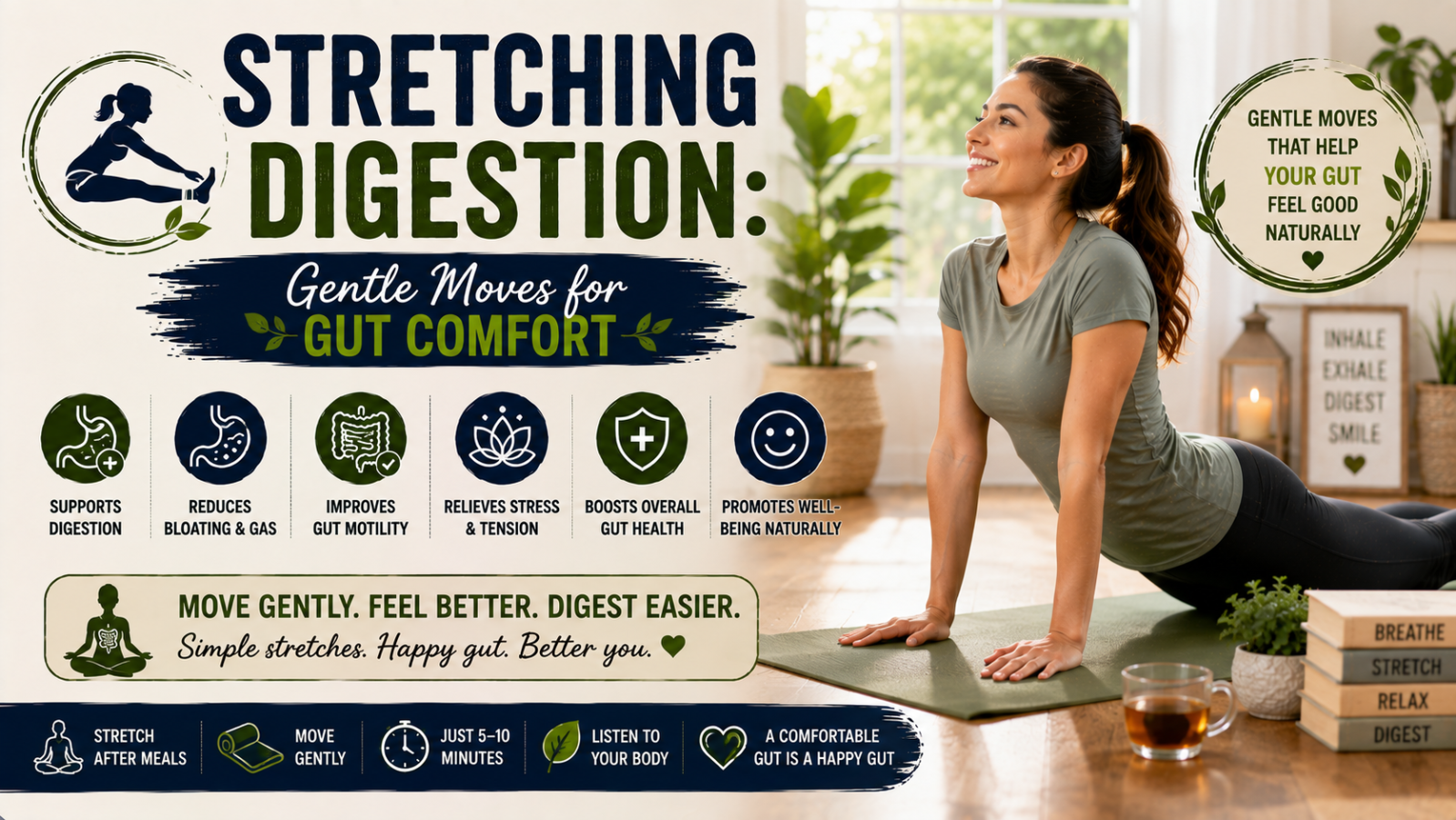
Stretching digestion can be a gentle way to add movement to your routine when your stomach feels full, tight, or sluggish. While stretching isn’t a treatment for digestive disease, light movement may support normal gut motility and help some people feel less bloated. (Cleveland Clinic)
If you’ve ever felt uncomfortable after a large meal, you probably know that lying on the couch isn’t always the best feeling. A few easy movements can be more comfortable, and you can use the Copy Button to save these simple tips for later.
Quick Answer: Can Stretching Help Digestion?
Gentle stretching may help digestion indirectly by keeping your body moving, relaxing tense muscles, and supporting comfortable movement through the digestive tract. However, research is stronger for regular physical activity and walking than for stretching alone. (Cleveland Clinic)
The best approach is simple: keep stretches gentle, avoid putting strong pressure on your abdomen after eating, and stop if a movement causes pain or nausea.
How Stretching Digestion May Work
Your digestive tract relies on coordinated muscle contractions to move food and waste through your system. Physical activity can support this process, which is one reason regular exercise is often included in strategies for digestive health.
Stretching doesn’t magically “push food through” your stomach. Instead, gentle movement may help you stay active and relaxed while supporting the normal activity of your digestive system.
That’s especially useful if your day involves long periods of sitting.
Movement matters more than intensity
You don’t need a demanding yoga session after dinner. In fact, intense movement with a full stomach may feel unpleasant.
Instead, try gentle standing stretches, slow torso movements, or an easy walk. Cleveland Clinic lists stretching, walking, and yoga among activities that may help with gas and bloating. (Cleveland Clinic)
Stretching Digestion After a Meal
Timing matters.
Immediately after a large meal, your abdomen may feel full and sensitive. Deep forward folds, strong twists, or exercises that compress your stomach can make that sensation worse.
For that reason, keep post-meal stretching relaxed.
Try standing tall and reaching your arms overhead. Breathe normally, hold the position briefly, then relax. You can also gently move your shoulders and upper back.
If you’re comfortable, follow stretching with a short walk. Walking has more direct evidence for helping post-meal bloating than stretching alone. Harvard Health notes that a 10- to 15-minute walk after eating may help reduce bloating for some people.
5 Gentle Stretches for Digestive Comfort
These movements aren’t cures for digestive problems. They’re simply easy ways to introduce gentle movement when your body feels stiff or sluggish.
1. Standing overhead reach
Stand with your feet about hip-width apart. Slowly raise both arms toward the ceiling.
Take two or three comfortable breaths. Then lower your arms.
This creates a gentle stretch through your sides and upper body without pressing on your abdomen.
2. Gentle standing side stretch
Raise one arm overhead. Slowly lean to the opposite side until you feel a mild stretch along your ribs.
Don’t force the movement. Return to the center and switch sides.
This works well when you’re standing in the kitchen after dinner or taking a break from your desk.
3. Shoulder rolls
Shoulder rolls are simple but useful when you’ve been sitting for hours.
Roll your shoulders slowly backward several times. Then reverse the direction.
Although this doesn’t directly stimulate digestion, it gets you moving and may help release upper-body tension.
4. Gentle standing torso rotation
Stand comfortably with your arms relaxed. Slowly rotate your upper body to one side, then return to center.
Repeat on the other side.
Keep the movement small after eating. You don’t need a deep twist.
5. Easy walking
Technically, walking isn’t stretching. Still, it may be the most useful movement to pair with your stretching routine.
Regular physical activity can support gut motility, and walking may help with bloating and constipation.
A relaxed 10-minute walk after dinner is a practical place to start.
Stretching Digestion and Bloating
Bloating can come from many different things, including gas, constipation, eating quickly, certain foods, and digestive conditions. Therefore, stretching won’t work for every cause.
Still, gentle movement can sometimes make a bloated belly feel less uncomfortable.
For example, imagine you finish a large restaurant meal and feel pressure across your abdomen. Rather than immediately lying down, you might stand up, take several slow breaths, stretch your sides, and then walk around the block.
That routine is simple enough to repeat without turning digestion into another complicated project.
Can Stretching Help With Gas?
It may.
Cleveland Clinic notes that gentle exercise, including stretching and yoga, may help move gas through the digestive system.
Certain yoga-style movements involve more abdominal compression or twisting. However, those positions aren’t necessarily comfortable right after eating.
If you’re gassy after a meal, start with standing movements. Give your body space rather than squeezing your abdomen.
A short walk can also be a better choice.
Stretching Digestion and Constipation
Regular movement can be particularly useful if constipation leaves you feeling heavy or sluggish.
Physical activity can stimulate bowel movement, and Harvard Health recommends regular exercise as part of constipation prevention.
Stretching alone shouldn’t replace adequate fiber, fluids, and regular physical activity. Instead, think of it as one small part of an active daily routine.
A simple combination might look like this:
- Drink water throughout the day.
- Eat fiber-rich foods gradually.
- Take regular walks.
- Avoid sitting for hours without getting up.
- Add gentle stretching when your body feels stiff.
- Give yourself enough time to use the bathroom.
That combination makes more sense than searching for one perfect stretch.
When Is the Best Time to Stretch for Digestion?
There’s no single perfect time.
After meals: Choose gentle standing stretches or a relaxed walk.
Morning: Stretching can help you wake up your body and start the day with movement.
Between meals: You have more freedom to include deeper stretches or a yoga session.
Before bed: Gentle stretching can help you wind down, although it isn’t necessary specifically for digestion.
If your stomach feels very full, wait until you’re comfortable before doing anything more demanding.
A Simple 10-Minute Stretching Digestion Routine
Here’s an easy routine to try after a meal:
Minute 1: Stand upright and take slow, comfortable breaths.
Minutes 2–3: Do gentle shoulder rolls.
Minutes 4–5: Perform standing overhead reaches.
Minutes 6–7: Add slow side stretches.
Minutes 8–10: Take an easy walk around your home or outside.
That’s it.
You don’t need special clothing, a yoga mat, or a complicated sequence. The goal is simply to avoid remaining completely sedentary after eating.
What to Avoid After Eating
Gentle is the key word.
After a large meal, avoid forcing your body into uncomfortable positions. In particular, strong abdominal compression or vigorous exercise may not feel good when your stomach is full.
Instead, keep your movements controlled and comfortable.
Also, don’t use stretching to push through unexplained abdominal pain. Persistent digestive symptoms deserve attention rather than another exercise routine. Harvard Health recommends medical evaluation when stomach discomfort, bloating, fullness, or nausea happens frequently.
7 Practical Stretching Digestion Tips
- Start gently. Your stomach doesn’t need a workout after dinner.
- Stay upright. Standing stretches are often easier after eating.
- Breathe normally. Don’t hold your breath while stretching.
- Avoid deep twists after large meals. A smaller range of motion may feel better.
- Pair stretching with walking. Walking has stronger evidence for post-meal digestive comfort.
- Move throughout the day. Digestive health benefits from regular activity, not one isolated stretch. (Cleveland Clinic)
- Pay attention to symptoms. If movement repeatedly causes pain, stop and investigate the cause.
FAQ About Stretching Digestion
Does stretching help digestion?
Gentle stretching may support comfort by encouraging movement and relaxation, but evidence is stronger for regular physical activity and walking. (Cleveland Clinic)
Can I stretch immediately after eating?
You can try gentle standing stretches if they feel comfortable. However, avoid intense or compressive movements when your stomach feels very full.
What is the best stretch for bloating?
There isn’t one stretch that works for everyone. Gentle side stretches, relaxed torso movements, and walking are reasonable options. (Cleveland Clinic)
Is walking better than stretching for digestion?
Walking has more direct evidence for supporting post-meal comfort and reducing bloating. Stretching can complement it, especially if you spend much of the day sitting.
Can stretching reduce gut inflammation?
Stretching shouldn’t be considered a treatment for gut inflammation. Regular physical activity supports overall health, but persistent digestive inflammation or symptoms need proper evaluation rather than relying on stretching alone.
Final Takeaway
Stretching digestion is less about finding a magic pose and more about keeping your body gently active. A few standing stretches, relaxed breathing, and a short walk can fit easily into a normal day.
Start small. After your next meal, stand up instead of immediately settling onto the couch. Try two gentle stretches, then walk for a few minutes if you feel comfortable.
Consistency matters more than complexity. Save this routine with the Copy Button so you can keep it handy when your stomach feels full or your body needs a little movement.

Here’s a short Gutrova-style author biography for Josh Axe:
Josh Axe
Josh Axe is a wellness expert, author, and educator known for his work in nutrition, natural health, and gut wellness. As a contributor to Gutrova, he shares practical insights on digestive health, healthy eating habits, and lifestyle strategies that help readers build a stronger foundation for overall well being. His content focuses on making wellness simple, actionable, and accessible for everyday life.











1 thought on “Stretching Digestion: Gentle Moves for Gut Comfort”