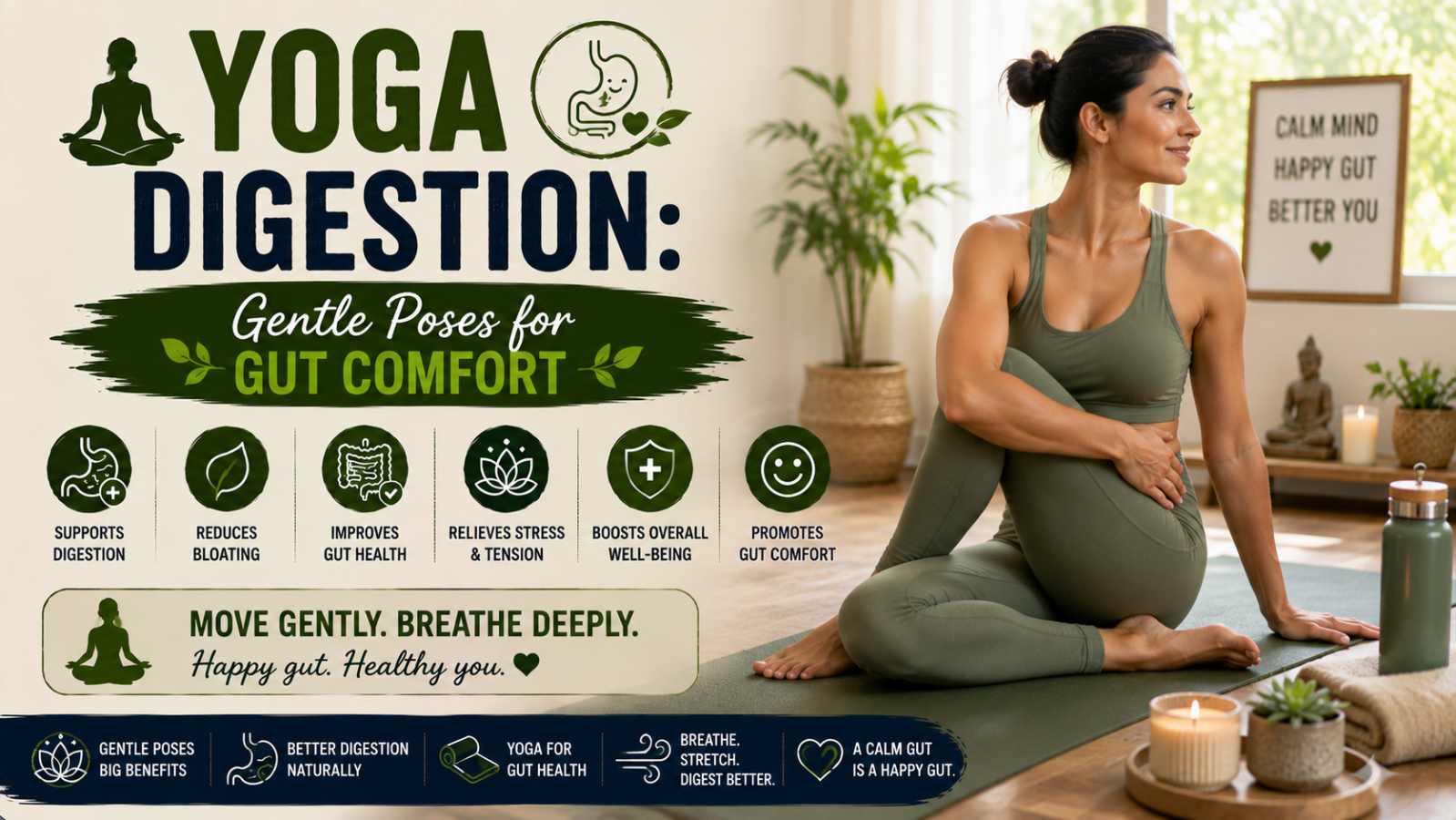
Yoga digestion is a popular topic for people who want a gentler way to support digestive comfort. Certain yoga movements may help you stay active, relax your body, and manage stress, while some research suggests yoga may improve digestive symptoms in people with IBS.
If you’ve ever felt bloated after a meal and wanted something more relaxing than a workout, a few gentle poses may be worth trying. You can also use the Copy Button to save this routine and keep it handy for later.
Quick Answer: Can Yoga Help Digestion?
Yoga may support digestive comfort, but it isn’t a cure for digestive problems. Gentle movement, breathing, and relaxation may help with bloating and stress, while research on yoga for IBS has shown mixed results.
The best approach is to use yoga as one part of a healthy routine rather than relying on specific poses to “fix” digestion.
How Yoga Digestion May Work
Your gut and nervous system communicate constantly through the gut-brain connection. Stress can affect how the digestive system feels and functions, so practices that promote relaxation may be useful for some people. NCCIH notes that yoga may help with stress management and general well-being.
Movement matters, too. Yoga involves physical activity, controlled breathing, and body awareness. Therefore, a gentle session may be a useful addition to walking, nutritious meals, adequate sleep, and other everyday habits.
The research deserves some caution, though. A 2025 meta-analysis of randomized trials found that the evidence wasn’t strong enough to recommend yoga as a treatment for IBS.
Yoga Digestion Poses for Bloating
You don’t need an advanced yoga class to get started. In fact, simple movements are often easier to fit into daily life.
Cat-Cow
Start on your hands and knees. Slowly round your back as you exhale, then gently lift your chest and tailbone as you inhale.
Move at a comfortable pace for several breaths.
This movement gently mobilizes your spine and abdomen. It can also help you slow down and focus on your breathing.
Child’s Pose
Kneel on a comfortable surface and slowly lower your hips toward your heels. Extend your arms forward or rest them beside your body.
Stay for several slow breaths.
If your abdomen feels compressed, widen your knees or choose another position. Comfort matters more than holding a particular pose.
Supine Knee-to-Chest
Lie on your back and gently bring one knee toward your chest. Hold briefly, then switch sides.
You can also bring both knees toward your chest if that feels comfortable.
This is often included in gentle yoga routines for abdominal comfort. However, skip it if the position increases pain, reflux, or pressure.
Gentle Spinal Twist
Lie on your back with your knees bent. Let your knees slowly move toward one side while keeping the movement easy.
Return to the center and repeat on the other side.
Don’t force the twist. A small range of motion is enough, especially if you’ve recently eaten.
Yoga Digestion and Bloating Relief
Bloating is common and can happen for many reasons, including gas, constipation, dietary factors, and digestive conditions.
Because the causes vary, yoga won’t relieve bloating for everyone.
Still, gentle movement may feel better than remaining completely still. Some people also find slow breathing helpful when abdominal discomfort is accompanied by tension.
For example, after a heavy dinner, you could spend five minutes walking around your home before doing a few relaxed stretches. That may be more comfortable than immediately dropping into deep abdominal poses.
Can Yoga Digestion Help With Gas?
It may help some people, although the evidence isn’t strong enough to promise a specific result.
Gentle movement can encourage you to change positions rather than staying still. Certain yoga poses also move the trunk and hips through different positions.
However, don’t treat gas as something you have to force out.
If a pose creates sharp pain or significant pressure, stop. A simple walk may be a better option.
Yoga Digestion and the Gut-Brain Connection
This is where yoga may have an especially interesting role.
Your digestive tract and nervous system communicate through several pathways. Stress can influence digestive sensations, bowel habits, and how strongly you notice discomfort.
NCCIH reports that research suggests yoga may help with stress management, although results vary depending on the type of yoga and the people studied.
That doesn’t mean stress causes every digestive problem. It simply means your mental state and digestive system aren’t completely separate.
I’ve found that this is also where people sometimes overcomplicate things. You don’t need an hour-long session. Five quiet minutes of breathing and gentle movement can be a reasonable starting point.
A 10-Minute Yoga Digestion Routine
Try this simple sequence when you want a calm movement break.
Minute 1: Sit or stand comfortably and take slow breaths.
Minutes 2–3: Move through gentle Cat-Cow.
Minutes 4–5: Rest in Child’s Pose if comfortable.
Minutes 6–7: Lie down and perform gentle knee-to-chest movements.
Minutes 8–9: Try a relaxed spinal twist on each side.
Minute 10: Lie comfortably and take several slow breaths.
There’s no need to rush from one pose to another. The goal is relaxed movement, not intensity.
Yoga Digestion After Eating
Be careful with timing.
A full stomach may make deep twists, inversions, strong abdominal work, or intense flows uncomfortable. Therefore, if you’ve just eaten a large meal, keep your movements light.
A short walk may be a better first choice.
If you want to practice yoga after eating, try gentle standing movements or breathing exercises. Save more demanding poses for later, when your stomach feels comfortable.
This is especially useful after dinner. Instead of going straight from the table to the couch, you might walk for a few minutes and then do gentle stretching.
Yoga Digestion for Constipation
Regular physical activity can support bowel function, so yoga may have a place within an active lifestyle.
However, stretching alone isn’t a substitute for the basics. Your overall routine also matters.
Focus on:
- Drinking enough fluids.
- Eating fiber-rich foods.
- Increasing fiber gradually.
- Staying physically active.
- Getting regular sleep.
- Responding to your body’s urge to use the bathroom.
- Managing stress in practical ways.
If constipation keeps returning, don’t assume you simply need a different yoga pose. Persistent symptoms deserve attention so the underlying cause can be identified.
Yoga Digestion and Gut Inflammation
It’s important to separate digestive comfort from inflammation.
Yoga shouldn’t be presented as a treatment that removes inflammation from the digestive tract. Research into yoga and gastrointestinal disorders is still developing, and studies have used different yoga styles, schedules, and patient groups.
Some research has found potential improvements in symptoms or quality of life, particularly among people with IBS. However, the evidence remains limited and inconsistent.
So, use yoga for what it can reasonably offer: movement, relaxation, flexibility, and a way to build a calmer daily routine.
7 Simple Yoga Digestion Tips
- Start with five minutes. You don’t need a long session.
- Keep breathing easy. Don’t hold your breath during poses.
- Choose gentle movements after meals. Save intense flows for another time.
- Don’t force abdominal stretches. Comfort should guide your range of motion.
- Pair yoga with walking. Regular physical activity provides broader benefits than stretching alone.
- Practice consistently. A short routine you enjoy is easier to maintain.
- Pay attention to symptoms. Stop if a movement causes pain, dizziness, nausea, or worsening discomfort.
NCCIH considers yoga generally safe for healthy people when practiced properly, although strains and sprains can occur.
What Type of Yoga Is Best for Digestion?
There’s no single “best” style for everyone.
For digestive comfort, a gentle approach may be easier to tolerate than a demanding workout. Restorative yoga, gentle Hatha practices, stretching, and breathing exercises can all provide a slower pace.
If you’re new to yoga, consider working with a qualified instructor. That’s especially useful if you’re dealing with physical limitations or want help modifying poses.
The research also makes one thing clear: studies don’t all use the same yoga program. That’s one reason it’s difficult to say that a particular pose or style will produce a specific digestive result.
When to Skip Yoga for Digestive Symptoms
Yoga isn’t appropriate for every type of abdominal discomfort.
If you have sudden or severe abdominal pain, significant vomiting, bloody stools, fainting, or another concerning symptom, don’t try to stretch through it.
Likewise, frequent bloating or digestive symptoms shouldn’t automatically be blamed on diet or stress. Bloating can have several causes, and persistent symptoms may need medical evaluation. (Cleveland Clinic)
FAQ About Yoga Digestion
Does yoga improve digestion?
Yoga may support digestive comfort through movement, relaxation, and stress management. However, research hasn’t established yoga as a treatment for digestive disorders.
What yoga pose is best for bloating?
There isn’t one proven best pose. Gentle Cat-Cow, knee-to-chest movements, and relaxed twists are commonly used in gentle routines, but your comfort should determine what you practice.
Can I do yoga right after eating?
Gentle movement may be comfortable, but avoid demanding poses immediately after a large meal. Walking or relaxed standing stretches may be easier on a full stomach.
Can yoga help IBS?
Some studies suggest yoga may improve IBS symptoms, but the evidence is mixed. A 2025 meta-analysis concluded that more high-quality research is needed before yoga can be recommended as an IBS treatment. (PubMed)
Can yoga reduce gut inflammation?
Yoga shouldn’t be considered a treatment for intestinal inflammation. It may support overall well-being and stress management, but digestive inflammation requires attention to its specific cause.
Final Takeaway
Yoga digestion is best viewed as a gentle wellness practice, not a quick fix for digestive problems. Slow movements, comfortable breathing, and regular physical activity may help you feel more relaxed and support a healthy routine.
Start with five or ten minutes. Try a few gentle poses, notice how your body responds, and adjust from there. If you enjoy the practice, make it part of a bigger gut-friendly routine that includes nourishing food, movement, sleep, and stress management.You can use the Copy Button to save this routine and return to it whenever you want a simple movement break.

Here’s a short Gutrova-style author biography for Josh Axe:
Josh Axe
Josh Axe is a wellness expert, author, and educator known for his work in nutrition, natural health, and gut wellness. As a contributor to Gutrova, he shares practical insights on digestive health, healthy eating habits, and lifestyle strategies that help readers build a stronger foundation for overall well being. His content focuses on making wellness simple, actionable, and accessible for everyday life.











1 thought on “Yoga Digestion: Gentle Poses for Gut Comfort”